You’ve probably been told to “just exercise more” for your PCOS. Maybe you’ve already tried it, pushed through intense workout programs, felt drained, and wondered why your periods were still irregular and your symptoms unchanged.
Here’s what most generic advice misses: not all exercise helps PCOS. Some types can actually worsen hormonal balance: if done at the wrong intensity, in the wrong combination, or without understanding what’s driving your symptoms.
The good news is that the right kind of exercise is genuinely powerful for PCOS. Research consistently shows it can restore ovulation, reduce androgen levels, improve insulin sensitivity, and clear up skin and hair symptoms, without requiring you to punish yourself at the gym. Here’s what the science actually says.
Why Exercise Matters for PCOS (Beyond Calories)
Before we get to which exercise works best, it helps to understand why exercise matters for PCOS at all.
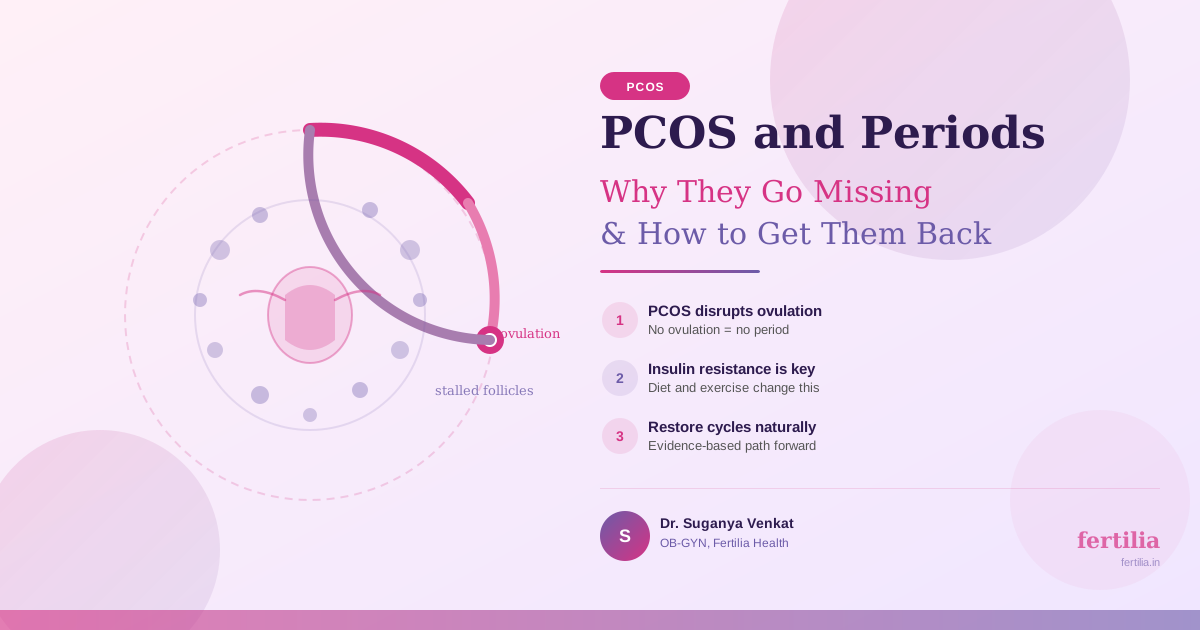
PCOS is not just a reproductive condition. It’s a metabolic one. Most women with PCOS have some degree of insulin resistance: their cells don’t respond normally to insulin, so the pancreas produces more of it. High insulin, in turn, tells the ovaries to produce excess androgens (testosterone, DHEA-S), which disrupts ovulation and drives symptoms like irregular periods, acne, excess hair growth, and belly fat.
Exercise directly targets this cycle. A landmark study by Hutchison et al. (2011, Journal of Clinical Endocrinology & Metabolism) showed that regular exercise improves insulin sensitivity in women with PCOS independent of weight loss: meaning even if the scale doesn’t move, your hormones can improve simply because your muscles are responding better to insulin.
For more on this, read our guide on PCOS Weight Loss. A 2011 Cochrane review by Moran et al. confirmed that lifestyle interventions including structured exercise improve menstrual cyclicity, hormonal profiles, and metabolic markers in PCOS.
Exercise also reduces chronic low-grade inflammation, another key driver in PCOS. Less inflammation means less androgen stimulation from the ovaries and adrenal glands, and a better environment for ovulation to occur.
The question isn’t whether to exercise. It’s what kind, how much, and how to pace it.
Strength Training: The Most Effective Exercise for PCOS
If you only have time for one type of exercise, this is the one.
Why it works: Muscle tissue is your body’s primary glucose consumer. When you build more muscle through resistance training, you increase the number of insulin receptors in your body. This improves insulin sensitivity, not just during exercise, but 24 hours a day, even while you’re sitting at your desk or sleeping.
A 2016 study by Kogure et al. (Journal of Strength and Conditioning Research) found that 16 weeks of resistance training significantly reduced free testosterone and DHEA-S levels in women with PCOS, alongside improvements in lean muscle mass and body composition.
A pilot RCT by Vizza et al. (2016, BMC Sports Science & Medicine) showed that progressive resistance training is not only feasible for women with PCOS but leads to meaningful improvements in insulin resistance and quality of life.
What strength training looks like in practice:
You do not need a gym membership. Effective strength training for PCOS can be done entirely at home with your bodyweight or a resistance band.
3–4 sessions per week, 30–40 minutes each. Focus on compound movements:
- Squats (bodyweight or with a water bottle as weight)
- Lunges (forward, reverse, or walking)
- Push-ups (standard, incline, or wall push-ups for beginners)
- Glute bridges or hip thrusts
- Plank holds (start with 20 seconds, build to 60)
- Resistance band rows or resistance band squats
Rest 60–90 seconds between sets. Aim for 3 sets of 10–15 reps. If it feels easy, increase reps before adding weight.
The goal is progressive overload: gradually doing a little more over weeks. This is what stimulates the muscle adaptations that improve insulin sensitivity long-term.
💜 Not sure where to start with PCOS exercise? Dr. Suganya designs personalised exercise and lifestyle plans based on your specific hormone profile. Talk to her on WhatsApp →
Walking: Small Effort, Big Hormonal Impact
Don’t dismiss this because it sounds too simple. Post-meal walking is one of the most evidence-backed, lowest-barrier strategies for PCOS, and most women aren’t doing it.
Here’s the mechanism: when you eat carbohydrates, your blood glucose rises. Insulin is released to clear that glucose from your blood. If you walk for 15–20 minutes after a meal, your muscles actively take up that glucose without needing as much insulin. Over time, this reduces the chronic insulin surplus that drives androgen production in PCOS.
A 2022 meta-analysis in Sports Medicine confirmed that post-meal walking (even light walking) significantly blunts postprandial blood glucose spikes compared to sitting. For insulin-driven PCOS, this adds up considerably across a week.
Practical target: 15–20 minutes of gentle walking after lunch and/or dinner, 5–6 days per week. This doesn’t need to be a “workout.” A stroll around your housing society or neighbourhood counts.
On top of post-meal walks, a longer walk of 30–40 minutes 3–4 times per week provides additional cardiovascular and metabolic benefit without stressing the adrenal system.
If you’re currently not exercising at all, start here. Walk after dinner tonight. Build the habit before adding anything else.
Yoga: Not Optional. Clinically Relevant
Yoga is often treated as a nice add-on for PCOS, but the research suggests it’s more important than that, particularly for women with elevated cortisol.
Here’s why: chronic stress raises cortisol, which worsens insulin resistance, promotes belly fat storage, and suppresses ovulation. Many women with PCOS have elevated cortisol even without obvious stress. It’s part of the hormonal picture. Intense exercise (especially high-intensity cardio done daily) further raises cortisol. Yoga counteracts this.
A 2012 study by Nidhi et al. (International Journal of Gynaecology and Obstetrics) found that 12 weeks of a structured yoga program significantly reduced BMI, fasting insulin, and testosterone levels in adolescent girls with PCOS compared to a conventional exercise group. The yoga group also showed improvements in anxiety scores.
Yoga postures that activate the parasympathetic nervous system (the “rest and digest” state) help break the cortisol–insulin resistance cycle that keeps PCOS symptoms going.
Recommended yoga styles for PCOS:
- Hatha yoga (gentle, hold-and-breathe)
- Yin yoga (deep stretches, parasympathetic activation)
- Pranayama (breathwork, especially anulom vilom and bhramari)
Aim for 2–3 yoga sessions per week, 30–45 minutes each. Even 15 minutes of pranayama at night can meaningfully reduce cortisol and improve sleep quality in PCOS. (If you’re curious how exercise needs evolve later in life, our sister site Menolia covers what actually helps during menopause, many of the same principles apply, with some important shifts.)
What About HIIT and High-Intensity Cardio?
High-Intensity Interval Training (HIIT) has been heavily promoted online for PCOS and fat loss. The evidence is more nuanced.
A 2015 pilot study by Almenning et al. (PLoS One) found that both HIIT and strength training improved metabolic and hormonal outcomes in women with PCOS. HIIT did show benefits, particularly for cardiovascular fitness and insulin sensitivity.
The problem isn’t HIIT itself. It’s overdoing it.
High-intensity exercise (when done 5–6 days per week) significantly raises cortisol. For women with already elevated cortisol (which many women with inflammatory or adrenal-driven PCOS have), this can:
- Further worsen insulin resistance
- Disrupt ovulation
- Cause missed or irregular periods
- Increase fatigue and mood instability
This is why some women find their periods become more irregular when they start intense gym programs.
The practical guidance: HIIT is fine for PCOS, but limit it to 1–2 sessions per week. On other days, prioritise strength training and walking. If you’re already dealing with high stress, poor sleep, or adrenal-driven symptoms (see our guide to PCOS hair growth and hirsutism), reduce HIIT further until cortisol normalises.
Exercise and PCOS Drivers: Matching Movement to Your Biology
Because PCOS looks different in different women, your exercise approach should reflect your dominant PCOS driver:
Insulin-resistant driver (weight gain, dark patches, intense carb cravings) → Prioritise strength training (3–4×/week) + post-meal walking (daily) → This directly targets the insulin–androgen cycle driving your symptoms
Inflammatory driver (fatigue, joint pain, digestive issues, not necessarily overweight) → Prioritise yoga + moderate walking + 1–2 sessions of light resistance training → High-intensity exercise worsens inflammation short-term; start gentle → Pair with anti-inflammatory foods: haldi in warm water or dahi, amla, leafy greens
Adrenal driver (DHEA-S elevated on blood work, symptoms worsen under stress) → Yoga and breathwork are non-negotiable here → Moderate strength training 2–3×/week; avoid prolonged high-intensity sessions → See also our guide on PCOS belly fat for the cortisol–belly fat connection
Post-hormonal rebound (symptoms appeared after stopping birth control) → ⚠️ Note: this may not be true PCOS and is often transient → Gentle yoga + walking + nutrition support is usually sufficient while the HPO axis recalibrates → No need for intense training protocols, let the body reset
If you don’t know which driver is dominant for you, your gynaecologist can guide you based on your blood work (fasting insulin, DHEA-S, CRP, cortisol levels).
How Much Exercise Do You Actually Need?
This is the most common question, and the most reassuring answer in all of PCOS research.
You don’t need to exercise for hours to see benefits. The evidence-based sweet spot for PCOS is:
| Type | Frequency | Duration |
|---|---|---|
| Strength training | 3–4×/week | 30–40 min |
| Post-meal walking | Daily (after 1–2 meals) | 15–20 min |
| Yoga / breathwork | 2–3×/week | 30–45 min |
| Moderate walking | 3–4×/week | 30–40 min |
| HIIT (optional) | 1–2×/week max | 20–25 min |
That works out to roughly 45–60 minutes of movement per day: often spread across a morning strength session and an evening post-dinner walk. Most of it doesn’t feel like “working out.”
Start with what’s sustainable. If you’re currently sedentary, doing everything at once will last two weeks before burnout. Pick one habit, do it consistently for three weeks, then add the next.
Building Your Weekly PCOS Exercise Plan
Here’s a practical starting point:
Monday: Strength training (squats, lunges, glute bridges, push-ups), 35 min + 15-min post-lunch walk
Tuesday: 40-min brisk walk + 20-min yoga/pranayama evening
Wednesday: Strength training, 35 min + 15-min post-dinner walk
Thursday: Yoga (45 min) or rest day with post-meal walks only
Friday: Strength training, 35 min + 15-min post-lunch walk
Saturday: 40-min walk or light swimming + yoga/stretching
Sunday: Rest or gentle yoga
This plan requires no gym, no expensive equipment, and no more than 45–60 minutes on any given day. Pair it with a PCOS-friendly Indian breakfast to keep blood sugar stable before morning workouts.
Common Exercise Mistakes Women with PCOS Make
1. Doing only cardio. Running on the treadmill for an hour every day misses the most effective lever, muscle building. Cardio has its place, but it shouldn’t dominate your routine.
2. Exercising intensely through exhaustion. If you wake up exhausted, have a heavy period (or none at all), or feel wired-but-tired all the time, your cortisol is already high. Rest is medicine on those days, not laziness.
3. Starting too intense, too fast. Many women go from zero to daily HIIT and crash within three weeks. Slow, consistent progress beats heroic effort followed by burnout, every time.
4. Ignoring post-meal movement. Most women think of exercise as a scheduled “workout” and miss the enormous benefit of moving 15 minutes after eating. This single habit can meaningfully reduce insulin load over weeks.
5. Skipping meals before exercise. Working out on an empty stomach (particularly long fasted cardio) can spike cortisol. Have a small snack beforehand if you exercise in the morning, a handful of soaked almonds, or dahi with a small amount of ragi, especially if you’re insulin-resistant.
To understand how exercise connects to your cycle and ovulation, it helps to start tracking your cycle as you build your routine, improvements in exercise tolerance often correlate with cycle regulation.
Frequently Asked Questions
What is the best exercise for PCOS?
Strength training (resistance training) is consistently the most effective exercise for PCOS. It builds muscle mass, which improves insulin sensitivity around the clock, not just during exercise. Combined with daily post-meal walking and 2–3 yoga sessions weekly, it targets the core mechanisms driving PCOS: insulin resistance, excess androgens, and elevated cortisol.
How many times a week should I exercise with PCOS?
Aim for movement most days, but that doesn’t mean intense workouts every day. A practical structure is: strength training 3–4×/week, post-meal walks daily, and yoga 2–3×/week. Total active time is around 45–60 minutes most days, often split between a morning session and an evening walk.
Can too much exercise make PCOS worse?
Yes. Excessive high-intensity exercise raises cortisol, which worsens insulin resistance and can disrupt ovulation further. Some women notice more irregular periods after starting intense workout programs. The fix isn’t to stop exercising. It’s to reduce intensity, add yoga, improve sleep, and let cortisol normalise. Think sustainable, not punishing.
Does yoga actually help PCOS?
Yes, and it’s often underestimated. A 2012 study (Nidhi et al., Int J Gynaecol Obstet) found yoga significantly reduced fasting insulin and testosterone in PCOS compared to conventional exercise. Yoga’s primary benefit for PCOS is lowering cortisol, which breaks the cortisol–insulin resistance–androgen cycle that keeps many symptoms going.
Can exercise alone regulate PCOS periods?
Exercise is a powerful tool, but it works best as part of a broader approach: nutrition (stable blood sugar), sleep (7–8 hours), and stress management alongside movement. A 2008 study (Palomba et al., Human Reproduction) found that structured exercise restored ovulation in a significant proportion of anovulatory PCOS patients. You don’t need to lose weight first, improved insulin sensitivity from exercise can restore cycles even before the scale changes.
I’m very tired all the time, should I still exercise with PCOS?
Fatigue in PCOS often comes from poor sleep, insulin resistance, or elevated cortisol, not from lack of exercise. Starting with 15-minute post-dinner walks and gentle yoga is perfectly appropriate. As insulin sensitivity improves and sleep quality increases (usually within 4–6 weeks of consistent movement), energy levels tend to rise and you can gradually add strength training. Don’t push through severe exhaustion, let the intensity match your recovery.
Your PCOS Is Specific. Your Exercise Plan Should Be Too.
Generic workout programs don’t account for your insulin levels, cortisol patterns, or which PCOS drivers are most active in your body. Dr. Suganya builds personalised plans based on your actual bloodwork, so your effort goes toward what will genuinely move the needle for you.
₹399 consultation · Evidence-based PCOS plan · Real, sustainable changes
For more on managing PCOS holistically, read our guides on PCOS belly fat, PCOS hirsutism and excess hair growth, and seed cycling for PCOS, evidence assessed.
Dr. Suganya Venkat, OB-GYN · 15+ years experience