You’ve tried threading. You’ve tried waxing. You’ve tried laser. And the hair keeps coming back, thicker, darker, in places you never expected.
If you have PCOS, this isn’t a grooming problem. It’s a hormonal one. And no amount of hair removal alone will fix it, because the signal telling your body to grow that hair is still active.
For more on this, read our guide on PCOS Facial Hair. As an OB-GYN who treats PCOS daily, here’s what I want you to know: hirsutism (unwanted hair growth) is one of the most distressing symptoms my patients deal with. It affects how you feel about yourself. And it deserves a proper explanation, not just “it’s hormonal, try laser.”
For more on this, read our guide on PCOS. Let me walk you through exactly why this happens and what actually works.
What Is Hirsutism?
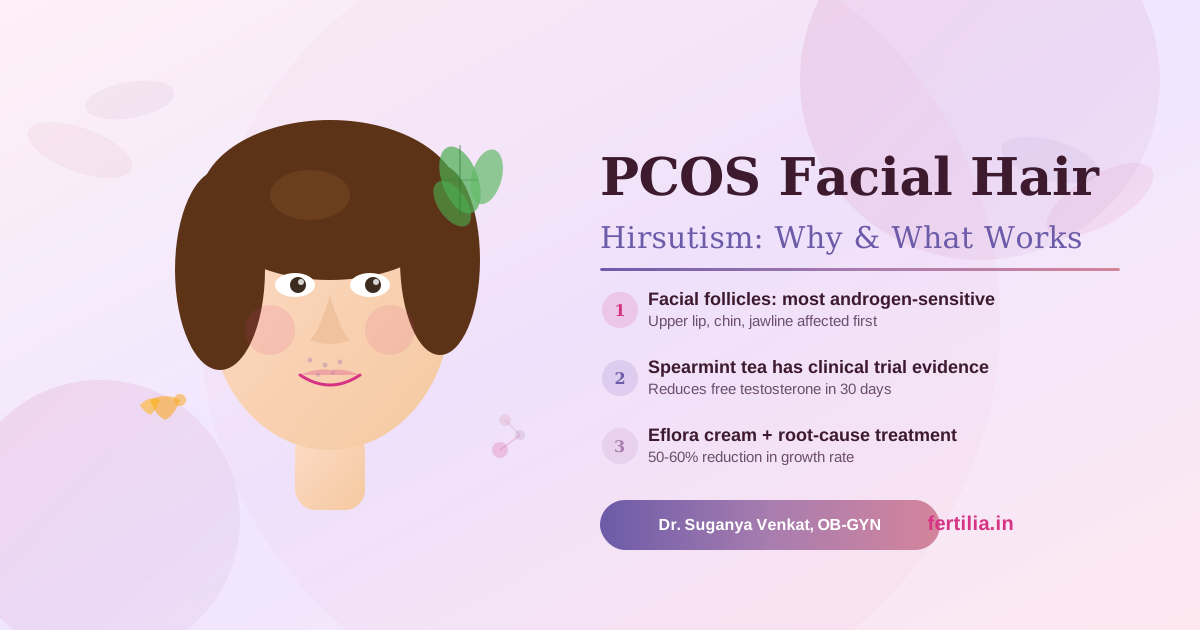
Hirsutism is the medical term for excess hair growth in areas where women typically don’t grow thick, dark hair: the face (upper lip, chin, jawline), chest, lower abdomen, inner thighs, and back.
It’s not about having body hair. All women have body hair. Hirsutism is about the pattern and thickness: coarse, dark, terminal hair growing in a male-pattern distribution.
How common is it in PCOS?
Very. Studies show 60-70% of women with PCOS experience hirsutism (Azziz et al., 2004). In Indian women specifically, rates may be even higher because of genetic factors affecting hair follicle sensitivity.
We measure hirsutism severity using the modified Ferriman-Gallwey (mFG) score: a scoring system that evaluates hair growth in 9 body areas on a scale of 0-4. A score of 8 or above is considered hirsutism.
Why Does PCOS Cause Excess Hair Growth?
The short answer: androgens. But let me explain the full picture.
The Androgen Connection
Your body naturally produces androgens, often called “male hormones,” though every woman makes them too. The key androgens involved in hair growth are:
- Testosterone: the most well-known androgen
- DHEA-S: produced by your adrenal glands
- Androstenedione: a precursor that converts to testosterone
- DHT (dihydrotestosterone): the most potent androgen for hair follicle stimulation
In PCOS, one or more of these androgens is elevated. When androgens reach your hair follicles, they transform tiny, light vellus hairs (peach fuzz) into thick, dark terminal hairs.
Here’s the important part: once a follicle has been converted from vellus to terminal, it tends to stay that way: even after androgen levels improve. This is why treatment needs to happen on two fronts: stopping new hair conversion AND removing existing terminal hair.
What’s Driving the Androgens?
The androgens don’t come from nowhere. In PCOS, there are specific drivers:
1. Insulin Resistance (the most common driver)
This affects roughly 70-80% of women with PCOS (Dunaif, 1997). Here’s the chain:
- Your cells don’t respond well to insulin
- Your pancreas produces more insulin to compensate
- High insulin directly stimulates your ovaries to produce more testosterone
- High insulin also reduces SHBG (Sex Hormone Binding Globulin), a protein that normally “binds” testosterone and keeps it inactive
- Result: more free, active testosterone reaching your hair follicles
2. Adrenal Androgen Excess
About 20-30% of women with PCOS have elevated DHEA-S from their adrenal glands (DeUgarte et al., 2005). This can happen alongside insulin resistance or on its own. Stress, sleep deprivation, and chronic inflammation can worsen adrenal androgen production.
3. Inflammation
Chronic low-grade inflammation (common in PCOS) stimulates both ovarian and adrenal androgen production (González, 2012). If you also have gut issues, food sensitivities, or chronic stress, inflammation may be a significant contributor.
The 5-Alpha Reductase Factor
There’s one more piece: an enzyme called 5-alpha reductase that converts testosterone into DHT in the skin and hair follicles. Some women have higher activity of this enzyme, meaning even with borderline androgen levels, their hair follicles get a stronger signal.
This is why some women with PCOS have significant hirsutism even when their blood testosterone levels look “normal.” The conversion happening at the follicle level doesn’t always show up on a blood test.
💜 Struggling with unwanted hair growth and not sure what’s driving it? Talk to Dr. Suganya on WhatsApp. I’ll help you understand YOUR specific hormonal picture and what will actually work for you.
The Tests That Matter
If you have hirsutism, these are the blood tests that help identify what’s driving it:
| Test | What It Tells You | When to Test |
|---|---|---|
| Total Testosterone | Overall androgen level | Day 2-5 of your cycle |
| Free Testosterone | The active, unbound portion | Day 2-5 of your cycle |
| DHEA-S | Adrenal androgen contribution | Any day |
| SHBG | How much testosterone is being “bound” (inactive) | Day 2-5 of your cycle |
| Fasting Insulin + Glucose | Insulin resistance check | Fasting, any day |
| 17-OH Progesterone | Rules out late-onset congenital adrenal hyperplasia | Early morning, Day 2-5 |
Important: Don’t just test testosterone alone. SHBG and fasting insulin are often more revealing. A woman with “normal” total testosterone but low SHBG may have high free testosterone, and that’s what matters at the hair follicle.
Cost in India: A comprehensive androgen panel typically costs ₹1,500-3,500 depending on the lab and city.
What Actually Works: The Evidence-Based Approach
Managing PCOS-related hair growth requires addressing it from multiple angles. No single treatment does it all.
Level 1: Address the Root Driver
This is the most important step, and the one most women skip because they go straight to hair removal.
If insulin resistance is your driver (this is also the main reason behind stubborn PCOS belly fat):
- Nutrition changes: Focus on balancing blood sugar. Include protein with every meal. Choose complex carbs (ragi, whole wheat, oats) over refined ones. Add healthy fats (coconut, nuts, ghee).
- Movement: Strength training 3-4x/week is particularly effective for improving insulin sensitivity. Walking after meals (even 10 minutes) helps reduce post-meal insulin spikes.
- Sleep: Poor sleep worsens insulin resistance within days. Aim for 7-8 hours.
- Inositol: Myo-inositol (2-4g daily) has strong evidence for improving insulin sensitivity in PCOS (Unfer et al., 2017). It’s well-tolerated and available in India.
Indian foods that support insulin sensitivity:
- Methi (fenugreek) seeds, soak overnight, eat on empty stomach
- Cinnamon (dalchini), ½ tsp daily in food or warm water
- Bitter gourd (karela), as a regular sabzi
- Turmeric (haldi), with black pepper for absorption
- Amla, fresh or as juice
If adrenal androgens are elevated:
- Stress management is non-negotiable. Chronically elevated cortisol drives DHEA-S production. This means actual stress-reduction practices: deep breathing, yoga, walks in nature, therapy, whatever works for you.
- Adaptogens: Ashwagandha (300-600mg daily) has evidence for reducing cortisol and DHEA-S.
- Avoid overexercising: High-intensity exercise every day can worsen adrenal androgen output. Balance intense workouts with gentle movement.
If inflammation is a key driver:
- Anti-inflammatory nutrition: Turmeric, omega-3s (fish, flaxseed), colourful vegetables, fermented foods (dahi, idli, dosa)
- Gut health: Fix digestive issues, bloating, constipation, and food sensitivities all indicate gut inflammation that feeds the cycle
- Reduce processed foods, refined sugar, and seed oils
Level 2: Medical Treatment
When lifestyle changes alone aren’t enough, and for many women with moderate-to-severe hirsutism, they won’t be, medical treatment can help significantly.
Anti-androgen medications (prescription only, consult your doctor):
- Spironolactone (25-100mg daily): The most commonly prescribed anti-androgen for hirsutism. It blocks androgen receptors and reduces androgen production. Takes 6-9 months to see full effect on hair growth. Must not be taken during pregnancy: use reliable contraception.
- Finasteride (2.5-5mg daily): Blocks 5-alpha reductase, reducing DHT at the follicle level. Also requires contraception. Sometimes used when spironolactone alone isn’t sufficient.
Oral contraceptive pills (OCPs):
OCPs increase SHBG (which binds free testosterone) and suppress ovarian androgen production. They’re often combined with spironolactone for better results. Not suitable if you’re trying to conceive.
Metformin:
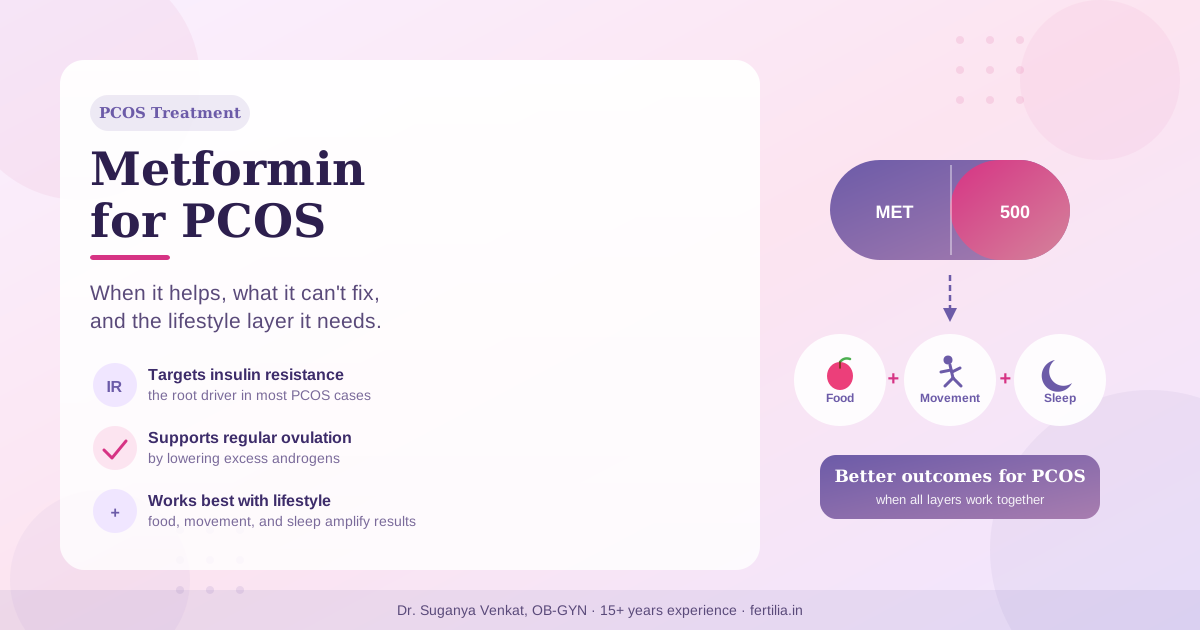
If insulin resistance is significant, metformin improves insulin sensitivity, which indirectly reduces androgen levels. It’s particularly helpful when combined with lifestyle changes.
Important timeline: Medical treatment for hirsutism takes at least 6-9 months to show visible improvement. Hair follicles have a growth cycle of about 6 months, so even after androgen levels drop, existing hairs need to complete their cycle before you see a difference.
Level 3: Hair Removal Methods
While you’re working on the hormonal root cause, hair removal methods manage the visible symptom. Here’s what works:
Laser Hair Reduction
- Most effective long-term option for dark hair on lighter skin
- Works by targeting melanin in the hair follicle
- Typically needs 6-8 sessions, 4-6 weeks apart
- Cost in India: ₹2,000-6,000 per session depending on area and city
- Works best when combined with anti-androgen treatment: without addressing the hormonal cause, new follicles keep converting
- Less effective for very fine hair or if there’s minimal contrast between skin and hair colour
Electrolysis
- Destroys individual hair follicles permanently
- Works on all hair colours and skin types
- Slower than laser (treats one follicle at a time)
- Best for smaller areas like upper lip, chin
Eflornithine cream (Vaniqa)
- Prescription cream that slows facial hair growth
- Applied twice daily to affected areas
- Doesn’t remove hair, reduces growth rate by 50-60%
- Works within 4-8 weeks
- Available in India at ₹400-750 (branded Eflora cream)
Threading/Waxing/Shaving
- These are temporary and don’t affect the follicle
- Contrary to myth, shaving does NOT make hair grow thicker, it just feels coarser because of the blunt edge
- Fine for maintenance between laser sessions
The Combination Approach (What Actually Gets Results)
Here’s what I recommend for most of my patients with moderate-to-severe hirsutism:
Months 1-3:
- Start lifestyle changes (nutrition, movement, sleep)
- Get blood work done to identify your specific driver
- Begin appropriate medical treatment (spironolactone/metformin/inositol based on your profile)
- Continue your current hair removal method for cosmetic management
Months 3-6:
- Hormonal levels should begin improving
- Start laser hair reduction now (hair removal works better once new follicle conversion is slowing)
- Continue lifestyle changes. They compound over time
Months 6-12:
- Visible reduction in new hair growth
- Continue laser sessions
- Reassess medications with your doctor
- Many women see 40-60% improvement in hirsutism scores by this point
💜 Want a personalised plan for managing your PCOS hair growth? Every woman’s hormonal profile is different. Message Dr. Suganya on WhatsApp. I’ll look at your specific situation and help you build a plan that addresses the root cause, not just the surface.
What About Natural Remedies?
You’ll find a lot of advice online about spearmint tea, saw palmetto, and various supplements. Here’s the evidence:
Spearmint tea: Two small studies showed that drinking spearmint tea twice daily for 30 days reduced free testosterone levels. The evidence is modest but it’s safe and cheap. Worth trying as an addition (not a replacement) to your main treatment.
Saw palmetto: Blocks 5-alpha reductase. Some evidence in men for hair loss, very limited data in women for hirsutism. Not recommended as a primary treatment.
Zinc: Mildly reduces 5-alpha reductase activity. A 50mg supplement may offer modest benefits if you’re deficient. Many Indian women are. Get your levels checked.
Vitamin D: Not directly anti-androgenic, but Vitamin D deficiency is extremely common in Indian women and worsens insulin resistance. Correcting deficiency can improve the overall hormonal picture.
What I tell my patients: Natural remedies can support your treatment plan, but they won’t replace medical treatment for moderate-to-severe hirsutism. Use them alongside, not instead of, evidence-based approaches. (Related: We reviewed the science on seed cycling for PCOS, flaxseed has real anti-androgenic data, but the “cycling” part is mostly myth.)
The Emotional Side. It Matters
Let me say something that medical articles often skip: hirsutism affects your mental health. Research consistently shows higher rates of anxiety, depression, and reduced quality of life in women with hirsutism (Keen et al., 2017).
If unwanted hair growth is affecting how you dress, whether you go out, your confidence in relationships, or your everyday comfort, that is a valid medical concern, not vanity. Don’t let anyone dismiss it.
You deserve treatment that addresses this. And it is treatable.
Common Mistakes to Avoid
-
Only doing hair removal without addressing hormones: You’ll be stuck in an endless cycle of removal and regrowth. The signal needs to be turned down.
-
Starting laser before starting anti-androgen treatment: Laser works on existing terminal hairs. If androgens are still high, new follicles keep converting. Start medical treatment first (or simultaneously), then begin laser.
-
Expecting results in weeks: The hair growth cycle is 6 months. Any treatment (medical or cosmetic) needs at least 6-9 months for visible improvement. Patience isn’t optional; it’s part of the treatment.
-
Testing only total testosterone: Ask for free testosterone and SHBG. Many women with significant hirsutism have “normal” total testosterone but low SHBG, meaning their free testosterone is actually high.
-
Ignoring insulin resistance: If insulin is driving your androgens, no anti-androgen medication will work as well as it should until insulin is addressed too.
FAQ
Q: Will the hair growth stop completely with treatment?
For most women, treatment significantly reduces new hair growth and slows conversion of new follicles. However, terminal hairs that already exist need to be removed through laser or electrolysis, medical treatment prevents new ones from forming but can’t reverse existing ones.
Q: How long do I need to be on medication?
This varies. Some women stay on spironolactone for years, others use it for 12-18 months while lifestyle changes take effect. The decision depends on your hormonal picture, your goals, and your doctor’s assessment.
Q: Can I take spironolactone while trying to conceive?
No. Spironolactone is strictly contraindicated in pregnancy. If you’re planning to conceive, discuss alternatives with your doctor. Inositol and lifestyle changes become the primary approach.
For more on this, read our guide on PCOS & Pregnancy. Q: Is PCOS hirsutism the same as other causes of unwanted hair growth?
Not always. Other causes include congenital adrenal hyperplasia, Cushing’s syndrome, and idiopathic hirsutism (genetic sensitivity with normal hormones). This is why proper testing matters, treatment depends on the cause.
Q: I’ve heard about IPL devices for home use. Do they work?
Home IPL devices are less powerful than clinical lasers but can help maintain results between professional sessions. They’re not a replacement for clinical laser, especially for PCOS-related hair growth where the hormonal drive is strong.
Q: Does losing weight help with hirsutism?
If you carry excess weight and have insulin resistance, even a 5-7% weight loss can meaningfully reduce insulin levels and free testosterone. This won’t eliminate hirsutism, but it reduces the hormonal signal that drives it.
Key Takeaways
- PCOS-related hair growth is driven by high androgens: it’s a hormonal problem, not a cosmetic one
- Identify your driver: insulin resistance, adrenal excess, or inflammation, treatment depends on this
- Address the root cause first, then add hair removal for best results
- Medical treatment takes 6-9 months minimum: be patient with the process
- The combination approach (lifestyle + medical + removal) gives the best outcomes
- Your feelings about hirsutism are valid. This is a real medical concern that deserves proper attention
- Hair changes don’t stop with PCOS, during menopause, declining oestrogen causes a different pattern of hair thinning and loss
Dr. Suganya Venkat is an OB-GYN with 15+ years of experience helping women with PCOS. She leads the 90-day Fertilia program that addresses PCOS holistically, including hirsutism, weight, fertility, and metabolic health.