Your gynaecologist has just written “Tab. Metformin 500 mg” on your prescription. You’ve been diagnosed with PCOS. Now you’re wondering: why this tablet specifically? Will it fix my periods? Do I have to take it forever? And what happens if I stop?
These are exactly the questions I hear from women in my clinic every week. Metformin is one of the most commonly prescribed medications for PCOS in India, and also one of the most misunderstood. Some women expect it to do everything. Others refuse it because they’re afraid of side effects they read about online. Both responses are understandable, but neither is quite right.
Let me walk you through what metformin actually does, when it genuinely helps, what it cannot fix, and what to expect if your doctor recommends it.
What Is Metformin? (It Is Not a Hormone Tablet)
This is the first thing to get straight. Metformin is not a hormonal medication. It does not contain oestrogen, progesterone, or any synthetic hormone. It belongs to a class of drugs called biguanides, and its main job is to make your body more sensitive to insulin.
Metformin was originally developed for type 2 diabetes. It lowers blood glucose by reducing the amount of glucose your liver releases and by improving how well your cells respond to insulin. In PCOS, insulin resistance is extremely common. A landmark 1997 study by Dunaif found that 50 to 80 percent of women with PCOS have some degree of insulin resistance, even those who are not overweight. This is why metformin ended up in PCOS treatment at all.
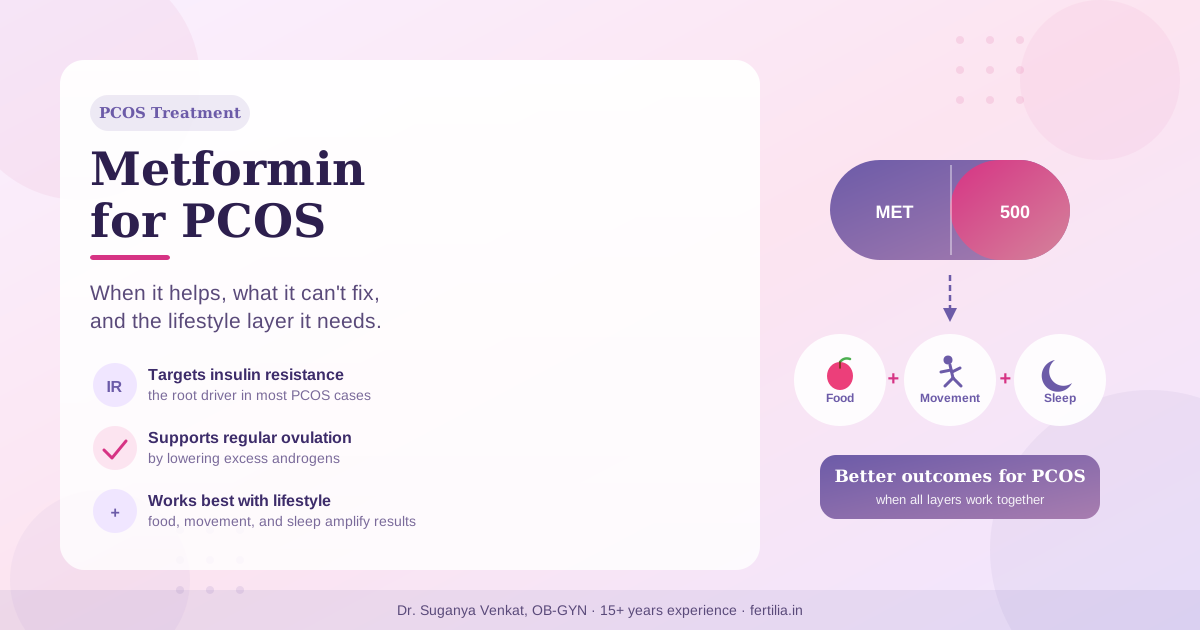
Metformin does not fix every aspect of PCOS. It targets one specific pathway: the insulin-glucose axis. When that pathway is a key driver of your symptoms, metformin can be genuinely useful. When it is not the dominant driver, its benefits are limited.
The Insulin-PCOS Link You Need to Understand
To understand why metformin matters for some women with PCOS, you need to understand what high insulin does inside the body.
When your cells resist insulin, your pancreas compensates by producing more of it. High circulating insulin then acts on the ovaries and stimulates them to produce more androgens, particularly testosterone. This excess testosterone is responsible for many of the symptoms you actually notice: acne on the jaw and chin, hair growth on the face and chest, thinning hair on the scalp, and disrupted ovulation.
High insulin also suppresses sex hormone binding globulin (SHBG), a protein that normally binds testosterone in the blood and keeps it inactive. When SHBG drops, more free testosterone circulates in your bloodstream, which amplifies the androgen effects.
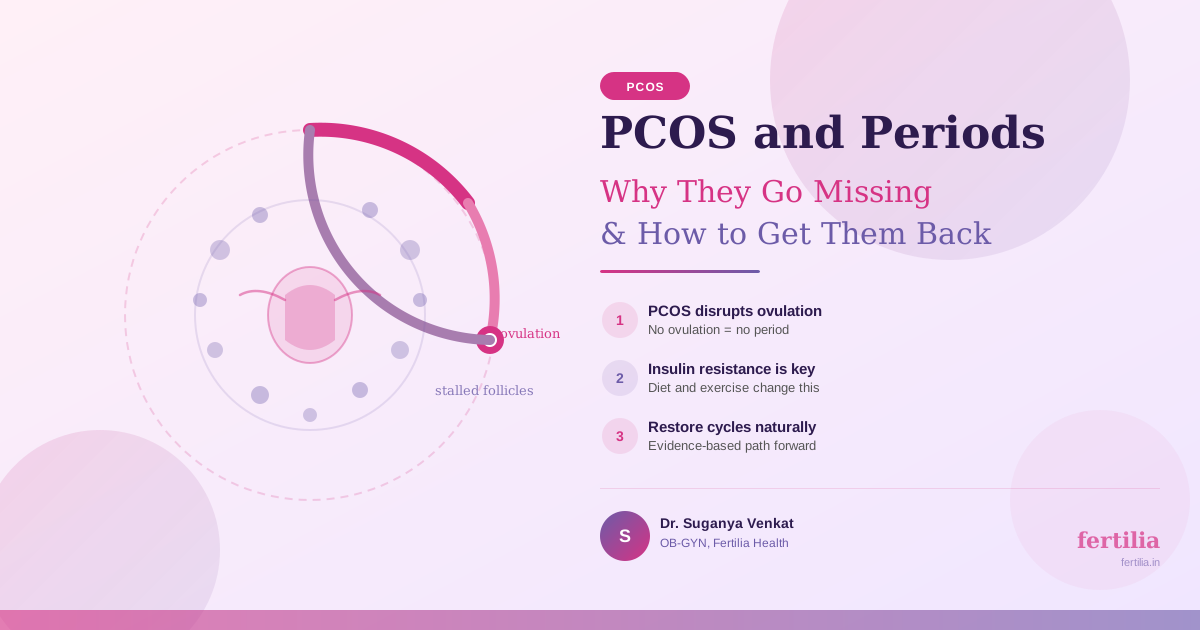
So the chain looks like this: insulin resistance leads to high insulin leads to high androgens leads to disrupted ovulation leads to irregular periods.
By improving insulin sensitivity, metformin reduces the stimulus for excess androgen production. This is the core of why it helps in insulin-resistant PCOS. A 2003 systematic review by Lord and colleagues, covering multiple randomised controlled trials, found that metformin improves ovulation rates and menstrual cyclicity in women with PCOS compared to placebo, especially when insulin resistance is present.
When Metformin Is Actually the Right Tool
Metformin is not a prescription that suits every woman with PCOS. Doctors typically recommend it in specific situations.
1. When insulin resistance or pre-diabetes is confirmed
If your fasting insulin is elevated, your HOMA-IR (a measure of insulin resistance calculated from fasting glucose and fasting insulin) is above 2.5, or your HbA1c or fasting blood sugar is moving toward pre-diabetic range, metformin addresses the underlying metabolic driver directly. This is its strongest indication.
2. When periods are absent or very irregular due to anovulation
Because high insulin disrupts ovulation, lowering insulin levels can help restore more regular cycles. Metformin is not as effective as a direct ovulation inducer like letrozole or clomiphene, but it works best as a sensitising background medication when your periods are irregular due to the insulin-androgen pathway rather than other causes.
3. When starting ovulation induction (IUI or fertility treatment)
Metformin is commonly co-prescribed during IUI or ovulation-induction protocols. A 2006 randomised controlled trial by Tang and colleagues found that adding metformin to clomiphene improved ovulation and pregnancy rates in women with clomiphene-resistant PCOS compared to clomiphene alone. Your reproductive endocrinologist or gynaecologist will advise whether this combination is right for you.
4. When there is a history of early pregnancy loss
Some research suggests that insulin resistance and high androgen levels in early pregnancy may increase miscarriage risk in women with PCOS. Continuing metformin into the first trimester is sometimes recommended for women with PCOS who have had recurrent early losses, though this is an area where your treating doctor’s individual guidance matters most.
5. When you have metabolic syndrome features alongside PCOS
If your PCOS comes with central weight gain, raised triglycerides, borderline blood pressure, or family history of diabetes, metformin has a role both in managing PCOS symptoms and in reducing long-term metabolic risk.
For more on this, read our guide on PCOS Weight Loss.
What Metformin Does Not Do on Its Own
Here is where many women feel let down, because they expect metformin to do more than it can.
It is not a direct acne treatment. Metformin may gradually reduce androgen levels by lowering insulin, but this is a slow, indirect effect. If acne is your primary concern, your dermatologist or gynaecologist may recommend additional options alongside it.
It does not cause significant weight loss without dietary change. Metformin modestly reduces appetite in some women and slightly lowers glucose storage, but clinical studies consistently show that the weight loss from metformin alone is small, usually 1 to 3 kg over 6 months. The studies that show better outcomes pair it with calorie-adjusted eating and regular physical activity.
It will not restart your periods immediately. Metformin typically takes 3 to 6 months to show its full effect on menstrual regularity. If you are hoping for a period within the first 4 to 6 weeks, that is unlikely unless other interventions are also in place.
It does not treat hyperandrogenism directly. Metformin lowers androgens by reducing the insulin stimulus to the ovaries, but if your adrenal androgens are also elevated, or if there is another driver at play, metformin alone may not bring your testosterone to normal range.
Side Effects: What to Expect and How to Manage Them
Metformin’s reputation for side effects, specifically nausea, loose stools, and stomach cramping, puts a lot of women off before they even start. These are real effects, but they are almost always manageable if the tablet is introduced correctly.
The key is starting low and going slow.
Most doctors in India begin with 500 mg once a day with dinner and increase to 500 mg twice a day (with breakfast and dinner) after 2 to 4 weeks. The extended-release (SR or XR) formulation causes significantly less gastrointestinal irritation than the standard tablet and is worth asking about if you find the standard version hard to tolerate.
Taking metformin with food is essential, not optional. Taking it on an empty stomach is the most common reason women report nausea and loose stools.
Lactic acidosis (a build-up of lactic acid in the blood) is technically a metformin risk, but it is extremely rare in people with normal kidney function. Your doctor will check your kidney function before starting you on it and periodically during treatment.
If you are undergoing a CT scan with contrast dye, tell the radiologist you are on metformin. The dye and metformin can interact in people with marginal kidney function, and your doctor may ask you to pause the tablet temporarily.
Vitamin B12: Long-term metformin use can reduce B12 absorption. If you are on metformin for more than a year, ask your doctor to check your B12 levels annually. Supplementation is simple if levels are low.
The Part Metformin Cannot Replace
Metformin works on the insulin pathway. But PCOS is a condition with multiple drivers, and lifestyle is the foundation that either makes medication more effective or makes it work against you.
Refined carbohydrates and sugar raise insulin sharply, even in women on metformin. If you are eating white rice three times a day, maida-based snacks, and sugary chai, metformin is fighting an uphill battle. Swapping to lower-glycaemic options, such as broken wheat upma, ragi mudde, bajra roti, or a dal-vegetable combination, reduces the insulin load your body faces every day.
Exercise, particularly resistance training and walking after meals, improves insulin sensitivity independently of metformin. A 20-minute walk after lunch and dinner can meaningfully reduce post-meal glucose and insulin spikes.
Sleep matters far more than most women realise. Even one week of restricted sleep (less than 6 hours per night) measurably worsens insulin sensitivity. If you are waking at night or sleeping less than 7 hours, that is worth addressing alongside medication.
Stress hormones (cortisol) raise blood glucose as part of the body’s fight-or-flight response. Chronic stress keeps glucose and insulin elevated in a way that partially offsets the benefit of metformin. Breathwork, yoga, and sleep hygiene are not nice-to-haves for PCOS: they are the metabolic levers that make everything else work better.
At Fertilia, we work on all of these layers alongside whatever medical treatment your gynaecologist has prescribed. The goal is not to replace your doctor’s plan. It is to build the lifestyle foundation that makes that plan more effective and reduces how long you need to stay on medication. Nisha’s case study is a clear example, PCOS, hypothyroidism, and insulin resistance managed together through combined medical and lifestyle support.
Ready to put together a personalised plan that works alongside your medical treatment? Chat with Dr. Suganya on WhatsApp: wa.me/919940270499
How Long Do You Take Metformin for PCOS?
This is one of the most common questions women ask, and the honest answer is: it depends on your goals and your underlying metabolic status.
For most women with PCOS and insulin resistance, metformin is not intended as a lifelong prescription. The typical approach is to continue it while the metabolic and hormonal situation is active (often 6 to 12 months at minimum), then reassess based on cycle regularity, repeat bloodwork, and how well lifestyle measures are established.
If insulin resistance has resolved (confirmed by repeat fasting insulin and HOMA-IR testing), and if your periods are regular and your lifestyle changes are stable, your doctor may taper or stop metformin. The goal is to address the underlying driver well enough that the medication is no longer needed.
Some women with severe insulin resistance, impaired fasting glucose, or family history of type 2 diabetes may be advised to continue longer as a preventive measure. That is a conversation to have with your treating doctor based on your complete history.
Working With Your Doctor, Not Around Them
I want to be clear about one thing. Metformin for PCOS is a prescription medication, and it should be prescribed and monitored by a doctor who knows your full history. The internet is full of well-meaning advice about stopping metformin because “it’s just treating the symptom, not the cause” or taking higher doses than prescribed to speed up results. Both are counterproductive.
Metformin works best as one part of a managed plan. Your gynaecologist prescribes it because the clinical picture warrants it. The lifestyle work we help you build at Fertilia adds the other layers. Neither replaces the other, and neither is more important.
If you feel your symptoms are not improving after 3 to 4 months on metformin, the answer is not to stop it unilaterally. Go back to your doctor with your symptom journal and ask for a review. There may be additional investigations needed, a dose adjustment, or a different combination of treatments entirely.
Practical Steps If You Have Just Been Prescribed Metformin
Here is a simple checklist to help you start on the right foot.
Before you begin:
- Confirm your kidney function has been checked (creatinine, eGFR)
- Get a baseline fasting insulin, fasting glucose, and HbA1c if your doctor has not already ordered them
- Ask about the SR (sustained release) formulation if you have a sensitive stomach
In the first month:
- Always take the tablet with food, not before or after, but with
- Start at 500 mg and increase only as your doctor advises
- Note any side effects and tell your doctor at the next visit rather than stopping on your own
Ongoing:
- Request a B12 check every 12 months if you stay on it longer term
- Track your cycle dates in a calendar or app, this is the clearest signal of whether metformin is working
- Pair the medication with a lower-glycaemic eating pattern for best effect
- See the related blogs on insulin resistance and PCOS and PCOS diet chart for Indian women for practical food guidance
Frequently Asked Questions
1. Can I take metformin for PCOS without being diabetic? Yes. Metformin is commonly prescribed for PCOS in women who do not have diabetes but do have insulin resistance. Its use in PCOS is well-established and supported by multiple clinical trials. Your doctor prescribes it to address the insulin-driven component of your PCOS, not because you have diabetes.
2. Will metformin help me lose weight? Metformin can support modest weight loss (typically 1 to 3 kg) in some women, mainly by reducing appetite and lowering insulin. It is not a weight-loss drug on its own. Meaningful and sustained weight change requires dietary adjustment and regular movement alongside any medication.
3. How long does metformin take to work for PCOS? Most women see changes in menstrual regularity after 3 to 6 months of consistent use. Metabolic markers (fasting insulin, HOMA-IR) often improve earlier, within 6 to 12 weeks. If you see no change in cycles after 6 months, discuss with your doctor whether the dose or treatment plan needs adjustment.
4. Can I get pregnant while on metformin? Yes. Metformin is often continued into the first trimester for women with PCOS, particularly those with insulin resistance or a history of early pregnancy loss. Discuss your specific situation with your doctor before making any changes to your medication if you are trying to conceive or become pregnant.
5. What are the main side effects of metformin? The most common are nausea, loose stools, and abdominal cramping, especially in the first 2 to 4 weeks. Taking it with food and using the sustained-release formulation reduces these effects significantly. Long-term, the main concern is reduced B12 absorption, which can be monitored and supplemented if needed.
6. Is there a natural alternative to metformin for PCOS? Lifestyle interventions (dietary changes, regular exercise, stress reduction) have solid evidence for improving insulin sensitivity in PCOS. In mild insulin resistance, these changes can achieve meaningful improvement without medication. In moderate to severe insulin resistance, or when conception is time-sensitive, metformin combined with lifestyle changes is typically more effective than lifestyle alone. This is a nuanced clinical decision best made with your doctor.
7. Can I stop metformin once my periods become regular? Do not stop metformin on your own. If your cycles are regular and your metabolic markers have improved, talk to your doctor about tapering or stopping. Stopping abruptly without reassessing the underlying insulin resistance may allow symptoms to return. A planned withdrawal with follow-up bloodwork is the right approach.
Metformin is a genuinely useful tool when insulin resistance is driving your PCOS. It works best as part of a plan that also addresses food, movement, sleep, and stress. If you have been prescribed it and want to understand how to make it work as effectively as possible alongside a personalised lifestyle approach, I am here to help.
Message Dr. Suganya on WhatsApp to discuss your PCOS plan: wa.me/919940270499
Dr. Suganya Venkat, OB-GYN with 15+ years of clinical experience. DNB OB-GYN (GKNM, Coimbatore) · MD Pathology (CMC Vellore) · MBBS with 5 Gold Medals (SRMC).