You know the routine. Before every family event, before every video call, before certain photos get taken, there’s a quick threading session, or a careful check in the magnifying mirror, or a specific angle you’ve learned to hold your face.
If you have PCOS, the hair on your upper lip, chin, or jawline isn’t a grooming quirk. It’s a hormonal signal. And the reason it keeps coming back, sometimes thicker and darker, is that the signal keeps being sent.
As an OB-GYN who treats PCOS daily, I want to give you a clear, face-specific picture of why this happens and what the evidence actually supports for reducing it. Facial hair is one of the most distressing PCOS symptoms my patients mention, and it deserves a proper clinical answer, not just another threading appointment.
Why PCOS Causes Facial Hair (More Than Body Hair)
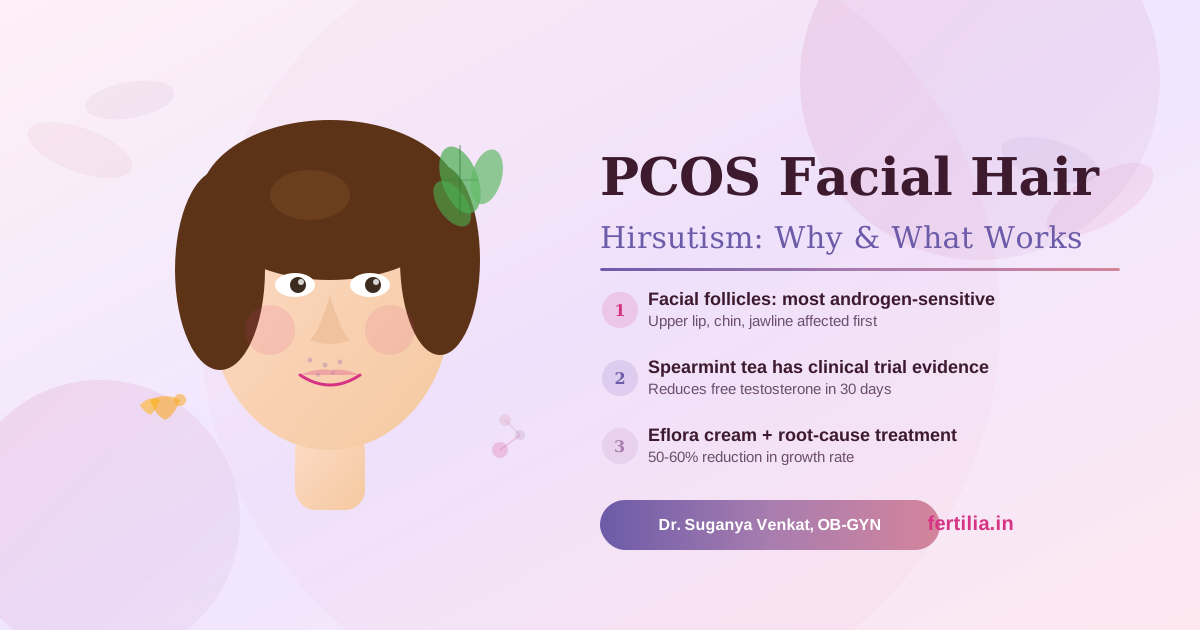
Most people know that PCOS causes excess androgens. What’s less discussed is that facial hair follicles are the most androgen-sensitive hair follicles in the body.
Your skin contains an enzyme called 5-alpha reductase, which converts testosterone into DHT (dihydrotestosterone). DHT is the most potent androgen for hair follicle stimulation. Facial follicles, particularly on the upper lip, chin, jawline, and sideburns, have significantly higher 5-alpha reductase activity than follicles on the arms, legs, or back.
This means that even a modest elevation in androgens can cause visible facial hair growth, while the rest of your body may look completely normal. (We document exactly this in Sujatha’s lean PCOS case study, she had visible facial hair growth despite a completely healthy BMI.) It also means that some women with PCOS develop significant facial hirsutism despite having blood testosterone levels that technically fall within the “normal” range. The conversion happening inside the follicle doesn’t always show up on a standard blood test.
Here’s the hormonal chain that drives it:
Insulin resistance (present in roughly 70-80% of PCOS cases, Dunaif 1997) increases insulin levels. High insulin directly stimulates your ovaries to produce more testosterone. High insulin also reduces SHBG (Sex Hormone Binding Globulin), a protein that binds testosterone and keeps it inactive. When SHBG drops, more free testosterone circulates. Free testosterone, not total testosterone, is what reaches your hair follicles.
Adrenal androgen excess (present in 20-30% of PCOS cases) adds DHEA-S to the mix. DHEA-S converts to testosterone in peripheral tissues, adding another androgen source that standard testing sometimes misses (DeUgarte et al., 2005).
Chronic low-grade inflammation, which is common in PCOS, amplifies both ovarian and adrenal androgen output (González et al., 2012).
The result: the follicles on your face, the most sensitive ones, get more androgen stimulation than they’re supposed to, and they respond by converting fine, light vellus hairs into thick, dark terminal hairs.
Which Facial Areas Are Affected?
PCOS-related facial hirsutism most commonly appears in these areas, roughly in order of frequency:
- Upper lip: The most common site. Fine hair that becomes more noticeable
- Chin and lower jaw: Coarse, dark hairs that feel different to touch
- Sideburns: Hair extending further down than usual
- Jawline and neck: Often develops after the chin area
- Cheeks: Less common, but can occur with higher androgen levels
Clinically, we measure facial hirsutism using the modified Ferriman-Gallwey (mFG) score, which evaluates 9 body areas including upper lip and chin specifically. Each area is scored 0-4, and a total score of 8 or above indicates hirsutism. The upper lip and chin zones alone often drive the score into clinical range in PCOS.
The Hormonal Tests That Tell the Full Story
If you have facial hirsutism, these tests help identify exactly what’s driving it. Ask your doctor specifically for this panel, not just a “hormonal test.”
| Test | Why It Matters | When to Test |
|---|---|---|
| Free Testosterone | More clinically relevant than total testosterone for hirsutism | Day 2-5 of cycle |
| SHBG | Low SHBG = high free testosterone even when total is “normal” | Day 2-5 of cycle |
| Total Testosterone | Baseline reading | Day 2-5 of cycle |
| DHEA-S | Identifies adrenal contribution | Any day |
| Fasting Insulin + Glucose | Identifies insulin resistance as the driver | Fasting, any day |
| LH and FSH | Assesses ovarian hormonal pattern | Day 2-3 of cycle |
| 17-OH Progesterone | Rules out late-onset congenital adrenal hyperplasia | Early morning, Day 2-5 |
The most important pairing is free testosterone and SHBG together. Many women with significant facial hirsutism have total testosterone that looks normal on paper but low SHBG, meaning a large proportion of their testosterone is free and active. Without the SHBG result, the driver gets missed.
💜 Not sure which tests to ask for, or what your results mean? Message Dr. Suganya on WhatsApp and she can walk you through your specific hormonal picture.
What Actually Works: Evidence-Based Treatment for Facial Hirsutism
Treating PCOS-related facial hair requires working on two levels at once: reducing the hormonal signal that drives hair growth AND managing the visible hair that’s already there. Focusing only on removal without addressing the hormones is why most women feel stuck in an endless cycle.
Step 1: Address the Root Hormonal Driver
If insulin resistance is your driver:
The goal is to reduce insulin levels, which directly reduces testosterone production and increases SHBG. This is the most impactful lifestyle intervention for facial hirsutism.
Practical changes that have clinical evidence:
- Include protein and healthy fat at every meal. Protein with each meal slows glucose absorption and reduces insulin spikes.
- Favour complex carbohydrates: whole ragi, jowar, brown rice, oats over maida, white rice, and packaged foods.
- Walk for 10-15 minutes after meals. Post-meal walking meaningfully reduces the blood glucose (and therefore insulin) spike from that meal.
- Strength training 3-4 times per week improves insulin sensitivity more than cardio alone.
- Myo-inositol (2-4g daily) has strong clinical evidence for improving insulin sensitivity and reducing free testosterone in PCOS (Unfer et al., 2017). It’s available over the counter in India.
Indian foods that specifically support insulin sensitivity:
- Methi (fenugreek) seeds: Soak overnight and eat on an empty stomach in the morning. Galactomannan fibre in methi slows glucose absorption.
- Dalchini (cinnamon): Half a teaspoon daily, added to oats, porridge, or warm water. Improves insulin receptor sensitivity.
- Karela (bitter gourd): As a regular sabzi or juice. Charantin and polypeptide-P in karela mimic insulin action.
- Haldi with black pepper: Curcumin in turmeric has anti-inflammatory and insulin-sensitising effects. Piperine from black pepper dramatically increases curcumin absorption.
- Amla: High chromium content supports insulin function.
If adrenal androgens are elevated (high DHEA-S):
Stress is the key target. Chronic psychological stress elevates cortisol, which in turn drives DHEA-S production from your adrenal glands. This is worth taking seriously, not as a vague lifestyle suggestion, but as a genuine treatment lever.
- Structured breathwork (even 5 minutes of diaphragmatic breathing twice daily) measurably reduces cortisol.
- Ashwagandha (300-600mg daily) has clinical evidence for reducing cortisol and DHEA-S in stressed adults.
- Avoid training at very high intensity every day. High-volume intense exercise can worsen adrenal androgen output.
- Consistent sleep (7-8 hours) is non-negotiable. Sleep deprivation raises cortisol the following day.
If inflammation is a contributing driver:
Anti-inflammatory nutrition supports the entire hormonal picture. Focus on fermented foods (dahi, idli, dosa), colourful vegetables, turmeric, and omega-3 sources like flaxseed and fatty fish. Reduce processed foods, refined sugar, and seed oils.
Step 2: Spearmint Tea (The One Natural Remedy With Clinical Support)
Spearmint deserves its own section because it has actual clinical trial data specifically for facial hirsutism.
Two randomized controlled trials examined spearmint tea in women with hirsutism:
- Akdogan et al. (2007) found that 2 cups of spearmint tea daily for 30 days significantly reduced free testosterone and LH levels in women with hirsutism.
- Grant et al. (2010) conducted a larger 30-day RCT and confirmed reductions in free testosterone and self-reported improvements in facial hair growth rate.
The mechanism: spearmint has anti-androgenic properties, it reduces free testosterone by interfering with 5-alpha reductase activity.
The evidence is still modest (small trials, short duration), but the intervention is safe, inexpensive, and India-accessible. Adding 2 cups of spearmint tea daily is a reasonable adjunct to your main treatment plan.
Spearmint is different from regular mint (pudina). Look for it as “spearmint” or “spear mint” in herbal tea sections. It’s increasingly available in Indian health stores and online.
Step 3: Medical Treatments for Facial Hirsutism
Lifestyle changes take several months to reduce androgen levels meaningfully. For moderate to severe facial hirsutism, medical treatment accelerates the process.
Eflornithine cream (Eflora in India)
This is the only topical prescription treatment designed specifically for facial hirsutism. It works by inhibiting ornithine decarboxylase, an enzyme needed for hair follicle cell division. The result: hair grows more slowly.
- Applied twice daily to the face (upper lip, chin, wherever hair is growing)
- Clinical trials show approximately 50-60% reduction in hair growth rate
- You see results within 4-8 weeks
- It does not remove existing hair, it slows new growth
- When you stop using it, growth rate returns to baseline
- Available in India at roughly Rs. 400-750 for branded Eflora cream (verify current price at your local pharmacy)
- Requires a prescription, ask your gynaecologist specifically for this
It works best when combined with hair removal methods. You’re slowing the re-growth while removing what’s already there.
Spironolactone (anti-androgen medication)
Spironolactone blocks androgen receptors and reduces ovarian androgen production. It’s the most commonly prescribed anti-androgen for hirsutism globally.
- Usually prescribed at 25-100mg daily
- Takes 6-9 months to see full effect on hair growth (the hair follicle growth cycle is approximately 6 months)
- Requires reliable contraception: it is contraindicated in pregnancy
- Side effects can include increased urination, dizziness, irregular periods
- Not suitable if you are trying to conceive. If that’s your goal, discuss alternatives with your doctor.
Metformin
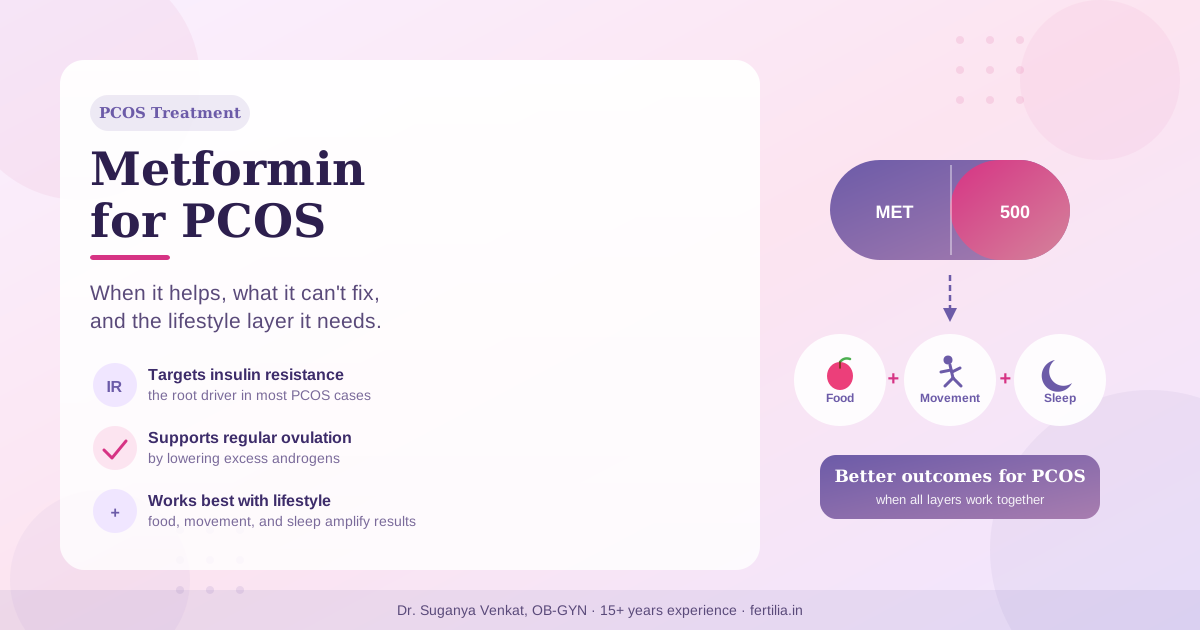
If insulin resistance is driving your androgens, metformin improves insulin sensitivity and indirectly reduces testosterone. It’s often prescribed alongside lifestyle changes as part of a comprehensive PCOS approach. Your gynaecologist handles this prescribing decision based on your metabolic profile.
Oral contraceptive pills (OCPs)
OCPs increase SHBG (which binds and deactivates free testosterone) and suppress ovarian androgen production. They’re often used alongside spironolactone for better results. Not appropriate if you’re trying to conceive, but a valid tool otherwise.
An important note about collaboration with your gynaecologist: These medications are prescription-only for good reason. Your gynaecologist prescribes based on your specific hormonal profile, medical history, and whether you’re trying to conceive. Our role at Fertilia is to address the lifestyle layer, including the dietary, movement, and stress practices that directly improve insulin sensitivity and inflammation. The medical and the lifestyle layers work best together.
💜 Ready to work on the lifestyle layer that supports your PCOS treatment? Connect with Dr. Suganya on WhatsApp to talk through what’s driving your facial hair and what a personalised approach looks like.
Step 4: Facial Hair Removal Methods (Face-Specific Guide)
While you address the hormonal root cause, these methods manage the visible symptom. Here’s the evidence on what works specifically for facial hair in Indian women.
Threading
Threading is the dominant facial hair removal method in India and for good reason. It’s precise, removes hair from the root, and doesn’t require chemicals or heat. It’s safe for all skin tones.
The downside: it’s temporary (2-4 weeks) and frequent threading can cause folliculitis (inflamed follicles) in sensitive skin, which can lead to dark spots on Indian skin (post-inflammatory hyperpigmentation). If you notice darkening of the upper lip area after threading, reduce frequency and apply an ice cube afterward to minimise inflammation.
Waxing (facial)
Waxing removes hair from the root and covers larger areas quickly. The concern for Indian skin tones (Fitzpatrick III-V) is that the heat and trauma from waxing can trigger post-inflammatory hyperpigmentation, particularly on the upper lip. If you’re prone to dark spots, threading is a safer option than waxing for your face.
Laser Hair Reduction (for Indian skin)
Laser is the most effective long-term facial hair removal option, but there are Indian-skin-specific considerations.
- Which laser: Nd:YAG lasers are recommended for Fitzpatrick III-V skin tones (most Indian women). Alexandrite lasers work well for Fitzpatrick III. IPL (Intense Pulsed Light) has a higher side-effect risk for darker skin tones and is less effective for facial hair, which tends to be finer than body hair.
- Number of sessions: Facial hair typically requires more sessions than body hair (8-12 sessions compared to 6-8) because facial hair growth cycles are influenced by ongoing hormonal fluctuations from PCOS. Sessions are usually spaced 4-6 weeks apart.
- When to start: Starting laser after beginning anti-androgen treatment gives better results. If androgens are still high, new follicles keep converting to terminal hairs and you’re chasing the problem.
- Sun protection is essential: Use SPF 30 or higher before and after sessions. UV exposure on freshly treated skin significantly increases pigmentation risk.
- Approximate cost in India: Rs. 2,000-5,000 per facial session depending on the clinic and city. Verify current prices directly with clinics in your area.
Electrolysis
Electrolysis destroys individual hair follicles permanently and works on all hair colours including grey and light hair. It’s slower than laser (treats one follicle at a time) but is the gold standard for permanent removal. For the face, particularly the upper lip and chin, it’s very practical given the small area involved.
What About Home IPL Devices?
Home IPL devices are less powerful than clinical devices and are less effective for facial hair, which is typically finer than body hair. They also carry a higher risk of adverse effects on darker Indian skin tones. If you choose to use one, start with the lowest setting, do a patch test, and always apply sun protection. They’re best used as maintenance between professional sessions, not as a primary treatment.
What to Expect: A Realistic Timeline
This is the part that prevents frustration. Hair follicle growth cycles are approximately 6 months long. Any treatment, medical or cosmetic, takes at least 6-9 months to show clear visible improvement on the face.
Months 1-3: Lifestyle changes begin improving insulin sensitivity. Medical treatment starts. Eflornithine cream (if using) begins slowing growth rate within 4-8 weeks. Continue threading or waxing for cosmetic management.
Months 3-6: Hormonal markers start improving. Free testosterone begins dropping. Begin laser sessions now for best results. Spearmint tea can be added as an adjunct.
Months 6-12: Visible reduction in re-growth rate. Laser continues. Many women notice that threading appointments are needed less frequently and that regrowth is finer. Continue medical treatment as your gynaecologist advises.
Months 12+: Most women with PCOS who stay consistent with treatment see 50-70% reduction in facial hirsutism scores by this point. Some achieve much more. The key variable is consistency with the root-cause work.
For more on this, read our guide on PCOS.
The Emotional Reality (And Why It Matters Clinically)
Research consistently shows higher rates of anxiety, depression, and reduced quality of life in women with facial hirsutism. Studies including Lipton et al. (2006, Fertility and Sterility) found that hirsutism is one of the PCOS symptoms most strongly associated with poor psychological wellbeing, independent of other metabolic features. For Indian women specifically, the social dimensions are real: comments from family, concerns about appearance in photographs, covering the face in close-up photos, extra time in the morning routine before leaving the house.
This is not vanity. Facial appearance carries significant psychological weight in Indian culture, and hirsutism affects it directly. If the emotional impact of facial hair is affecting your daily life, your relationships, or your self-perception, that is a legitimate medical concern and is worth discussing openly with your doctor.
Treatment works. It takes time and it requires working on the hormonal root cause, not just the surface. But the combination of lifestyle changes, appropriate medical support, and the right hair removal approach gives most women a meaningful and lasting improvement.
Common Mistakes That Slow Progress
-
Focusing only on hair removal without addressing hormones. Threading and laser manage the symptom. They don’t turn down the signal that keeps creating new terminal hairs.
-
Starting laser before beginning anti-androgen treatment. Laser works by destroying existing terminal follicles. If new follicles keep converting because androgens are still high, new terminal hairs keep forming and progress stalls.
-
Testing only total testosterone. Free testosterone and SHBG together give the real picture. Many women with significant facial hirsutism have “normal” total testosterone but low SHBG.
-
Expecting fast results. The 6-month hair cycle means patience is a genuine part of treatment. Most women start to see real improvement between months 6 and 9.
-
Treating PCOS as an ovarian problem only. Facial hirsutism reflects a whole-body metabolic picture. Nutrition, movement, and stress each have direct hormonal effects that influence what shows up on your face.
Frequently Asked Questions
Q: I have fine, light upper lip hair that’s getting darker. Does that mean my PCOS is getting worse?
Darkening and thickening of facial hair suggests that androgens are reaching those follicles more actively. It’s a sign that addressing the hormonal driver should be a priority. It doesn’t necessarily mean PCOS has “gotten worse” as a whole, but it’s a signal worth responding to.
Q: My testosterone levels are “normal” but I still have significant facial hair. How is that possible?
Total testosterone can look normal while free testosterone is elevated. Ask your doctor specifically for free testosterone and SHBG. Low SHBG allows more free testosterone to reach your follicles even when total levels appear normal. Additionally, high 5-alpha reductase activity in facial follicles means the conversion to DHT happens aggressively even at moderate androgen levels.
Q: Can spearmint tea replace medical treatment?
No. The evidence for spearmint is promising but comes from short-duration small trials. It’s a useful, safe addition to your treatment plan, but it’s not potent enough to replace anti-androgen medications or meaningful lifestyle changes for moderate-to-severe hirsutism.
Q: Is laser hair removal safe for my skin tone? I’m worried about scarring or darkening.
Nd:YAG laser is specifically designed for darker Indian skin tones (Fitzpatrick III-V) and has a strong safety record when performed by trained practitioners. Avoid Alexandrite laser if you have darker skin. Always do a patch test before a full session, apply SPF 30 before and after sessions, and avoid sun exposure on treated areas. The risk of adverse effects drops significantly with the right laser type and an experienced practitioner.
Q: I’m trying to conceive. Can I still treat facial hirsutism?
Yes, but your options change. Spironolactone is contraindicated in pregnancy and while trying to conceive. The primary tools become lifestyle changes (which improve insulin sensitivity and reduce testosterone naturally), myo-inositol, and hair removal methods. Discuss your specific situation with your gynaecologist, who can advise on medication adjustments while you’re in the conception phase.
For more on this, read our guide on PCOS & Pregnancy. Q: Will the hair come back after I stop treatment?
For hormonal treatments (spironolactone, OCPs), yes. Stopping treatment means the anti-androgen effect stops, and hair may gradually return over several months. Laser-treated follicles that have been destroyed are permanently gone. But new follicles can convert to terminal hair if androgens remain elevated. This is why addressing the root driver long-term (through lifestyle and metabolic health) is the most sustainable strategy.
Q: My mother and sister both have significant facial hair without PCOS. Is mine definitely PCOS-related?
Familial or idiopathic hirsutism (genetic sensitivity with normal or mildly elevated androgens) is possible and distinct from PCOS. Getting a proper PCOS workup (Rotterdam Criteria evaluation: irregular periods, ovarian ultrasound, and androgen blood work) helps distinguish the cause. The treatment approach differs slightly depending on whether it’s idiopathic versus PCOS-driven.
Key Takeaways
- Facial hair follicles are the most androgen-sensitive in the body, which is why the face shows PCOS changes early and visibly
- Free testosterone and SHBG together tell a more accurate story than total testosterone alone
- Addressing the hormonal driver (insulin resistance, adrenal androgens, or inflammation) is the foundation of treatment
- Spearmint tea twice daily has clinical trial support for reducing free testosterone and facial hair growth rate
- Eflornithine cream (Eflora) is the only topical prescription specifically designed for facial hirsutism and reduces growth rate by 50-60%
- For Indian skin tones, Nd:YAG laser is the safest and most effective laser type for facial hair reduction
- Treatment takes 6-9 months minimum. Patience and consistency are part of the clinical plan.
Related reading on the Fertilia blog: PCOS Hair Growth: Why It Happens and What Works covers androgens and body hair broadly. Insulin Resistance and PCOS goes deeper on the metabolic driver. PCOS Belly covers the overlapping insulin resistance picture.
💜 PCOS facial hair is treatable, and you don’t have to figure it out alone. If you want to understand your specific hormonal picture and build a plan that addresses the root cause, reach out to Dr. Suganya on WhatsApp. A 20-minute conversation can clarify more than months of searching online.
Dr. Suganya Venkat, OB-GYN with 15+ years of clinical experience. DNB OB-GYN (GKNM, Coimbatore) · MD Pathology (CMC Vellore) · MBBS with 5 Gold Medals (SRMC).