“I haven’t had a natural period in three years. My doctor keeps giving me tablets to force it, but the moment I stop, it disappears again.”
I hear this in my clinic almost every week. The tablet works. The period comes. The woman stops the tablet. The period vanishes. Three, four, sometimes five years pass this way, with no one explaining what is actually happening inside the body, or what it would take to change it.
This post is that explanation.
Here is what we will cover:
- Why PCOS specifically causes periods to disappear (the hormonal chain, step by step)
- The PCOS drivers that hit your cycle hardest
- What “irregular” versus “absent” periods mean clinically
- How to get your cycles back, both through lifestyle and with medical support
- What realistic progress looks like, and how to know you are moving in the right direction
What Actually Happens to Your Period When You Have PCOS
A period is the result of ovulation. To understand why PCOS takes your period away, you need to understand that the period is not the event. Ovulation is the event. The period is just the consequence.
Here is the normal sequence:
- The brain (hypothalamus and pituitary) sends hormonal signals (FSH and LH) to the ovaries
- One follicle matures, surpasses the others, and releases an egg at ovulation
- The ruptured follicle becomes the corpus luteum, which produces progesterone
- Progesterone builds and maintains the uterine lining
- If there is no fertilisation, progesterone drops, the lining sheds, and you get a period
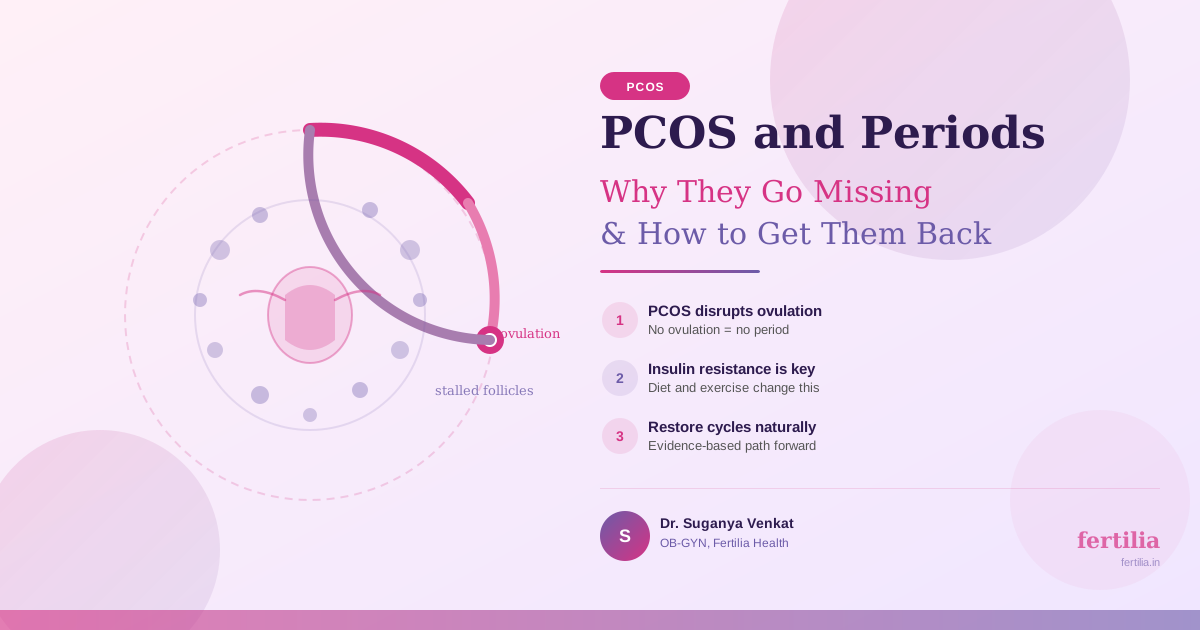
In PCOS, step 2 fails. Follicles start developing but none crosses the finish line. The egg is never released. Without ovulation, there is no corpus luteum. Without a corpus luteum, there is no progesterone. Without progesterone, the uterine lining does not shed on schedule.
This is anovulation. It is the direct hormonal cause of missing periods in PCOS. The blood test or ultrasound that shows multiple small follicles in a “string of pearls” pattern is not showing you a cyst. It is showing you a collection of follicles that started the maturation process and then stalled.
Even with irregular PCOS cycles, you can still learn to recognise when ovulation is actually happening. Our guide on how to track ovulation (5 methods ranked by an OB-GYN) walks through the tools that work even when your cycle is unpredictable.
The Rotterdam Criteria, which set the international standard for PCOS diagnosis, list irregular or absent ovulation as one of the three diagnostic criteria (alongside clinical or biochemical signs of elevated androgens, and polycystic ovary morphology on ultrasound). You need to meet two of the three to receive a diagnosis. Irregular periods are so central to PCOS that they are literally built into the definition of the condition.
The PCOS Drivers That Affect Your Cycle Most
PCOS is one syndrome with multiple biological drivers. Understanding which drivers are active in your case tells you why your cycles behave the way they do, and which interventions will actually move the needle.
Insulin Resistance
This is the most common driver, present in 50 to 80 percent of women with PCOS, including those who are not overweight. When your cells resist insulin, the pancreas compensates by producing more of it. High circulating insulin then acts on the ovaries and pushes them to produce excess androgens, particularly testosterone.
High androgens interfere with follicle maturation directly. The follicles start growing but the hormonal environment is too androgen-heavy for any one follicle to dominate and release. The result: no ovulation, no period.
Insulin resistance also suppresses sex hormone binding globulin (SHBG), which normally keeps testosterone bound and inactive. When SHBG drops, more free testosterone circulates, amplifying the effect.
If your PCOS is driven primarily by insulin resistance, you may notice that your cycles are most disrupted when your diet is high in refined carbohydrates, when you sleep poorly, or when you are under prolonged stress, because all three worsen insulin sensitivity.
For a full breakdown of how insulin resistance drives PCOS symptoms, read our guide on insulin resistance and PCOS. The same insulin-driven pathway also explains why many women with PCOS struggle with abdominal weight gain that won’t respond to standard dieting; our guide on why PCOS belly happens and how to reduce it covers that side of the picture.
Androgen Excess
Whether driven by insulin or by other pathways, high androgens disrupt ovulation at multiple stages. Elevated LH levels (common in PCOS) and a reversed LH-to-FSH ratio create a hormonal environment that stimulates androgen production from the ovarian theca cells while suppressing the FSH signal that a follicle needs to mature fully. The follicle grows a little, then stalls.
This is why blood tests in PCOS often show: elevated LH, low or normal FSH, high free testosterone or DHEA-S, and low SHBG.
Inflammation
Chronic low-grade inflammation is a recognised feature of PCOS, present even in lean women with the condition. Inflammatory signals can directly impair ovarian function, disrupt follicle development, and worsen insulin resistance, creating a cycle that compounds over time. Processed food, sedentary habits, poor sleep, and psychological stress all raise systemic inflammation.
The Hormonal Rebound Driver
A small number of women experience absent periods after stopping combined oral contraceptives (COCs). If periods were regular before starting the pill and become irregular only after stopping, the picture may be different from classic PCOS. This pattern may represent a transient post-pill hormonal adjustment, not true PCOS. ⚠️ If this applies to you, mention the timeline to your doctor before accepting a full PCOS diagnosis. It may not be true PCOS, and the condition is often transient.
What “Irregular” and “Absent” Mean Clinically
There is a difference between a cycle that is 35 days (within normal range for some women), a cycle that is 45 to 60 days (oligomenorrhea: infrequent periods), and a cycle that has not come for three months or more without pregnancy (amenorrhea).
In PCOS, oligomenorrhea is most common. Fewer than eight periods per year is a well-established threshold that doctors use as a clinical marker of anovulatory cycles. If you are getting periods every 45 to 90 days, most of those cycles are likely anovulatory, even if a period does arrive eventually. What is coming is not a period following ovulation. It is the lining shedding because it has built up long enough without progesterone support that it becomes unstable and sheds anyway. This is called breakthrough or anovulatory bleeding.
The practical implication: having a period does not confirm you are ovulating. In PCOS, many women have periods and still do not ovulate regularly.
How to Get Your Periods Back
The goal is not to force a period with a tablet. The goal is to restore ovulation, because that is what produces a real, hormonally driven cycle. Here is how that happens.
Food That Works With Your Hormones
This is the highest-leverage lifestyle change for PCOS periods, because it directly addresses insulin resistance.
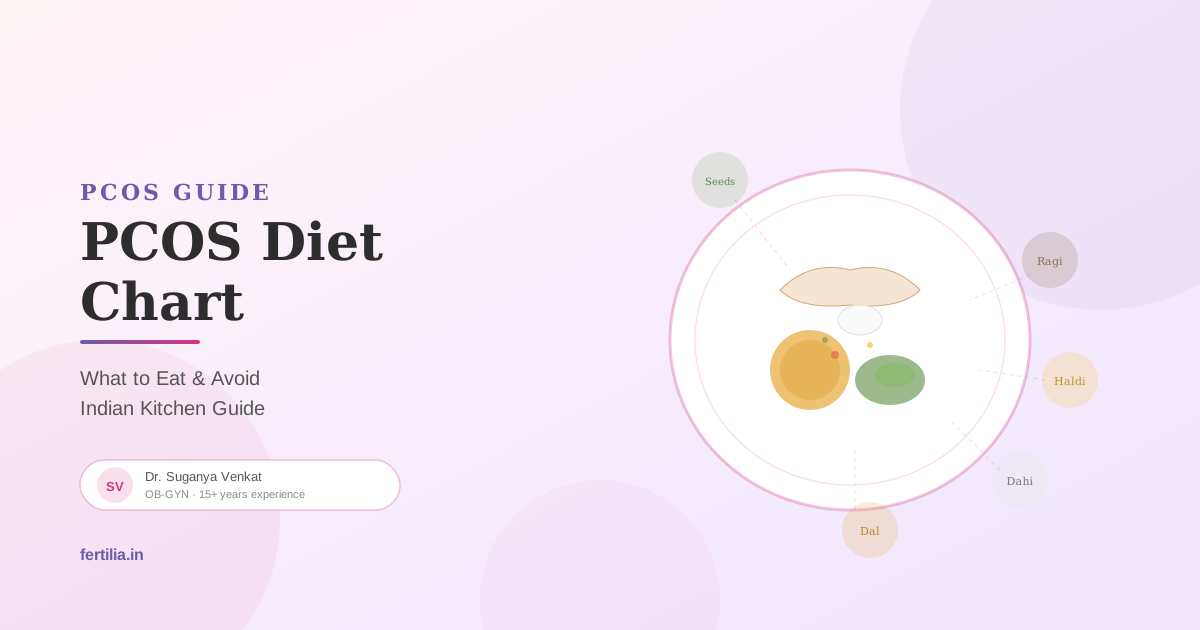
The key shift is reducing the glycemic load of your diet without eliminating carbohydrates entirely. Replace refined grains with whole-grain options. White rice cooked and cooled (as in dahi rice or rice from the previous night) has a lower glycemic impact than freshly cooked rice. Ragi (finger millet) is an excellent base for porridge, idli, or dosa. Dal, sambar, and vegetables eaten before or alongside rice blunt the glucose spike from the rice. Dahi (curd) with meals supports gut health, which in turn influences insulin signalling.
Every meal that combines protein, fat, and fibre with carbohydrate reduces the insulin demand from that meal. Over weeks and months, consistently lower insulin levels reduce the androgen signal to the ovaries, allowing follicle development to progress further toward ovulation.
For specific meal planning guidance, see our PCOS diet chart.
Movement That Supports Ovulation
Exercise improves insulin sensitivity independently of weight loss. A 2013 meta-analysis published in Human Reproduction Update found that exercise alone, without dietary restriction, improved menstrual regularity in women with PCOS. You do not need to lose weight before your periods return. You need to improve the hormonal environment, and exercise is one of the fastest tools for doing that.
The most effective combination for PCOS is:
- 3 to 4 sessions per week of moderate-intensity cardio (brisk walking, cycling, swimming) lasting 30 to 45 minutes
- 2 sessions per week of strength training, because muscle tissue is more insulin-sensitive than fat tissue
You do not need a gym. A daily 30-minute brisk walk after dinner, combined with bodyweight exercises three times a week, has measurable effects on insulin sensitivity within 6 to 8 weeks.
Read more in our detailed guide on PCOS exercise.
Sleep and Stress
These two are underestimated levers. Sleep deprivation of even one night raises cortisol and impairs insulin sensitivity the next day. Chronic stress elevates cortisol persistently, which suppresses GnRH pulsatility (the signal from the hypothalamus that initiates the entire hormonal cascade for ovulation). Women under severe chronic stress can develop hypothalamic amenorrhea layered on top of PCOS, making the picture more complex.
Practical sleep targets: 7 to 8 hours on a consistent schedule, with the bedroom dark and cool, and screens off 30 minutes before bed. For stress, the intervention that has the best evidence in PCOS specifically is structured relaxation: yoga, meditation, or even a daily 10-minute breathing practice. Not because stress is “all in your head” but because the HPA axis (the stress response system) directly influences the HPO axis (the reproductive hormone system).
Talk to Dr. Suganya About Your Cycles
If your periods have been absent or very irregular for more than six months, it is worth having a structured assessment rather than continuing the tablet-stop-disappear cycle indefinitely.
At Fertilia, we run a full hormonal panel (LH, FSH, free testosterone, SHBG, fasting insulin, HOMA-IR, thyroid, prolactin), review your ultrasound findings in the context of Rotterdam Criteria, and build a 90-day plan that targets the specific drivers active in your case.
Chat with Dr. Suganya on WhatsApp for a personalised assessment of your cycles.
Medical Support When Lifestyle Alone Is Not Enough
Lifestyle changes are the foundation. For some women, particularly those with severe insulin resistance or long-standing amenorrhea, medical support accelerates the process or is needed to restart ovulation.
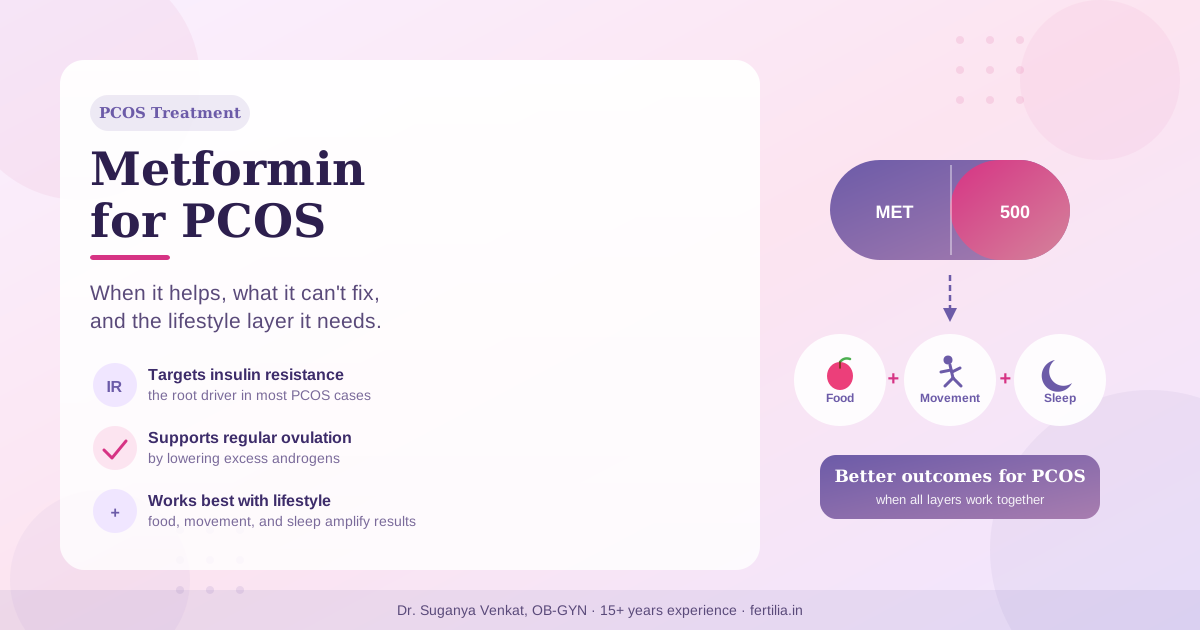
Metformin is an insulin sensitiser commonly used in PCOS when insulin resistance is confirmed. It works by lowering the insulin signal to the ovaries, which over time allows androgen levels to drop and follicle development to progress. A 2003 systematic review by Lord and colleagues found metformin improved ovulation rates and menstrual cyclicity compared to placebo in women with PCOS, particularly when insulin resistance was present. For more detail on when metformin is the right tool, read our post on metformin for PCOS.
Letrozole or clomiphene are ovulation-induction agents used when a woman wants to conceive and lifestyle alone has not restored ovulation. These are short-course medications given in the first half of the cycle to stimulate follicle maturation. They do not fix the underlying hormonal environment; they provide a pharmacological push to get one cycle to ovulate. Alongside them, the lifestyle and metabolic work matters because it affects egg quality and early pregnancy outcomes.
Cyclic progesterone is sometimes used to induce withdrawal bleeding in women with very long-standing amenorrhea, to prevent the uterine lining from thickening without any hormonal fluctuation (a risk for endometrial health). This is different from treating the cause. It manages one downstream consequence while the underlying work continues.
The right combination for you depends on your specific hormonal profile, whether you are trying to conceive now, and how your body has responded to lifestyle changes so far. This is a conversation for your treating doctor.
What Realistic Progress Looks Like
Women sometimes expect that six weeks of dietary changes should produce a perfect 28-day cycle. That is not how hormonal systems work.
Here is what realistic recovery typically looks like:
Weeks 1 to 4: Improved energy, reduced bloating, better sleep. No visible cycle change yet, but insulin sensitivity is improving at the cellular level.
Weeks 4 to 8: Some women notice increased cervical mucus, mild ovulatory twinges (Mittelschmerz), or slight spotting that indicates hormonal activity is picking up.
Month 2 to 3: First spontaneous cycle in women who had oligomenorrhea. It may be a 40 to 50 day cycle, not 28, and that is progress. The cycle is ovulatory.
Month 3 to 6: Cycle length gradually normalises toward 28 to 35 days in most women whose primary driver was insulin resistance with lifestyle root causes.
Beyond 6 months: Women with long-standing amenorrhea (3 years or more) or severe insulin resistance may need more time, particularly if they cannot or choose not to use metformin. Progress is still happening even when periods are not yet regular.
One of our PCOS program members shared: “Without even taking any medications for this cycle I got my periods today.” What those words represent is months of consistent dietary work, daily movement, and sleep discipline, not a magic fix.
Another of our patients (testimonial ID: GR-13) had been to multiple doctors over five years. Tablets brought her period temporarily. Nothing lasted. After three months on Fertilia’s structured dietary plan, her periods became regular every month. She wrote: “Since I started the diet plan with Fertilia, my periods have been regular every month.”
The timeline is longer than anyone wants. But the mechanism is real, and the outcomes are lasting when the underlying drivers are addressed rather than suppressed.
Practical Takeaways
- Missing periods in PCOS are caused by failed ovulation, not a uterine problem. Treat the root cause.
- Insulin resistance is the most common and most modifiable PCOS driver. Diet and exercise directly address it.
- Cycle tracking (basal body temperature, cervical mucus, or a monitoring app) helps you detect ovulatory activity before your period even returns.
- “Getting a period from a tablet” is not the same as “getting your period back.” The goal is spontaneous ovulation.
- Weight loss helps, but it is not a prerequisite. Improving insulin sensitivity is the target, and that begins with the first dietary change, not the last kilogram.
- If periods have been absent for more than six months, get a full hormonal workup. Thyroid and prolactin problems can mimic PCOS and must be ruled out.
FAQ
Why does PCOS cause periods to disappear? PCOS disrupts the hormonal signals that trigger ovulation. Without ovulation, no progesterone is produced, and without progesterone, the uterine lining does not shed on schedule. The period is absent because ovulation failed, not because anything is wrong with the uterus itself.
Is it harmful to go months without a period in PCOS? Prolonged anovulation means the uterine lining continues to build without the cyclic shedding that progesterone produces. Over time, this can increase the risk of endometrial hyperplasia. This is one reason doctors sometimes prescribe cyclic progesterone to women with PCOS who have not had periods for three or more months. It is worth discussing with your gynaecologist if this applies to you.
How long does it take to get periods back naturally with PCOS? Most women who address insulin resistance through dietary changes and exercise see cycle improvement within 3 to 6 months. Women with long-standing amenorrhea or severe metabolic dysfunction may take longer. There is no single timeline because the answer depends on the severity of your insulin resistance and how consistently the lifestyle changes are applied.
Will losing weight fix my PCOS periods? Weight loss can significantly improve PCOS symptoms when excess weight is contributing to insulin resistance. However, weight loss is not the only path. Lean women with PCOS can restore cycles through dietary quality and exercise without significant weight change. The target is insulin sensitivity, which improves with lifestyle changes regardless of whether the number on the scale changes.
Does the contraceptive pill treat PCOS periods? The pill does not treat PCOS. It suppresses the hypothalamic-pituitary-ovarian axis entirely, replacing the cycle with a withdrawal bleed from the tablet. When you stop the pill, the underlying PCOS is exactly where you left it. The pill is a valid tool for managing specific symptoms (acne, heavy bleeding, endometrial protection) in the years before you are ready to try to conceive, but it does not address the root cause.
Can I get pregnant if my PCOS periods are irregular or absent? Irregular or absent periods indicate infrequent or absent ovulation. Pregnancy requires ovulation. If you are trying to conceive with PCOS, the focus should be on restoring ovulation, not just inducing a period. Many women with PCOS conceive naturally once insulin resistance is addressed. If cycles do not normalise with lifestyle changes, ovulation-induction medications (letrozole or clomiphene) can be used alongside a healthy hormonal foundation.
Ready to Understand Your Cycle?
If your period has been missing for months, or if the tablet-stop-disappear cycle has been going on for years, it is time for a structured assessment rather than another prescription.
Dr. Suganya Venkat (DNB OB-GYN, GKNM Hospital Coimbatore; MD Pathology, CMC Vellore; 5x Gold Medallist, SRMC; 15+ years clinical experience) takes a full hormonal and metabolic assessment approach to PCOS cycles, identifying the specific drivers active in your case and building a 90-day plan around them.
Message Dr. Suganya on WhatsApp to book your consultation.