If you’ve spent any time on Instagram looking for PCOS advice, you’ve probably come across seed cycling. Eat flaxseeds and pumpkin seeds for the first half of your cycle, switch to sunflower and sesame seeds for the second half, and watch your hormones “balance themselves.”
It sounds simple. Almost too simple. Which is exactly why many of my patients ask me: does seed cycling actually work for PCOS?
The honest answer? It’s complicated. There’s real science behind the individual seeds, but the specific “cycling” protocol doesn’t have decades of research behind it. Let me walk you through what we actually know, so you can make an informed decision.
What Is Seed Cycling?
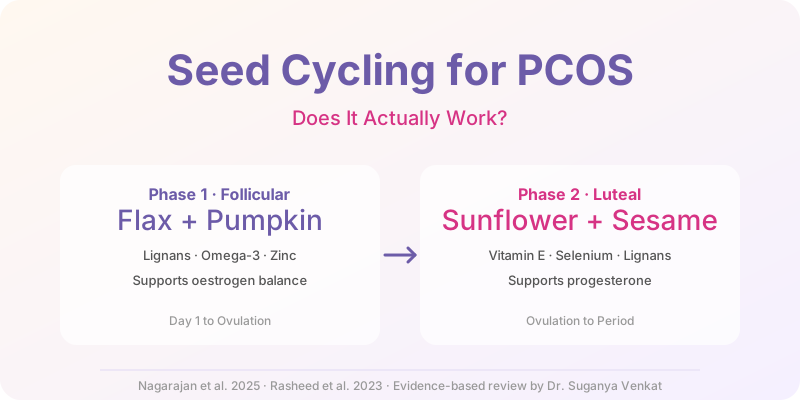
Seed cycling is a practice where you eat specific seeds during the two main phases of your menstrual cycle:
Phase 1. Follicular Phase (Day 1 to Ovulation)
- 1 tablespoon ground flaxseeds
- 1 tablespoon pumpkin seeds
Phase 2. Luteal Phase (Ovulation to Period)
- 1 tablespoon sunflower seeds
- 1 tablespoon sesame seeds
The idea is that Phase 1 seeds support healthy oestrogen levels, while Phase 2 seeds support progesterone production. For women with PCOS who have irregular or absent periods, the typical recommendation is to follow a 28-day calendar cycle (Day 1-14 seeds, Day 15-28 seeds) until natural cycles resume.
The Science Behind Each Seed
Before we evaluate seed cycling as a whole, let’s look at what research says about each seed individually. This is where things get genuinely interesting.
Flaxseeds. The Most Studied
Flaxseeds are rich in lignans: plant compounds that have weak oestrogenic activity and can help modulate oestrogen levels in the body. They’re also an excellent source of omega-3 fatty acids (ALA).
What the research shows:
- A study by Nowak et al. (2007) found that flaxseed supplementation increased the number of ovulatory cycles in regularly cycling women
- Phipps et al. (1993) demonstrated that flaxseed consumption lengthened the luteal phase and improved the progesterone-to-oestrogen ratio
- Lignans in flaxseeds can help reduce excess androgens, a key concern in PCOS (Brooks et al., 2004)
For PCOS specifically: Flaxseeds may help with androgen excess (one of the main PCOS drivers) through their lignan content. This is one of the more evidence-backed components of seed cycling.
Pumpkin Seeds. Zinc Powerhouse
Pumpkin seeds are particularly rich in zinc: a mineral that plays a crucial role in reproductive health.
What the research shows:
- Zinc deficiency is associated with menstrual irregularities and impaired ovulation (Nasiadek et al., 2020)
- Women with PCOS tend to have lower zinc levels compared to women without PCOS (Kanafchian et al., 2020)
- Zinc supplementation has been shown to improve insulin resistance markers in women with PCOS (Foroozanfard et al., 2015)
Pumpkin seeds also provide magnesium and healthy fats, both beneficial for women with PCOS.
Sesame Seeds. Lignan-Rich
Sesame seeds are another excellent source of lignans (particularly sesamin and sesamolin).
What the research shows:
- Wu et al. (2006) found that sesame consumption improved blood lipid profiles and enhanced antioxidant status in postmenopausal women
- Sesame lignans have anti-inflammatory properties, which may benefit women with PCOS where chronic low-grade inflammation is often a driver (González, 2012)
Sunflower Seeds. Vitamin E Source
Sunflower seeds provide vitamin E and selenium, both important for reproductive health.
What the research shows:
- Vitamin E supplementation has been shown to improve endometrial thickness in women undergoing fertility treatment (Hashemi et al., 2019)
- Selenium supports thyroid function, relevant since many women with PCOS also have thyroid issues
What Does the Research Say About Seed Cycling Itself?
Here’s where we need to be honest about the distinction between the individual seeds (reasonably well-studied) and the specific cycling protocol (less studied).
The 2025 Systematic Review
A systematic review by Nagarajan et al. (2025), published in Cureus, evaluated the existing evidence on seed cycling as an integrative therapy for hormonal balance. Their findings:
- Seed cycling shows promise as a complementary approach for menstrual regulation
- The individual seeds contain nutrients and phytocompounds relevant to hormone health
- However, they noted that most studies examined individual seeds, not the cycling protocol itself
- They concluded it could be a “positive complementary therapy” but called for more rigorous research
The 2023 PCOS-Specific Study
Rasheed et al. (2023), published in Frontiers in Nutrition, studied seed cycling specifically as adjacent therapy for PCOS. Their conclusion: the approach showed “significant results in comparison to placebo”, though the study had a small sample size.
A Case Study Worth Noting
Dhamija et al. (2025) published a case study of a 29-year-old woman with primary infertility who followed a seed cycling protocol alongside other naturopathic interventions. The results were positive, but case studies are the lowest level of evidence, and the protocol wasn’t used in isolation.
My take as a practitioner: The evidence is emerging and encouraging, but not definitive. We don’t yet have large randomised controlled trials that isolate seed cycling alone. What we DO have is solid evidence for the individual nutrients these seeds provide.
How PCOS Changes the Picture
PCOS adds specific complexity to seed cycling because many women with PCOS don’t have regular cycles. If you’re not ovulating regularly, the “follicular phase” and “luteal phase” distinction becomes theoretical.
Here’s what I tell my patients:
If you have somewhat regular periods (25-35 day cycles):
Follow the standard protocol, seeds 1 & 2 from period to ovulation, seeds 3 & 4 from ovulation to next period.
If your periods are very irregular or absent:
Use a calendar-based approach, seeds 1 & 2 on Days 1-14, seeds 3 & 4 on Days 15-28. Pick any day to start as “Day 1.”
Either way:
Give it at least 3 months before evaluating. Hormonal changes don’t happen overnight.
The Practical Guide. How to Do Seed Cycling in India
One thing I love about seed cycling is that all four seeds are easily available and affordable in India. You don’t need to order anything special.
What You Need
| Seed | Hindi/Tamil Name | Where to Buy | Monthly Cost |
|---|---|---|---|
| Flaxseeds (alsi) | अलसी / ஆளி விதை | Any kirana store | ₹50-80 |
| Pumpkin seeds | कद्दू के बीज / பூசணி விதை | Supermarket, online | ₹100-150 |
| Sesame seeds (til) | तिल / எள் | Any kirana store | ₹30-50 |
| Sunflower seeds | सूरजमुखी बीज / சூரியகாந்தி விதை | Supermarket, online | ₹80-120 |
Total monthly cost: approximately ₹260-400: far less than most supplements.
How to Prepare and Eat Them
Flaxseeds MUST be ground. Whole flaxseeds pass through your digestive system undigested. Grind them in a mixer just before eating, or grind a week’s worth and store in an airtight container in the fridge.
Simple ways to include seeds in your Indian diet:
- In your morning dosa/idli batter: mix ground seeds into the batter
- Chutney: make a seed-based chutney (flaxseed chutney is common in Maharashtra and Karnataka)
- Sprinkled on curd/raita: mix seeds into your afternoon curd
- In smoothies: blend with banana, curd, and a little honey
- Laddoos: make seed laddoos with jaggery (great for Phase 1 with flax + pumpkin)
- On salads or poha: sprinkle as a topping
- Mixed into roti dough: knead ground seeds into your wheat flour
A Sample Day (Phase 1)
- Breakfast: Ragi porridge with 1 tbsp ground flaxseed stirred in
- Snack: A handful of pumpkin seeds with your tea
- Lunch: Normal meal + flaxseed chutney on the side
- Evening: Curd with pumpkin seeds sprinkled on top
💬 Need a complete PCOS diet plan that includes seed cycling? Chat with Dr. Suganya on WhatsApp, she’ll help you build a plan that works with your life.
What Seed Cycling CAN and CAN’T Do
Let me be direct about this, because I’ve seen too many social media posts promise miracles.
What it CAN do ✅
- Provide important nutrients (omega-3s, zinc, selenium, vitamin E, lignans) that many women with PCOS are deficient in
- Support overall hormonal health through phytoestrogens and anti-inflammatory compounds
- Give you a sense of agency: doing something proactive for your health every day
- Complement your medical treatment: it won’t interfere with metformin, letrozole, or other PCOS medications
- Improve gut health through fibre content (gut health and PCOS are deeply connected)
What it CAN’T do ❌
- Replace medical treatment if you have insulin resistance, high androgens, or other PCOS-related issues that need clinical management
- Guarantee period regularity on its own. PCOS has multiple drivers (insulin resistance, adrenal androgen excess, chronic inflammation) that seeds alone may not address
- Work overnight: expect to give it 3-6 months
- Cure PCOS: nothing cures PCOS, but it can be managed effectively
Who Should Try Seed Cycling?
Seed cycling is worth trying if you:
- Have PCOS and want to add a natural, food-based approach alongside your current treatment
- Are looking for an affordable, low-risk way to support your hormonal health
- Don’t have any seed allergies (check with your doctor if you’re unsure)
- Are willing to be consistent for at least 3 months
It may not be the best first step if you:
- Have severe insulin resistance that needs metformin or medical management first
- Have completely absent periods for 6+ months, see a doctor before trying dietary approaches alone
- Are looking for a single solution for PCOS, seed cycling works best as part of a comprehensive approach
The Bigger Picture. Seeds Are Part of the Answer
Here’s what I’ve observed in my practice: the women who see the best results with PCOS don’t rely on any single intervention. They combine:
- Nutrition (including approaches like seed cycling, and understanding why PCOS causes stubborn belly fat)
- Movement (even 30 minutes of walking daily makes a difference)
- Sleep (7-8 hours, this affects insulin sensitivity more than most people realise)
- Stress management (cortisol directly worsens PCOS symptoms)
- Medical support when needed (there’s no shame in needing metformin or other medications)
Seed cycling fits beautifully into #1. It gives you a daily practice, it provides real nutrients, and the emerging research supports its potential. Just don’t expect it to do the work of all five pillars on its own.
Frequently Asked Questions
Can I do seed cycling if I’m on birth control pills?
Yes, seed cycling is safe alongside oral contraceptives. However, since the pill overrides your natural cycle, the “cycling” aspect becomes less relevant. You’d still get the nutritional benefits of the seeds themselves.
Do I need to eat seeds raw or can I cook them?
Raw or lightly roasted is best. Flaxseeds should always be ground: whole flaxseeds pass through undigested. Avoid deep-frying as it destroys omega-3 fatty acids. Light roasting of pumpkin, sunflower, and sesame seeds is fine.
How long before I see results?
Most practitioners recommend giving seed cycling 3-6 months. Hormonal changes are gradual. If your primary concern is period regularity, track your cycles during this period.
Can seed cycling help with PCOS hair growth (hirsutism)?
Possibly. Flaxseed lignans have been shown to help reduce androgen levels (Brooks et al., 2004), and excess androgens drive hirsutism in PCOS. But significant improvement in hair growth typically requires additional interventions.
Is it safe during pregnancy?
Flaxseeds in large amounts are sometimes avoided during pregnancy due to their phytoestrogenic properties. If you’re trying to conceive or are pregnant, discuss with your doctor before continuing seed cycling. Small amounts in regular diet are generally considered safe.
Can men benefit from these seeds too?
Yes. Pumpkin seeds and sunflower seeds are excellent for male reproductive health, zinc and selenium support sperm quality. However, the “cycling” protocol is specifically designed around the female menstrual cycle.
Where can I buy quality seeds in India?
Any well-stocked kirana store will have flaxseeds (alsi) and sesame seeds (til). Pumpkin and sunflower seeds are widely available on Amazon, BigBasket, or in supermarkets like D-Mart and Reliance Fresh. Buy from trusted brands and store in airtight containers.
The Bottom Line
Seed cycling isn’t a miracle cure for PCOS, but it’s also not a hoax. The individual seeds contain well-studied nutrients that support hormonal health. The specific cycling protocol is newer to research, but the 2025 systematic review and recent studies suggest genuine promise.
At ₹300-400 per month, with virtually no side effects, and solid nutritional value regardless of the cycling aspect. It’s one of the more sensible natural approaches you can add to your PCOS management plan.
Just don’t let it be your ONLY plan.
💜 Living with PCOS and not sure where to start? Dr. Suganya creates personalised 90-day programs that combine nutrition, lifestyle changes, and medical support, tailored to YOUR specific PCOS drivers. Start a conversation on WhatsApp, no pressure, just guidance.
References
- Nagarajan DR et al. (2025). Efficacy of Seed Cycling as an Integrative Therapy for Hormonal Balance. Cureus. PMID: 41018334.
- Rasheed N et al. (2023). As adjacent therapy to treat polycystic ovary syndrome: seed cycling. Frontiers in Nutrition. PMC10261760.
- Dhamija P et al. (2025). Seed Cycling and Hormonal Balance: A Case Study. Cureus. PMID: 40511049.
- Phipps WR et al. (1993). Effect of flax seed ingestion on the menstrual cycle. J Clin Endocrinol Metab. 77(5):1215-9.
- Nowak DA et al. (2007). The effect of flaxseed supplementation on hormonal levels. Nutr Cancer. 58(2):171-6.
- Brooks JD et al. (2004). Supplementation with flaxseed alters estrogen metabolism. Cancer Epidemiol Biomarkers Prev. 13(8):1438-45.
- Kanafchian M et al. (2020). Status of serum zinc in polycystic ovary syndrome. Biol Trace Elem Res. 193(1):34-41.
- Foroozanfard F et al. (2015). Effects of zinc supplementation on markers of insulin resistance. Exp Clin Endocrinol Diabetes. 123(4):215-20.
- González F (2012). Inflammation in Polycystic Ovary Syndrome. Best Pract Res Clin Endocrinol Metab. 26(2):171-180.
- Wu WH et al. (2006). Sesame ingestion affects sex hormones, antioxidant status, and blood lipids. J Nutr. 136(5):1270-5.