Let’s start with the truth that most people won’t tell you: losing weight with PCOS is genuinely harder than losing weight without it. It’s not in your head. It’s not because you’re lazy. And it’s definitely not because you’re not trying hard enough.
If you have PCOS and you’ve been struggling with weight despite doing “everything right,” there’s a biological reason for it. And understanding that reason is the first step to actually making progress.
I’ve worked with hundreds of women with PCOS over the years, and the pattern is almost always the same: they’ve tried multiple diets, they’ve exercised intensely, they’ve felt frustrated and blamed themselves when nothing worked. The problem was never their effort, it was their approach.
This guide will explain why PCOS makes weight loss difficult, what the science actually says works, and how to build a sustainable approach that fits into an Indian lifestyle.
For more on this, read our guide on PCOS Weight Loss Diet.
Why Is Weight Loss So Hard with PCOS?
To understand why the scale won’t budge, you need to understand what’s happening inside your body.
The Insulin Resistance Connection
This is the single most important thing to understand about PCOS and weight: 70-80% of women with PCOS have insulin resistance, even if they’re not overweight (Stepto et al., 2013, Human Reproduction Update).
For more on this, read our guide on Insulin Resistance & PCOS. Here’s what happens:
- Your body produces insulin after you eat (this is normal)
- With insulin resistance, your cells don’t respond well to insulin
- Your pancreas produces more insulin to compensate
- High insulin levels tell your body to store fat, especially around the abdomen
- High insulin also stimulates your ovaries to produce more androgens (male hormones)
- Higher androgens cause more weight gain, acne, hair loss, and irregular periods
This is why PCOS weight gain is different. It’s not just about calories in vs calories out. Your hormonal environment is actively working against you, making it easier to gain weight and harder to lose it.
The Cortisol Factor
Many women with PCOS also have elevated cortisol levels. Cortisol is your stress hormone, and when it’s chronically elevated, it:
- Increases appetite and cravings (especially for sugary, carb-heavy foods)
- Promotes belly fat storage
- Disrupts sleep (which further affects weight)
- Worsens insulin resistance
This is why crash diets and extreme exercise often backfire with PCOS. They raise cortisol, which makes insulin resistance worse, which makes weight loss even harder. It’s a vicious cycle.
A real example of what sustainable PCOS weight loss looks like: Gowri lost 14 kg in 3 months (95 kg to 81 kg) with balanced Indian meals and consistent walking, no crash diet. Her HbA1c dropped from 9.8% to 6.2% over the same window.
For more on this, read our guide on Best Exercise for PCOS.
The Inflammation Link
PCOS is also associated with chronic low-grade inflammation. This inflammation:
- Worsens insulin resistance
- Promotes fat storage
- Makes you feel tired and sluggish
- Contributes to water retention and bloating
Many women with PCOS feel like they “look 3 months pregnant” by evening. That’s inflammation and bloating, not actual fat gain.
What Doesn’t Work (Stop Doing These)
Before we talk about what works, let’s address the approaches that are either ineffective or actively harmful for PCOS.
1. Extreme Calorie Restriction
Eating 800-1000 calories a day might show results for a week, but it crashes your metabolism, spikes cortisol, and sends your body into survival mode. For women with PCOS, this is particularly damaging because it worsens the hormonal imbalance that caused the weight gain in the first place.
What happens: You lose some weight initially (mostly water and muscle), then plateau, then gain it all back with interest. Sound familiar?
2. Cutting Out All Carbs
The “no rice, no roti, no fruit” approach is neither sustainable nor necessary. Your body needs carbohydrates, the key is choosing the right kind and pairing them properly.
Indian women who cut all carbs often end up:
- Feeling exhausted and irritable
- Bingeing on the weekends
- Losing muscle instead of fat
- Having worse period irregularity
3. Only Doing Cardio
Running on the treadmill for an hour every day without any strength training is one of the least effective approaches for PCOS weight loss. Excessive cardio can actually raise cortisol and make things worse.
4. Detox Teas and Supplements
No amount of green tea, apple cider vinegar, or “fat-burning” supplements will fix insulin resistance. Some may have modest benefits, but none are a replacement for the fundamental changes that actually work. (Wondering about seed cycling for PCOS? We reviewed the research, some seeds help, but not the way Instagram claims.)
What Actually Works: The Evidence-Based Approach
1. Fix Insulin Resistance First
This is the foundation. Everything else is secondary.
How to improve insulin sensitivity:
-
Eat protein and fiber with every meal. This slows down glucose absorption and reduces insulin spikes. A roti with dal and sabzi is far better than a roti with just aloo.
-
Don’t eat carbs alone. A banana by itself will spike your blood sugar. A banana with a handful of almonds won’t. Always pair carbs with protein or healthy fat.
-
Eat your vegetables first. Research shows that eating fibre-rich vegetables before carbs in a meal can reduce glucose spikes by up to 40% (Shukla et al., 2015, Diabetes Care).
-
Move after meals. A 10-15 minute walk after lunch or dinner significantly improves insulin sensitivity. This is one of the simplest, most effective things you can do.
-
Consider inositol. Myo-inositol and D-chiro-inositol (in a 40:1 ratio) have strong evidence for improving insulin resistance in PCOS (Unfer et al., 2017, Gynecological Endocrinology). Ask your doctor about this.
2. Eat for Blood Sugar Stability (Not Calorie Counting)
Forget counting every calorie. Focus instead on keeping your blood sugar stable throughout the day.
A PCOS-friendly Indian diet looks like this:
Breakfast options:
- Ragi dosa with coconut chutney and sambar
- Moong dal cheela with mint chutney
- Besan cheela with vegetables
- Dahi (curd) with soaked almonds, walnuts, and flaxseeds
- Vegetable poha with peanuts (moderate portion)
Lunch:
- Brown rice or hand-pounded rice (1 small cup) with dal, sabzi, and dahi
- Roti (1-2) with rajma/chole and a large portion of salad
- Millet rice (jowar, bajra, or ragi) with sambar and vegetables
Dinner (lighter than lunch):
- Dal khichdi with vegetables and ghee
- Vegetable soup with multigrain roti
- Grilled paneer or tofu with stir-fried vegetables
- Moong dal with rice (small portion) and sabzi
Snacks:
- Roasted chana or makhana
- A small handful of mixed nuts
- Cucumber and carrot with hummus
- Sprout chaat with lemon and chaat masala
- Buttermilk (chaas) with roasted cumin
Key principles:
- Protein at every meal (dal, dahi, paneer, eggs, chicken, fish)
- Healthy fats daily (ghee, coconut oil, nuts, seeds, avocado)
- Fiber-rich foods (vegetables, whole grains, legumes)
- Limit refined carbs (maida, white bread, packaged biscuits, sugary drinks)
- Don’t skip meals: long gaps between meals worsen insulin resistance
3. Strength Training > Cardio
This is the game-changer that most women with PCOS miss.
Why strength training works better than cardio for PCOS:
- Builds muscle mass, which improves insulin sensitivity 24/7 (not just during exercise)
- Doesn’t spike cortisol the way intense cardio does
- Improves metabolic rate: more muscle = more calories burned at rest
- Reduces androgen levels over time
- Improves body composition even if the scale doesn’t change dramatically
A practical PCOS exercise plan:
- 3-4 days of strength training (bodyweight exercises, resistance bands, or weights)
- 2-3 days of moderate walking (30-40 minutes, brisk but conversational)
- Daily 10-15 minute post-meal walks
- Yoga 1-2 times per week (especially helpful for cortisol and sleep)
You don’t need a gym membership. Squats, lunges, push-ups, planks, and resistance band exercises at home are perfectly effective.
💜 Struggling with PCOS weight loss despite trying everything? Dr. Suganya creates personalised plans based on your bloodwork, not generic advice. Talk to her on WhatsApp →
Start small. If you’re not exercising at all right now, start with 15 minutes of walking after dinner. Build from there.
4. Prioritize Sleep
This one sounds too simple to be important, but it’s critical.
Poor sleep directly worsens PCOS by:
- Increasing insulin resistance, even one night of poor sleep reduces insulin sensitivity by up to 25% (Donga et al., 2010, Journal of Clinical Endocrinology & Metabolism)
- Raising cortisol levels
- Increasing ghrelin (hunger hormone) and decreasing leptin (fullness hormone)
- Making you crave high-carb, high-sugar foods the next day
Sleep fixes for PCOS:
- Aim for 7-8 hours of sleep (non-negotiable)
- Stop screens 1 hour before bed
- Keep your bedroom cool and dark
- Have dinner at least 2-3 hours before sleeping
- Consider magnesium glycinate before bed (helps both sleep and insulin sensitivity)
5. Manage Stress (This Is Not Optional)
Chronic stress is not just an emotional problem. It’s a hormonal one. For women with PCOS, stress management is as important as diet and exercise.
Practical stress management:
- 10 minutes of deep breathing daily (box breathing or pranayama)
- Limit social media (comparison is a major stress trigger)
- Say no to things that drain you
- Spend time in nature (even a park)
- Talk to someone: a friend, family member, or professional
The 5-7% Rule: Why Small Wins Matter
Here’s the most encouraging piece of research about PCOS and weight: you don’t need to lose a lot of weight to see dramatic improvements.
Studies consistently show that losing just 5-7% of your body weight can (Kiddy et al., 1992, Human Reproduction; Pasquali et al., 2003, Human Reproduction Update):
- Restore regular ovulation
- Reduce androgen levels by 30-40%
- Improve insulin sensitivity significantly
- Reduce acne and excess hair growth
- Improve fertility outcomes
For a 75 kg woman, that’s just 4-5 kg. Not 20 kg. Not fitting into your college jeans. Just 4-5 kg of sustained, healthy weight loss.
This is why sustainable, slow progress beats dramatic crash diets every single time.
What About Medications?
Some medications can support weight loss in PCOS when combined with lifestyle changes:
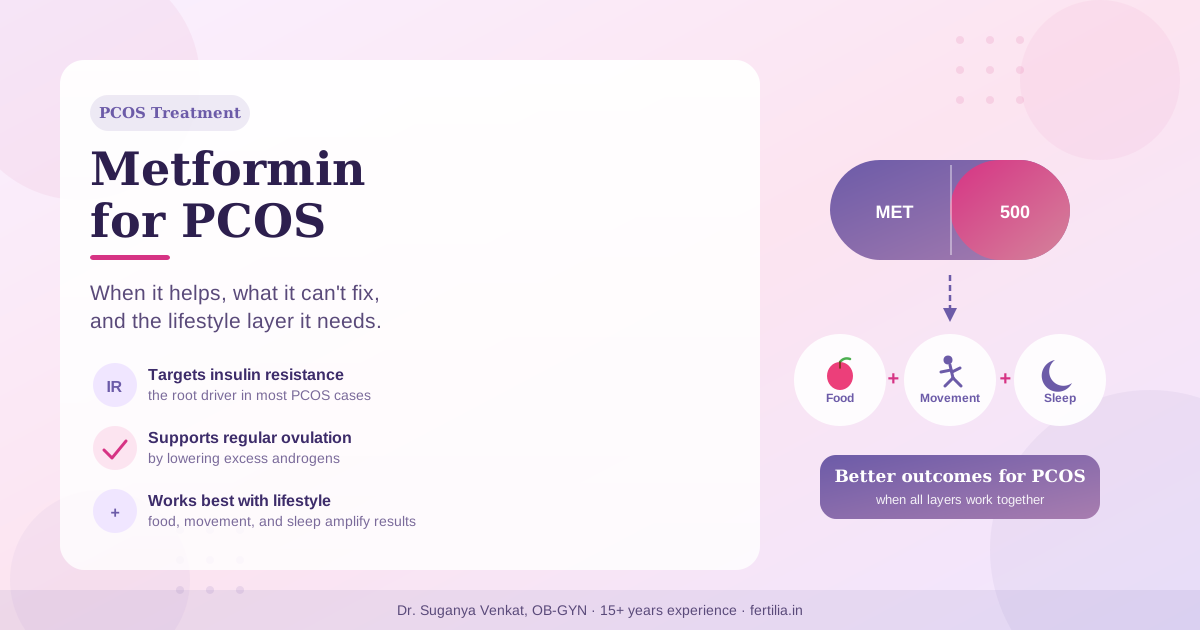
- Metformin: Improves insulin resistance and can support modest weight loss. Widely prescribed and well-studied.
- Inositol: A supplement (not technically a medication) with good evidence for insulin resistance in PCOS.
- Ozempic/Semaglutide: Newer medications showing promise for PCOS weight loss, but availability and cost in India are still barriers.
Important: Medication works best alongside lifestyle changes, not instead of them. And any medication should be prescribed by your doctor based on your specific situation.
Common Mistakes Indian Women with PCOS Make
- Skipping breakfast: This worsens insulin resistance. Always eat within 1-2 hours of waking.
- Drinking fruit juice: Even fresh juice spikes blood sugar. Eat the whole fruit instead.
- Avoiding ghee and fats: Healthy fats actually help with PCOS. The low-fat era was wrong.
- Over-exercising when stressed: More is not always better. Intensity should match your recovery capacity.
- Comparing progress to others: Your PCOS is different from someone else’s. Compare yourself to where you were last month, not to someone on Instagram.
- Giving up after 2 weeks: Hormonal changes take 2-3 months to show. The first month is the hardest.
A Realistic Timeline
If you’re following the right approach (blood sugar management + strength training + sleep + stress control), here’s what to expect:
- Week 1-2: Less bloating, slightly more energy, better sleep
- Month 1: 1-2 kg loss (some may be water weight), reduced cravings
- Month 2-3: Consistent 0.5-1 kg/month loss, better period regularity
- Month 3-6: Noticeable body composition changes, clearer skin, more regular cycles
- Month 6-12: Sustained progress, significantly improved PCOS markers on blood tests
The scale may not move linearly. You might lose nothing for 3 weeks, then drop 1.5 kg in a week. This is normal with PCOS. Trust the process.
When to Get Help
You should work with a doctor or specialist if:
- You’ve been consistent for 3+ months with no change at all
- Your periods have stopped completely
- You’re experiencing significant hair loss
- You want to get pregnant and PCOS is affecting your fertility
- You feel depressed or hopeless about your weight
- You have signs of severe insulin resistance (dark skin patches on neck/underarms, skin tags)
PCOS is a medical condition. There’s no shame in needing medical support alongside lifestyle changes.
The Bottom Line
PCOS weight loss is harder, but it’s not impossible. The key is working with your biology instead of against it:
- Address insulin resistance through diet, movement, and sleep
- Strength train more than you do cardio
- Stop punishing your body with extreme diets and excessive exercise
- Be patient: aim for 0.5-1 kg per month, not 5 kg in a week
- Get the right support: from a doctor who understands PCOS, not from Instagram
Your body isn’t broken. It’s responding to a hormonal environment that can be changed, slowly, steadily, and sustainably.
For more on managing PCOS beyond weight, read our complete PCOS guide. If fertility is your concern, here’s what you can do. And if you’re approaching your 40s, know that the weight challenges don’t end with PCOS, menopause brings its own hormonal weight shifts, and understanding them early helps.
Frequently Asked Questions
How much weight do I need to lose to see PCOS improvements?
Even 5-7% of your body weight can restore ovulation and improve symptoms significantly. For a 75 kg woman, that’s just 4-5 kg. You don’t need to reach an “ideal weight”, small losses have outsized hormonal benefits.
Why do I gain weight so easily with PCOS?
Insulin resistance (present in 70-80% of women with PCOS) causes your body to store more fat, especially around the belly, read our detailed guide on why PCOS belly happens and how to reduce it. Your body is literally working against you. This is why willpower-based dieting fails and a metabolic approach works.
Is keto good for PCOS weight loss?
Short-term, keto can help with insulin resistance. But most women can’t sustain it, and extreme carb restriction can worsen thyroid function and cortisol levels. A moderate low-glycemic approach (ragi, dal, vegetables, adequate protein) is more sustainable and equally effective long-term.
How long does it take to lose weight with PCOS?
Expect 0.5-1 kg per month with a sustainable approach. This feels slow, but it’s lasting. Women who lose weight slowly with PCOS are far more likely to keep it off than those who crash diet. The first month may show minimal scale change but improvements in energy and bloating.
Should I do intense exercise for PCOS weight loss?
No. moderate exercise (walking, yoga, light strength training) is better than intense cardio for PCOS. Excessive exercise raises cortisol, which worsens insulin resistance. Aim for 30-40 minutes of movement daily, with 2-3 strength sessions per week.
Can metformin help with PCOS weight loss?
Metformin improves insulin sensitivity and can help with modest weight loss (2-3 kg over 6 months). But it works best alongside diet and exercise changes, not as a standalone solution. Discuss with your doctor.
What exercise is best for PCOS weight loss?
Strength training (resistance training) 3-4 times per week is the most effective exercise for PCOS. It builds muscle, which improves insulin sensitivity even at rest. Combine with walking (especially after meals) and moderate cardio. Avoid excessive high-intensity exercise daily, it can raise cortisol and worsen hormonal balance.
Can PCOS weight be lost without medication?
Yes, many women lose weight and improve PCOS symptoms through lifestyle changes alone, nutrition, movement, sleep, and stress management. Medication helps when lifestyle changes aren’t enough, but it’s not always required. The approach depends on the severity of your insulin resistance and symptoms.
Stop Fighting Your Body, Start Working With It
Dr. Suganya Venkat has helped hundreds of women with PCOS lose weight sustainably, without crash diets or extreme measures. Her approach targets the root cause: your insulin, your hormones, your metabolism.
₹399 consultation · Personalised PCOS plan · Real Indian food