Your baby is here. The first 6-week checkup said you’re healed. You try sex for the first time and it hurts in a way it never did before. Or you cannot bring yourself to try because you know it will hurt. You are not alone, and you are not done healing.
Pain during sex after delivery - called postpartum dyspareunia - is one of the most common and least discussed postpartum experiences. Women rarely raise it at the 6-week appointment, and the appointment often does not ask. So it becomes a private struggle that goes on for months, sometimes interpreted as something being permanently wrong, when in most cases it is treatable and temporary.
This post explains what is happening in your body, why the causes differ by delivery type, and what actually works. If you want the broader framework - including when postpartum pain becomes a recognised pelvic floor disorder - the full picture is at Vaginismus: An OB-GYN’s Honest Guide for Indian Women.
📘 Would you rather read about this privately first? You do not have to raise it with anyone yet. Download Dr. Suganya’s free 39-page guide, Navigating Vaginismus, and read it in your own time. It covers postpartum pain, what is healing and what is not, and the gentle path back to comfort. Get the free guide →
How Common Is This?
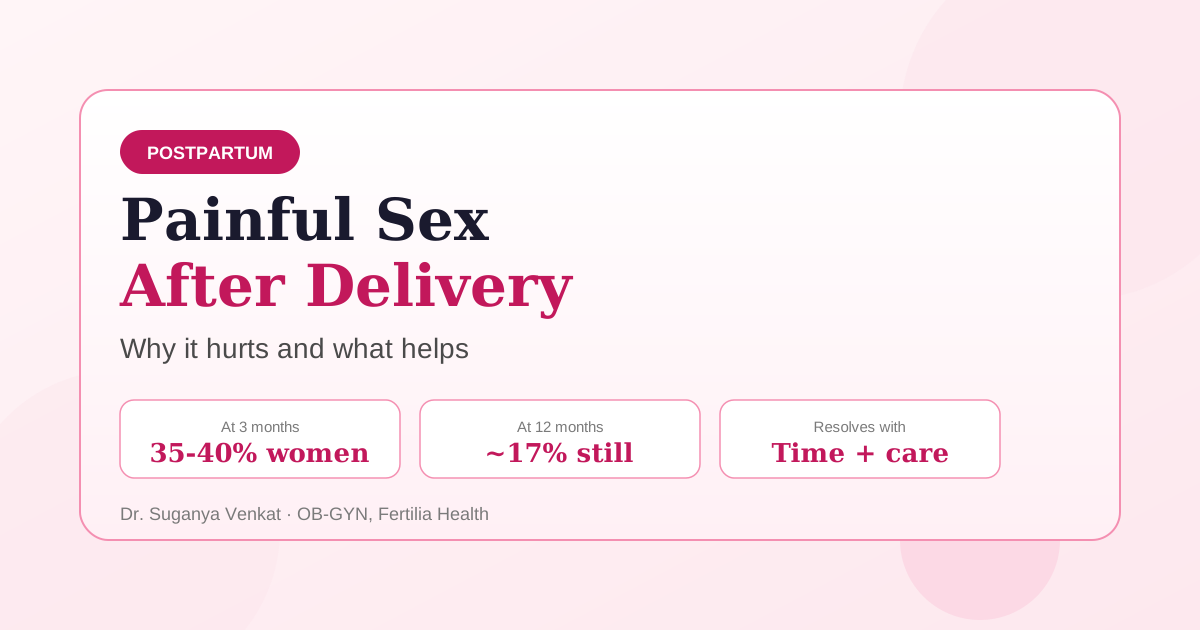
Very common. A systematic review and meta-analysis (Banaei M et al., International Journal of Gynecology & Obstetrics, 2021, PMID 33300122) found that about 43% of women report pain with sex between 2 and 6 months postpartum, and around 22% still do between 6 and 12 months.
In India, population-level data from 84,644 currently married women found a background dyspareunia rate of 12.6% (Padmadas, Stones, Matthews, 2006, PMID 16409224). That is the baseline before accounting for the postpartum period. In the first year after delivery, the number is substantially higher.
The 6-week checkup is not a finish line. It tells you whether stitches have closed and the uterus has involuted. It does not confirm that the pelvic floor has returned to baseline, that hormones have normalised, or that sex will feel comfortable. Many women - correctly cleared at 6 weeks - are genuinely not ready for weeks or months after that.
Four Reasons Sex Hurts After Delivery
1. Perineal Tissue Healing: Episiotomy and Tear Scars
If you had an episiotomy or a perineal tear with stitches, the tissue that healed is scar tissue - not the same as the original. Scar tissue is denser, less elastic, and more sensitive to stretch and pressure. That is why the area can hurt even after the stitches have technically healed.
In the women I see, scar tenderness typically peaks between weeks 6 and 12, gradually improves from weeks 12 to 24, and in most cases resolves by 6 to 12 months. The timeline depends on the depth of the tear, whether there was any infection, and how much scar tissue formed.
Scar massage - starting gently from around 6 weeks with your OB-GYN’s approval - helps meaningfully. Using a few drops of vitamin E oil or coconut oil on the perineum and gently stretching the tissue breaks up adhesions and improves elasticity over time. Our episiotomy care and recovery guide covers the day-by-day approach in detail.
Localised pinpoint tenderness at one spot on the scar (rather than general sensitivity) after 3-6 months warrants a clinical assessment. This can indicate a neuroma or a specific adhesion that responds well to targeted treatment.
2. Vaginal Atrophy from Lactation
This surprises many women. If you are exclusively breastfeeding, your body is suppressing ovarian oestrogen production to maintain milk supply. Low oestrogen causes the vaginal walls to become thinner, drier, and more sensitive to friction - the same mechanism as perimenopause. This is sometimes called lactational atrophy or genitourinary syndrome of lactation.
This is not permanent. Once breastfeeding reduces or stops and your periods return, oestrogen levels recover and vaginal tissue returns to normal. But during exclusive breastfeeding, the dryness and fragility are real and make sex uncomfortable even when there is no scar, no tear, and nothing structurally wrong.
Lubricant - water-based, generous - is not optional for lactating women attempting intercourse. It is the first line of management for this specific cause.
For women with significant atrophy symptoms (thin, painful, fragile vaginal tissue rather than just dryness), low-dose topical vaginal oestrogen cream is an option to discuss with your OB-GYN. Systemic absorption at vaginal doses is low, but this is not a formally guideline-endorsed use in breastfeeding: small, variable amounts of oestradiol can appear in breast milk, and oestrogen can reduce milk supply, particularly in the first six weeks before supply is established (LactMed, NIH). In practice it is usually tried after lubricants and moisturisers, at the lowest effective dose, while keeping an eye on your supply.
3. Pelvic Floor Hypertonicity
Most postpartum conversations about the pelvic floor focus on weakness: urinary leakage, prolapse, reduced support. But the pelvic floor can also be too tight - a state called hypertonicity.
During pregnancy, the pelvic floor carries sustained load for nine months. After a prolonged second stage of labour, or following a delivery that involved significant pushing, the muscles can remain in a guarded, contracted state. This is the opposite of weakness - and it responds to completely different treatment.
A hypertonic pelvic floor creates pain at penetration because the muscles are not releasing the way they need to. Kegel exercises, which train contraction, make hypertonicity worse. What is needed is pelvic floor down-training: consciously learning to release and lengthen these muscles, sometimes called reverse Kegels. If you have postpartum pain during sex but no urinary leakage, this distinction matters - and a pelvic floor physiotherapist can assess it clearly.
4. Postpartum Secondary Vaginismus
When sex hurt the first time you tried after delivery - or even before you tried, when you were already dreading it - the body can enter a fear-anxiety-pain cycle. The pelvic floor tenses in anticipation, which increases pain at the next attempt, which reinforces the fear. This is secondary vaginismus: vaginismus that developed after a period of normal sexual function, triggered by the postpartum experience.
For more on this, read our guide on Unconsummated Marriage.
For more on this, read our guide on Primary vs Secondary Vaginismus.
For more on this, read our guide on First-Time Sex Painful. This pattern is often missed because both women and clinicians attribute all postpartum pain to “still healing.” Sometimes that is accurate. But when pain persists well past the expected healing window, or when the pelvic floor tenses at the thought of penetration rather than from any physical injury, waiting for more time to pass is not the solution. What is needed is the same graded, pelvic-floor-focused treatment used for any vaginismus presentation.
Clinically, secondary vaginismus responds well to treatment. In a meta-analysis of vaginismus treatments, around 79% of women went on to achieve penetrative intercourse, and whether the vaginismus was primary or secondary did not appear to change the outcome (Maseroli E et al., Journal of Sexual Medicine, 2018, PMID 30446469). The evidence is mostly observational and did not look at postpartum onset specifically, but nothing in it suggests a postpartum start makes the condition harder to treat. In my experience, the earlier treatment starts, the faster it works.
For the clinical distinction between postpartum dyspareunia and vaginismus, our post on dyspareunia vs. vaginismus: how doctors tell them apart covers the diagnostic framework.
If You Had a C-Section
C-section mothers sometimes expect to have no postpartum sexual pain because there was no vaginal delivery. But pain with sex after a caesarean is more common than is often assumed.
Pregnancy affects the pelvic floor regardless of delivery mode. The floor carries nine months of extra load whether the baby arrived vaginally or surgically. Lactational atrophy occurs with any delivery mode if you are breastfeeding. And for women who had a difficult, emergency, or emotionally difficult caesarean, postpartum secondary vaginismus can develop from anxiety alone, without any vaginal injury.
Post-surgical factors also play a role. Internal adhesions, abdominal scar sensitivity, and referred pain from the uterine incision can contribute to discomfort during sex in certain positions, particularly in the months immediately after surgery. For a week-by-week picture of what is happening at each stage of C-section healing, our C-section recovery guide covers the physical recovery timeline in detail.
The India Context: What Helps and What Adds Pressure
The traditional 40-day rest period (jaappa) observed in South Indian and many other Indian families is genuinely well-aligned with what recovery actually needs. The implicit norm of not resuming sexual activity during confinement creates space without requiring the woman to negotiate it individually with her partner or family. This is protective.
What is not helpful is what sometimes follows the 40 days: family pressure to “return to normal,” or pressure to attempt a second pregnancy before the body has recovered from the first. There is no medical urgency to conceive again at four months postpartum. The WHO recommends at least 18 to 24 months between delivery and the next conception for maternal health reasons. That recommendation exists because the body needs time to rebuild its nutritional, hormonal, and structural baseline.
If there is pressure from a joint-family context or from a partner who believes the 6-week clearance is a green light for everything, the honest medical position is this: sex that hurts is not sex the body is ready for. Timing the next pregnancy can wait until this body is actually healed.
For the full picture of postpartum physical recovery - including why the belly takes longer to recover than the 6-week check-up suggests - our postpartum belly guide and postpartum recovery guide for Indian mothers cover what is happening in the body across the full first year.
What Actually Helps
Use lubricant generously, every time. Water-based lubricant is safe with latex condoms and lactating bodies. It is not a signal of inadequacy - it is the physiological gap-fill for lactation-induced dryness. During exclusive breastfeeding, natural lubrication is pharmacologically suppressed. Lubricant compensates for that directly.
Ask your OB-GYN about topical oestrogen if dryness is significant. For women with clear lactational atrophy (fragile, thin vaginal tissue, not just dryness), a short course of low-dose vaginal oestrogen cream can restore tissue health. Systemic absorption is low, but it is not a guideline-endorsed use in breastfeeding and oestrogen can lower milk supply, so it is a lowest-effective-dose decision made with your OB-GYN, with your supply watched.
Start scar massage from week 6. With your doctor’s go-ahead, gentle perineal massage using coconut oil or vitamin E oil breaks down scar tissue adhesions and improves the elasticity of healed tissue over weeks 6 to 24. Consistent, gentle work over several months makes a measurable difference.
Practice pelvic floor down-training if the floor is tense. If sex hurts but there is no urinary leakage, the pelvic floor may be too tight rather than too weak. Release exercises - diaphragmatic breathing with active pelvic floor drop, conscious perineal relaxation - are the starting point. A pelvic floor physiotherapist can confirm whether this is the pattern and guide the technique.
Consider vaginal dilators if down-training and lubricant are not enough. The graded approach used for vaginismus applies equally to postpartum secondary presentations. Starting with the smallest comfortable size and working up gradually over weeks retrains the body’s anticipatory bracing response. The protocol is detailed in our 12-week dilator guide at home.
Give it more time than you expect to need. Six weeks is a minimum healing check, not a discharge. Most women need 6 to 12 months for sex to feel fully comfortable. That timeline is not failure - it is physiology.
What NOT to Do
Do not push through pain. Attempting penetration when it hurts trains the body to brace harder before the next attempt. Pushing through reinforces the fear-anxiety-pain cycle rather than breaking it. If it hurts, stop, reassess the cause, and address that cause first.
Do not leave the conversation unspoken with your partner. Prolonged avoidance without explanation creates a different kind of damage to the relationship. A clear, simple account of what is happening physically is less harmful than months of unexplained withdrawal.
Do not assume this is permanent. The evidence is clear: the vast majority of postpartum dyspareunia improves significantly within 12 months. What makes it persist is almost always an untreated, identifiable cause - lactational atrophy that was never addressed, pelvic floor hypertonicity that was never diagnosed, or a secondary vaginismus pattern that was never treated. These all respond to the right targeted intervention.
For women where anticipatory anxiety has become as much of the barrier as the physical pain itself, our postpartum anxiety guide covers what the anxiety pattern looks like and how to access support.
💬 You don’t have to figure this out alone. Postpartum pain with sex is something I see and treat regularly in consultation. If you are not sure what is causing it or which approach to try first, let’s talk it through. Message Dr. Suganya on WhatsApp
📘 Want a guide that covers both postpartum dyspareunia and secondary vaginismus? Download Dr. Suganya’s free 39-page Navigating Vaginismus: Information, Support, and Recovery. It explains the differential and the treatment ladder in one place. Get the guide →
Prefer Instagram? Comment PAINLESS on any @fertilia.health post and we’ll DM you the guide directly.
When to Talk to Your OB-GYN
Don’t wait indefinitely. Have a specific conversation with your doctor if:
- Sex is still painful at 6 months postpartum with no improvement trend
- There is pinpoint tenderness at one specific spot on the scar (this may need targeted scar treatment or assessment for localised nerve involvement rather than general time)
- There is bleeding with attempted intercourse
- The pain has been getting worse rather than slowly better
- You have stopped attempting sex entirely because of anticipated pain (this is a treatable pelvic floor pattern that responds better to earlier intervention than later)
When you go, ask for a focused assessment of the pelvic floor and perineum - not just a visual check. If the pattern includes significant fear or avoidance, ask for a pelvic floor physiotherapy referral alongside your gynaecological care. The combination gives the best outcomes. If you are not sure your current doctor treats sexual pain confidently, our guide on how to choose a vaginismus doctor in India covers the questions to ask before you commit.
This post is part of Fertilia’s vaginismus and pelvic pain resource cluster. The hub covers diagnosis, assessment, and the full treatment pathway: Vaginismus: An OB-GYN’s Honest Guide for Indian Women.
Related posts in the cluster:
- Vaginismus exercises at home: the 12-week dilator protocol (S1)
- Dyspareunia vs. vaginismus: how doctors tell them apart (S3)
Frequently Asked Questions
Is it normal for sex to hurt after delivery?
Yes, it is common. Around 43% of women report pain with sex between 2 and 6 months postpartum (Banaei M et al., 2021, PMID 33300122). It does not mean something is permanently wrong. The four main causes - perineal scar tissue, lactational atrophy, pelvic floor hypertonicity, and secondary vaginismus - all have effective, specific treatments. Common does not mean inevitable, and experiencing it does not mean you simply have to wait.
How long does postpartum dyspareunia last?
For most women, pain improves significantly between 3 and 12 months postpartum. Between 6 and 12 months, around 22% of women still report pain, down from 43% earlier in the year (Banaei M et al., 2021, PMID 33300122). Those who still have pain at that stage usually have an identifiable, untreated cause - most commonly unaddressed pelvic floor hypertonicity or ongoing lactational atrophy. Identifying and treating the specific cause shortens the timeline considerably.
Can sex hurt after a C-section even without vaginal delivery?
Yes. Pregnancy loads the pelvic floor for nine months regardless of delivery mode. Lactational atrophy occurs with any delivery if you are breastfeeding. Post-surgical adhesions and referred abdominal pain can contribute to discomfort in certain positions. And secondary vaginismus can develop from the anxiety of a difficult or emergency caesarean, without any vaginal injury. C-section mothers are not spared postpartum dyspareunia, and the causes are real.
What is the difference between a tight and a weak pelvic floor after delivery?
Weakness (leaking urine, heaviness, prolapse symptoms) and tightness (pain at penetration, difficulty with internal examinations) are opposite presentations that need opposite treatments. Weakness responds to Kegel exercises. Tightness responds to down-training and release work - and Kegels will make tightness worse. If you have postpartum pain during sex without urinary leakage, it is worth assessing whether the floor is tight rather than weak. A pelvic floor physiotherapist can tell you with a single assessment.
Is low-dose vaginal oestrogen safe while breastfeeding?
It can be, at low vaginal doses, but it is a decision to make with your OB-GYN rather than a blanket yes. Systemic absorption is low, yet small and variable amounts can reach breast milk and oestrogen can lower milk supply, especially in the first six weeks (LactMed, NIH). Lubricants and moisturisers come first; if oestrogen is used, it is the lowest effective dose with your supply watched.
When should postpartum pain with sex be investigated rather than waited out?
If pain continues past 6 months without clear improvement, if there is localised tenderness at one specific point on the scar, if there is bleeding with attempted intercourse, or if the pain is worsening - those are signals for a focused clinical assessment, not continued waiting. Earlier intervention produces faster results: secondary vaginismus that is treated at 4 months is easier to resolve than the same pattern at 18 months.
My mother-in-law says I should have recovered and we should be trying for the next baby. Is that reasonable?
No. The WHO recommends at least 18 to 24 months between delivery and the next conception for maternal health reasons. After a C-section, 24 to 36 months is safer for uterine healing. Beyond fertility timing, sex that causes pain is not sex the body is ready for. There is no medical reason to prioritise a second pregnancy over this body’s recovery from the first.
You Are Not Done Healing - and You Do Not Have to Figure This Out Alone
Postpartum pain with sex is treatable in the great majority of cases. The question is identifying which cause is driving it and applying the right approach. I offer consultations specifically for postpartum pelvic floor and sexual pain - because this conversation should not wait until you’ve spent a year wondering what is wrong.
Where the cause is secondary vaginismus, a protective tightening that set in after birth, structured treatment helps. Fertilia’s online Vaginismus Recovery Program addresses exactly this, at a pace that respects postpartum recovery. If cost is part of your decision, what vaginismus treatment costs in India breaks down each step of care.
Message Dr. Suganya on WhatsApp →
Dr. Suganya Venkat - OB-GYN with 15+ years of clinical experience. DNB OB-GYN (GKNM Hospital, Coimbatore) · MD Pathology (CMC Vellore) · MBBS with 5 Gold Medals (SRMC).