Two patients can come to me describing the same thing: “sex is painful” or “we haven’t been able to have intercourse.” Both are distressed, both have often been told nothing is physically wrong, and both may have spent months wondering if the problem is in their head.
But when I sit with them and take a careful history, one picture is quite different from the other. One patient has an involuntary muscle spasm at the vaginal entrance that prevents any penetration at all. The other can often tolerate penetration but feels sharp burning, a deep ache, or pressure pain at a specific point in the process. These are not the same condition, and they do not always get the same treatment.
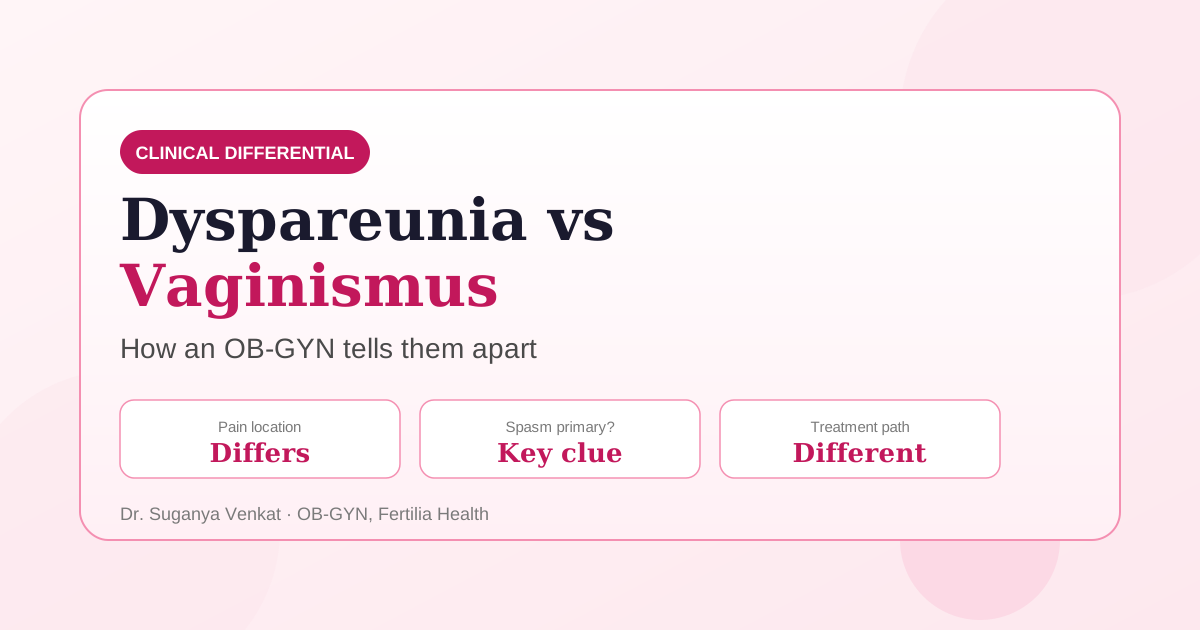
This post is the clinical differential I walk through in my own practice. If you want the broader overview of vaginismus, the full guide is at Vaginismus: An OB-GYN’s Honest Guide for India. Here, I am focusing specifically on how to tell vaginismus apart from dyspareunia, why that distinction matters, and what it changes about treatment.
Plain Language: What Each Term Means
Dyspareunia is the umbrella term for persistent or recurrent pain during intercourse. It is not a single diagnosis - it is a symptom with many possible causes underneath it. The pain can be at the vaginal entrance (called superficial or introital dyspareunia) or deep inside the pelvis during thrusting (called deep dyspareunia). Endometriosis, vulvodynia, atrophy, lichen sclerosus, and pelvic floor tightness from non-sexual causes are all common culprits.
Vaginismus is something more specific: an involuntary, reflex-like contraction of the pelvic floor muscles (primarily the bulbocavernosus and levator ani group) that occurs when penetration is attempted or even anticipated. The anatomy is normal. There is no structural blockage. But the muscle response is powerful enough to prevent penetration entirely - or to make it extremely difficult and painful.
The important distinction: vaginismus is primarily a muscle response, often with a significant fear-anxiety component. Dyspareunia is primarily pain, which may or may not involve muscle involvement.
The DSM-5 Reframe: GPPPD
In 2013, the DSM-5 merged vaginismus and dyspareunia into a single diagnostic category called Genito-Pelvic Pain/Penetration Disorder (GPPPD). The reasoning was practical: the two conditions overlap heavily in clinical presentation, and the original DSM-IV separation implied a cleaner distinction than actually exists in practice.
GPPPD requires at least one of four criteria, present for six months or more, with clinically significant distress:
- Persistent difficulty having vaginal penetration during intercourse
- Marked vulvovaginal or pelvic pain during vaginal intercourse or penetration attempts
- Marked fear or anxiety about vulvovaginal or pelvic pain in anticipation of, during, or as a result of vaginal penetration
- Marked tensing or tightening of the pelvic floor muscles during attempted vaginal penetration
The ICD-11 - the diagnostic system used in Indian hospitals and for insurance coding - moved in a similar direction. It does not keep vaginismus as a standalone diagnosis: vaginismus now sits inside HA20, sexual pain-penetration disorder, in the chapter on conditions related to sexual health, while dyspareunia arising from an identifiable physical cause is coded separately (GA12). This matters practically because a referral letter written in the old vocabulary may not match the code your hospital or insurer uses.
For a patient, the practical translation is this: the GPPPD category is a reminder that pain, fear, and muscle tension often co-exist and reinforce each other. You do not need a clean diagnosis of “only vaginismus” or “only dyspareunia” to start treatment. But knowing which feature is primary changes where the treatment effort is concentrated first.
The 6-Point Clinical Differential Table
| Feature | Vaginismus | Dyspareunia |
|---|---|---|
| Pain location | Typically at the vaginal entrance (introitus); may also occur with tampon use or speculum insertion | Variable - can be superficial (entrance) or deep (with thrusting); depends on the underlying cause |
| Muscle spasm | Primary finding; involuntary pelvic floor contraction is the defining feature | Usually absent or secondary; if present, it develops as a protective guarding response to repeated pain |
| Penetration possible? | Often not possible at all, or possible only with significant difficulty and pain | Usually possible, but accompanied by pain at a specific point or throughout |
| Typical timing pattern | Lifelong (primary vaginismus) or acquired after a clear trigger - first painful experience, delivery, assault, surgery | Linked to a specific underlying cause; may be cyclic (endometriosis), progressive (atrophy), or constant (vulvodynia) |
| Exam findings | Anatomy is normal; the key finding is the spasm response when palpation is attempted; patient may visibly tense or pull away | May show vestibular tenderness on Q-tip test, skin changes (lichen sclerosus), atrophic mucosa, visible scars, nodularity in the posterior fornix (endometriosis) |
| First-line treatment | Graded dilator therapy combined with CBT and pelvic floor physiotherapy | Treat the underlying cause first - anti-inflammatory and hormonal management for endometriosis, topical oestrogen for GSM, anti-itch treatment for lichen sclerosus, then address pelvic floor if secondary spasm has developed |
Why Many Women Have Both
This is where the clinical picture gets nuanced. Dyspareunia and vaginismus are not mutually exclusive - in fact, the fear-pain-avoidance cycle commonly produces both together.
Here is how it typically progresses: a woman develops a painful experience during sex from a physical cause, say vestibulodynia or a postpartum scar. The body learns to anticipate that pain. Before the next attempt, the pelvic floor begins to tighten as a protective measure. Over time, that tightening becomes involuntary and reflexive, meeting the definition of secondary vaginismus even though the original problem was purely physical.
This means a woman can arrive in clinic with a primary diagnosis of provoked vestibulodynia (a form of dyspareunia) and a secondary layer of vaginismus on top of it. Treating only the vestibulodynia will help, but unless the muscle component is also addressed, penetration may remain difficult. And treating only the dilators without addressing the original cause will be slower than it needs to be.
Five Common Causes of Dyspareunia That Are Not Vaginismus
When a patient presents with pain during sex, I work through a differential that includes these five causes before concluding that the pain is primarily vaginismus-driven.
Vulvodynia and provoked vestibulodynia (PVD). This is localised pain at the vestibule (the tissue just inside the vaginal entrance) that is triggered by touch or pressure but absent at rest. On Q-tip testing, there is marked tenderness at the 5 and 7 o’clock positions. PVD affects an estimated 6-8% of women at any point in time, and up to 25% of women report it at some stage in their lives (Henzell and Berzins, 2017, PMCID PMC5602415). It is commonly misdiagnosed as a yeast infection or dismissed entirely.
Endometriosis. Deep dyspareunia - pain felt deep inside the pelvis with thrusting, often worse just before or during a period - is a cardinal symptom of endometriosis. The pain correlates with implants in the posterior fornix, uterosacral ligaments, or rectovaginal septum. This is distinct from the entry-level pain of vaginismus. If a patient with deep dyspareunia also wants to conceive and has not yet investigated endometriosis, I refer her to the detailed breakdown in this case study on endometriosis, failed IUI, and eventual natural conception.
Genitourinary syndrome of menopause (GSM). In perimenopause, after oophorectomy, or during breastfeeding, oestrogen drops cause vaginal tissue to thin, lose elasticity, and produce less natural lubrication. The result is friction-related burning during sex. This is entirely different from vaginismus in origin, and it responds to topical oestrogen or vaginal moisturisers - not dilators.
Lichen sclerosus. A chronic skin condition that causes white, papery skin changes on the vulva, often with intense itch, fragility, and architectural changes over time. Sex is painful because the tissue tears easily. The white patches are visible on examination and the diagnosis is confirmed on biopsy if uncertain. Untreated, it can cause scarring that genuinely narrows the introitus - so early treatment matters.
Pelvic floor hypertonicity from non-sexual triggers. Chronic constipation, IBS, or low back pain can keep the pelvic floor in a chronically elevated resting tone - nothing to do with sex, but those muscles are already working overtime. When intercourse is attempted, the tense floor resists. This responds well to pelvic floor physiotherapy, with or without a formal label.
How I Work Through This
When a patient comes to me with painful sex, the first fifteen minutes are history - not examination.
I ask about timing (when in the sexual encounter does the pain begin - at the moment of attempted entry, partway through, or deep with thrusting), location (where exactly is the pain - at the entrance, inside, one specific spot, or diffuse across the pelvis), triggers (is it worse at certain points in the cycle, after a specific event, or consistent regardless of timing), and whether there is a prior history of trauma, a painful first experience, an episiotomy, or a pelvic surgery.
Only then does examination come into it. My consultations are online, by video call, so the examination itself happens with a gynaecologist near you. I am setting out what that examination should involve so that you know what to expect and can tell whether it was done properly, and so that the history we take together tells your examining doctor where to look.
The first thing that examination should not be is a speculum. For a woman who is already anxious and guarding, a cold speculum as the opening move makes the examination impossible. It should begin with visual inspection of the vulva and vestibule, looking for skin changes, erythema, white patches of lichen sclerosus, or scarring. Then the Q-tip test: gentle cotton-swab palpation at several vestibular positions, with you scoring discomfort from 0 to 10. Focal tenderness at 5 and 7 o’clock suggests provoked vestibulodynia. Then single-finger pelvic floor palpation, noting resting tone, any reflex-spasm response to entry, and which muscle groups are tender.
Tests are usually not the first step. For most presentations of vaginismus, laboratory investigations change nothing early on - the anatomy is normal and the diagnosis is clinical. I order a hormone panel (FSH, oestradiol, total testosterone) if I suspect GSM or an androgen-related cause, and a vaginal swab if there is discharge suggesting infection that is contributing to irritation. Pelvic ultrasound is indicated if I suspect an adnexal mass or ovarian cyst. Otherwise, the history and careful examination give me what I need.
Which Treatment Path Follows
The treatment direction splits based on what is primary.
When vaginismus is the dominant finding - the spasm is there before any penetration attempt, penetration has been impossible or nearly impossible, there are no structural exam findings, and there is significant anticipatory fear - the approach is graded dilator therapy paired with cognitive-behavioural therapy (CBT) and pelvic floor physiotherapy (PFPT). The dilator protocol builds tolerance from smaller to larger sizes in a structured, unhurried way. The S1 post in this cluster walks through a full 12-week dilator protocol for home use.
When dyspareunia from an underlying cause is the dominant finding - visible skin changes, confirmed endometriosis, atrophic tissue, or clear Q-tip focality - the first treatment priority is the underlying condition. Topical oestrogen for GSM, endometriosis management (hormonal or surgical) for deep dyspareunia, high-potency steroid cream for lichen sclerosus, and visceral physiotherapy for pelvic floor hypertonicity. Only after the primary cause is addressed does it make sense to layer in dilator work if secondary pelvic floor guarding has developed.
For postpartum dyspareunia specifically - which has its own particular mix of scar tenderness, oestrogen-depleted tissue, and pelvic floor disruption after delivery - the full breakdown is at Painful Sex After Delivery: Why It Hurts and What Helps.
💬 If you are not sure whether what you have is vaginismus, dyspareunia, or something else, you are not expected to diagnose yourself. I do these consultations on WhatsApp every week. Message Dr. Suganya
📘 Want the full differential in one place? Download Dr. Suganya’s free 39-page Navigating Vaginismus: Information, Support, and Recovery. Section 5 covers all 10 conditions that can mimic vaginismus and how each is distinguished clinically. Get the guide →
Prefer Instagram? Comment PAINLESS on any @fertilia.health post and we’ll DM you the guide directly.
Evidence Behind This Differential
Dyspareunia is not rare in India. A population-based study of 84,644 currently married Indian women found dyspareunia prevalence at 12.6% (Padmadas, Stones, and Matthews, 2006, PMID 16409224). The condition is underreported, undertreated, and regularly dismissed at primary care visits.
Provoked vestibulodynia, one of the most common causes of superficial dyspareunia, affects 6-8% of women at any point in time and up to 25% across their lifetime (Henzell and Berzins, 2017, PMCID PMC5602415). Given how often PVD is misdiagnosed as recurrent candidiasis, the real number of unidentified cases in India is likely higher.
The DSM-5’s GPPPD category reflects the clinical reality that vaginismus and dyspareunia rarely present in isolation. The four-criterion framework captures the interplay between physical and psychological maintaining factors that clinicians have long observed but the older classification did not account for. ICD-11’s HA20 reaches much the same conclusion by a different route, which is why the two systems no longer disagree in the way they once did.
Frequently Asked Questions
What is the difference between dyspareunia and vaginismus? Dyspareunia is the umbrella term for painful intercourse from any cause; it is a symptom, not a diagnosis. Vaginismus is a specific cause: an involuntary spasm of the pelvic floor muscles at the vaginal entrance that prevents or makes penetration painful. Vaginismus is one possible cause of dyspareunia, but dyspareunia can also come from vulvodynia, vaginal atrophy, endometriosis, lichen sclerosus, infections, or scar tissue. The distinction matters because treatment differs: vaginismus responds to dilator therapy and pelvic floor down-training; dyspareunia treatment depends on identifying which underlying cause is responsible.
Can vaginismus and dyspareunia exist at the same time? Yes, and this is common. A physical cause of pain (such as vestibulodynia or a postpartum scar) triggers a protective muscle response over repeated painful attempts. Over time, that muscle response becomes automatic and constitutes secondary vaginismus on top of the original dyspareunia. Both need to be addressed for sex to become comfortable.
If penetration is possible but painful, does that rule out vaginismus? Not entirely. Mild to moderate vaginismus (Lamont grades 1 and 2) may still allow penetration but make it difficult and painful. Grade 3 and 4 typically prevent penetration altogether. The presence of spasm on examination is the distinguishing finding - not whether penetration occurred.
Does the DSM-5 GPPPD diagnosis mean my doctor thinks it is psychological? No. The GPPPD criteria include physical pain as a criterion. The merger acknowledges that pain, fear, and muscle tension co-exist and that treating all three together produces better outcomes than treating only the most prominent one.
Is the Q-tip test painful? For women with provoked vestibulodynia, the gentle cotton-swab palpation can feel sharp or burning at affected points - which is what makes it diagnostically useful. For women with vaginismus but no vestibular sensitivity, it is typically well tolerated. A good clinician explains the test before starting and paces it to your comfort.
If I have deep dyspareunia, does that mean I have endometriosis? Deep dyspareunia is a significant symptom of endometriosis, but not the only cause. Pelvic adhesions, a retroverted uterus, ovarian cysts, and pelvic floor tightness can all produce deep pain. History and examination come first. Laparoscopy is the definitive tool for endometriosis, but not the first step for every presentation.
How is dyspareunia treated in India? Topical oestrogen, antifungal or antibiotic treatment, and basic pelvic floor physiotherapy are available in most urban Indian cities. Specialist vestibulodynia clinics and CBT-trained sex therapists are more concentrated in metros. Our guide on how to choose a vaginismus doctor in India covers what to look for in a provider. A WhatsApp consultation can help identify which pathway fits your specific presentation.
I have vaginismus but also pain at a specific point - should I start dilators or see a gynaecologist first? See a gynaecologist first. If there is a focal pain point - a tender spot you can consistently identify - it is worth a clinical examination to rule out vestibulodynia or a scar before starting a dilator program. If the exam is clear, dilator therapy is the right next step. If there is a treatable underlying cause, addressing it first makes the dilator work faster and less frustrating. See also: Vaginismus and Fertility: Can You Get Pregnant?
If it turns out to be vaginismus, it responds well to structured treatment. Fertilia runs an online vaginismus treatment program that brings medical, psychological, and pelvic floor support together into one coordinated 12-week plan. If cost is part of your decision, what vaginismus treatment costs in India breaks down each step of care.
💬 Both vaginismus and dyspareunia are treatable. The diagnosis matters because it changes what you treat first. If you have been dealing with painful sex for months and still do not have a clear answer, bring your questions to a consultation. Message Dr. Suganya on WhatsApp