You’ve just done the most physically demanding thing the human body can do. Whether it was a natural delivery or a C-section, your body has been through a massive transformation, and it deserves time, care, and respect to heal.
This guide is for the mother, not the baby. Because everyone asks about the baby, and very few people ask how you are doing.
The 6-Week Recovery Snapshot (What to Do When)
Skim this section first, then read the detail below as you need it.
| Phase | What’s Happening | What to Do | What to Watch For |
|---|---|---|---|
| Day 1–3 | Uterus contracting, bleeding heaviest, milk coming in, body in shock | Rest flat or propped up. Warm fluids (ajwain water, jeera water, soups). Assisted walking only, no lifting. Feed the baby on demand | Bleeding that soaks a pad an hour, fever >100.4°F, severe headache, chest pain, baby not feeding |
| Day 4–10 | Bleeding lightens, milk supply stabilising, hormones shifting rapidly | Short gentle walks indoors. Warm nourishing meals. Sleep when baby sleeps. Start Kegels only if you had a normal delivery and are comfortable | Foul-smelling discharge, incision pain or oozing, persistent sadness or anxiety |
| Week 2–4 | Uterus returning to pre-pregnancy size, lochia (bleeding) reducing to spotting | Longer walks (15–20 min). Full-calorie nutrition (extra 500 kcal for breastfeeding). Watch for baby blues becoming persistent | Heavy bleeding returning, thoughts of harming yourself or the baby, inability to sleep even when baby sleeps |
| Week 4–6 | First postpartum check-up window. C-section incision fully healed. Pelvic floor still rebuilding | 6-week OB-GYN visit. Discuss contraception. Pelvic floor exercises now safe even after C-section. Gentle yoga OK | Urinary leakage persisting, pain during any movement, low mood not lifting |
| Week 6 onwards | Cleared for most exercise. Many women feel “more normal” but full recovery continues | Gradually return to activity. Don’t rush weight loss (that comes at months 6–12). Pelvic floor physiotherapy if leaking continues | Pelvic heaviness, pain during intimacy, ongoing back pain |
For more on this, read our guide on Postpartum Weight Loss.
🚨 When to Call Your Doctor Immediately
In the first 6 weeks after delivery, certain symptoms need same-day medical attention. Do not wait to “see if it gets better.”
- Heavy bleeding: soaking through a maternity pad in under an hour, or passing clots larger than a golf ball
- Fever above 100.4°F (38°C) at any time
- Foul-smelling vaginal discharge (may indicate infection)
- Severe headache or vision changes (can indicate postpartum preeclampsia, even 6–8 weeks after delivery)
- Chest pain or difficulty breathing
- Pain, redness, or swelling in one leg (can indicate a blood clot)
- Incision (C-section or tear) that is red, warm, oozing, or opening
- Thoughts of harming yourself or your baby
If any of these appear, call your OB-GYN or go to the nearest hospital. Postpartum complications are time-sensitive, and early treatment is almost always simpler and safer.
The Truth About Postpartum Recovery
Let’s start with what nobody tells you:
- Your uterus takes 6-8 weeks just to return to its pre-pregnancy size (Cunningham et al., Williams Obstetrics, 26th edition)
- Your pelvic floor muscles may take 6-12 months to fully recover
- Your hormones: especially oestrogen, progesterone, and thyroid, go through dramatic shifts for months
- Your brain literally changes during pregnancy and postpartum, a process called matrescence (Hoekzema et al., 2017, Nature Neuroscience)
- If you had a C-section, you’re recovering from major abdominal surgery while caring for a newborn
Recovery is not a 40-day event. It’s a 12-month process, and that’s completely normal.
The First 40 Days (Jaappa Period)
The traditional Indian practice of a 40-day confinement period has genuine wisdom behind it. The emphasis on rest, warm foods, body massage, and family support aligns well with evidence-based postpartum care.
What Traditional Practices Get Right
1. Rest and reduced activity Your body needs rest to heal. The uterine wound where the placenta was attached is roughly the size of a dinner plate. Pushing yourself too early increases the risk of postpartum haemorrhage and slows healing.
For more on this, read our guide on Postpartum Belly. 2. Warm, nourishing foods There’s a reason your grandmother insisted on hot food. Warm meals are easier to digest, and your digestive system is genuinely sluggish after delivery due to hormonal changes and reduced abdominal muscle tone.
3. Oil massage (abhyanga) Postpartum massage improves circulation, reduces muscle tension, helps with fluid retention, and promotes relaxation. A randomised trial showed it can significantly reduce postpartum depression scores (Field et al., 2009, Journal of Bodywork and Movement Therapies).
4. Restricted visitors This protects both the mother’s rest and the newborn’s immune system. It’s not superstition. It’s sensible.
Where Tradition Needs Updating
Some traditional restrictions don’t hold up to evidence:
- “Don’t drink water”: This is dangerous. You need more fluids postpartum, especially if breastfeeding. Dehydration reduces milk supply and slows healing.
- “Don’t eat fruits”: Fruits provide essential vitamins, fibre, and hydration. There’s no evidence that they cause cold or gas in the baby through breast milk.
- “No bathing for 40 days”: Hygiene is critical for preventing infection, especially if you had stitches or a C-section incision. Warm baths are perfectly safe. If you had an episiotomy or perineal tear, our normal delivery stitches guide covers day-by-day care.
Postpartum Nutrition: What to Eat
Your nutritional needs are actually higher postpartum than during pregnancy, especially if you’re breastfeeding. You need approximately 500 extra calories per day while breastfeeding (ICMR-NIN Recommended Dietary Allowances for Indians, 2020), along with increased protein, calcium, iron, and fluids. Calcium is especially important, if your diet falls short, your body pulls it from your bones, which has long-term implications for bone health during menopause.
Foods That Actually Help Recovery
Iron-rich foods (to replenish blood loss):
- Ragi porridge (nachni) (one of the richest plant sources of iron and calcium)
- Dates (khajoor), traditionally given postpartum for good reason
- Beetroot, pomegranate, and dark leafy greens (drumstick leaves, moringa)
- Jaggery (gur) instead of refined sugar
Protein for healing:
- Dals and lentils (moong dal is easiest to digest in early postpartum)
- Eggs, if your family eats them, they’re nutritional powerhouses
- Paneer and curd (dahi), also excellent calcium sources
- Fish, especially small fish like sardines (nethili) which are rich in omega-3
Galactagogues (milk-boosting foods):
- Methi (fenugreek) seeds, soaked overnight or in laddoos
- Garlic (3-4 cloves daily, cooked)
- Saunf (fennel) water
- Oats porridge
- Dill (soya leaves)
Anti-inflammatory and healing foods:
- Haldi (turmeric) milk, curcumin genuinely reduces inflammation
- Ajwain (carom seeds) water, improves digestion and reduces bloating
- Ginger tea, anti-inflammatory and aids digestion
- Dry ginger (saunth) laddoos
A Sample Postpartum Day of Eating
Early morning: Ajwain water (warm) + 3-4 soaked almonds
Breakfast: Ragi porridge with jaggery and ghee, or methi paratha with curd
Mid-morning: A glass of milk with turmeric and a date-nut laddoo
Lunch: Rice with ghee, moong dal, a dry vegetable (drumstick, palak), rasam, and curd
Evening: Saunf tea + a handful of dry fruits + a banana
Dinner: Jowar or bajra roti with palak paneer or egg curry, and a light dal
Before bed: Warm milk with a pinch of nutmeg (for sleep)
The key principles: eat warm, eat often (5-6 small meals), include protein at every meal, stay hydrated, and don’t restrict calories.
Breastfeeding: What You Need to Know
Breastfeeding is natural, but it’s not always easy. And that’s okay.
Common Challenges and Solutions
Latching difficulties: This is the #1 reason women stop breastfeeding early. A proper latch means the baby takes in the entire areola, not just the nipple. If it hurts beyond the first 10-15 seconds, the latch needs correction. A lactation consultant can make an enormous difference.
Low milk supply (perceived vs. actual): Most women produce enough milk. But stress, dehydration, poor nutrition, and lack of sleep genuinely reduce supply. Before assuming you need formula, try:
- Nursing on demand (every 2-3 hours)
- Drinking 3+ litres of water daily
- Eating enough calories (don’t diet while breastfeeding)
- Skin-to-skin contact with the baby
- Methi water or garlic in your food
Sore or cracked nipples: Almost always a latch issue. Apply expressed breast milk on nipples after feeds (it has natural healing properties). Lanolin cream can also help.
Engorgement: Common in the first week. Warm compresses before feeding, cold compresses after, and frequent feeding/pumping help. If you are expressing milk, our pumping and storing guide covers technique and safe storage times.
It’s okay to supplement. If your baby needs formula alongside breastmilk, that doesn’t make you a failure. A fed baby and a sane mother are more important than ideological purity about feeding methods.
Need postpartum support? Dr. Suganya’s team provides personalised nutrition plans, breastfeeding guidance, and recovery support for new mothers, because you deserve care too, not just your baby.
For more on this, read our guide on Postpartum Yoga. Talk to us on WhatsApp →
Postpartum Mental Health: The Conversation India Needs to Have
This is the most under-discussed aspect of postpartum recovery in India. And it’s the most important.
Baby Blues vs. Postpartum Depression
Baby blues (affects 60-80% of new mothers):
- Starts within 2-3 days of delivery
- Tearfulness, mood swings, irritability, overwhelm
- Resolves on its own within 2 weeks
- Normal hormonal adjustment
Postpartum depression (PPD) (affects about 1 in 5 Indian mothers, pooled estimate 22%, Upadhyay et al., Bulletin of the World Health Organization, 2017, PMID 29147043):
- Can start anytime in the first year
- Persistent sadness, hopelessness, inability to enjoy the baby
- Severe anxiety, intrusive thoughts, feeling like a bad mother
- Sleep problems even when the baby is sleeping
- Loss of appetite or overeating
- In severe cases, thoughts of harming yourself or the baby
- Does NOT resolve on its own, needs professional help
Why PPD Is Underdiagnosed in India
- Families often dismiss it as “just being dramatic” or “adjusting to motherhood”
- There’s stigma around mental health, especially for new mothers who are “supposed to be happy”
- Joint family dynamics can add pressure rather than support
- Sleep deprivation is normalised (“all new mothers are tired”)
- Many women don’t have the vocabulary to describe what they’re feeling
When to Seek Help
If you experience any of these for more than 2 weeks after delivery:
- You feel persistently sad, empty, or hopeless
- You can’t bond with or feel love for your baby
- You have anxiety that something terrible will happen
- You have thoughts of harming yourself or your baby
- You can’t sleep even when the baby sleeps
- You’ve lost interest in everything, including eating
This is not weakness. This is a medical condition caused by hormonal changes, sleep deprivation, and the enormous physical and emotional demands of new motherhood. It is treatable with therapy, and sometimes medication that is safe during breastfeeding.
Please talk to your doctor. Please talk to someone.
Pelvic Floor Recovery
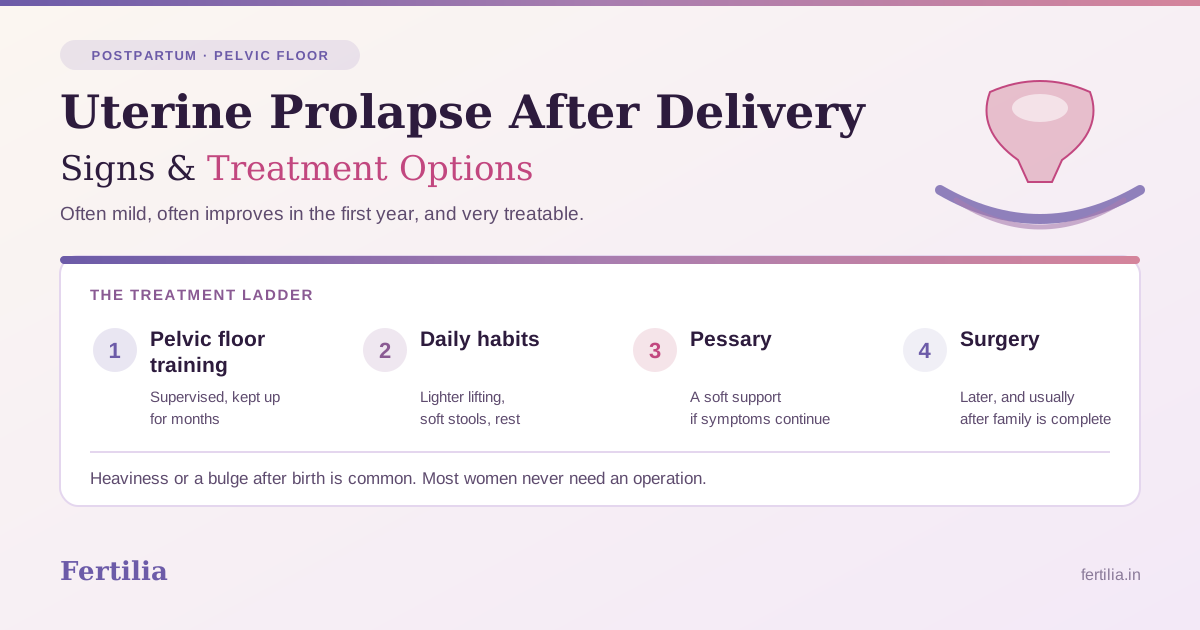
Your pelvic floor muscles stretched enormously during pregnancy and delivery. Ignoring pelvic floor recovery can lead to long-term issues like urinary incontinence, pelvic organ prolapse, and pain during intimacy.
When to Start
- Kegel exercises: You can start gentle Kegels within days of a vaginal delivery (once comfortable). For C-section, wait until your incision has healed (usually 6-8 weeks).
- Walking: Short, gentle walks from 2-3 weeks onwards. Don’t power-walk. Just move.
- Core rehabilitation: From 6-8 weeks, start gentle core work (diaphragmatic breathing, pelvic tilts). Do not do crunches or planks in early postpartum. They can worsen diastasis recti.
For more on this, read our guide on Postpartum Exercise.
For more on this, read our guide on Diastasis Recti. For a week-by-week exercise programme with separate tracks for normal delivery and C-section, read our postpartum exercises by week guide.
Signs You Need a Pelvic Floor Physiotherapist
- Leaking urine when you cough, sneeze, or laugh (beyond the first 6 weeks)
- A feeling of heaviness or bulging in the vaginal area
- Pain during intercourse (after 8+ weeks postpartum)
- Difficulty controlling gas
- Lower back pain that doesn’t improve
If back pain is persistent, especially from breastfeeding posture or carrying the baby, read our guide on back pain after delivery.
Pelvic floor physiotherapy is not widely known in India, but it’s one of the most impactful interventions for postpartum recovery. Ask your gynaecologist for a referral.
Postpartum Weight: The Honest Truth
Let’s address this directly, because it causes enormous anxiety.
You will not look like your pre-pregnancy self at 6 weeks. Or 3 months. And that’s fine.
Here’s what’s realistic:
- Most women retain 5-7 kg at 6 months postpartum
- It takes 6-12 months for most women to return to near pre-pregnancy weight
- If you’re breastfeeding, your body deliberately holds onto some fat reserves. This is biological, not a personal failure
- Crash dieting while breastfeeding reduces milk supply and depletes your already low nutrient reserves
What Actually Works
Months 1-3: Don’t focus on weight loss at all. Focus on healing, nourishing, and sleeping.
Months 3-6: Introduce gentle walking (30 minutes daily), ensure adequate protein (helps with satiety and muscle recovery), and reduce processed foods and refined sugar.
Months 6-12: You can now gradually increase exercise intensity, swimming, yoga, strength training. Focus on building strength, not losing weight. The weight loss will follow.
What doesn’t work: Extreme calorie restriction, juice cleanses, herbal weight loss supplements, and comparing yourself to Instagram influencers who have personal trainers, nannies, and good lighting.
C-Section Recovery: Special Considerations
If you had a caesarean delivery, your recovery timeline is longer, and that’s not a reflection of anything you did wrong.
- Incision care: Keep it clean and dry. Watch for redness, swelling, oozing, or fever. These could indicate infection
- Movement: You’ll need help getting in and out of bed for the first few days. Start gentle walking as soon as you can, it prevents blood clots and speeds healing
- Lifting: Don’t lift anything heavier than your baby for at least 6 weeks
- Driving: Most doctors recommend waiting 4-6 weeks
- Exercise: Wait for your 6-8 week check-up before starting any exercise beyond walking
- Emotional recovery: C-section mothers sometimes carry guilt about “not delivering naturally.” This is harmful and unfounded. You delivered a baby. The method doesn’t diminish that.
For a detailed week-by-week timeline covering wound care, stairs, driving, lifting, and scar maturation, read our C-section recovery week-by-week guide.
When to Call Your Doctor
In the postpartum period, certain symptoms require immediate medical attention:
- Heavy bleeding (soaking through a pad in an hour) or passing large clots
- Fever above 100.4°F (38°C)
- Foul-smelling vaginal discharge
- Severe headache or vision changes (could indicate postpartum preeclampsia)
- Chest pain or difficulty breathing
- Pain, redness, or swelling in your legs (could indicate a blood clot)
- Thoughts of harming yourself or your baby
- Incision site that is red, warm, oozing, or opening up
Don’t wait. Don’t “see if it gets better.” Call your doctor.
For a full traffic-light triage (green, yellow, red) of postpartum symptoms, read our postpartum warning signs guide.
The Partner’s Role
This section is for the partner reading this blog (and if you’re the mother, feel free to share this with them):
- She needs sleep. Take night feeds when possible. Even one unbroken 4-hour stretch makes an enormous difference.
- She needs food. Make sure she’s eating regularly. Bring her meals and water. She will forget.
- She needs you to ask, “How are YOU doing?”: not just ask about the baby.
- She needs you to handle visitors, family opinions, and logistics so she can focus on healing and bonding.
- If she says she’s not okay, believe her. Don’t dismiss it. Help her access professional support.
Postpartum recovery is not just the mother’s responsibility. It’s a family event.
A Note From Dr. Suganya Venkat
I’ve worked with hundreds of postpartum mothers, and the one thing I see repeatedly is women putting themselves last. Every calorie, every hour of sleep, every ounce of energy goes to the baby, and nothing is left for the mother.
You cannot pour from an empty cup. Your baby needs you to be nourished, rested, and mentally well. Taking care of yourself IS taking care of your baby.
If you’re struggling, with breastfeeding, with recovery, with your mental health, with the sheer overwhelm of new motherhood, please reach out. You don’t have to do this alone.
Our postpartum care program at Fertilia includes personalised nutrition planning, breastfeeding support, exercise guidance, and mental health check-ins. We walk with you through the entire first year, not just the first 40 days.
If you’re planning your pregnancy nutrition, read our pregnancy diet guide. For those dealing with PCOS postpartum, our PCOS guide covers what you need to know.
Frequently Asked Questions
When will I feel “normal” again after delivery?
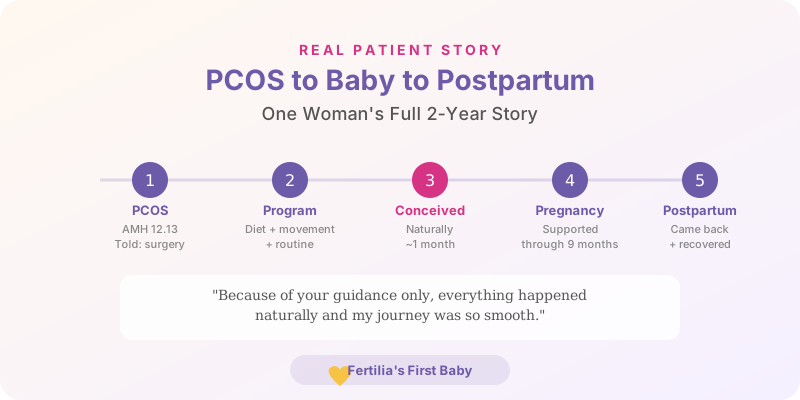
Most women feel physically recovered by 6-8 weeks for vaginal delivery and 8-12 weeks for C-section. But full hormonal, emotional, and body composition recovery takes 6-12 months. Be patient with yourself, your body grew a human being.
How much should I eat while breastfeeding?
About 400-500 extra calories per day, roughly one extra meal. Focus on protein (dal, eggs, paneer), calcium (ragi, dahi, til), and plenty of fluids. You need more food, not less, during breastfeeding.
Is it safe to exercise after delivery?
Walking can start within days of a vaginal delivery. Gentle exercises after 6 weeks (with doctor approval). After C-section, wait 8-12 weeks before any core or abdominal exercises. Listen to your body and avoid pain. For a structured week-by-week programme, see our postpartum exercises by week guide.
How do I know if I have postpartum depression vs baby blues?
Baby blues (mood swings, crying, anxiety) are common in the first 2 weeks and resolve on their own. If symptoms persist beyond 2 weeks, intensify, or include thoughts of harming yourself or your baby, it may be postpartum depression. Please seek help immediately. It’s treatable.
What traditional postpartum foods are actually helpful?
Ajwain water aids digestion. Dry ginger powder (sukku) reduces bloating. Ghee in moderation supports recovery. Garlic and fenugreek may support milk supply. Avoid excessive sugar and fried foods. Most traditional pathiya samayal (recovery food) is genuinely good science.
When can I start trying for another baby?
Most doctors recommend waiting at least 18-24 months after delivery before conceiving again (WHO, 2005, Report of a WHO Technical Consultation on Birth Spacing). After C-section, waiting 2-3 years is safer for uterine healing. This gives your body time to fully recover and replenish nutrients.
Is hair fall after delivery normal?
Yes. What you are seeing is telogen effluvium, the diffuse, non-scarring shedding that follows a trigger (Grover & Khurana, Indian Journal of Dermatology, Venereology and Leprology 2013, PMID 23974577). After delivery it usually becomes noticeable around 3 to 4 months in. Published estimates of how many women it affects vary widely between studies. During pregnancy, high estrogen keeps hair in the growth phase. After delivery, estrogen drops and all those hairs enter the shedding phase at once. It’s temporary, hair usually returns to normal by 6-12 months postpartum. Ensure adequate protein, iron, and biotin intake. Read our full guide on postpartum hair loss.
For more on this, read our guide on Postpartum Bleeding (Lochia).
When do periods return after delivery?
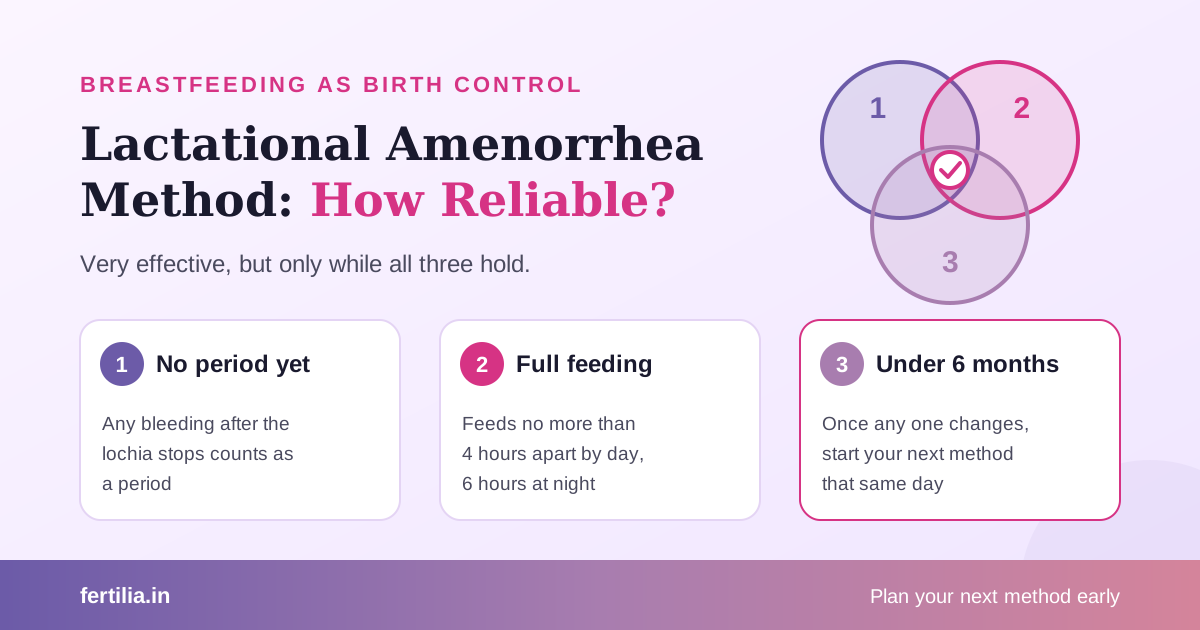
If you’re exclusively breastfeeding, periods may not return for 6-12 months (sometimes longer). If you’re formula feeding or mixed feeding, periods can return as early as 6-8 weeks. The return of periods doesn’t always mean you’re ovulating regularly, and you CAN get pregnant before your first postpartum period, so discuss contraception with your doctor. For a deeper look at the timeline and what to expect, read our first period after delivery guide.
Your Recovery Matters
Dr. Suganya’s postpartum program includes personalised nutrition, breastfeeding support, exercise guidance, and mental health check-ins, for the entire first year, not just the first 40 days.
Start a conversation on WhatsApp →
For structured, week-by-week support, see Dr. Suganya’s Postpartum Recovery program.
Dr. Suganya Venkat is an OB-GYN with 15+ years of clinical experience. She founded Fertilia to provide holistic, evidence-based care for fertility, PCOS, pregnancy, and postpartum recovery.
Related Reading
- Postpartum Depression: Signs, Support & Recovery
- Postpartum Warning Signs: When to Call Your Doctor
- C-Section Recovery Week by Week
- Normal Delivery Stitches: Episiotomy Care & Recovery
- Postpartum Exercises by Week
- First Period After Delivery
- Back Pain After Delivery
- Postpartum Belt: Does It Help?
- Postpartum Hair Loss
- Diastasis Recti: Self-Check & Exercises
- After Delivery Food Guide
- Normal Delivery Tips