Your baby finally falls asleep. The room is quiet. Everyone says this is the moment to rest.
Instead, you lie there with your heart pounding, cycling through the same thoughts: Is the breathing normal? Did I sterilise the bottles properly? What if something happens and I don’t notice? Is it too hot in here? Should I check again?
You know, somewhere, that these thoughts are disproportionate. But knowing that does not make them stop.
This is postpartum anxiety. It affects more new mothers than most people realise, and it is not a sign that something is wrong with you as a mother.
For more on this, read our guide on Postpartum Yoga.
What this post covers
- How postpartum anxiety differs from postpartum depression and baby blues
- The specific signs to watch for, across thought patterns, physical symptoms, and behaviour
- Why anxiety spikes after delivery (the biology behind it)
- What actually helps, including India-specific strategies
- When to reach out for professional support
- Answers to the questions I hear most often in clinic
Postpartum Anxiety Is Not the Same as Postpartum Depression
This distinction matters because the experiences feel different, and the support you need may differ too.
Postpartum depression typically presents as persistent sadness, emotional numbness, difficulty bonding with your baby, or a feeling of hopelessness. It is the emotional floor dropping out.
Postpartum anxiety feels more like the ceiling closing in. The dominant experience is excessive worry, not sadness. Your mind is running constantly, even when you are exhausted. You may feel on edge, restless, and unable to relax even when your baby is safe and sleeping.
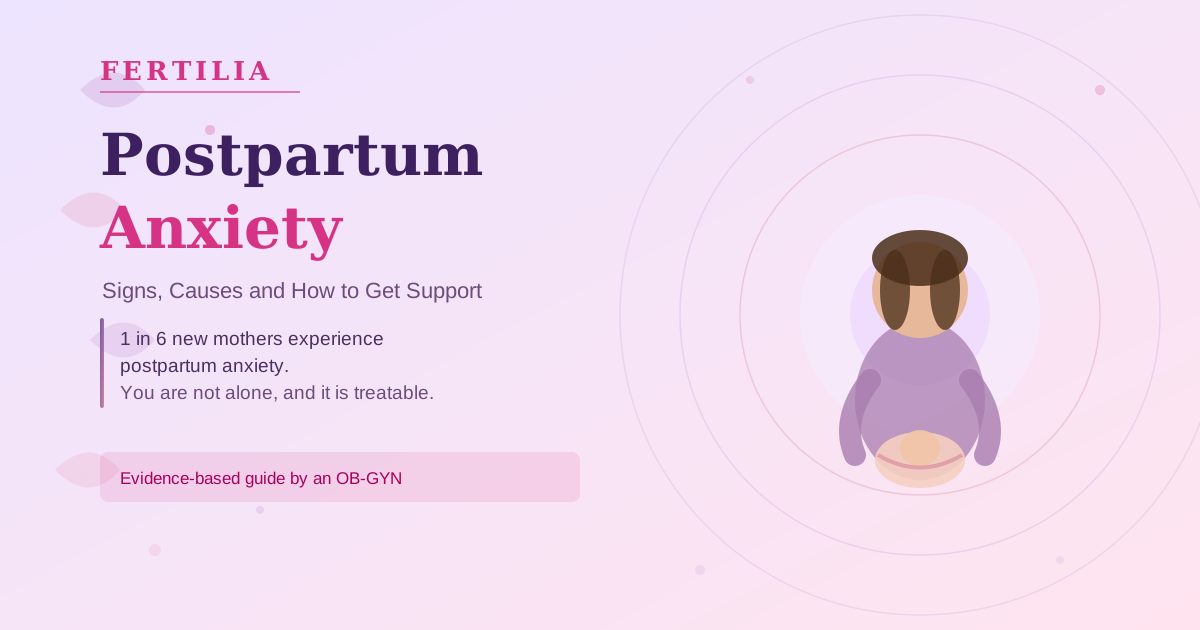
A systematic review and meta-analysis published in the British Journal of Psychiatry found that around 15% of women report anxiety symptoms in the first six months after delivery (Dennis, Falah-Hassani, and Shiri, 2017, PMID 28302701). That is roughly 1 in 7 new mothers. Postpartum depression and postpartum anxiety frequently co-occur, but anxiety can also appear independently.
Both are real medical conditions. Both deserve attention.
For a complete overview of what to expect and how to care for yourself in the weeks after delivery, the Postpartum Care Guide covers recovery, nutrition, exercise, and emotional wellbeing.
For more on this, read our guide on Constipation After Delivery.
Signs of Postpartum Anxiety
Postpartum anxiety shows up differently for different women. Most of the signs fall into three areas.
Thought patterns
- Racing thoughts that are difficult to slow, especially at night when the house is quiet
- Excessive worry about the baby’s health, safety, or development, even when all checks are normal
- Intrusive “what if” thoughts: what if the baby stops breathing, what if I make a mistake, what if something goes wrong
- Replaying interactions and second-guessing decisions repeatedly
- Catastrophising small situations, turning a minor feeding difficulty into a fear of complete failure
Physical symptoms
- Heart pounding or a racing pulse with no physical cause
- Shortness of breath or a tight chest
- Trembling or shakiness, particularly in the hands
- Nausea or an unsettled stomach that is not related to food or illness
- Feeling physically on edge, unable to sit still, unable to settle
Behavioural changes
- Checking on the baby excessively, sometimes many times per hour, even when the baby is well
- Avoiding situations that feel unpredictable (leaving the house, having visitors, sleeping when someone else is watching the baby)
- Difficulty trusting anyone else to care for the baby, because nobody else seems careful enough
- Inability to rest or sleep even when the opportunity is there
- Withdrawing from conversations or social contact because everything feels like too much
One thing I want to name directly: if you are having intrusive thoughts about accidentally or intentionally harming your baby, and these thoughts horrify you (rather than feel like wishes or intentions), this is a feature of postpartum OCD, a specific subtype of perinatal anxiety. These thoughts do not make you dangerous. They make you distressed, which is different. Please tell your doctor. This is a recognised and treatable condition, and you should not carry it alone.
Why Anxiety Spikes After Delivery
Understanding why this happens can remove some of the self-blame.
Hormonal shifts
During pregnancy, oestrogen and progesterone are at the highest levels they will ever reach. Progesterone, in particular, has a calming, GABA-like effect on the brain. In the 24 to 72 hours after delivery, both hormones drop sharply. For women whose nervous systems are sensitive to hormonal fluctuations, this drop can directly trigger anxiety. Cortisol, the stress hormone, also remains elevated in the early postpartum period as your body reads “new baby” as a high-alert situation.
Sleep deprivation
A fragmented, sleep-deprived brain does not regulate emotion effectively. When the amygdala (your brain’s threat-detection system) is running on insufficient sleep, it overestimates danger. The “is my baby breathing?” check at 3 AM is not irrational. It is a sleep-deprived brain doing exactly what it is built to do: scan for threats. The problem is that it cannot turn off, even when there is no threat.
A new identity under construction
Nothing prepares you for how complete the identity shift of becoming a mother is. The weight of responsibility for another life, the loss of your previous sense of self, and the social pressure to feel joyful and competent all at once create a context in which anxiety takes root easily.
Previous anxiety history
If you had anxiety before pregnancy, or experienced high anxiety during pregnancy, your risk of postpartum anxiety is higher. This is not deterministic. Having a history does not guarantee postpartum anxiety. But it is worth discussing with your care team before or just after delivery, so they can watch for early signs alongside you.
The Indian family context
In many Indian families, the postpartum period comes with strong opinions from multiple family members, confinement practices, and clear expectations about how a new mother should look and feel. When your internal experience does not match what is expected of you, the gap itself becomes a source of anxiety. Some women find themselves performing wellness (laughing at the right moments, reassuring relatives) while feeling completely overwhelmed inside. Knowing that your experience is medically recognised, and not a personal failing, can matter enormously.
If what you are reading sounds familiar, please know that reaching out is the right next step. Many women find that one honest conversation changes everything.
Chat with Dr. Suganya on WhatsApp and tell us what you are experiencing. We will take it from there.
What Actually Helps
Talk about it
The most consistent finding across postpartum mental health research is that social support reduces both the severity and duration of postpartum anxiety. In the Indian context, this means being honest with at least one person: your partner, your mother, a close friend, or your doctor. You do not need to perform wellness for the people around you.
Breathwork as a first-line tool
This works through your physiology, not through positive thinking. Slow, extended exhalation activates the parasympathetic nervous system, which counteracts the fight-or-flight state that anxiety creates.
Try this: breathe in for 4 counts, hold for 2, breathe out for 6. Repeat for 5 minutes. This is not a cure. It is a circuit-breaker that reduces the physical intensity of an anxious moment, which makes the thoughts easier to manage.
Pranayama practices like Anulom Vilom (alternate nostril breathing) and Bhramari work through the same mechanism and have a long tradition in postpartum care in India. If these practices feel familiar, they are worth returning to.
Sleep in blocks, not snatches
This is harder than it sounds, but sleep deprivation is a direct amplifier of anxiety. Multiple brief snatches of sleep do less for your nervous system than one longer continuous block. If your family is around, ask them to cover one feed or one check so you can sleep for three to four hours without interruption. That one block makes a measurable difference.
India-relevant postpartum foods
Postpartum nutrition affects mood through several pathways. Omega-3 fatty acids (alsi, aakhrot) support brain function and reduce inflammatory markers linked to postpartum mood disorders. Magnesium (rajma, palak, kaddu ke beej) plays a direct role in regulating the stress response. Iron and B12 deficiencies are common in the postpartum period and both worsen anxiety, cognitive fog, and fatigue. Warm, easy-to-digest foods such as moong dal khichdi, dahi, and ragi kanji also support the gut-brain axis, which is increasingly understood to play a role in mood regulation.
Our complete guide to after-delivery food for Indian mothers covers what to eat and what to avoid across the postpartum weeks.
Gentle movement once you are cleared
Light walking, once your doctor has cleared you, has a consistent and measurable effect on anxiety. You do not need a gym or a programme. Ten minutes outside, even with the baby in a carrier or with someone else for a short time, is enough to shift your nervous system state. Our guide to postpartum exercise covers the safe timeline for both vaginal delivery and C-section recovery.
Reduce decision fatigue
Anxious brains are exhausted brains. Every unnecessary decision, what to eat, who to call back, how to respond to a relative’s opinion, draws from the same cognitive bandwidth your nervous system is already struggling to maintain. For the first few weeks, simplify deliberately. Let your partner or family handle non-essential decisions. Eat the same simple, nutritious foods. Defer social obligations. The world can wait.
When to Seek Professional Support
At-home strategies genuinely help, but they are not a replacement for clinical support when anxiety is severe or persistent.
Please reach out to your doctor if:
- The anxiety is interfering with your ability to care for your baby or yourself
- You are avoiding essential activities because of worry
- Physical symptoms (pounding heart, shortness of breath, shaking) are happening daily
- You are unable to sleep even when you have the opportunity, because racing thoughts take over
- Intrusive thoughts are present and distressing
- The anxiety has not improved meaningfully after two weeks of trying the strategies above
Treatment for postpartum anxiety is effective. Depending on your situation, your doctor may recommend cognitive behavioural therapy (which has the strongest evidence base for perinatal anxiety), medication (SSRIs that are safe for breastfeeding are available and widely used), or a combination of both. You do not have to wait until things become unmanageable before asking for help. Earlier support means faster recovery.
If you are also dealing with postpartum belly changes or concerns about postpartum bleeding, those are worth bringing up at the same appointment. Physical discomfort that goes unaddressed adds to the mental load, and your doctor can assess the full picture together.
Frequently Asked Questions
Is postpartum anxiety normal, or does it mean something is wrong with me? Postpartum anxiety is a recognised clinical condition affecting approximately 1 in 6 new mothers. It has biological causes including hormonal shifts, sleep deprivation, and nervous system sensitisation. It is not a sign that you are weak, unstable, or failing as a mother. It does mean that your nervous system is under a great deal of strain, and that strain deserves support, not silence.
How long does postpartum anxiety last? This varies widely. For some women, symptoms resolve within a few weeks as sleep improves and hormones stabilise. For others, particularly those with more severe symptoms or a history of anxiety, it can persist for months without support. Reaching out early matters: earlier support consistently leads to faster recovery. There is no benefit in waiting.
Can postpartum anxiety affect my ability to breastfeed? Yes, indirectly. Elevated cortisol can temporarily affect the let-down reflex. Anxiety also makes it harder to feed calmly, which can create a difficult cycle where feeding difficulties increase anxiety, which further affects feeding. Breathwork before feeds, a calm environment, and addressing the anxiety itself all help. Your doctor can also advise on whether any treatment options are compatible with breastfeeding, and most commonly used SSRIs are considered safe.
I had anxiety during pregnancy. Does that mean I will definitely develop postpartum anxiety? Not definitely. A history of anxiety does increase the risk, but it does not make postpartum anxiety inevitable. Women who had antenatal anxiety and received support early often do very well postpartum. The key step is telling your care team before or just after delivery so they can watch for early signs alongside you, rather than discovering them weeks later.
My family says I just need to rest and eat properly. Is that enough? Rest and nutrition are genuinely important foundations for postpartum recovery, including mental health. But if you are experiencing moderate to severe postpartum anxiety, these alone are unlikely to be sufficient. They support recovery; they do not replace it. If you have been honest with your family about how you are feeling and it has not changed, please also tell your doctor. Both conversations matter.
My partner does not understand what I am going through. How do I explain it? One useful frame: “I know our baby is fine. I know it logically. But my brain is not responding to that knowledge. It keeps generating emergencies that are not there, and I cannot make it stop.” Anxiety is not about lacking information or being unreasonable. It is a physiological state in which the threat-detection system is overactivated. When partners understand this, they are usually better able to help practically (taking the next feed, reducing background noise, handling family phone calls) rather than trying to argue you out of it.
You do not have to navigate this alone. Dr. Suganya and the Fertilia team have supported many women through exactly this kind of postpartum experience.
Reach out on WhatsApp and tell us where you are right now. We will take it from there. You can also find steady support inside Dr. Suganya’s Postpartum Recovery program.