Nobody quite prepares you for the soreness.
You have just delivered your baby. The first feed has happened, the cord has been cut, and the room has softened into something resembling calm. Then you sit up, or try to, and you feel it: a deep, throbbing tenderness between your legs. The midwife or doctor mentions stitches, and your mind goes blank. You were so focused on the delivery that the recovery part never quite registered.
The short version: most repairs use dissolvable stitches, the worst of the soreness passes by day 5 to 7, and the repair is usually confirmed healed at your 6-week check, so 4 to 6 weeks in total.
Stitches after a vaginal delivery are extremely common. Over 85% of women who deliver vaginally sustain some degree of perineal trauma, and a significant proportion need stitches (Kettle & Tohill, BMJ Clinical Evidence, 2008, PMID 19445799). Understanding what your stitches are, how they heal, and what to do each day makes recovery significantly more manageable.
This post is part of the complete post-delivery care guide for Indian mothers. Here you will find everything specific to perineal stitches: what happens during repair, how the healing progresses day by day, practical care at home, and which signs mean your doctor should know.
Episiotomy vs Natural Tear: What Is the Difference?
A perineal tear happens when the tissue between the vaginal opening and the rectum (the perineum) stretches and splits during delivery. Tears are graded from first to fourth degree depending on depth. First and second-degree tears involve the skin and some superficial muscle, heal well, and are the most common. Third and fourth-degree tears extend deeper and require more careful repair.
An episiotomy is a deliberate incision made by the doctor or midwife just before delivery, either to create more space for the baby’s head or to reduce the risk of a more severe tear in a specific clinical situation. It is typically made at a 45-degree angle (mediolateral episiotomy) or straight down (midline episiotomy).
The World Health Organization’s evidence review and NICE’s intrapartum care guideline (NG235, 2023, which replaced CG190) both recommend restricting episiotomy to situations where it is clinically necessary, rather than performing it routinely. A Cochrane review of eight trials found that a restrictive episiotomy policy, compared with routine episiotomy, resulted in less severe perineal trauma, less need for suturing, and fewer healing complications, with no difference in pain or in severe vaginal or perineal trauma (Carroli and Mignini, Cochrane Database of Systematic Reviews, 2009, PMID 19160176).
That said, if you had an episiotomy, that decision was made in real time based on your specific situation. The question now is how to heal well.
For context on the delivery itself, the evidence-based guide to normal delivery has the full picture of what happens in the labour room.
Types of Stitches: Dissolvable and Non-Dissolvable
Most perineal repairs today use dissolvable (absorbable) sutures, such as polyglactin (Vicryl Rapide) or chromic catgut. These do not need to be removed. The body absorbs them over 2 to 6 weeks depending on the material used.
A 2012 Cochrane systematic review by Kettle, Dowswell, and Ismail found that continuous (running) absorbable sutures caused significantly less short-term pain than interrupted (knotted) sutures for repair of second-degree tears and episiotomy, and were associated with fewer suture removals (Kettle, Dowswell and Ismail, Cochrane Database of Systematic Reviews, 2012, PMID 23152204). Most hospitals and clinics now use continuous sutures for this reason.
Non-dissolvable sutures are used less commonly for perineal repairs, and if they were used in your case, your doctor would have arranged a removal appointment, typically at 5 to 7 days postpartum. If you are unsure what type you had, ask the nurse or doctor who handled your discharge paperwork.
A small note for women who notice what looks like suture material in their pad or in the bath after a few days: this is often just the outer suture shedding as the tissue heals from the inside out. The underlying repair is intact. If the wound edges appear to be opening rather than closing, that is a different matter and needs review.
The Recovery Timeline: Day by Day and Week by Week
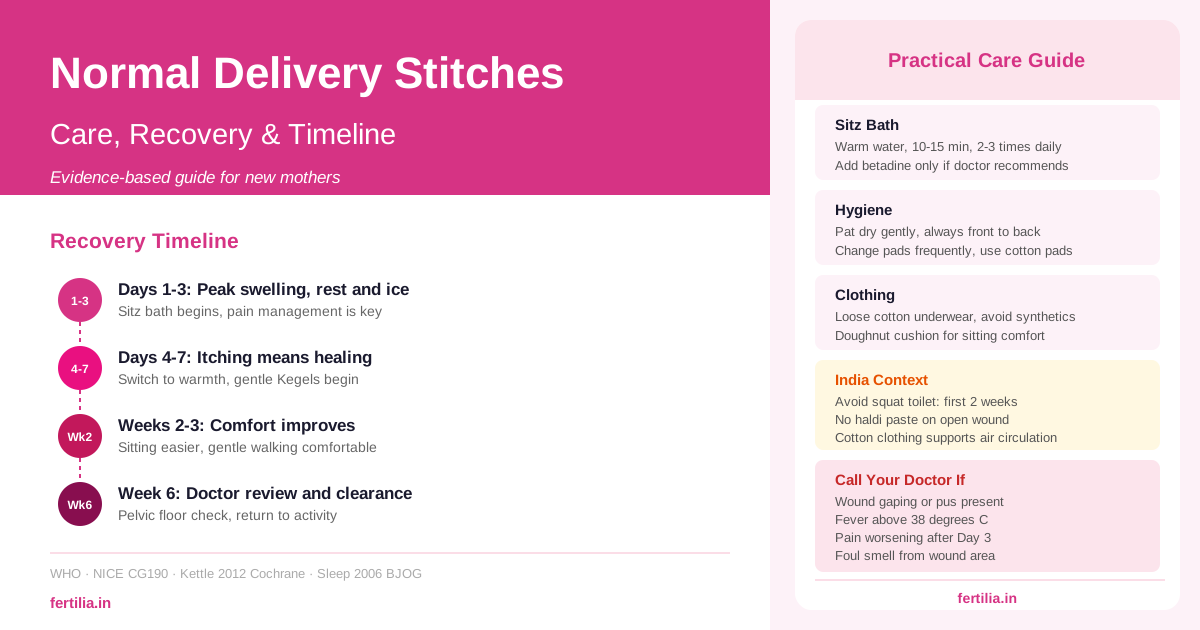
Healing does not happen on a single clock. It depends on the degree of the tear or episiotomy, your nutrition, how well pain and swelling are managed, and whether any complications arise. The timeline below reflects typical uncomplicated healing.
Days 1 to 3: Swelling and Initial Soreness
The first 48 to 72 hours are usually the most uncomfortable. Swelling of the perineal tissue is at its peak. Sitting, standing, and moving from lying down to upright all cause discomfort. Passing urine can sting if it contacts the raw wound edges, which is why the standard advice is to pour warm water over the perineum while voiding. This dilutes the urine and reduces the sting considerably.
Ice packs, wrapped in a clean cloth, applied for 10 to 15 minutes at a time in the first 24 hours reduce swelling and provide relief. After the first day, warmth generally works better than cold. Your doctor may have prescribed a painkiller for this period. Take it as directed, especially before feeds that require you to sit upright. Managing pain well in the first 72 hours also reduces the risk of developing a hunched compensatory posture that creates secondary back and hip pain.
A sitz bath can begin as soon as you are comfortable enough to manage it. Fill a shallow basin or bathtub with enough warm water to cover the perineum, add a small amount of diluted povidone-iodine (betadine) only if your doctor has specifically recommended it, and sit for 10 to 15 minutes two to three times a day. Warm water alone promotes circulation and supports healing, and it keeps the area clean without the pulling motion of wiping.
Days 4 to 7: Itching Means Healing
If your stitches begin to itch by Day 4 or 5, that is a reassuring sign. In practice, most women notice the itch around day 4 or 5, and it almost always means the surface is knitting together rather than that something is wrong. The itch can feel intense but avoid scratching or rubbing. Continue the sitz baths. If you were given a perineal spray (often containing a local anaesthetic such as lignocaine, or a herbal-based formulation), this can help with surface itch and discomfort.
The swelling should begin reducing by Day 5 to 7 in most women. Sitting becomes a little easier. Pain is more noticeable when changing positions than when you are still.
The postpartum bleeding guide explains what lochia looks like in these first weeks and how to tell normal uterine discharge from wound-related bleeding, which are distinct things happening at the same time.
In my practice, the most common reason a woman messages me around Day 5 is pain that feels as though it is getting worse. Far more often than not, it is normal swelling settling unevenly rather than an infection. Women also frequently panic when they see a thread of suture material on the pad, but this is usually just the outer knot shedding. When a mother-in-law is insisting on haldi paste on the wound, I tell the family the same thing: haldi in the food helps, and haldi on fresh stitches does not.
Weeks 2 and 3: Comfort Improves
By the second week, most women with first or second-degree repairs notice meaningful improvement. Sitting is more comfortable. Walking at a gentle pace is possible without significant pain. The stitches are largely dissolving.
A supportive cushion helps considerably at this stage. A doughnut-shaped ring cushion reduces direct pressure on the perineum when sitting. In the absence of a ring cushion, sitting slightly to one side on a firm chair is a practical alternative. Avoid soft mattresses and deep sofas in the early weeks because they allow the pelvis to sink in a way that compresses the repair.
Continue gentle hygiene throughout: patting dry rather than wiping, always front to back, changing pads regularly. The perineal area benefits from air circulation where possible, so loose clothing and cotton underwear serve double duty here.
Week 4 to 6: Return to Normal Function
By 4 to 6 weeks, most women find that daily activities are comfortable again. At your 6-week postpartum review, which NICE recommends as standard care at 6 to 8 weeks after the birth (NICE postnatal care guideline NG194, 2021), your doctor will check the repair site, assess pelvic floor function, and discuss return to exercise and intimacy. Our guide on sex after delivery covers when intimacy is usually safe again.
Pelvic floor exercises (Kegels) can begin as soon as the pain allows a gentle contraction, often in the second week. They improve blood flow to the repair area, which supports healing, and they help prevent longer-term consequences of perineal trauma including urinary leakage and reduced sensation. The postpartum exercises by week guide has a step-by-step Kegel programme starting from Week 0, and the general postpartum exercise guide covers when it is safe to progress to walking, core work, and strength exercises.
Return to sexual activity after a vaginal delivery with stitches is typically guided by the 6-week check. Many women find they need longer, which is completely normal. There is no fixed deadline. Communicate with your partner and discuss with your doctor if you have concerns.
Practical Care: What to Do at Home
Here is the daily care routine that covers the essentials.
Sitz bath: Fill a shallow basin or bathtub with warm water. Sit for 10 to 15 minutes, two to three times a day. Add diluted betadine only if your doctor has specifically recommended it. Plain warm water is effective and gentle on the tissue.
After passing urine: Use a clean squeeze bottle or mug to pour warm water over the perineum while voiding, then pat dry gently from front to back. Do not wipe in a motion that moves material toward the wound.
Ice packs: Useful in the first 24 hours for swelling control. Wrap ice in cloth; never apply directly to skin. After Day 2, warm soaks are more effective than ice.
Perineal spray: If your hospital provided one, use it as directed. Lignocaine-based sprays help with surface pain and itch.
Doughnut cushion: Reduces direct pressure on the perineum when sitting. Available at most pharmacies. Not essential, but many women find it makes a significant difference in the first two weeks.
Sleeping positions: Side-lying is most comfortable for most women. If lying on your back, a small pillow tucked between the knees reduces perineal pressure. When moving from lying to sitting, use your arms to push up rather than contracting the abdominals sharply.
Clothing: Loose cotton underwear that does not press against the repair site. Avoid synthetic fabrics, tight waistbands, or anything that creates friction. Change pads frequently to keep the area dry.
India-Specific Care: What Your Family May Suggest and What the Evidence Says
The postpartum period in India comes with strong family traditions and well-intentioned advice from elders. Some of it genuinely helps. Some of it needs to be adapted in the first weeks.
Squat toilets: If your home uses an Indian-style squat toilet, use a Western-style toilet or commode chair for the first two weeks after stitches. The deep squat position puts significant downward pressure on the pelvic floor and perineum at a time when the repair is still in its most vulnerable phase. This is not a cultural comment but a mechanical one: the squat position stresses the suture line before it has adequate tensile strength. If you do not have a Western-style toilet at home, a plastic commode chair from a medical store costs only a few hundred rupees and solves this; where neither is available, placing a low stable stool over the squat pan and getting a family member to steady you is a reasonable substitute for the first two weeks.
Haldi paste on the wound: A common family suggestion is to apply haldi paste directly to the stitched area for its antiseptic properties. This should not be done on a fresh or open wound. Curcumin, haldi’s active compound, does have anti-inflammatory properties in laboratory research, but applying a thick paste to an open wound can introduce particulate matter, cause contact irritation, and create an occlusive environment that traps bacteria rather than repelling them. At the perineum, where the wound is in continuous contact with urine and lochia, a paste application increases the risk of wound contamination rather than reducing it. Haldi in your diet and warm haldi milk are genuinely supportive foods for your recovery. As a topical wound treatment, it does more harm than good in the first 4 to 6 weeks.
Oil massage: General body massage during the traditional 40-day confinement period is comfortable and restorative for the back, shoulders, and legs. The perineal area should not be massaged until your 6-week check has confirmed the repair has healed fully.
Cotton clothing and loose garments: Tradition and evidence agree completely here. Cotton allows ventilation, reduces moisture, and does not create friction against tender tissue. If a salwar kameez or loose cotton dhoti feels more comfortable than fitted jeans, that is because it is. Prioritise comfort and airflow.
Diet during recovery: Adequate protein and iron support wound healing directly. Lentil dals, eggs, paneer, ragi, palak, and chana are all practical high-protein and high-iron foods for the postpartum period. Dietary restrictions based on regional “cold foods” or “gas-producing foods” traditions vary widely. There is no evidence that specific foods impair wound healing, so restrict only what causes you genuine digestive discomfort.
Signs of Normal Healing and When to See a Doctor
Most perineal repairs heal without complications. Knowing what normal looks like reduces unnecessary anxiety, and knowing the warning signs means you can act promptly when needed.
Signs that the healing is on track:
- Tenderness gradually reducing from Day 3 onward
- Itching around Day 4 to 7
- Visible suture material in the pad (outer dissolving layer shedding)
- Mild redness at the wound edges in the first week
- Some discomfort when sitting, improving noticeably by Week 2 to 3
Signs that need medical review (contact your doctor or midwife):
- Wound edges appearing to pull apart or gape
- Pain that is getting worse after Day 3, rather than improving
- Pus, thick or discoloured discharge from the wound (distinct from normal lochia)
- Fever above 38°C with perineal pain (possible wound infection)
- A foul smell from the area that is not consistent with normal lochia
- Inability to pass urine or stools due to pain
For the full checklist of postpartum warning signs including bleeding, fever, and mental health red flags, the postpartum warning signs guide gives a clear traffic-light triage system.
If you are unsure whether what you are experiencing is normal, message Dr. Suganya on WhatsApp with a brief description, and she will tell you whether it can wait for your routine check or needs to be examined the same day. If you have fever, pus, a foul smell, or the wound looks like it is opening, do not wait for a reply, get the wound examined.
Frequently Asked Questions
How can I help my stitches recover faster after a normal delivery?
The stitches heal on their own over 4 to 6 weeks; what you can do is keep the area clean and let it heal undisturbed. Rinse with plain warm water after every visit to the toilet and pat (do not rub) dry from front to back. Change your pad every 4 to 6 hours so the area stays dry. Sit on a firm chair with a ring cushion or slightly to one side, do gentle pelvic-floor (Kegel) squeezes once it feels comfortable to bring blood flow to the area, and avoid straining on the toilet by keeping your stools soft with fluids and fibre. Take the pain relief your doctor prescribed rather than pushing through. The single most important thing is not to ignore the red flags below: increasing pain after day 3 to 4, a foul smell, pus, fever, or the wound gaping all mean call your doctor rather than wait it out.
How long does it take for episiotomy stitches to dissolve?
Dissolvable stitches, which are used in most perineal repairs today, typically dissolve within 2 to 6 weeks depending on the material. Vicryl Rapide dissolves fastest: it loses most of its strength by around 10 to 14 days and is fully absorbed by roughly six weeks, which is why the surface knots shed early while the deeper repair still holds. You may notice suture material in your pad or bath as the outer sutures shed. The deeper sutures dissolve more slowly and are not visible externally. If you had non-dissolvable sutures, your doctor would have arranged removal at around Day 5 to 7.
Is it normal for the area to feel very tight after delivery?
Yes. Swelling in the perineal tissue and the initial stages of wound healing both contribute to a feeling of tightness, heaviness, and tenderness. This typically peaks in the first 48 to 72 hours and then gradually eases. The tightness does not mean the stitches are too tight or that anything has gone wrong. If the tightness is accompanied by increasing pain, fever, or a visible change in the wound, contact your doctor.
Can I use any ointment on the stitches?
Use only products recommended by your doctor or midwife. Diluted betadine in sitz bath water is commonly used in the early days. Some doctors prescribe a topical antibiotic ointment or a barrier cream. Do not apply haldi paste, ghee, herbal oils, or any traditional home remedy directly to fresh stitches. Once the wound is fully healed after the 6-week check, gentle calendula or coconut oil can be used for scar massage if desired.
When can I start Kegel exercises after stitches?
Gentle Kegels can begin as soon as the pain allows a contraction without significant discomfort, usually during the second week for most women. Starting them early improves blood flow to the repair area, which actively supports healing. Begin with very gentle, short holds of 2 to 3 seconds and build up gradually over the weeks. If contracting causes sharp pain, wait a few more days. The postpartum exercises by week guide has a structured progression starting from Week 0 for both normal delivery and C-section recovery.
The sutures seem to have come out early but I still have pain. Is that normal?
Dissolvable stitches shed in layers. The outer suture material dissolving early does not mean the repair is open. The deeper layers dissolve more slowly and continue to hold the tissue together for several more weeks. Mild discomfort in the second and third weeks is normal as the tissue remodels and the deeper sutures absorb. If you notice the wound edges are visibly gaping, there is pus or unusual discharge, or the pain is increasing rather than decreasing, that needs clinical review.
Will the stitches affect intimacy in the long term?
For most women, a straightforward first or second-degree repair heals without long-term effects on sexual function. Return to intimacy after the 6-week check, when the repair is confirmed to be sound, is generally safe. Some women find the area feels different for a few months, and this usually settles over time as the scar tissue matures. Women with third or fourth-degree tears or with wound complications may take longer and often benefit from pelvic floor physiotherapy. If you have ongoing discomfort during intimacy at 3 months postpartum, a review with your OB-GYN is the right next step.
My family says I should not climb stairs for 40 days. Is this true for stitches?
Gentle stair-climbing at a slow pace is generally fine once you can walk without significant pain, usually by the second week for most women. Stairs do not directly stress the perineal repair the way deep squatting does. What matters more in the first two weeks is avoiding heavy lifting (anything heavier than your baby), squat positions, and prolonged standing without support. The traditional 40-day rest period has a genuinely sensible core: rest, good food, and family support are all protective for recovery. The specific restriction on stairs is not supported by clinical evidence, though taking recovery slowly in these weeks is genuinely helpful and you should not feel any pressure to rush.
Your Body Is Doing Exactly What It Should
Perineal stitches after a vaginal delivery heal reliably in the great majority of women. The process has clear, predictable stages: swelling in the first days, itching as early healing progresses, gradual comfort improvement through Weeks 2 and 3, and confirmed healing at the 6-week check. What makes the difference is consistent gentle care: warm water, clean pads, adequate protein and rest, and knowing the difference between normal healing and signs that need attention.
If you have questions about your recovery or want to check whether what you are experiencing is within the normal range, message Dr. Suganya on WhatsApp. For a complete postpartum care plan covering the full 6 weeks of recovery, download the Postpartum Care Resource. For guided recovery, see Dr. Suganya’s Postpartum Recovery program.