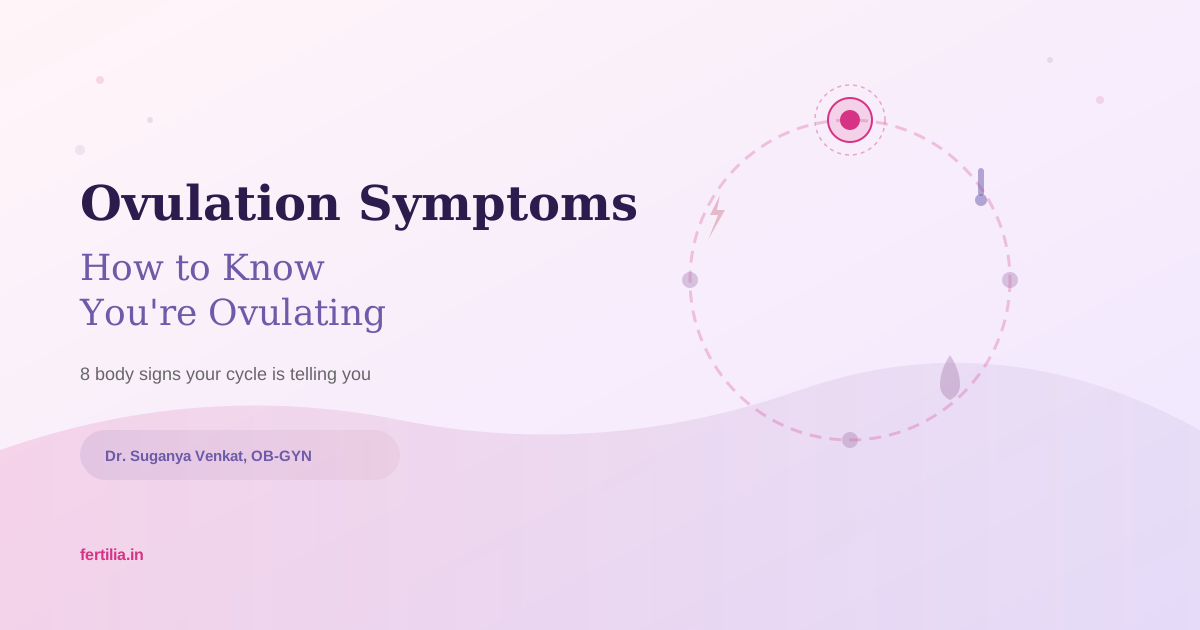
Your body doesn’t stay silent during ovulation. Every cycle, it sends a series of signals that tell you when an egg is about to be released, when it’s being released, and when the window has passed.
The problem? Most of us were never taught what to look for. We learn about periods in school but almost nothing about the 24 to 48 hours each month that actually determine whether conception is possible.
In my 15+ years of clinical practice, I’ve found that women who learn to read their body’s ovulation signs conceive faster and feel more in control of their fertility journey. Not because the signs replace medical tools, but because they give you daily, free information about what your body is doing right now.
This guide will walk you through 8 real ovulation symptoms, what causes each one, and how to use them practically when you’re trying to conceive.
How Ovulation Works (A Quick Refresher)
Ovulation is the moment a mature egg releases from the ovary into the fallopian tube. It typically happens once per cycle, around 12 to 16 days before your next period starts (not 14 days after your period, which is a common misconception that trips up women with longer or shorter cycles).
The process is driven by a surge in luteinizing hormone (LH). This LH surge triggers the follicle to rupture and release the egg. The egg then survives for only 12 to 24 hours. Sperm, however, can survive for up to 5 days inside the reproductive tract.
This means your fertile window is about 5 to 6 days: the 5 days before ovulation plus the day of ovulation itself. Every symptom we’ll discuss below is your body’s way of signalling where you are in this window.
If you want to learn how to actively track ovulation using tools like LH kits or BBT charting, read our complete ovulation tracking guide. This post focuses specifically on what your body tells you without any tools at all.
The 8 Ovulation Symptoms to Watch For
1. Cervical Mucus Changes (The Most Reliable Sign)
This is the single most useful body sign. Research published in Fertility and Sterility confirms that the presence of egg-white cervical mucus (EWCM) correlates strongly with the fertile window and is a better predictor of conception probability than cycle day counting alone (Bigelow et al., 2004).
What to look for:
In the days after your period, discharge is typically minimal and dry. As you approach ovulation, it gradually becomes:
- Sticky and white (early pre-ovulation, a few days out)
- Creamy and lotion-like (getting closer)
- Wet, slippery, and stretchy like raw egg white (peak fertility, ovulation is imminent or happening)
After ovulation, mucus dries up quickly and becomes thick or absent again. This shift from wet to dry is your body confirming that ovulation has passed.
Why it happens: Rising oestrogen stimulates the cervix to produce thin, alkaline mucus that helps sperm survive and swim toward the egg. After ovulation, progesterone thickens the mucus to form a plug.
How to check: You can observe it on toilet paper when you wipe, or between your fingers. The peak-fertility mucus stretches 3 to 5 cm without breaking.
2. Ovulation Pain (Mittelschmerz)
About 40% of women experience a mild, one-sided pain in the lower abdomen around ovulation. In German, it’s called mittelschmerz, literally “middle pain” because it occurs mid-cycle.
What it feels like:
- A sharp twinge or dull ache on one side (the side that’s ovulating that month)
- Lasts anywhere from a few minutes to a few hours
- Occasionally lasts up to a day or two
Why it happens: The exact mechanism isn’t fully confirmed, but it’s likely caused by the follicle stretching the ovarian surface before rupture, or by a small amount of fluid or blood released when the follicle bursts (O’Herlihy et al., 1980).
Important: Ovulation pain tells you ovulation is happening right now or just happened. If you only rely on this sign, you may be catching the tail end of your fertile window. Ideally, combine it with cervical mucus changes to start trying a few days earlier.
If the pain is severe (not mild), lasts more than 2 days, or comes with heavy bleeding, talk to your gynaecologist. That pattern may point to something else entirely, like an ovarian cyst or endometriosis.
3. Increased Libido
Research shows that sexual desire tends to peak in the days leading up to ovulation. A study published in Hormones and Behavior found that women reported higher sexual desire during their fertile window compared to other phases of the cycle (Roney & Simmons, 2013).
Why it happens: The pre-ovulatory rise in oestrogen and a small spike in testosterone together increase libido. This is your body’s biological nudge toward conception.
How to use it: If you notice a natural increase in desire mid-cycle, it’s a soft signal that you may be approaching ovulation. It’s not precise enough to use alone, but it’s a useful “background signal” alongside mucus changes.
4. Breast Tenderness
Some women notice mild breast soreness or tenderness that begins around ovulation and continues into the second half of the cycle (the luteal phase).
What it feels like:
- Slight heaviness or sensitivity, especially on the sides of the breasts
- Not the same as pre-period tenderness, which tends to be stronger and more widespread
Why it happens: The post-ovulatory rise in progesterone causes fluid retention in breast tissue. If you notice this tenderness appearing mid-cycle, it’s often a sign that ovulation has just occurred.
One caveat: Breast tenderness alone is not a reliable ovulation predictor. Many women get it, many don’t, and PMS breast pain can feel similar. Think of it as a supporting sign, not a standalone one.
5. Light Spotting
A small percentage of women (about 3 to 5%) notice very light spotting around ovulation. This is not a period. It’s usually just a few drops of pink or light brown discharge.
Why it happens: When the follicle ruptures, it can cause a small amount of bleeding. Additionally, the rapid drop in oestrogen just before ovulation (before progesterone takes over) can cause a brief thinning of the uterine lining.
When to pay attention: Ovulation spotting is light and brief (a day or less). If spotting is heavy, lasts more than 2 days, or happens between periods regularly, it’s worth a check-up to rule out other causes.
6. Bloating and Fluid Retention
Mild bloating around ovulation is common and often overlooked. You might notice your clothes feel slightly tighter or your belly looks a bit more rounded than usual.
Why it happens: Oestrogen promotes water retention. Since oestrogen peaks just before ovulation, some bloating around this time is normal. It usually resolves within a day or two as progesterone rises.
For women with PCOS: If you have PCOS-related bloating, it can be harder to distinguish this from your baseline. Tracking mucus changes alongside bloating helps clarify whether ovulation is actually happening.
7. Heightened Sense of Smell
This one surprises most women, but studies support it. Research published in Hormones and Behavior demonstrated that olfactory sensitivity increases during the fertile window (Lundstrom et al., 2006). You may notice certain smells feel stronger or more noticeable around ovulation.
Why it happens: Rising oestrogen enhances olfactory receptor sensitivity. From an evolutionary perspective, this may help with mate selection during the fertile period.
How useful is it? It’s one of the subtler symptoms. Most women won’t notice it unless they’re paying attention. But if you do notice certain foods or perfumes smelling stronger around mid-cycle, it could be another piece of the puzzle.
8. Basal Body Temperature Shift
Your resting body temperature (measured first thing in the morning before getting out of bed) drops slightly just before ovulation and then rises by about 0.2 to 0.5°C after ovulation. This temperature shift stays elevated until your next period.
Why it happens: Progesterone (released after ovulation) raises your core body temperature. The sustained rise confirms that ovulation has already occurred.
The limitation: BBT tells you ovulation happened yesterday. It doesn’t predict when it’s coming. That’s why it works best when combined with cervical mucus (which tells you ovulation is approaching) and tracked over multiple cycles to identify your pattern.
For a detailed guide on how to measure BBT accurately, including what can throw off your readings, see our ovulation tracking guide.
How to Combine These Signs (The Practical Approach)
No single symptom is reliable enough on its own. The real power comes from combining 2 or 3 signs to build a clearer picture. Here’s what I recommend to my patients:
Your core combination:
- Cervical mucus (primary indicator, check daily)
- Ovulation pain or BBT (secondary confirmation)
- Any personal pattern you’ve noticed (libido, bloating, spotting)
A typical fertile pattern looks like this:
- Day 10: Mucus starts becoming wetter and clearer
- Day 12: Egg-white mucus appears, you may notice increased desire or mild bloating
- Day 13: Peak mucus day, possibly a twinge of one-sided pain
- Day 14: Mucus dries up, BBT rises the next morning, breast tenderness begins
Your numbers will be different. The point is to learn your pattern over 2 to 3 cycles. Once you know it, you’ll feel confident about your fertile window without needing to guess.
When you’re trying to conceive: Start having intercourse when you first notice wet, stretchy mucus (not when you feel pain, that’s often too late). Continue every 1 to 2 days until mucus dries up.
When Your Body Isn’t Showing Ovulation Signs
What if you’re watching carefully and the signs just aren’t there? No egg-white mucus, no mid-cycle pain, no temperature shift?
This is important information too. The absence of ovulation symptoms may mean you’re not ovulating (a condition called anovulation), and it’s more common than most women realise.
Signs that suggest anovulation:
- No egg-white cervical mucus at any point in your cycle
- Cycles shorter than 21 days or longer than 35 days
- No mid-cycle temperature shift when tracking BBT
- Very light or very heavy periods
- Irregular cycle lengths (varying by more than 7 to 9 days month to month)
Common causes of anovulation: (For a real case of anovulation reversing through lifestyle changes, see Nisha’s PCOS story, absent periods since puberty, natural ovulation restored in Month 1.)
- PCOS (the most common cause in younger women)
- Thyroid disorders (both hypothyroid and hyperthyroid)
- High stress or very low body weight
- Coming off hormonal birth control (cycles may take a few months to regulate)
- Insulin resistance (even without a PCOS diagnosis)
If you suspect you’re not ovulating, the next step is a clinical evaluation. Your gynaecologist can confirm with a simple blood test (Day 21 progesterone) and an ultrasound to check for follicular development. This isn’t something to worry about in silence. It’s something to get clarity on so you can take the right next step.
What Ovulation Symptoms Tell You About Your Hormonal Health
Beyond fertility, your ovulation symptoms are a monthly report card on your hormonal balance.
Strong, consistent ovulation signs (regular mucus pattern, predictable pain, clear temperature shift) generally indicate that your oestrogen, LH, and progesterone are working in coordination. This is reassuring even if you’re not trying to conceive right now.
Weak, inconsistent, or absent signs may point to:
- Low oestrogen (minimal mucus, no libido changes)
- Progesterone deficiency (no sustained temperature rise, very short luteal phase)
- Elevated androgens, often related to PCOS (irregular timing, absent ovulation in some cycles)
Paying attention to these patterns gives you and your doctor valuable information. When you walk into a consultation saying, “I’ve been tracking my cervical mucus and I haven’t seen egg-white mucus in 3 cycles,” that’s incredibly helpful. It immediately tells your doctor where to look.
Nutrition That Supports Ovulation
What you eat won’t make ovulation happen if there’s an underlying condition, but it can support the hormonal environment that makes regular ovulation more likely.
Key nutrients for ovulation support:
- Vitamin D: Deficiency is extremely common in Indian women (up to 70 to 90% in some studies) and is linked to menstrual irregularity and anovulation. Get your levels checked and supplement if needed.
- Vitamin B12: Critical for cell division and egg development. Many vegetarian Indian women are deficient. Found in dahi (curd), paneer, and milk, though supplementation is often needed.
- Iron: Heavy periods deplete iron stores, and low iron itself can affect cycle regularity. Include ragi, bajra, jaggery, and green leafy vegetables (palak, methi) in your diet.
- Omega-3 fatty acids: Support hormone production. Found in flaxseeds (alsi), walnuts, and mustard oil (commonly used in Indian cooking).
- Zinc: Plays a role in follicle development. Good sources include pumpkin seeds, sesame seeds (til), and dal.
Foods that support your cycle: Whole grains like ragi and jowar, protein-rich dal and moong, healthy fats from coconut and groundnuts, and a generous portion of seasonal vegetables with each meal.
Avoid crash dieting or extreme restriction. Your body reads significant calorie deficits as a signal that it’s not safe to reproduce, which can suppress ovulation entirely.
Frequently Asked Questions
How many days before your period do you ovulate?
Ovulation typically happens 12 to 16 days before the start of your next period. This is called the luteal phase. For a 28-day cycle, that’s around Day 12 to 16. For a 32-day cycle, it’s around Day 16 to 20. The key is counting backward from your next expected period, not forward from your last one.
Can you feel ovulation happening?
About 40% of women feel a twinge or mild pain (mittelschmerz) on one side during ovulation. Others notice a sudden change in cervical mucus or a brief wave of bloating. But many women don’t feel anything obvious, and that’s also completely normal. Subtle signs like mucus changes are happening even when you can’t “feel” ovulation.
What does ovulation discharge look like?
Peak fertility discharge looks like raw egg white: clear, stretchy, slippery, and wet. It can stretch 3 to 5 cm between your fingers without breaking. This is different from the creamy white discharge you see at other points in your cycle. After ovulation, discharge becomes thick, sticky, or minimal.
Can you ovulate without any symptoms?
Yes. Some women ovulate regularly without experiencing any noticeable symptoms. The absence of symptoms doesn’t mean ovulation isn’t happening. If you want confirmation, a Day 21 progesterone blood test or an LH test kit can provide objective evidence.
How long do ovulation symptoms last?
Most ovulation symptoms last 1 to 2 days. Egg-white mucus typically appears for 1 to 3 days before and on the day of ovulation. Ovulation pain usually lasts a few minutes to a few hours (rarely more than a day). Breast tenderness may start at ovulation and continue through the luteal phase until your period.
Is ovulation pain on the same side every month?
Not necessarily. Ovulation can alternate between ovaries, though it doesn’t follow a strict left-right pattern. Some women ovulate more frequently from one ovary. If you consistently feel pain on only one side for many months, mention it to your gynaecologist at your next visit.
Can stress delay ovulation?
Yes. Physical or emotional stress can delay or suppress the LH surge needed for ovulation. This is one reason why your cycle might be longer than usual during stressful months. The delay happens in the first half of your cycle (the follicular phase). Once ovulation occurs, the time from ovulation to your period (luteal phase) stays relatively constant.
Your Body Is Already Talking to You
Every cycle, your body runs through a carefully orchestrated hormonal sequence. Learning to read that sequence, the mucus changes, the subtle pain, the temperature shift, gives you something powerful: information.
You don’t need expensive gadgets to start. You need attention, consistency, and 2 to 3 cycles of observation. Most of my patients are surprised by how quickly they learn their own pattern once they know what to look for.
If you’re trying to conceive and want to understand your cycle better, or if you’ve been tracking and something doesn’t seem right, talking to a specialist can make the difference between months of uncertainty and a clear plan forward.
Chat with Dr. Suganya on WhatsApp to discuss your ovulation patterns and fertility questions.
References
- Bigelow JL, et al. “Mucus observations in the fertile window: a better predictor of conception than timing of intercourse.” Fertility and Sterility. 2004;82(6):1525-1532.
- O’Herlihy C, et al. “Mittelschmerz is a preovulatory symptom.” BMJ. 1980;280(6219):986.
- Roney JR, Simmons ZL. “Hormonal predictors of sexual motivation in natural menstrual cycles.” Hormones and Behavior. 2013;63(4):636-645.
- Lundstrom JN, et al. “Olfactory sensitivity in relation to the menstrual cycle.” Hormones and Behavior. 2006;50(2):222-228.
- Fehring RJ, et al. “Variability in the phases of the menstrual cycle.” Journal of Obstetric, Gynecologic, & Neonatal Nursing. 2006;35(3):376-384.