You woke up after 8 hours of sleep. You had your chai. You sat down at your desk and thought: I am already tired.
This happens to women in my clinic every week. They assume it is stress, their job, their children, or just getting older. They push through. They drink more coffee. They promise themselves they will sleep earlier.
Then someone finally runs the right blood tests, and we find what we should have looked for years ago.
Persistent fatigue in women is not a personality trait. It is often a signal from your body that one of three very specific, very correctable deficiencies is present. The problem is that the standard “check your blood count” approach misses the most important test every time.
Here is the 3-test checklist I use when a woman tells me she is always tired.
Why Tiredness in Indian Women Is So Frequently Missed
The standard blood panel ordered for fatigue in India is usually a CBC (complete blood count). This gives you your haemoglobin level. If your haemoglobin is above the lab’s “normal” threshold, you are told your blood work is fine.
But haemoglobin is the last thing to fall. By the time haemoglobin drops below normal, your iron stores (measured by ferritin) have been depleted for months. Thyroid hormones and Vitamin D do not appear in a CBC at all.
You could be profoundly iron-depleted, have subclinical hypothyroidism, and be severely Vitamin D deficient, and a standard CBC would come back perfectly normal. This happens constantly. The three tests below catch what the CBC misses.
Test 1: Ferritin (Not Just Haemoglobin)
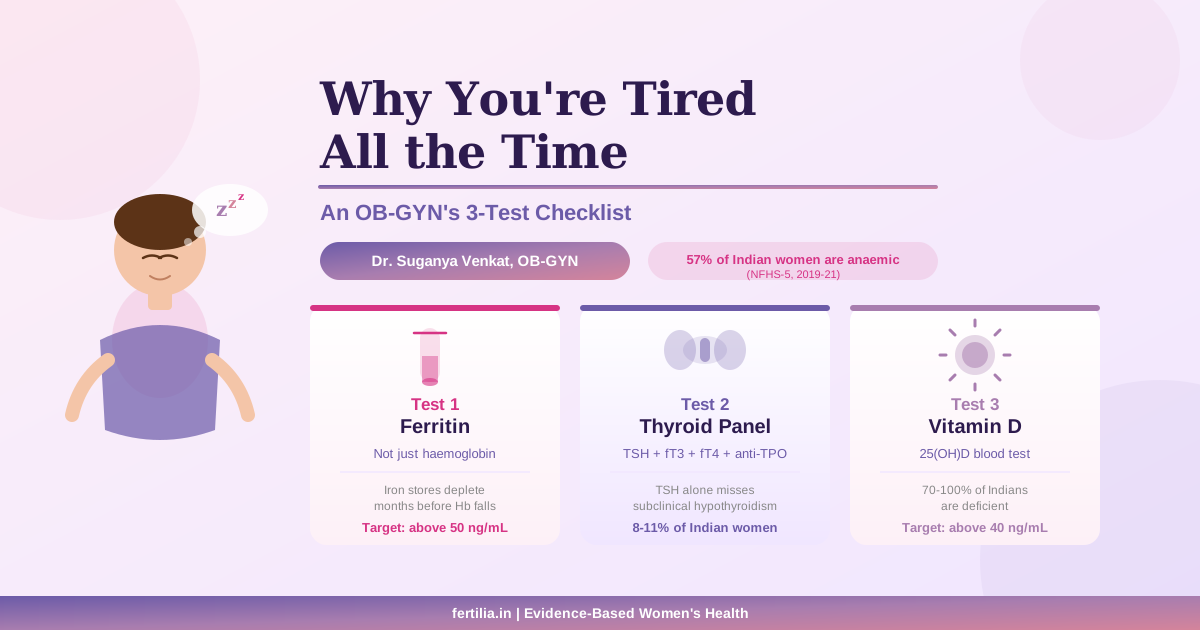
Iron is the most common nutrient deficiency in the world, and Indian women are disproportionately affected. The National Family Health Survey 5 (NFHS-5, 2019-21) found that 57% of Indian women between the ages of 15 and 49 are anaemic. That is more than 1 in 2.
But the number that matters for fatigue is not haemoglobin. It is ferritin: the storage form of iron in your body.
A 2012 randomised controlled trial in BMJ (Vaucher et al.) enrolled 198 women with unexplained fatigue and ferritin levels below 50 ng/mL. None of them were technically “anaemic” by standard haemoglobin criteria. Women who received iron supplementation reported significantly lower fatigue scores than those who received placebo. This phenomenon is called iron deficiency without anaemia, and it is extremely common.
What to ask for: Serum ferritin (not just haemoglobin or a CBC).
Reference ranges:
- Below 30 ng/mL: Iron deficient. Fatigue is very likely iron-related.
- 30 to 50 ng/mL: Borderline. Worth addressing.
- Above 50 ng/mL: Adequate iron stores.
What this looks like in practice: Many women in my clinic have haemoglobin readings of 11.5 to 12 g/dL (flagged as borderline normal by the lab) with ferritin levels of 8 to 15 ng/mL. They have been told their blood count is “basically fine.” It is not fine for energy.
Iron-rich Indian foods to include daily:
| Food | Iron per 100g | Practical Use |
|---|---|---|
| Til (sesame seeds) | 14.5 mg | Ellu podi, til chutney, til ladoo |
| Rajma (kidney beans) | 8.2 mg | Rajma chawal, rajma curry |
| Ragi (finger millet) | 3.9 mg | Ragi dosa, ragi kanji, ragi roti |
| Palak (spinach) | 2.7 mg | Palak dal, palak sabzi, palak paratha |
| Methi (fenugreek leaves) | 1.9 mg | Methi thepla, methi sabzi |
| Chana (chickpeas) | 6.2 mg | Sundal, chana masala, chana chaat |
One important practice: pair iron-rich foods with a Vitamin C source at the same meal (amla chutney, tomato in dal, lemon squeezed on sabzi). Vitamin C increases non-haem iron absorption by 2 to 3 times. Equally important: avoid tea or coffee within 30 minutes of meals, as tannins chelate iron and significantly reduce absorption.
For a complete list of iron-rich foods and portions by life stage, download our Iron-Calcium Rich Foods guide.
Test 2: Full Thyroid Panel (Not Just TSH)
Thyroid disease affects 8 to 11 percent of adult Indian women (Unnikrishnan et al., Thyroid 2013). Many of them do not know.
The standard thyroid test is TSH (thyroid stimulating hormone). If TSH falls within the lab’s reference range (typically 0.5 to 5.0 mIU/L), you are told your thyroid is fine.
The problem: TSH can sit in the upper end of normal (2.5 to 5.0 mIU/L) while your actual thyroid hormones, free T3 and free T4, are already declining. Free T3 is the active thyroid hormone that enters your cells and drives metabolism, energy production, and mood. When free T3 is low, you feel exhausted, cold, cognitively foggy, and sluggish. When TSH alone is checked, this pattern gets missed.
The second reason to run a full panel is anti-TPO antibodies. Anti-thyroid peroxidase antibodies are the marker for Hashimoto’s thyroiditis, an autoimmune condition and the most common cause of hypothyroidism in India. Anti-TPO can be elevated for years before TSH rises out of the normal range. Women with elevated anti-TPO and normal TSH still report significant fatigue, hair thinning, irregular cycles, and difficulty conceiving (Kim et al., Thyroid 2011; Stagnaro-Green et al., Thyroid 2011).
What to ask for: TSH + free T3 + free T4 + anti-TPO antibodies. This is a full thyroid panel.
Approximate reference ranges:
- TSH: 0.5 to 2.5 mIU/L is optimal for women of reproductive age (some labs use a broader range; for fertility and pregnancy, we prefer TSH at or below 2.5)
- Free T4: 0.8 to 1.8 ng/dL
- Free T3: 2.3 to 4.2 pg/mL
- Anti-TPO: below 34 IU/mL is normal
These ranges vary slightly between labs. Your OB-GYN or physician will interpret them in the context of your symptoms, not just the numbers in isolation.
This panel is especially relevant if you also notice:
- Irregular or very light periods
- PCOS or difficulty conceiving
- Hair thinning or hair fall
- Feeling cold when others are comfortable
- Brain fog, low mood, or difficulty concentrating
If you have PCOS, thyroid testing is non-negotiable. Up to 26% of women with PCOS have concurrent thyroid autoimmunity (Sinha et al., Gynaecological Endocrinology 2013), and unaddressed hypothyroidism makes PCOS harder to manage across the board. Read our complete guide to Thyroid and Fertility: The Hidden Connection for a deeper look at how thyroid function affects your cycle, ovulation, and fertility.
Want to Know Which Tests to Prioritise for Your Situation?
Your fatigue may have one cause or a combination. A brief conversation can help us identify which tests matter most for your specific history, whether you have PCOS, are trying to conceive, or are postpartum.
Test 3: Vitamin D (The One Most Women Skip)
India is a tropical country. Most people assume Vitamin D deficiency is a Northern European problem.
It is not. Multiple studies have found Vitamin D deficiency in 70 to 100 percent of Indian adults tested, across all geographic regions including South India (Ritu and Gupta, Nutrients 2014). The reasons are counter-intuitive: indoor work and study hours, clothing coverage, melanin pigmentation (which requires longer sun exposure to synthesise adequate Vitamin D), and an Indian diet that is largely absent in natural dietary Vitamin D sources.
Vitamin D is not a vitamin in the conventional sense. It is a steroid hormone precursor that acts on receptors in nearly every cell type in the body, including brain cells, muscle cells, immune cells, and ovarian cells. When Vitamin D is deficient (below 20 ng/mL), the typical symptoms are fatigue, muscle aches, low mood, and reduced immunity. These are precisely the symptoms women attribute to stress or overwork.
Vitamin D also plays a direct role in fertility. Vitamin D receptors are present in the uterus, ovaries, and placenta. Low Vitamin D is associated with irregular cycles, poorer egg quality, reduced implantation rates, and higher miscarriage risk (Lerchbaum and Obermayer-Pietsch, European Journal of Endocrinology 2012). In women with PCOS specifically, Vitamin D deficiency worsens insulin resistance: the same driver that underlies most PCOS symptoms (Wehr et al., European Journal of Endocrinology 2011).
What to ask for: 25-hydroxy Vitamin D (written on lab forms as 25(OH)D). This is the definitive test for Vitamin D status.
Reference ranges:
- Below 20 ng/mL: Deficiency. Supplementation and lifestyle change are needed.
- 20 to 30 ng/mL: Insufficiency. Worth correcting.
- 30 to 60 ng/mL: Adequate.
- Above 60 ng/mL: Optimal range, particularly relevant for fertility and immune function.
Practical steps while you wait for results:
Dietary sources of Vitamin D are limited in the Indian diet. The two most effective interventions are supervised supplementation (dose depends on how deficient you are, which is why the test matters) and daily morning sun exposure of 15 to 20 minutes on uncovered forearms. Morning sun before 9 AM in India is the safest window in terms of UV intensity, and it initiates Vitamin D synthesis in the skin without the skin-damage risk of peak-hour sun.
Your 3-Test Checklist at a Glance
Here is exactly what to ask your doctor to order:
| Test | What It Measures | Why the Standard Test Misses It |
|---|---|---|
| Serum ferritin | Iron storage | CBC only measures haemoglobin, which falls months after ferritin depletes |
| TSH + free T3 + free T4 + anti-TPO | Full thyroid function plus autoimmunity | TSH alone misses subclinical hypothyroidism and Hashimoto’s |
| 25(OH) Vitamin D | Vitamin D status | Not part of any standard panel; must be explicitly requested |
These three tests are inexpensive: combined cost at most diagnostic chains in India (SRL, Thyrocare, Dr Lal PathLabs, Metropolis) is typically Rs 800 to 1500, require a single fasting blood draw, and explain a very high proportion of persistent fatigue in women who have been told their “blood work is normal.”
Four Things to Start Before Your Results Come Back
You do not need to wait for test results to work on your nutritional baseline. These four steps are safe, evidence-based, and relevant regardless of which deficiency is found:
1. Add ragi to one meal daily. One ragi dosa, roti, or kanji gives you iron, calcium, and slow-release carbohydrates that prevent the blood sugar crashes that worsen fatigue. This is particularly useful for women with PCOS, where blood sugar instability compounds tiredness.
2. Shift protein to breakfast. Most Indian breakfasts are carbohydrate-dominant (idli, upma, poha, bread). Adding eggs, paneer, dahi, or moong dal chilla stabilises blood sugar and prevents mid-morning energy crashes. You do not need to overhaul your diet: swapping one component of your existing breakfast is enough to start.
3. Get 15 to 20 minutes of morning sun. Step outside before 9 AM, uncovered forearms, ideally in a garden or open area. This begins Vitamin D synthesis and sets your circadian rhythm for the day, both of which directly affect energy levels.
4. Move tea and coffee between meals. Shift your chai to mid-morning or mid-afternoon, between meals rather than alongside them. This small change meaningfully improves iron absorption from your food without requiring any dietary change.
These are the building blocks. They compound over 4 to 6 weeks. They are not a substitute for treating the underlying deficiency if one is found, but they create the conditions for treatment to work faster.
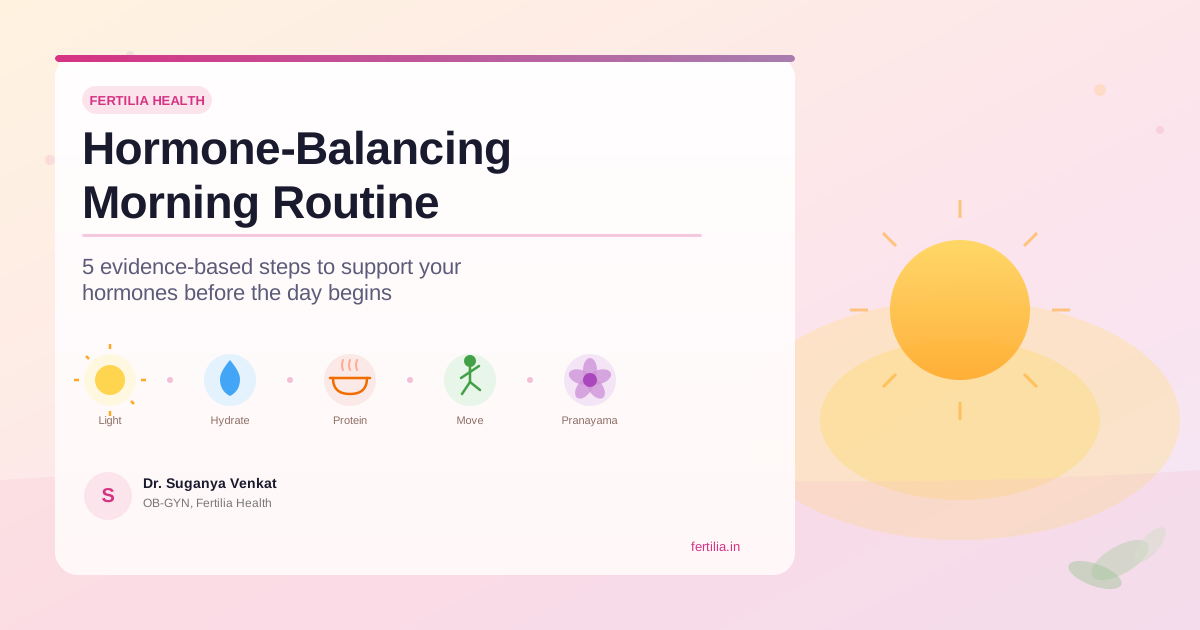
For a structured guide to morning habits that support hormone and energy balance, read Hormone-Balancing Morning Routine: An OB-GYN’s Guide.
Feeling Tired Is Not Something to Push Through
If your blood work comes back with a deficiency, or if you are not sure where to start, our team at Fertilia can help you make sense of your results and build a plan that fits your life. Whether you have PCOS, are trying to conceive, or are postpartum, the approach to fatigue changes with your context.
You can also download our free Iron and Calcium-Rich Foods guide to get started on the dietary side right away.
Frequently Asked Questions
My haemoglobin was checked last month and it was normal. Do I still need a ferritin test?
Yes. Haemoglobin only falls after iron stores have already been depleted for months. You can have a ferritin level of 10 to 15 ng/mL, which is enough to cause significant fatigue, while your haemoglobin still reads within the “normal” range. Serum ferritin is a separate test that specifically measures your iron stores, not your haemoglobin. These are two different things.
My doctor already checked my TSH and said it was fine. Do I need the full panel?
TSH alone can appear normal while free T3 and free T4 are already declining. Anti-TPO antibodies can be elevated years before TSH shifts. If you have persistent fatigue alongside hair thinning, cold sensitivity, irregular cycles, or difficulty conceiving, ask specifically for TSH + free T3 + free T4 + anti-TPO together. This is a standard request for symptomatic women and most labs offer it as a single panel.
Is it safe to start a Vitamin D supplement without testing first?
Vitamin D is fat-soluble, meaning it accumulates in the body and can cause toxicity at very high doses. A standard dose of 1000 to 2000 IU daily is considered safe for most adults and is unlikely to cause harm. However, if you are significantly deficient, you may need a much higher correction dose (prescribed based on your test result and retested at 3 months). Testing first lets your doctor prescribe the right dose. Self-supplementing at low doses while you wait to test is generally fine; self-supplementing at high doses without knowing your baseline is not recommended.
I have PCOS. Are these tests especially important for me?
Yes. Women with PCOS have significantly higher rates of all three deficiencies compared to women without: iron deficiency from heavy periods, thyroid autoimmunity in 26% of PCOS cases (Sinha et al., 2013), and Vitamin D deficiency linked directly to insulin resistance. All three, if untreated, make PCOS symptoms harder to manage. If you have not had a full thyroid panel and ferritin checked alongside your standard PCOS blood work, they are worth adding. Read more about PCOS: Symptoms, Root Causes and Treatment to understand how these deficiencies interact with PCOS drivers.
I am in my first trimester and always tired. Is this just normal pregnancy fatigue?
Some fatigue is normal in the first trimester due to rising progesterone. But iron deficiency, thyroid disease, and Vitamin D deficiency are all more common in pregnancy and all significantly worsen fatigue when present. All three tests are standard components of antenatal care. If your iron, thyroid, and Vitamin D have not been included in your antenatal blood work, ask your OB-GYN to add them to your next panel.
How long does it take to feel better once a deficiency is treated?
It depends on the deficiency. Vitamin D levels typically normalise within 4 to 8 weeks of supplementation, with energy improvements following. Iron repletion takes 2 to 3 months for ferritin to fully normalise; most women notice some improvement in fatigue within 4 to 6 weeks of starting iron. Thyroid treatment is slower: it typically takes 6 to 8 weeks at the correct Levothyroxine dose before you notice consistent improvement, and some women need 2 to 3 dose adjustments before finding the right level.
Can I get these tests done without a doctor’s referral?
In most Indian states, diagnostic labs accept self-referral for routine blood tests. You can walk into most chains (Thyrocare, SRL, Dr Lal PathLabs, Metropolis) and request serum ferritin, a full thyroid panel, and 25(OH) Vitamin D. The combined cost is typically Rs 800 to 1500. That said, it is worth sharing your results with an OB-GYN or physician for interpretation, since what “normal” means in the context of your symptoms, stage of life, and reproductive history is different from what the lab’s printed range suggests.
Dr. Suganya Venkat is an OB-GYN with 15+ years of clinical experience. DNB OB-GYN (GKNM, Coimbatore) · MD Pathology (CMC Vellore) · MBBS with 5 Gold Medals (SRMC). She founded Fertilia to provide holistic, evidence-based care for fertility, PCOS, pregnancy, and postpartum recovery.
Related Reading
- Thyroid and Fertility: The Hidden Connection, understanding how thyroid function affects your cycle, ovulation, and conception
- Iron-Rich Foods for Pregnancy: Indian Guide, a complete list of Indian iron sources with absorption tips
- Hormone-Balancing Morning Routine: An OB-GYN’s Guide, the 5-step morning sequence that supports cortisol, blood sugar, and energy
- PCOS and Periods: Why They Go Missing and How to Get Them Back, for women whose fatigue comes alongside cycle irregularity