“Can I get pregnant with PCOS?” is the question I hear most often in my clinic, sometimes whispered, sometimes asked with a voice that has already heard a difficult answer somewhere else.
Here is what the evidence actually says: the large majority of women with PCOS who want to conceive do conceive, and many do so without IVF or IUI. A 2008 ESHRE/ASRM consensus statement confirmed that with appropriate management, cumulative pregnancy rates in PCOS reach 70 to 80 percent within 12 months. The challenge is not fertility in the biological sense. It is unpredictable ovulation, and unpredictable ovulation is something we can systematically address.
This post gives you a step-by-step clinical approach, grounded in what actually works across fifteen years of practice and the current research evidence.
Why PCOS Makes Conception Harder (and What That Means for You)
PCOS stands for polycystic ovary syndrome. Under the Rotterdam Criteria (the global diagnostic standard), a diagnosis requires two of three findings: irregular or absent periods, clinical or biochemical signs of excess androgens (such as acne, facial hair, or elevated testosterone on blood work), and polycystic ovarian appearance on ultrasound.
The fertility difficulty comes from one core problem: the follicles in your ovaries start to develop but do not reliably complete their maturation and release an egg. Without ovulation, conception is not possible in that cycle.
Why does this happen? PCOS has several biological drivers that can operate individually or together. The most common is insulin resistance: when your cells become less responsive to insulin, the pancreas produces more of it, and that excess insulin signals the ovaries to produce more androgens. Elevated androgens disrupt follicle maturation. A 1997 review by Dunaif in Endocrine Reviews estimated that 50 to 70 percent of women with PCOS have measurable insulin resistance, regardless of body weight.
Other drivers include low-grade chronic inflammation, elevated cortisol from prolonged stress, and (far less commonly) a hormonal rebound pattern following discontinuation of oral contraceptives. The last of these is often transient and may not represent true PCOS.
Understanding which drivers are most active for you is step one, because the actions that follow are not one-size-fits-all.
Step 1: Confirm Your Diagnosis and Know Your Drivers
Before you adjust your diet or buy ovulation strips, make sure you have a clear clinical picture. This means:
Confirm the Rotterdam Criteria are met. A PCOS diagnosis should be based on at least 2 of the 3 criteria. If you were told you have PCOS only because your ultrasound showed multiple follicles, ask your doctor to review your hormone panel and period history as well.
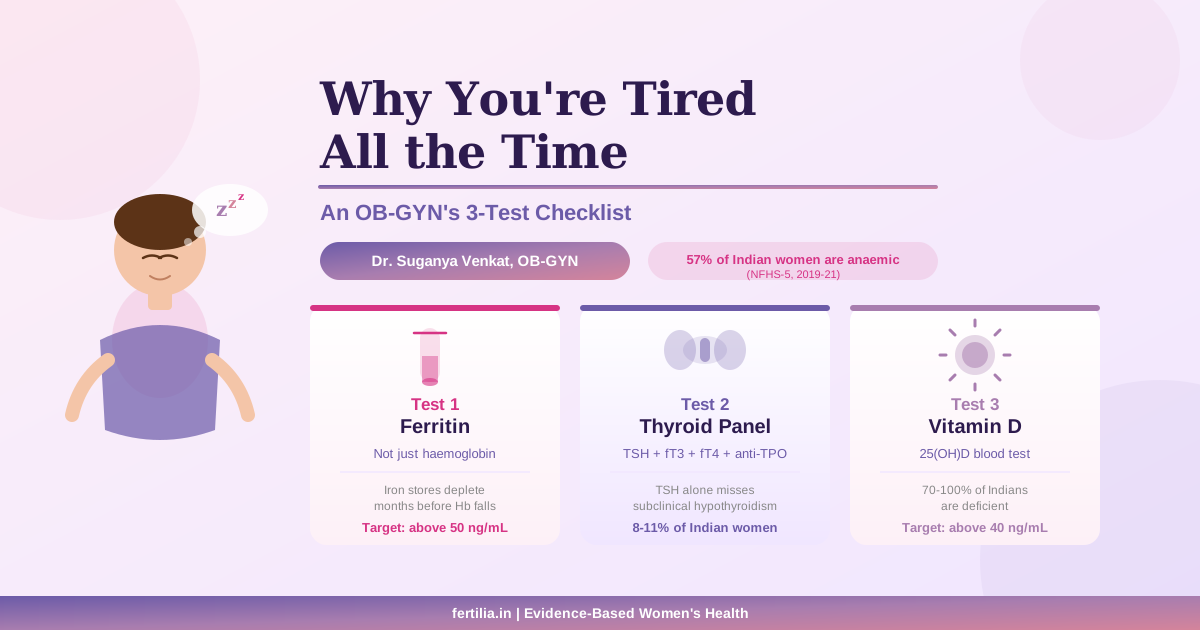
Know your key numbers. Request a fasting insulin level alongside the standard fasting glucose, a full androgen panel (total testosterone, DHEAS), a thyroid panel (TSH plus free T4 and free T3), prolactin, and an AMH. This panel tells you which levers matter most for your case.
Separate the drivers. If your fasting insulin is above 10 to 12 mcIU/mL and your glucose-to-insulin ratio is under 4.5, insulin resistance is your primary driver. If your DHEAS is elevated but your insulin is normal, the adrenal axis is contributing. If your testosterone is high but your insulin is only mildly elevated, the picture is mixed and dietary and lifestyle interventions target all of these, just in different proportions.
Knowing your drivers prevents you from spending months on strategies that are not matched to your biology. This is also where a structured program, rather than generalist advice, saves the most time.
Step 2: Track Ovulation the PCOS Way
Standard advice to “track ovulation using an LH strip from day 12 to 16” does not work well for PCOS. Here is why: in a PCOS cycle, LH surges are often broader and flatter, and multiple LH rises can occur before the actual ovulating surge. Reading a standard strip as positive on a Tuesday does not reliably mean ovulation on Wednesday.
A more accurate approach for PCOS:
Start LH strips earlier. Begin testing from day 8 of your cycle (day 1 is the first day of full bleeding). Test twice daily (morning and evening) rather than once, because the actual surge can be short.
Add basal body temperature (BBT) tracking. Take your temperature each morning before getting out of bed, using a digital basal thermometer. A sustained rise of 0.2 to 0.3 degrees Celsius for three consecutive days confirms that ovulation has occurred. BBT alone cannot predict ovulation in advance, but combined with LH strips, it gives you confirmation.
Use a transvaginal ultrasound if uncertain. A follicular tracking scan from day 10 onward is the gold standard for confirming that a follicle is developing and then rupturing. Many women with PCOS benefit from one or two monitoring scans per cycle, especially in the first two to three months of targeted treatment, to confirm the approach is working.
Record cervical mucus changes. Around ovulation, discharge becomes clearer, more stretchy, and more slippery. This is called fertile-quality cervical mucus, and it corresponds to the peak fertile window. Combined with LH and BBT, it gives you a three-signal confirmation system.
For a deeper look at the different methods and how to read them, our complete ovulation tracking guide walks through each one with practical detail.
Step 3: Address Insulin Resistance (Your Biggest Lever)
If your numbers suggest insulin resistance, addressing it is the highest-return action you can take for fertility. Here is the clinical reasoning.
Elevated insulin acts directly on the theca cells of your ovaries to increase androgen production. Those excess androgens block the normal maturation of follicles, which is why lowering insulin consistently improves ovulation frequency and cycle regularity in women with PCOS.
A 2007 New England Journal of Medicine study by Legro and colleagues found that lifestyle modification alongside targeted treatment significantly improved live birth rates in anovulatory PCOS. Earlier work by Clark and colleagues (1998) showed that even modest weight loss of 5 to 10 percent in women with overweight PCOS restored spontaneous ovulation in over half of participants.
A recent patient from our clinic: Gowri lost 14 kg over 3 months and reduced her HbA1c from 9.8% to 6.2%, then conceived in one cycle of ovulation induction. Her natural periods returned without withdrawal tablets by Month 1.
But insulin resistance in PCOS is not just a weight issue. Lean women with PCOS can have significant insulin resistance too, and the approach is the same: lower glycaemic load, reduce refined carbohydrates, increase dietary fibre and protein, and move your body regularly.
The three most effective non-pharmaceutical insulin-lowering interventions in the PCOS literature are:
- Low glycaemic index eating. A 2010 randomised controlled trial by Marsh and colleagues in the American Journal of Clinical Nutrition found that a low-GI diet improved menstrual regularity in PCOS independently of weight loss.
- Resistance exercise. Strength training two to three times per week improves insulin sensitivity via glucose transporter activation in muscle tissue.
- Inositol supplementation. Myo-inositol at 2 to 4 grams daily (or in combination with d-chiro-inositol in a 40:1 ratio) has consistent evidence for improving insulin signalling and restoring ovulation in PCOS. A 2019 meta-analysis in Reproductive Biomedicine Online confirmed significant improvement in clinical pregnancy rates with inositol versus placebo.
If lifestyle changes alone are not sufficient after three to four months, metformin is a reasonable medical adjunct. Our guide to metformin for PCOS explains when and how it is used alongside lifestyle, not instead of it.
Step 4: Build a Fertility-Supporting Nutrition Base
The nutrition approach for PCOS conception is simpler than it looks once you strip away the supplement marketing. The goal is to keep blood sugar stable, reduce systemic inflammation, and support the micronutrient requirements that underpin hormone synthesis and egg quality.
Anchor your meals around protein and fibre. Start each meal with a protein source (eggs, dal, paneer, curd, fish) and a fibre source (sabji, salad, moong sprouts). This slows glucose absorption and reduces the insulin spike.
The India-relevant carbohydrate swap. White rice and refined flour raise blood glucose quickly. Swapping to ragi (finger millet), jowar (sorghum), oats, or brown rice reduces the glycaemic load without removing carbohydrates from your diet. Ragi in particular has a glycaemic index of approximately 54, has significant calcium, and is available in every Indian kitchen in some form. Ragi kanji, ragi roti, or ragi porridge are practical daily options.
Anti-inflammatory daily staples. Haldi (turmeric) at half a teaspoon daily in cooking or in warm milk has consistent anti-inflammatory evidence. Methi (fenugreek) seeds soaked overnight and consumed in the morning lower post-meal glucose. Jeera (cumin) water taken before meals has preliminary evidence for insulin sensitivity, and more importantly, has no downside. Dahi (homemade curd or plain yoghurt) provides gut-supportive bacteria that help reduce systemic inflammation over time.
Reduce ultra-processed foods and refined sugar. This is the single highest-impact dietary change for PCOS, not because sugar is uniquely toxic, but because it drives the sustained insulin spikes that keep androgens elevated.
Micronutrients that matter most for PCOS and fertility. Vitamin D deficiency is present in up to 67 to 85 percent of Indian women with PCOS (Wehr et al., 2011), and Vitamin D supplementation has been shown to improve insulin sensitivity and menstrual regularity. Zinc (found in pumpkin seeds, til, and legumes) supports androgen metabolism. Folate (at a minimum 400 micrograms daily, ideally as methylfolate if you have MTHFR variants) is essential for neural tube development and should be started three months before you want to conceive.
For a broader look at how nutrition connects to egg quality specifically, our egg quality nutrition guide covers the evidence behind the key dietary patterns.
Talk to Dr. Suganya about your PCOS conception plan. WhatsApp us now.
Step 5: Lower Cortisol to Restore Ovulation
The stress axis and the reproductive axis share common regulatory pathways. Sustained cortisol elevation suppresses GnRH (the hypothalamic hormone that initiates the LH and FSH cascade needed for ovulation). This is not a minor or marginal effect: under chronic psychological stress, cycles lengthen, ovulation delays, and conception rates fall.
A 2009 study by Benson and colleagues in Psychoneuroendocrinology confirmed disturbed stress responses and elevated cortisol reactivity in women with PCOS compared with controls, independent of BMI, suggesting that adrenal activation is a biological feature of the syndrome for a significant subset of women.
The practical interventions that lower cortisol consistently in the research literature are not exotic. They are:
Sleep. Seven to eight hours of consistent sleep, at a consistent time, is the single most effective cortisol-lowering intervention we know of. Disrupted sleep raises cortisol the following day and impairs insulin sensitivity.
Yoga and pranayama. A 2011 study by Domar and colleagues in Fertility and Sterility found that women in a mind-body program including yoga had significantly lower anxiety and higher pregnancy rates during IVF. In PCOS specifically, yoga reduces cortisol and supports cycle regularity. Two practices with particular evidence are Anulom Vilom (alternate nostril breathing) at 10 minutes daily and Yoga Nidra as a sleep-adjacent practice.
Moving the body without overtraining. High-intensity exercise seven days a week raises cortisol. Moderate resistance training two to three times a week, combined with daily walking of 30 minutes, is the evidence-supported balance for PCOS fertility.
You can read more about how these practices work together in our fertility yoga guide.
Step 6: Time Intercourse for the PCOS Cycle
This step is often overlooked. Women with PCOS often have longer cycles (35 to 60 days is common), which means ovulation occurs much later than the day 14 taught in standard biology. If you are having intercourse around day 12 to 16 of a 45-day cycle, you are likely missing the window entirely.
The fertile window is the 5 days before ovulation plus ovulation day itself. Sperm survive for up to 5 days in fertile cervical mucus, which is why beginning intercourse slightly before the LH surge is often more effective than waiting for the positive strip.
Practical timing for PCOS:
- Begin monitoring LH from day 8
- When you notice the first positive LH signal or fertile-quality cervical mucus, have intercourse that day and every 1 to 2 days until your BBT confirms the temperature shift
- After confirmed ovulation, you can relax, as no action during the luteal phase changes conception likelihood in that cycle
One common mistake is treating sex as a performance target in the fertile window while avoiding it the rest of the cycle. This increases anxiety (which raises cortisol) without improving timing. The evidence supports every 1 to 2 day intercourse during the 6-day fertile window, with no specific position or post-intercourse protocol required.
When to Involve Medical Support
Lifestyle intervention, ovulation tracking, and the nutritional foundations above are your starting point. But there are clear situations where medical support alongside these steps gives you the best outcome.
Anovulation confirmed after 3 months of lifestyle change. If you have been implementing the above consistently and your tracking confirms you are still not ovulating, ovulation induction with letrozole (the current evidence-based first-line agent per ESHRE 2023 guidelines, preferred over clomiphene in PCOS) is appropriate. Letrozole works by briefly lowering oestrogen, which stimulates a stronger FSH surge and more reliable follicle development.
AMH above 6 to 10 ng/mL with no ovulation response. Very high AMH in PCOS can indicate a large resting follicle pool that is not responding to physiological signals. These cases sometimes need lower-dose ovulation induction with careful monitoring to avoid ovarian hyperstimulation.
Age 35 or above and trying for more than 6 months. The timeline shortens appropriately. At 35, six months of optimised trying without conception warrants a full fertility evaluation for both partners and a discussion about adjunct treatment.
Partner’s semen analysis is outside normal range. PCOS is often the first thing investigated when a couple has difficulty conceiving, but male factor contributes to 40 to 50 percent of cases. If you have not had a semen analysis done, this is worth completing early rather than spending 12 months optimising only one side of the equation.
For more on understanding your hormonal picture and what the AMH number specifically means for your treatment pathway, see our guide to AMH levels.
And if you want to read about what this journey actually looks like for real women who have come through our program, the Fertilia stories page collects those accounts.
Ready to start? Message Dr. Suganya on WhatsApp and we will build your plan together.
Frequently Asked Questions
Can I get pregnant with PCOS without IVF or IUI?
Yes. The majority of women with PCOS who receive appropriate management achieve pregnancy without IVF or IUI. The ESHRE/ASRM consensus data shows 70 to 80 percent cumulative pregnancy rates within 12 months with structured care. First-line treatment is lifestyle modification combined with ovulation induction using letrozole if natural ovulation does not occur consistently. IUI and IVF are second and third-line options when first-line approaches have not worked over an adequate period of time.
How long does it take for lifestyle changes to restore ovulation in PCOS?
Most women see measurable changes in cycle regularity within 2 to 4 months of consistent lifestyle modification, including dietary changes, exercise, and sleep. Ovulation may restore earlier. If there is no change in cycle pattern after 3 months, adding ovulation induction medication alongside the lifestyle base is appropriate rather than waiting longer.
Does weight loss help PCOS fertility, and how much weight do I need to lose?
In women with overweight or obesity and PCOS, a modest reduction of 5 to 7 percent of body weight (for example, 4 to 5 kg in a 65 kg woman) has been shown to restore spontaneous ovulation in a significant proportion. The mechanism is reduced insulin levels, which lower ovarian androgen production. However, lean women with PCOS also have insulin resistance and benefit from the same dietary and lifestyle approach even without weight loss as a goal. Weight loss is a byproduct of the approach, not the primary target.
Is it safe to take myo-inositol while trying to conceive?
Myo-inositol is considered safe during the preconception period and early pregnancy based on the current evidence. A number of randomised trials have used doses of 2 to 4 grams daily without adverse outcomes. However, it is worth discussing with your doctor before starting, particularly if you are also on metformin, as both lower insulin and their combined effect should be monitored.
My PCOS was diagnosed after I stopped the pill. Is my fertility affected?
This is a common scenario. The pill suppresses ovulation, and when it is withdrawn, cycles can be irregular for several months as the HPG axis re-establishes itself. For some women this settles within 3 months. For others, the irregular cycles reveal underlying PCOS that was masked by the pill. A hormonal panel done at least 3 months after stopping the pill gives you a cleaner picture. The approach for fertility is the same regardless of when the PCOS was identified.
My husband’s semen analysis is normal. Does that mean the difficulty is only from my PCOS?
A normal semen analysis is reassuring but does not capture all aspects of male factor. Standard parameters include count, motility, and morphology. Sperm DNA fragmentation, which is not part of a standard analysis, can affect fertilisation and early pregnancy and is worth testing if there have been multiple early pregnancy losses or if standard IVF is not producing fertilisation. It is also worth confirming that the analysis was done after 2 to 3 days of abstinence and within 1 hour of sample production, as both affect the result.
Can stress cause PCOS or make it worse?
Sustained psychological stress activates the HPA axis (hypothalamic-pituitary-adrenal), which elevates cortisol and can directly suppress the HPG axis (the reproductive hormone cascade). In women with existing PCOS, stress worsens the cortisol-driven component of the condition and delays ovulation further. There is no evidence that stress alone causes PCOS. But stress management is a legitimate part of PCOS treatment, not an optional lifestyle add-on.
About the author: Dr. Suganya Venkat is an OB-GYN with 15 years of clinical experience, trained at GKNM Hospital, Coimbatore (DNB OB-GYN), with an MD in Pathology from CMC Vellore and 5 gold medals in MBBS from SRMC. She leads the Fertilia Health fertility program in Coimbatore.