Every week in my clinic I meet women holding a lab report with a low AMH number circled in red. Some of them have barely started trying to conceive. Others have been through failed cycles. Most of them come in believing the same thing: that this number is a final answer.
It is not.
AMH (Anti-Müllerian Hormone) tells us about your current egg reserve. It does not tell us whether you can get pregnant. It does not tell us whether your eggs are healthy. And in most cases, it does not tell us you need IVF right now.
What it does tell us is that your ovarian environment deserves attention. And the right attention, applied consistently over 3 to 6 months, can make a real difference to both your AMH reading and your egg health more broadly.
This guide covers what the evidence actually supports, what is specific to Indian women and our food culture, and what to skip.
What AMH Actually Measures (and What It Doesn’t)
AMH is produced by granulosa cells, the cells that surround each small follicle developing in your ovaries. The more small antral follicles you have at a given time, the higher your AMH reading.
This makes AMH a useful proxy for ovarian reserve, the total pool of remaining follicles. But a few things it does not measure:
- Egg quality (a follicle can be present without containing a chromosomally healthy egg)
- Your ability to conceive naturally (a landmark 2017 JAMA study by Steiner et al. found no statistically significant difference in natural conception rates between women with low AMH and those with normal AMH, in women aged 30 to 44 trying to conceive without assisted reproduction)
- Your total lifetime fertility potential
A low AMH is a signal worth taking seriously. It is not a verdict.
You can read more about what your AMH number actually means in the context of your full fertility picture here: AMH Test Cost in India: Complete Guide.
Can You Actually Raise AMH Levels?
This question deserves an honest answer.
You cannot create new follicles. Female biology is fixed: you are born with all the follicles you will ever have, and that number declines naturally over time. No supplement, food, or lifestyle change reverses that biological process.
What the research does show is something more nuanced and more useful:
First, AMH readings can vary. Studies have shown that the same woman’s AMH can shift by 15 to 30 percent across a 3 to 6 month period based on nutritional status, stress levels, and inflammation. This variability tells us the reading is not as fixed as many assume.
Second, specific deficiencies, particularly vitamin D, have a documented suppressive effect on AMH. Correcting those deficiencies has been shown to produce measurable AMH improvement in clinical research.
Third, the environment inside your ovaries, driven by inflammation, oxidative stress, and hormonal signaling, directly affects how existing follicles develop and how accurately they are reflected in the AMH reading at any moment.
In practical terms: you may or may not see your AMH number move. But the steps below will improve the conditions in which your remaining follicles are developing. That matters regardless of what the next blood test says.
Step 1: Test and Fix Vitamin D First
If there is one thing to do before anything else, it is this.
Vitamin D deficiency has one of the strongest documented associations with low AMH of any modifiable factor. Research published in major reproductive medicine journals, including studies focused specifically on women with diminished ovarian reserve, has found that vitamin D receptors are present in granulosa cells and that deficiency measurably suppresses ovarian function.
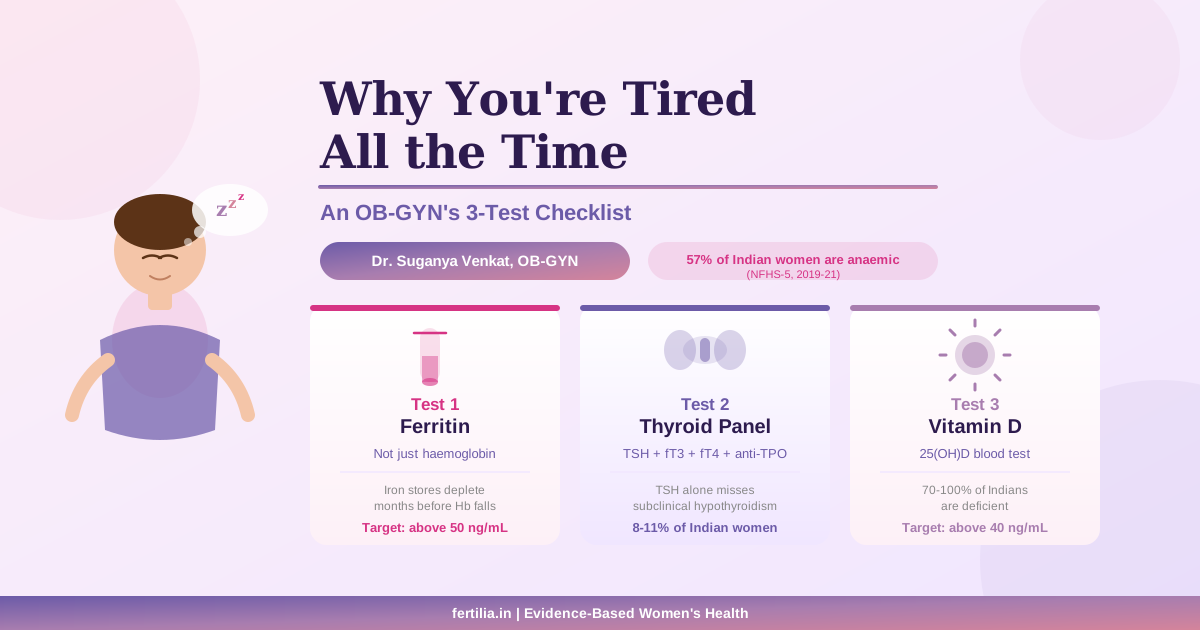
In India, vitamin D deficiency is extraordinarily common. Estimates suggest 70 to 90 percent of the Indian population has insufficient vitamin D levels, despite abundant sunlight. The reason is a combination of pigmentation, clothing patterns, indoor work, and dietary factors.
Most women who come to me with low AMH have vitamin D levels below 20 ng/mL on testing. Many are below 10.
What to do:
Get a 25-OH vitamin D test at any major lab (Thyrocare, Redcliffe, Dr. Lal PathLabs all offer this for under ₹500). Discuss the result with your doctor. If you are deficient, a standard correction protocol is 60,000 IU of vitamin D3 per week for 8 to 12 weeks, followed by 1,000 to 2,000 IU daily for maintenance. Do not self-medicate at high doses without testing first.
Food sources of vitamin D relevant to Indian diets: egg yolk (eat the whole egg), fatty fish such as rohu, katla, and salmon, and fortified dairy milk. Getting 20 to 30 minutes of morning sunlight (before 10 AM) or late afternoon sun (after 4 PM) on your arms and legs also helps, and costs nothing.
Step 2: Add CoQ10 to Support Follicle Energy
Coenzyme Q10 (CoQ10) is not a hormone. It works at the cellular level by supporting mitochondrial function, the energy-producing machinery inside each follicle cell.
Follicle development is an energy-intensive process. As women age and as oxidative stress accumulates, mitochondrial efficiency in follicle cells declines. CoQ10 supplementation helps restore that efficiency.
Multiple randomized controlled trials in women with poor ovarian response preparing for IVF have shown that CoQ10 supplementation improves ovarian response markers including antral follicle count and oocyte yield. The biological mechanism (mitochondrial support in follicles) applies equally to women trying to conceive naturally.
Practical guidance:
- Choose the ubiquinol form of CoQ10, which is more bioavailable than ubiquinone
- Dose: 200 to 400 mg per day
- Take with a meal containing fat for better absorption (your dal-chawal with a drizzle of ghee is a natural pairing)
- Allow at least 2 to 3 months before expecting any measurable effect. Follicle development runs on a 90 to 120 day cycle
CoQ10 is available at most Indian pharmacies and through online platforms. It is generally well-tolerated and has a good safety profile.
💜 Not sure which supplements are right for your situation? Message Dr. Suganya on WhatsApp for a personalised recommendation based on your current reports.
Step 3: Build an Anti-Inflammatory Diet Using Indian Foods
Chronic low-grade inflammation suppresses ovarian function. Elevated inflammatory markers such as CRP and IL-6 have been associated with lower AMH and poorer follicle development in multiple studies. The good news is that traditional Indian cooking, eaten close to how our grandmothers ate it, is genuinely anti-inflammatory.
Foods to prioritize:
Haldi (turmeric): Curcumin, the active compound in turmeric, has demonstrated anti-inflammatory effects in multiple peer-reviewed studies. Use it daily in cooking. Absorption improves with black pepper and a fat source, which happens naturally when you add haldi to dal or sabzi cooked in a little ghee or oil.
Til (sesame seeds): Rich in zinc and healthy fats. Zinc plays a direct role in FSH receptor sensitivity in follicle cells. Add one to two tablespoons of til to your food daily. Til ladoo (without excess jaggery), til chutney, and sprinkling roasted til on rice or yogurt are all practical options.
Alsi (flaxseeds): Contain alpha-linolenic acid (plant omega-3) and lignans that support hormonal balance. Grind them first for bioavailability. Add one tablespoon of ground alsi to roti dough, yogurt, or a glass of water daily.
Palak, methi, and curry leaves: Dark leafy greens provide folate, iron, and antioxidants that support cell replication inside follicles. Include at least one serving daily. Methi (fenugreek) has specific evidence for improving hormonal profiles in women with PCOS.
Amla (Indian gooseberry): Exceptionally high in vitamin C, which is an antioxidant that protects follicle cells from oxidative damage. Fresh amla, amla murabba (without excess sugar), or dried amla all provide meaningful amounts.
Rajma, moong dal, and chana: Plant-based protein, zinc, and folate without the inflammatory effects of excess red meat. A daily serving of dal is genuinely one of the best things an Indian woman can do for her hormonal health.
Foods to reduce:
Ultra-processed foods and packaged snacks are high in trans fats and refined omega-6 oils, both of which drive systemic inflammation. Excess refined sugar disrupts insulin signaling, which in turn affects ovarian function. Alcohol has direct follicle-toxic effects; there is no established safe threshold for women trying to conceive.
This is not about eating perfectly. One cup of chai with sugar is not damaging anything. The overall dietary pattern across months is what research actually measures.
You can download our complete egg health food guide here: Free Egg Health Resource.
Step 4: Treat Sleep and Stress as Fertility Medicine
Cortisol, your body’s primary stress hormone, suppresses the hypothalamic-pituitary-ovarian (HPO) axis when elevated chronically. This reduces the pulse frequency of GnRH signaling, which directly affects follicle development and AMH-producing cell activity.
This is not soft advice. This is documented endocrine physiology.
The practical minimum: 7 to 8 hours of sleep per night and at least one intentional relaxation activity daily. Yoga and pranayama have specific evidence for neuroendocrine modulation. A 2018 study in the Journal of Clinical Psychology in Medical Settings found that mind-body practices reduced cortisol and improved hormonal outcomes in women undergoing fertility treatment.
Women who also use targeted pregnancy yoga through the Fertilia program consistently report improvements in their overall cycle regularity alongside their formal treatment plan.
If you want a structured starting point, see our guide: Pregnancy Yoga: Safe Poses for Each Trimester.
What About DHEA and Myo-Inositol?
These two supplements come up frequently in conversations about low AMH. Here is a direct answer on both.
DHEA: DHEA has evidence specifically for poor ovarian responders preparing for IVF, where several trials have shown improved ovarian response at doses of 25 to 75 mg per day. However, DHEA is an androgen precursor. It can worsen acne, increase unwanted hair growth, and disrupt hormonal balance in women who do not actually need it. I do not recommend DHEA without a blood test showing appropriate androgen levels and a conversation with your doctor. This is not a supplement to start independently.
Myo-inositol: The strongest evidence for myo-inositol is in women with PCOS, where it improves insulin sensitivity and oocyte quality. If you have PCOS alongside low AMH, myo-inositol at 2 g twice daily is a reasonable addition to your plan. If you do not have PCOS, the evidence for AMH-specific improvement is thinner. See our related guide: Insulin Resistance and PCOS: Signs, Diet & What to Do.
What Does Not Have Evidence (and Why It Is Still Popular)
Several interventions circulate widely among women with low AMH that are not supported by meaningful human clinical data:
Castor oil packs placed over the ovaries have no clinical trial data. The proposed mechanism does not reflect how ovarian biology works.
Royal jelly has a few animal studies but no well-designed human randomized trials specifically for AMH.
Exclusive raw food diets can actually cause deficiencies: vitamin B12 and heme iron are poorly absorbed from raw plant sources, and both matter for follicle health.
I understand the impulse to try everything. When your AMH is low and you want to conceive, you want to take every action available. The steps in this guide are where the real evidence sits. Start there, and add other interventions only after discussing with a clinician who has seen your full picture.
How Long Before You See a Difference?
Realistic timeframe: 3 to 6 months for a measurable AMH change, if one is going to happen.
Follicles have a 90 to 120 day development cycle. Any change in your nutritional or lifestyle environment needs to work through that entire cycle before it would be reflected in a lab reading.
A practical approach:
Month 1: Test vitamin D and correct if deficient. Begin CoQ10 if appropriate. Start shifting your diet pattern.
Months 2 and 3: Continue consistently. Sleep 7 to 8 hours. Reduce processed food and alcohol. Add the Indian foods listed above.
Months 4 to 6: Retest AMH at the same lab, ideally on day 2 to 3 of your cycle, at a consistent time of day. Compare.
If your AMH has not changed after 6 months of honest effort, that is also useful information. It tells you the reserve is where it is, and the question now becomes egg quality and overall fertility assessment, not just the AMH number. That is a conversation to have in detail with an OB-GYN who knows your complete picture.
💜 Ready to create a plan specific to your AMH levels and fertility goals? Book a consultation with Dr. Suganya and get a personalised roadmap based on your reports.
Frequently Asked Questions
Can AMH levels be increased naturally? Yes, within limits. You cannot create new follicles, but research shows AMH can fluctuate by 15 to 30 percent based on nutritional status, vitamin D levels, and inflammation. Correcting vitamin D deficiency and supporting follicle health through CoQ10, anti-inflammatory foods, and stress reduction has shown measurable AMH improvement in clinical studies in some women.
Which foods increase AMH levels? No single food dramatically raises AMH on its own. A consistent pattern of anti-inflammatory, antioxidant-rich foods supports the best ovarian environment. Prioritize haldi, til, alsi, amla, palak, methi, moong dal, and rajma. Reduce ultra-processed foods, refined sugar, and alcohol. Indian traditional cooking, close to how it was prepared before heavily packaged foods, aligns well with what the evidence supports.
How long does it take to improve AMH levels? Expect 3 to 6 months of consistent effort before retesting. Follicles develop over a 90 to 120 day cycle, so any change in your nutritional or lifestyle environment needs that full window to register in a lab reading. Do not retest at 4 weeks and draw conclusions.
Is low AMH the same as early menopause? No. Low AMH means reduced ovarian reserve for your age. Early menopause (premature ovarian insufficiency) is a different clinical condition with different causes and a different hormonal profile (elevated FSH, absent periods). Many women with low AMH have completely regular cycles and conceive naturally. See an OB-GYN to clarify which situation you are in.
Can I get pregnant naturally with an AMH below 1? Yes. The 2017 JAMA study by Steiner et al. found no statistically significant difference in natural conception rates between women with low AMH (below 0.7 ng/mL) and those with normal AMH in women aged 30 to 44 trying to conceive without medical assistance. AMH measures reserve quantity, not egg quality. One healthy egg is enough to conceive.
Should I start DHEA on my own for low AMH? No. DHEA is an androgen precursor and should only be used under medical supervision after a blood test confirms it is appropriate for you. Unsupervised use can worsen hormonal imbalance, acne, and unwanted hair growth. Discuss it with your doctor if you are preparing for IVF and have documented poor ovarian response.
What is the difference between AMH and egg quality? AMH reflects how many small follicles are currently active in your ovaries (quantity). Egg quality refers to whether those eggs are chromosomally normal and capable of fertilization and healthy implantation. These are separate measures. A woman with high AMH can have poor egg quality; a woman with low AMH can have excellent egg quality. Age is the single strongest predictor of egg quality.