Every week in my clinic, I meet women who have tried everything they can think of and are looking for something they may have missed.
Some have been tracking their cycles for years. Some are waiting between IUI cycles. Some just want to feel less like they are fighting their own body.
When I suggest yoga, the responses range from “I have been meaning to start” to “will that actually help?” Both make sense. Yoga is everywhere, and the claims around it can feel unmoored from clinical reality. Women dealing with real fertility challenges want to know whether the evidence is real.
It is. And it is specific enough to be useful.
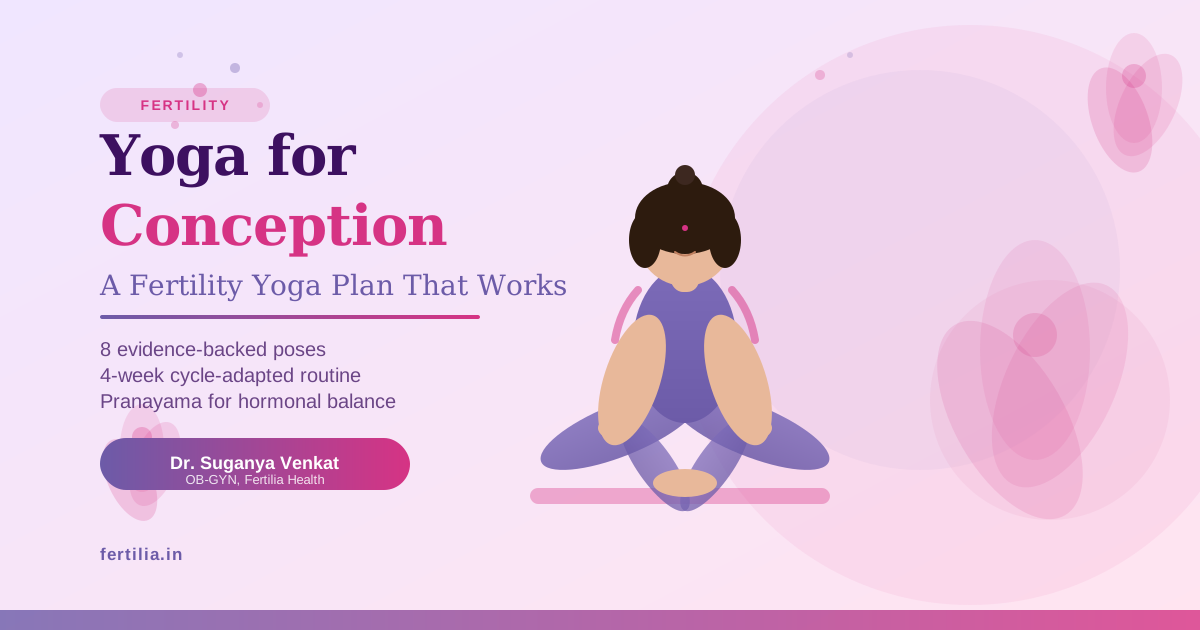
This post covers what the research actually says about yoga and fertility, which poses are worth your time, and a practical 4-week plan you can start this week.
Why Yoga and Fertility Are Connected
Yoga alone is not a fertility treatment. But chronic stress is a genuine fertility disruptor, and yoga is one of the most evidence-supported tools we have for reducing it.
The mechanism works like this: when stress is prolonged, your body prioritises survival over reproduction. Cortisol competes with progesterone for the same receptor pathways. Elevated cortisol can suppress GnRH (the master hormone that signals your pituitary to produce LH and FSH), which directly delays ovulation or shortens the luteal phase.
A 2011 study by Alice Domar and colleagues, published in Fertility and Sterility, found that women undergoing IVF who participated in a mind-body programme including yoga and relaxation had significantly lower anxiety scores and higher clinical pregnancy rates than controls. A 2018 systematic review in Complementary Therapies in Clinical Practice found that yoga reduced cortisol and improved psychological distress in women experiencing infertility.
Yoga also improves pelvic blood flow, supports lymphatic drainage, and activates the parasympathetic (rest-and-digest) nervous system. Together, these create a more hospitable internal environment for conception.
For women with PCOS, the evidence is even more specific. A randomised controlled trial published in the Journal of Alternative and Complementary Medicine (2012) found that 12 weeks of yoga practice significantly reduced testosterone, improved LH/FSH ratios, and lowered fasting insulin compared to conventional exercise in adolescent girls with PCOS. These are clinically relevant changes, not minor shifts in wellness markers. If irregular or absent periods are part of your picture, see PCOS and Periods: Why They Go Missing and How to Get Them Back for the full clinical picture of what is driving the disruption.
The 8 Poses Worth Practising
These poses were not selected because they look gentle. Each has a specific physiological reason for inclusion in a fertility practice.
1. Supta Baddha Konasana (Reclining Bound Angle)
Lie on your back. Bring the soles of your feet together and let your knees fall wide. Rest your hands on your lower abdomen. If the inner thighs feel strained, place folded blankets or pillows under each knee. Stay for 3 to 5 minutes.
Why it helps: This pose opens the inner thighs, softens the pelvic floor, and directs blood flow toward the ovaries and uterus. The reclined position activates the parasympathetic nervous system through the supported spinal position.
2. Viparita Karani (Legs Up the Wall)
Sit sideways near a wall, then swing your legs up as you lie back. Your hips can rest 15 to 20 centimetres from the wall. Stay for 5 to 15 minutes, using a folded blanket under the sacrum if you want more support.
Why it helps: This gentle inversion reverses gravitational pull on the pelvic organs, encourages venous return from the legs, reduces peripheral swelling, and deeply activates vagal tone. Best practised in the follicular phase and after intercourse. It is one of the most commonly recommended poses in fertility yoga for good reason.
3. Baddha Konasana (Seated Butterfly)
Sit tall, bring the soles of your feet together, and let your knees open wide. Hold your feet or ankles and maintain a long spine. Hold for 2 to 3 minutes.
Why it helps: Opens the hip flexors and inner thighs, improves pelvic circulation. In classical yoga texts, this is called Bhadrasana and has been recommended for reproductive health for centuries.
4. Malasana (Garland Pose)
Stand with feet slightly wider than hip distance apart, toes turned out. Lower into a deep squat, bring your palms to prayer at your heart, and press your elbows gently into your inner knees. Stay for 30 to 90 seconds.
Why it helps: Squatting is the most natural position for pelvic floor release. It stretches the adductors and pelvic floor simultaneously, promotes healthy bowel transit (which matters for oestrogen clearance via the gut), and opens the lower back. Many Indian women squat regularly in daily life, which partly explains why pelvic floor dysfunction is less common in rural South Asian populations.
5. Paschimottanasana (Seated Forward Bend)
Sit with legs extended. Inhale to lengthen your spine, then exhale to fold forward from the hips rather than rounding the lower back. Hold your shins, ankles, or feet. Stay for 1 to 2 minutes.
Why it helps: Creates gentle compression over the lower abdomen, which stimulates the ovaries and uterus, calms the nervous system, and stretches the hamstrings and lower back. The forward fold also activates the vagus nerve, shifting the body toward parasympathetic tone.
6. Balasana (Child’s Pose)
From kneeling, sink your hips back toward your heels and rest your forehead on the mat. Arms can extend in front or rest alongside your body. Stay for 2 to 5 minutes.
Why it helps: Creates a deeply inward experience, releases the lower back and sacrum, and activates the dorsal vagal pathway through the forehead-to-mat contact. Many women find this is the pose that helps them release the hypervigilance that builds during fertility challenges.
7. Setu Bandhasana (Supported Bridge)
Lie on your back with knees bent and feet flat. Lift your hips and slide a yoga block or folded blanket under your sacrum at a comfortable height. Stay for 3 to 5 minutes.
Why it helps: The supported version (not the active bridge) provides gentle traction to the sacral area, improves uterine blood flow, and releases hip flexor tension that accumulates from prolonged sitting.
8. Savasana with Yoga Nidra
Every session should end with 10 to 15 minutes of Savasana. Lie flat, let your body be completely still, and either rest in silence or follow a guided yoga nidra recording.
Why it helps: Yoga nidra produces the largest drop in cortisol of any yoga practice and significantly improves heart rate variability (HRV), a reliable marker of parasympathetic activity. It also provides space to set a sankalpa (intention), such as: “My body is healthy and capable.”
Pranayama for Hormonal Balance
Two breathing practices with specific evidence for stress reduction and hormonal regulation:
Anulom Vilom (Alternate Nostril Breathing): Close your right nostril with your thumb, inhale through the left for 4 counts. Close the left nostril with your ring finger, open the right, exhale for 4 counts. Inhale through the right, then exhale through the left. That is one round. Do 10 rounds.
Research from the All India Institute of Medical Sciences shows that regular Anulom Vilom practice significantly reduces serum cortisol and improves HRV within 4 weeks of daily practice. It is one of the most culturally familiar practices for Indian women and can be done sitting on a chair or on the floor.
Bhramari (Bee Breath): Inhale fully through the nose, then exhale slowly while making a soft humming sound with your mouth closed. Do 5 to 7 rounds. The vagal vibration from the hum directly activates the parasympathetic nervous system within seconds.
Either or both can be practised before bed as a standalone 5-minute routine on days when you do not have time for a full session.
💜 Not sure which practices suit your specific situation, your cycle phase, or your fertility picture? Message Dr. Suganya on WhatsApp for a personalised recommendation.
Your 4-Week Fertility Yoga Routine
This plan was designed for real life: 25 to 30 minutes, 5 times a week.
Week 1: Foundation
Goal: Learn the poses. Build the habit.
Monday, Wednesday, Friday (25 minutes):
- Anulom Vilom: 10 rounds
- Baddha Konasana: 3 minutes
- Malasana: 1 minute
- Paschimottanasana: 2 minutes
- Savasana: 10 minutes
Tuesday, Thursday (20 minutes):
- Bhramari: 7 rounds
- Supta Baddha Konasana: 5 minutes
- Balasana: 3 minutes
- Savasana: 10 minutes
Note: These poses should feel like releasing, not efforting. If anything feels strained, use a blanket or pillow for support.
Week 2: Building Pelvic Awareness
Goal: Add the full sequence with smooth transitions.
Five days a week (30 minutes):
- Anulom Vilom: 10 rounds
- Baddha Konasana: 2 minutes
- Malasana: 2 minutes
- Setu Bandhasana (supported): 5 minutes
- Paschimottanasana: 2 minutes
- Viparita Karani: 8 minutes
- Savasana with Yoga Nidra: 10 minutes
Week 3: Cycle Adaptation
Goal: Shape your practice to match your cycle phase.
Follicular phase (Day 1 to ovulation): Full Week 2 sequence.
Luteal phase (post-ovulation to period): Replace Malasana with Balasana. Add an extra round of Supta Baddha Konasana. Extend Savasana to 15 minutes. Reduce physical effort across all poses and increase time in stillness.
If you are in the two-week wait: Skip deep twists and any active inversions. Focus entirely on restorative poses and pranayama. This is the phase where less is genuinely more.
Week 4: Integration
Goal: Move from following a routine to having a practice.
By Week 4, you will likely know how each pose feels and what your body needs on a given day. Maintain the pranayama bookends at the start and end of each session. Spend more time in whichever poses feel most useful. Begin keeping a brief note after each session: not what you did, but how you felt. This is useful data for both you and your doctor.
Yoga Nidra: The Underused Tool
Most women start with asana (poses) and stop there. Yoga nidra is where a significant part of the cortisol-reduction research is actually concentrated.
A 2019 study in the International Journal of Yoga found that 30 minutes of daily yoga nidra for 3 months significantly reduced serum cortisol, FSH levels, and LH/FSH ratios in women with menstrual irregularities.
You do not need to attend a class. Search for “yoga nidra for fertility” or “yoga nidra for women” on YouTube. Recordings based on the Bihar School of Yoga tradition (founded by Swami Satyananda Saraswati) tend to be the most structurally sound, as yoga nidra was systematically developed within that tradition. Choose a 20 to 30 minute version. Lie down, close your eyes, and follow the instructions.
Adding one session of yoga nidra per week alongside your regular practice is a meaningful and low-effort addition.
Poses to Approach With Caution
During your period (Days 1 to 3): Avoid active inversions such as shoulderstand or headstand. Supported Viparita Karani is fine. Focus on restorative poses only.
During the two-week wait: Avoid strong twists, deep core compression, and hot yoga. The restorative sequence (Supta Baddha Konasana, Viparita Karani, Balasana, Yoga Nidra) is appropriate throughout this phase.
If you have PCOS with adrenal involvement: Avoid vigorous or hot yoga styles. Your cortisol regulation is already under strain. A gentle, cooling, yin-style practice is what supports you, not a power flow class.
If you have endometriosis: Some women find that strong inversions increase discomfort. Pay attention to what your body is telling you, and work with your gynaecologist on any modifications.
These are precautions, not prohibitions. The restorative poses in this plan are safe across your entire cycle.
Practical Takeaways
- Practise 5 times a week, 25 to 30 minutes. Consistency across months matters more than intensity on any single day.
- Adapt to your cycle: more active in the follicular phase, more restorative in the luteal phase.
- End every session with at least 10 minutes of Savasana or Yoga Nidra. This is where much of the hormonal benefit happens.
- Add Anulom Vilom or Bhramari before bed on the days you skip a full session. Five minutes still matters.
- If you have PCOS, pair yoga with the dietary and lifestyle changes that address its specific drivers. See our PCOS Reversal Programme for what works together.
- If low egg reserve is part of your picture, read How to Increase AMH Levels Naturally for evidence-based guidance on nutrition and supplementation.
- For cycle tracking that works alongside a yoga practice, see How to Track Ovulation: Indian Woman’s Guide.
- Read how other Fertilia women navigated their fertility journey at Patient Stories.
- Download our free fertility yoga resource guide for a printable version of the 4-week plan.
FAQ
Can yoga actually help me get pregnant? Yoga is not a fertility treatment, but it addresses two things that directly affect conception: chronic stress (which disrupts ovulation through the HPA axis) and pelvic blood flow. Research shows yoga reduces cortisol, improves heart rate variability, and in women with PCOS, lowers fasting insulin and androgen levels. It works best as a complementary support alongside your clinical care, not as a replacement for it.
How often should I practise fertility yoga? Five times a week for 25 to 30 minutes produces the most measurable cortisol reduction in the research literature. If five days is not possible, three sessions a week is better than none. The key is consistency across months, not intensity across days.
Are there yoga poses I should avoid when trying to conceive? During the two-week wait, avoid deep twists, strong core compression, and hot yoga. During your period, avoid active inversions. These are cycle-specific precautions. The restorative poses in this plan are safe to practise throughout your entire cycle.
Can yoga help with PCOS and fertility? Yes, and there is specific clinical research here. A 2012 randomised controlled trial found that 12 weeks of yoga reduced testosterone, improved LH/FSH ratios, and lowered fasting insulin in women with PCOS. For PCOS-related fertility challenges, yoga is most effective when combined with appropriate dietary changes and clinical management of the underlying drivers.
Is it safe to practise yoga during the two-week wait? Yes, with modifications. Stick to restorative poses: Supta Baddha Konasana, Viparita Karani, Balasana, and Yoga Nidra. Avoid strong inversions, vigorous flow styles, and hot yoga. The two-week wait is exactly the phase where a quieter, more restorative practice supports you best.
What time of day is best for fertility yoga? Morning practice before breakfast sets parasympathetic tone for the day. Evening practice helps lower cortisol before sleep, which supports overnight hormonal repair. Both are good. Evening Yoga Nidra is particularly useful if sleep quality is a challenge during the two-week wait or after a difficult cycle.
Does my partner benefit from yoga too? Yes. Male fertility is affected by oxidative stress and chronic cortisol in similar ways. Yoga and pranayama have been shown to reduce oxidative stress markers and improve sperm motility parameters in small trials. A shared practice also reduces the relational strain that fertility challenges often bring into couples.
💜 Ready to build a fertility plan that brings yoga, nutrition, and clinical guidance together for your specific situation? Book a consultation with Dr. Suganya on WhatsApp and get a roadmap designed for your body.
Dr. Suganya Venkat is an OB-GYN (DNB, GKNM Hospital, Coimbatore) with an MD in Pathology from CMC Vellore and 5 Gold Medals from SRMC. She has 15+ years of clinical experience in fertility, PCOS, and women’s hormonal health.