Most mornings in my clinic, women describe the same pattern: they wake up already exhausted, reach for their phone, skip breakfast or eat something quick and sweet, and feel wired but unfocused by mid-morning. They assume this is just life.
It is not just life. It is a hormonal pattern that your morning either reinforces or repairs.
I want to be clear about something before we go further: a morning routine is not a treatment for PCOS, infertility, or irregular periods. But the way you spend the first 60 minutes after waking directly shapes your cortisol rhythm for the entire day, and cortisol does not operate in isolation. It interacts with oestrogen, progesterone, insulin, and the hormones that regulate your menstrual cycle. How you begin your morning is one of the most consistent levers you have.
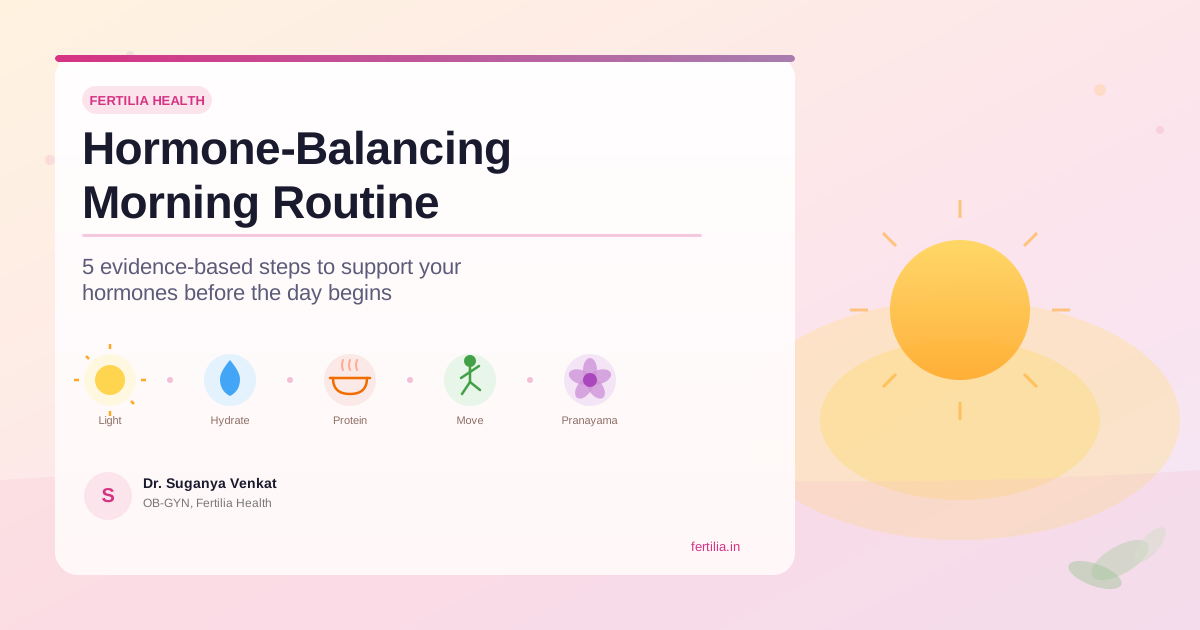
This post covers the biology first, then five practical steps you can start tomorrow.
Why Your Morning Matters More Than You Think
Your body follows a daily rhythm called the circadian cycle. This rhythm is set primarily by light and governs when most of your hormones rise and fall throughout the day.
Cortisol is central to this rhythm. Within 20 to 45 minutes of waking, your body triggers a sharp rise in cortisol called the cortisol awakening response (CAR). This is normal and healthy. It gives your body energy and mental clarity for the first part of the day. After the CAR, cortisol is supposed to gradually decline through the afternoon and drop to its lowest point at night, which allows melatonin to rise and sleep to deepen.
The problem arises when the CAR is disrupted. Clow and colleagues (Neuroscience and Biobehavioral Reviews, 2010) showed that psychological stress, irregular sleep, and poor lifestyle behaviours blunt the CAR, making it flat and prolonged rather than sharp and declining. A flat cortisol curve keeps your body in a low-grade state of stress throughout the day.
This matters for reproductive health because the hypothalamic-pituitary-adrenal (HPA) axis, which controls cortisol, directly interacts with the hypothalamic-pituitary-gonadal (HPG) axis, which controls your reproductive hormones. When cortisol is chronically elevated or dysregulated, it suppresses the release of GnRH from the hypothalamus. This reduces LH and FSH, disrupts ovulation, and alters progesterone levels in the second half of the cycle. Whirledge and Cidlowski (Nature Reviews Endocrinology, 2010) reviewed this mechanism in detail: the relationship between stress hormones and reproductive hormones is not theoretical. It is measurable and clinically relevant.
For women with PCOS, the stakes are higher. Many women with PCOS already have elevated cortisol reactivity and disrupted diurnal rhythms. Adding a chaotic morning pattern on top of this compounds the hormonal disruption. If you want to understand more about how insulin resistance and PCOS interact, read our complete guide to insulin resistance and PCOS.
The five steps below are not complicated. They work because they support the biology that is already supposed to happen in your body every morning.
Step 1: Get Morning Light Within 30 Minutes of Waking (5 to 10 Minutes)
This is the most overlooked step, and it costs nothing.
When light enters your eyes in the morning, it signals to the suprachiasmatic nucleus (your brain’s master clock) that the day has begun. This does two things. First, it anchors your circadian rhythm so that cortisol rises when it should and falls when it should. Second, it begins the 14 to 16-hour countdown to melatonin release, which means you will sleep better that night and wake more rested the following morning.
You do not need bright sunshine. Outdoor light on a cloudy day is typically 10,000 to 20,000 lux. Indoor light is usually 100 to 500 lux. The difference is enormous. Your phone screen is not a substitute.
How to do this in India: Step outside for 5 to 10 minutes. A small balcony, a terrace, or a walk to the gate is enough. If you have a courtyard, sit there while you have your morning water. You do not need to look directly at the sun. Just let outdoor light reach your eyes.
If you live in an apartment without easy outdoor access, open windows as wide as possible and sit near them. This is less effective than going outside but still better than staying in artificial light.
Step 2: Drink 500ml of Water Before Coffee or Tea
After 7 to 8 hours without fluids, your body wakes up mildly dehydrated. Mild dehydration, even at 1 to 2 percent below optimal, raises cortisol and increases the subjective sense of stress.
More practically, cortisol itself is produced in the adrenal glands, which need adequate hydration to function well. Reaching for coffee first thing raises cortisol even further (caffeine is a cortisol stimulant) before your body has had the chance to rehydrate and stabilise.
What to drink: Plain water, warm water, or water with a squeeze of lemon all work equally well. The temperature and flavour additions are personal preference. The volume matters: aim for 500ml (two standard glasses) before your first cup of chai or coffee. If you find plain water difficult first thing in the morning, jeera water (cumin water) is a good option: it helps digestion, is gentle on an empty stomach, and counts toward your fluid intake.
Consume your coffee or tea after you have eaten, not before. This blunts the cortisol spike from caffeine because food in the stomach moderates the absorption and adrenal response.
Step 3: Eat a Protein-First Breakfast Within an Hour of Waking
Skipping breakfast or eating something sweet first (biscuits, white bread, sugary cereals) causes a rapid spike in blood glucose followed by a rapid drop. That drop is perceived by the body as a stress signal, triggering another cortisol surge.
Protein at breakfast does the opposite. It slows gastric emptying, moderates the glucose rise, and provides the amino acids that support neurotransmitter production (serotonin, dopamine) that are important for mood stability throughout the day.
For women with PCOS and insulin resistance, this step is particularly important. Keeping blood glucose stable in the morning reduces the insulin spike that drives androgen production in the ovaries. We cover this mechanism in detail in our guide to PCOS and irregular periods.
India-relevant breakfast options with good protein content:
- 2 eggs (any style) with a small bowl of curd: approximately 18 to 20g protein
- Moong dal chilla (2 pieces) with curd: approximately 14 to 16g protein
- Ragi mudde or ragi dosa with sambar: approximately 10 to 12g protein, plus fibre
- Paneer bhurji with 1 roti: approximately 15g protein
- Overnight soaked chana (chickpeas) with tomato and coriander: approximately 12g protein
Aim for at least 20 to 25g of protein at breakfast. You do not need a protein shake or supplement if you eat whole food protein. Indian cooking already has excellent protein sources. The challenge is usually convenience: having moong dal batter soaked overnight or a batch of boiled eggs in the fridge makes this easy on rushed mornings.
Step 4: Move for 10 to 15 Minutes Before Sitting Down
You do not need a full workout in the morning. Light movement, 10 to 15 minutes, is enough to regulate the cortisol curve.
What counts: a brisk walk (indoors or outdoors), 10 minutes of yoga, or gentle stretching. What does not count: standing up to make coffee, or moving from bedroom to bathroom.
The mechanism: skeletal muscle contraction clears glucose from the bloodstream without requiring insulin (via GLUT4 transporters). This improves metabolic sensitivity for the rest of the day. It also triggers the release of BDNF (brain-derived neurotrophic factor), which improves focus and mood.
For women trying to conceive or managing PCOS, morning movement sets up a metabolic environment that is more responsive to hormonal signals throughout the day. Our fertility yoga guide includes a 4-week practice with poses you can do in 10 to 15 minutes if you prefer structured movement over a walk.
Intensity note: Intense exercise (HIIT, heavy weight training) can raise cortisol significantly, especially if done in a fasted state. If you are dealing with hormonal disruption or irregular cycles, save intense workouts for later in the morning, after breakfast. Gentle movement before food is fine for most women.
Would you like a personalised look at how your morning routine is affecting your hormones?
Dr. Suganya reviews this as part of her initial consultation. Chat with us on WhatsApp to book a session.
Step 5: Five Minutes of Pranayama Before You Start Your Day
Pranayama, specifically slow, rhythmic breathing techniques, is one of the most evidence-supported tools for reducing cortisol in a short time window. A 2017 meta-analysis by Pascoe and colleagues (Psychoneuroendocrinology) found that yoga practices including pranayama consistently reduced salivary cortisol levels across multiple study populations.
Two techniques that are practical for a morning routine:
Anulom Vilom (alternate nostril breathing): Sit comfortably. Close the right nostril with the right thumb and inhale slowly through the left nostril for a count of 4. Close both nostrils briefly. Release the thumb and exhale through the right nostril for a count of 8. Inhale through the right for 4. Close briefly. Exhale through the left for 8. This is one cycle. Do 10 cycles. This takes approximately 3 to 4 minutes.
Bhramari (humming bee breath): Sit comfortably. Take a slow, full inhale. As you exhale, make a gentle humming sound (like a bee) with your mouth closed and lips relaxed. Feel the vibration in your skull and chest. Do 5 to 7 rounds. This takes approximately 2 minutes.
Both techniques activate the parasympathetic nervous system, which is the counterpart to the stress response. The effect is measurable within a single session. You do not need to practise yoga to use these techniques.
Putting It Together: The 5-Step Sequence
| Time After Waking | Step | Duration |
|---|---|---|
| 0 to 5 min | Morning light (outside or open window) | 5 to 10 min |
| 5 to 15 min | 500ml water (plain, warm, or jeera water) | Drink while outside |
| 15 to 30 min | 10 to 15 min of movement (walk or yoga) | 10 to 15 min |
| 30 to 60 min | Protein-first breakfast (20 to 25g protein) | As needed |
| After breakfast | 5 min of Anulom Vilom or Bhramari | 5 min |
The total time invested: approximately 35 to 45 minutes, depending on your breakfast preparation. Most of this overlaps with things you already do (eating, moving through your home). The main additions are the outdoor light exposure and the pranayama.
What Happens If You Miss a Morning?
Nothing, permanently. Hormonal patterns are set by consistency over weeks, not by any single morning. Missing a day does not reset your progress. Do not create an all-or-nothing relationship with this routine. If a morning is rushed, prioritise water and breakfast. The light and pranayama can happen in shortened versions (2 to 3 minutes each) or the following day.
The goal is a consistent pattern over 4 to 6 weeks, which is roughly how long it takes for cortisol rhythms to reset and begin influencing downstream hormones measurably.
A Note on Individual Variation
Some women with hypothyroidism, adrenal conditions, or other endocrine disorders have cortisol patterns that are already significantly disrupted. For these women, lifestyle changes are still important, but they work alongside medical management, not instead of it. If you have been told your cortisol is abnormal (through a 4-point salivary cortisol test or blood test), or if you have a diagnosed condition affecting your adrenal function, discuss with your doctor before making significant changes to your routine.
Similarly, if you are already under the care of a gynaecologist for PCOS, infertility, or irregular cycles, the steps in this post are supportive of your treatment plan. They are designed to work alongside medical care, not to replace it. If you would like guidance specific to your hormonal situation, we are here to help.
For women managing PCOS who want to know more about how weight loss connects to hormonal health, our PCOS weight loss guide explains the research in practical terms.
Frequently Asked Questions
Can a morning routine really affect fertility?
Yes, indirectly. Your morning habits shape your cortisol rhythm, and cortisol directly influences the hypothalamic-pituitary-gonadal axis, which governs ovulation, progesterone levels, and menstrual regularity. No morning routine is a fertility treatment on its own, but consistent hormonal support through lifestyle creates a better environment for conception, especially when combined with appropriate medical care.
What if I have to wake up very early (4 AM or 5 AM) for work? Will there be no sunlight?
If you wake before sunrise, skip the outdoor light step until natural light is available (this may be during your commute or a break). Focus on the other four steps. Artificial bright light boxes (10,000 lux) can help if early morning darkness is consistent, but they are not essential for most women.
Is coffee really bad for hormones in the morning?
Coffee is not bad for hormones overall. The issue is timing. Caffeine on an empty stomach, before cortisol has naturally peaked and before you have rehydrated, produces a larger adrenal response than it would after a meal. Shifting your coffee to after breakfast changes this dynamic significantly. If you enjoy chai or filter coffee in the morning, keep it, just move it to after breakfast.
I have PCOS and my doctor has me on metformin. Should I still do this routine?
Yes. Metformin addresses insulin resistance medically. The morning routine addresses it through lifestyle. Both can work together without conflict. The protein-first breakfast and morning movement improve insulin sensitivity independently of metformin’s mechanism. Discuss any concerns about timing your medication with meals with your prescribing doctor.
How long before I notice a difference?
Most women notice changes in energy and mood within 2 to 3 weeks of consistent practice. Measurable changes in hormonal markers (cortisol patterns, cycle regularity) take 6 to 12 weeks. If you are tracking your cycle, note whether your luteal phase length or premenstrual symptoms change over the following 2 to 3 cycles.
Is pranayama safe during pregnancy?
Anulom Vilom and Bhramari are generally considered safe during pregnancy when practised gently, without breath retention (kumbhaka). If you are pregnant, always consult your obstetrician before starting any new breathing practice, and avoid holding your breath at any point.
I am not a morning person. Do I have to do all five steps every day?
Start with two steps: water and breakfast. These two alone reduce the cortisol spike from dehydration and blood sugar drops. Add one more step each week. Building the habit gradually is more sustainable than attempting all five from day one and abandoning the routine when life gets busy.
Hormones respond to patterns, not to perfect mornings. Small, consistent changes to the first hour of your day have a compounding effect over weeks. You do not need to overhaul your life. You need to give your body the signals it is already designed to respond to.
If you have questions about how your specific situation (PCOS, irregular cycles, trying to conceive) intersects with lifestyle changes like these, Dr. Suganya reviews this as part of a full consultation. A morning routine is one habit layer of the wider plan she runs in her 90-day PCOS Symptom Reversal program.
Talk to us on WhatsApp to book a session or ask a question. We are here.
About the author: Dr. Suganya Venkat is an OB-GYN with 15+ years of clinical experience. DNB OB-GYN (GKNM Hospital, Coimbatore). MD Pathology (CMC Vellore). MBBS with 5 Gold Medals (SRMC). Founder of Fertilia Health.