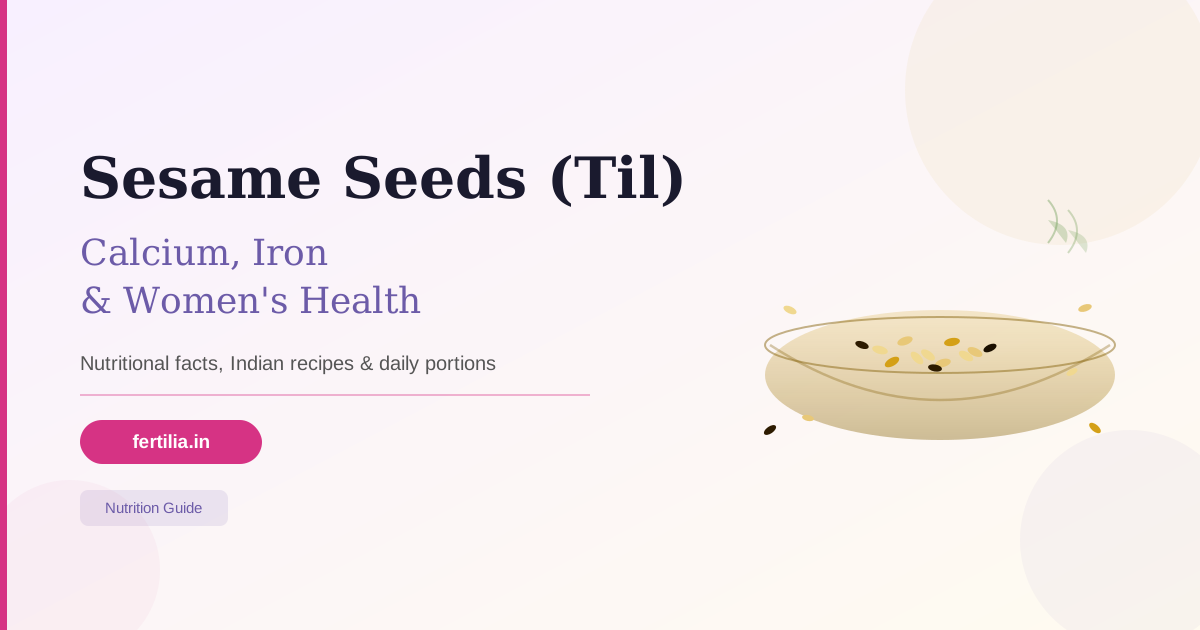
You have probably had til (sesame seeds) more times than you realise: roasted into laddoos at Makar Sankranti, stirred into South Indian ellu sadam, pressed into chikki from the local sweet shop. These small, flat seeds are a staple across Indian kitchens in every region and season.
What is less commonly noticed is how nutritionally dense sesame seeds are. A single tablespoon of whole sesame provides a meaningful amount of calcium and iron, two minerals that matter throughout a woman’s life, from managing PCOS to supporting pregnancy to postpartum recovery.
This guide covers what sesame seeds contain, how much to include at each life stage, and five easy recipes from the Indian kitchen.
For the clinical side of how sesame fits into PCOS management, read our complete guide to insulin resistance and PCOS.
What Are Sesame Seeds? Indian Names and Varieties
Sesame seeds have been cultivated in India for thousands of years. They go by different names across regions:
- Hindi / North India: til, teel
- Tamil: ellu, ali vidhai
- Telugu: nuvvulu, nuvvu
- Kannada: ellu, yellu
- Marathi: til, teel
- Malayalam: ellu
- Bengali: til
Sesame comes in three common colours: white, black, and brown. All three are nutritionally similar in most ways, with one important distinction. Black sesame seeds (kala til) are unhulled, meaning their outer coat is intact. This coat holds a significant portion of the seed’s calcium.
White sesame (the most common in Indian kitchens) is usually hulled. It has a milder flavour and dissolves easily into sweet and savoury dishes.
Black sesame (kala til) is unhulled, nuttier, and slightly more bitter. It retains the hull and its calcium content, making it the more mineral-dense choice. It is used in traditional sweets, ellu podi, and many postpartum preparations.
For everyday cooking, either variety works well. Rotating black sesame into your diet a few times a week is worth the effort.
Nutritional Facts (per 1 tablespoon / 9 g, whole dried)
| Nutrient | Amount |
|---|---|
| Calories | 52 kcal |
| Protein | 1.6 g |
| Total Fat | 4.5 g |
| Carbohydrates | 2.1 g |
| Dietary Fibre | 1.1 g |
| Calcium | 88 mg |
| Iron | 1.3 mg |
| Magnesium | 32 mg |
| Zinc | 0.7 mg |
| Copper | 0.4 mg |
Source: USDA FoodData Central (whole dried sesame).
Important note on calcium: The values above are for whole (unhulled) sesame (kala til and similar unhulled varieties). White hulled sesame, which is more commonly found in Indian provision stores, has a significantly lower calcium content because the hull is removed. If calcium is a priority, use black til or check that your white sesame is labelled as unhulled. Both white and black sesame are good sources of iron and healthy fats regardless of hulling status.
Iron contribution: One tablespoon provides 1.3 mg of iron. Pair sesame seeds with a vitamin C source (amla, tomato, lemon) at the same meal.
Building an iron and calcium-rich daily diet? Download our free Iron and Calcium-Rich Foods Guide for a complete food list and meal planning tips across all life stages.
Sesame Seeds for PCOS
Sesame seeds are a natural fit for a PCOS-friendly kitchen. They have a low glycemic index and pair well with other PCOS staples like ragi, jowar, dal, and dahi. Their fibre and healthy fat content help you feel full and satisfied after meals.
Simple ways to add sesame to a PCOS meal plan:
- Stir 1 tablespoon of roasted sesame into your morning dahi
- Knead sesame seeds into roti or paratha dough
- Use ellu podi as a daily condiment with idli or dosa
- Sprinkle roasted sesame over salads or raita
For the clinical context on PCOS and food choices, read our insulin resistance and PCOS guide. Sesame fits naturally alongside the PCOS-friendly Indian breakfast ideas already on this site.
A good starting amount is 1 tablespoon per day, which you can build up to over a week.
Sesame Seeds During Pregnancy
Sesame seeds contribute calcium, iron, and magnesium, three nutrients that are part of a well-rounded pregnancy diet.
Calcium: Whole sesame seeds (particularly black til) are among the more calcium-dense foods in an everyday Indian kitchen. Calcium needs increase during pregnancy, making regular inclusion of sesame seeds in meals a practical contribution alongside dairy foods like dahi and paneer.
Iron: Each tablespoon provides 1.3 mg of iron. Pair sesame with a vitamin C source (amla, tomato, lemon) in the same meal. For a full guide to iron-rich Indian foods through pregnancy, see our iron-rich foods for pregnancy guide.
Magnesium: A tablespoon contributes around 32 mg, adding to your daily intake from food.
Portions During Pregnancy
One to two tablespoons (9 to 18 g) per day is a practical amount. The easiest ways to include sesame during pregnancy:
- Knead 1 to 2 tablespoons into your daily roti or paratha dough
- Sprinkle over dal or sabzi as a garnish
- Use ellu podi with idli or dosa
- Stir into dahi or raita
Sesame Seeds After Delivery (Postpartum)
Sesame seeds have been part of Indian postpartum nutrition for generations. Til ladoo, made with jaggery and ghee, is a traditional postpartum sweet given to new mothers in many Indian communities. The combination of sesame seeds, jaggery, and ghee provides iron, healthy fats, and natural sugars in a warming, easy-to-eat form that suits the postpartum period well.
After delivery, your body benefits from calcium for bone recovery and iron for overall nutritional restoration. Sesame seeds contribute to both, and their traditional preparation as ladoo or podi makes them easy to eat even when you have little time to cook.
Two tablespoons (18 g) per day works well in the postpartum period, whether in ladoo, podi, rice dishes, or mixed into dal and sabzi.
For a full Indian postpartum meal guide, read our complete after-delivery food guide.
Want a personalised meal plan that builds sesame and other key foods into your daily routine? Message us on WhatsApp and our nutrition team will put together a plan based on your stage of life and food preferences.
5 Easy Sesame Seed Recipes for the Indian Kitchen
Recipe 1: Til Ladoo (Sesame Laddoo)
The classic Indian sweet made for Makar Sankranti and traditionally given to new mothers after delivery.
Makes: 12 to 14 laddoos Time: 25 minutes
Ingredients:
- 1 cup (140 g) white or black sesame seeds (til)
- 3/4 cup (120 g) jaggery powder (adjust sweetness to taste)
- 1 tablespoon ghee
- 1/4 teaspoon cardamom (elaichi) powder
- 2 tablespoons roasted peanut powder (optional, helps with binding)
Method:
- Dry-roast sesame seeds in a heavy-bottomed pan on medium heat, stirring continuously, until golden and fragrant (5 to 7 minutes). Watch closely: sesame burns quickly. Cool completely.
- In the same pan, melt jaggery powder with 2 tablespoons of water on low heat until dissolved. Increase heat slightly and cook until the syrup thickens (soft-ball stage: a drop in cold water forms a soft ball). This takes about 4 to 5 minutes.
- Remove from heat. Stir in roasted sesame, ghee, elaichi, and peanut powder if using.
- Grease your hands lightly with ghee and roll into balls while still warm. Work quickly, as the mixture firms as it cools.
- If the mixture cools before you finish, warm briefly on very low heat for 30 seconds.
- Store in an airtight container at room temperature for up to 7 days.
Daily portion: 1 to 2 laddoos.
Recipe 2: Ellu Sadam (South Indian Sesame Rice)
A quick South Indian rice dish ready in under 20 minutes with leftover rice.
Makes: 2 servings Time: 20 minutes
Ingredients:
- 1 cup cooked white or brown rice (cooled or day-old rice works best)
- 3 tablespoons white sesame seeds
- 1 tablespoon black sesame seeds (optional, adds nuttiness)
- 1 tablespoon sesame oil (gingelly oil)
- 1 teaspoon mustard seeds
- 1 teaspoon urad dal
- 2 dried red chillies
- 8 to 10 curry leaves
- 1/4 teaspoon hing (asafoetida)
- Salt to taste
Method:
- Dry-roast sesame seeds on medium heat until they pop and smell nutty (2 to 3 minutes). Cool completely, then grind to a coarse powder. Set aside.
- Heat sesame oil in a kadai. Add mustard seeds and let them splutter.
- Add urad dal and stir until golden. Add dried red chillies, curry leaves, and hing. Stir for 30 seconds.
- Add cooked rice and mix gently to coat with the oil and tempering.
- Add the ground sesame powder and salt. Toss together on medium heat for 2 to 3 minutes.
- Serve with a side of plain dahi or papad.
Recipe 3: Til Roti (Sesame Flatbread)
The easiest way to add sesame to daily meals. The seeds blend into the dough and add a subtle nutty crunch.
Makes: 6 to 8 rotis Time: 20 minutes
Ingredients:
- 1 cup (120 g) whole wheat atta (or jowar/ragi flour for a variation)
- 2 tablespoons sesame seeds (white or black)
- 1/4 teaspoon ajwain (optional)
- Salt to taste
- Water for kneading
- Ghee for cooking
Method:
- Combine flour, sesame seeds, ajwain (if using), and salt. Mix well.
- Add water gradually and knead to a soft, smooth dough. Rest for 10 minutes.
- Divide into 6 to 8 portions. Roll out on a lightly floured surface.
- Cook on a hot tawa, flipping once and pressing the edges. Finish on the open flame for a light char if preferred.
- Brush with ghee before serving.
The sesame seeds add a mild crunch and faint nuttiness that pairs with any dal or sabzi without changing your cooking routine.
Recipe 4: Ellu Podi (Sesame Chutney Powder)
A dry South Indian chutney podi that keeps for weeks and turns any meal complete.
Makes: About 150 g (one small jar) Time: 15 minutes
Ingredients:
- 3 tablespoons white sesame seeds
- 2 tablespoons black sesame seeds (or all white)
- 4 to 5 dried red chillies (adjust to taste)
- 1 tablespoon urad dal
- 1 tablespoon chana dal
- 3 tablespoons dry-grated coconut
- 1/4 teaspoon hing
- Salt to taste
- A few drops of oil for roasting
Method:
- Dry-roast sesame seeds until golden and fragrant. Cool completely.
- Roast urad dal and chana dal with a drop of oil until golden. Cool.
- Roast dried red chillies briefly until fragrant. Cool.
- Dry-roast grated coconut until lightly golden. Cool.
- Combine all cooled ingredients in a mixer jar. Add hing and salt.
- Grind to a coarse powder. Do not over-grind.
- Store in an airtight glass jar at room temperature for up to 3 weeks.
To serve: Mix 1 teaspoon podi with a little sesame oil or ghee. Serve with idli, dosa, or stir into plain rice.
Recipe 5: Sesame Raita (Til Dahi)
A quick cooling side that adds sesame to any meal in under 5 minutes.
Makes: 2 servings Time: 5 minutes
Ingredients:
- 1 cup (250 g) fresh dahi (full-fat or toned)
- 1 tablespoon roasted sesame seeds (white or black)
- 1/2 cucumber, grated and squeezed
- 1/4 teaspoon roasted jeera powder
- Salt and black pepper to taste
- Fresh coriander for garnish
Method:
- Whisk dahi until smooth.
- Stir in grated cucumber, jeera powder, salt, and pepper.
- Top with roasted sesame seeds and fresh coriander.
- Serve chilled alongside roti, rice, or dal.
The roasted sesame adds a pleasant crunch and a nutty depth that lifts a plain raita into something more satisfying.
How Much Sesame to Eat: A Quick Reference
| Life Stage | Daily Amount | Best Form |
|---|---|---|
| PCOS | 1 tablespoon (9 g) | Roti, dahi, podi, or garnish |
| Pregnancy | 1 to 2 tablespoons (9 to 18 g) | Roti dough, podi, sadam |
| Postpartum | 2 tablespoons (18 g) | Til ladoo, podi, sadam, raita |
| General maintenance | 1 tablespoon (9 g) | Any of the above |
Starting tip: If sesame seeds are not already part of your daily meals, begin with 1 teaspoon for the first few days and increase gradually. Black til has a stronger flavour, so start with 1 teaspoon before moving to 1 tablespoon.
How to Buy and Store Sesame Seeds
Buying:
- White sesame (hulled) is widely available in kirana stores, provision shops, and grocery apps (BigBasket, Blinkit, JioMart) in 100 g to 500 g packs.
- Black sesame (kala til) is available at organic stores, some provision stores, and online. For maximum calcium, look for whole/unhulled black til specifically.
- Choose seeds with a uniform colour and no musty smell.
- Buy in small quantities and replenish every two to three months for freshest flavour.
Storing:
- Keep in an airtight container in a cool, dry cupboard away from sunlight.
- Whole sesame seeds stay fresh for 6 to 12 months in good storage conditions.
- In humid regions (Chennai, Mumbai, coastal Kerala), refrigerating extends freshness.
- Discard if seeds smell bitter or rancid, as the oils in sesame can go stale, especially in humidity.
Have a question about adding sesame seeds to your daily routine? Message us on WhatsApp and our nutrition team will get back to you within 24 hours.
Frequently Asked Questions
Can I eat sesame seeds during pregnancy? Yes. Sesame seeds are a nutritious addition to a pregnancy diet. One to two tablespoons per day in food form (roti, podi, sadam, or as a garnish) is a practical daily amount. If you have any specific concerns, speak with your doctor.
Which is better, white or black sesame seeds? Both are nutritious. Black sesame seeds (kala til) are unhulled and retain their outer coat, which holds much of the calcium. White sesame is milder in flavour and easier to use daily. Including both across the week gives you variety and full nutritional benefit.
How do I eat sesame seeds without noticing the taste? Three easy methods: knead 2 tablespoons into 1 cup of roti flour (taste is barely noticeable), stir 1 tablespoon into dahi before serving, or use ellu podi as a daily condiment. These require no extra cooking steps.
Are sesame seeds a good calcium source? Whole (unhulled) sesame, particularly black til, provides about 88 mg of calcium per tablespoon, making it one of the more calcium-dense foods in the Indian kitchen. White hulled sesame has significantly lower calcium, though it remains a useful source of iron and healthy fats.
Can I eat sesame seeds while breastfeeding? Yes. Sesame seeds are a traditional postpartum food in many Indian communities. Til ladoo is specifically made for new mothers as an energy-dense, warming snack. Two tablespoons per day in any form works well during the postpartum and breastfeeding period.
What is the best way to store sesame seeds? In an airtight container in a cool, dry cupboard. Whole seeds stay fresh for 6 to 12 months. In humid regions, refrigerating them extends freshness. Discard if they smell rancid or bitter.
Is ellu sadam suitable for everyday eating? Yes. Ellu sadam is a balanced South Indian meal: rice, sesame, and tempering with curry leaves and lentils. It works well as a quick lunch or dinner, particularly with a side of dahi. Day-old rice works best as it separates cleanly during cooking.