The bowl of ragi kanji appears on your bedside table before you have fully woken up. The tin of til laddoos arrives with your mother-in-law. The neighbour sends up garlic milk. And somewhere between feeding the baby and trying to rest, you are getting contradictory advice from every corner about what you should and should not be eating.
The traditional Indian postpartum diet, known as pathiya samayal in Tamil or pathya aahar in Hindi, was built on one straightforward idea: give the new mother foods that are warm, easy to digest, and dense with nutrients she needs to recover. Most of this tradition holds up very well when you look at the nutritional content of these foods.
This guide covers the key foods in the Indian postpartum kitchen, how much of each to eat daily, a 7-day meal plan, three complete recipes, and a clear list of what to avoid and when.
For the full picture of physical recovery after delivery, from wound care to activity timelines, see our complete postpartum recovery guide.
What to Focus on in the First Six Weeks
The first six weeks after delivery call for a specific kind of eating: nutritious, warm, easy to digest, and consistent across the day. The traditional Indian postpartum kitchen covers this through a handful of whole foods eaten in rotation.
The key food groups to prioritise:
- Protein-rich foods at every meal: dal (moong, masoor), eggs, paneer, dalia, soft chicken
- Iron-rich foods daily: ragi, methi seeds, dates, dry fruits, til, jaggery
- Calcium-rich foods at every meal: ragi kanji, til laddoo, dairy (milk, curd, paneer)
- Energy-dense easy snacks: til laddoo, ragi laddoo, dry fruits, panjiri, ghee in meals
- Warm fluids throughout the day: dal water, kanji water, warm rasam, lasun doodh, warm haldi milk
The traditional postpartum Indian diet covers all of these naturally. For complete breastfeeding nutrition, see our breastfeeding diet guide for Indian mothers.
Traditional Indian Postpartum Foods: The Core Ingredients
These are the foods that form the backbone of the Indian postpartum kitchen across regions, and the reasons their nutritional profiles make sense for this period.
1. Ragi (Finger Millet)
Ragi is one of the most calcium-rich grains available in Indian kitchens. A 100-gram portion of ragi flour provides approximately 344 mg of calcium, making it far more calcium-dense than rice or wheat flour. It is also a source of iron and dietary fibre.
Daily portion: 1 to 2 cups of ragi kanji, or one ragi laddoo
How to eat it:
- Ragi kanji: thin porridge cooked with water or milk, a pinch of salt, and a small piece of jaggery. One of the most widely recommended first-week foods.
- Ragi laddoo: rolled with ghee, jaggery, and dry ginger powder (sukku). A shelf-stable snack that is easy to eat with one hand during feeds.
- Ragi mudde: steamed balls eaten with sambar or dal. More common from Week 2 onwards when appetite returns.
- Ragi dosa or ragi roti: a good breakfast option from Week 3 once the stomach is tolerating a wider range of foods.
For ragi’s full nutritional breakdown and more preparation ideas, see our ragi benefits guide.
2. Til (Sesame Seeds)
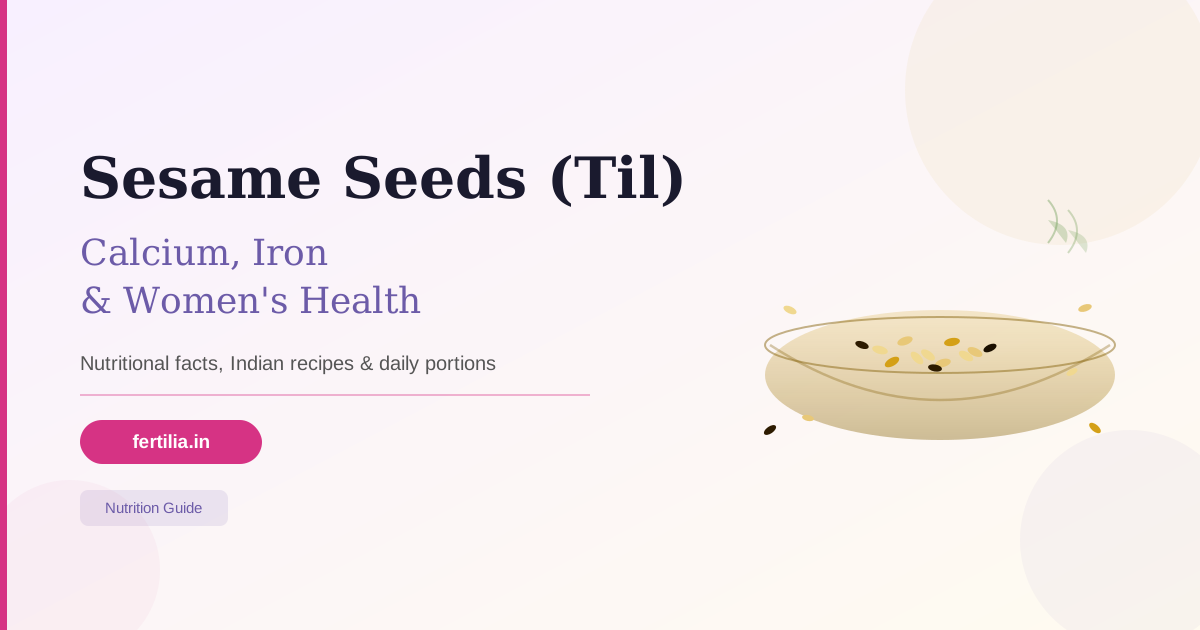
White and black sesame seeds are calcium and iron-rich and feature prominently in postpartum cooking across South India, Maharashtra, Rajasthan, and Punjab. One tablespoon of sesame seeds contains approximately 88 mg of calcium and 1.3 mg of iron.
Daily portion: 2 to 3 tablespoons across the day, or 1 to 2 til laddoos
How to eat it:
- Til laddoo: the classic postpartum sweet, made with jaggery. Recipe included below.
- Til chikkee: a flat sesame-jaggery brittle common in South Indian and Maharashtrian traditions. Can be prepared in bulk and stored for 2 to 3 weeks.
- Mixed into chutneys, dal, or sprinkled over soft sabzi.
3. Methi (Fenugreek Seeds)
Methi seeds appear in postpartum cooking traditions across India, from Punjab’s ajwain-methi laddoos to Tamil Nadu’s vendhaya kali (a sweet methi porridge). They are traditionally used to support the early postpartum period and are one of the most consistent ingredients across regional Indian traditions.
Daily portion: 1 teaspoon soaked overnight and eaten in the morning, or in laddoos and curries
How to eat it:
- Soaked methi seeds: soak 1 teaspoon overnight in warm water, drain, and eat in the morning before breakfast.
- Methi dal: cooked moong dal or masoor dal with fresh methi leaves and a garlic tadka in ghee.
- Methi paratha: ground dried methi mixed into whole wheat dough for flatbreads.
- Vendhaya kali: a South Indian tradition using ragi or rice flour and methi seeds cooked with palm sugar. Recipe included below.
- Methi laddoo: available as a traditional preparation across North India, typically made with wheat flour, methi seeds, dry ginger, ghee, and jaggery.
For more on methi’s nutritional profile, see our methi water benefits guide.
4. Garlic (Lasun)
Garlic has been a constant in Indian postpartum cooking for generations. Lahsun ki chutney, garlic-heavy dal tadka, and garlic milk (lasun doodh) appear in postpartum traditions from Kashmir to Kerala.
Daily portion: 4 to 6 cloves per day, incorporated in cooking
How to eat it:
- Lasun doodh: 4 to 5 crushed garlic cloves simmered in 1 cup of milk with a piece of jaggery and a pinch of dried ginger (sukku). A traditional South Indian and Rajasthani postpartum drink.
- Garlic dal tadka: standard moong dal finished with a generous garlic tadka in ghee.
- Garlic rasam: South Indian rasam with whole garlic cloves, a digestive and warming preparation.
5. Dalia (Broken Wheat)
Dalia is gentle on the stomach, quick to cook, and one of the most protein-rich grains in the Indian kitchen. A 100-gram serving provides approximately 12 g of protein and 12 g of dietary fibre. It is well-suited to the first weeks when appetite may be variable and digestion slower.
Daily portion: 1 cup of cooked dalia per meal
How to eat it:
- Dalia khichdi: cooked with moong dal, turmeric, and soft vegetables (pumpkin, bottlegourd). Add 1 teaspoon of ghee before serving.
- Sweet dalia: cooked in milk with 2 to 3 dates and a small piece of jaggery. A good breakfast option.
- Dalia upma: tempered with mustard seeds, curry leaves, a little ghee, and soft-cooked onion. Protein-rich and easy to prepare.
6. Dry Fruits
A small katori of soaked dry fruits provides calcium, iron, magnesium, and healthy fats in one snack. The same dry fruits recommended during pregnancy apply here.
| Dry Fruit | Daily Portion | Key Nutrients |
|---|---|---|
| Almonds (badam), soaked | 8 to 10 pieces | Calcium, magnesium, healthy fats |
| Walnuts | 4 halves | Omega-3 fats, magnesium |
| Dried figs (anjeer), soaked | 2 to 3 pieces | Calcium, iron, fibre |
| Dates (khajoor) | 2 to 3 pieces | Iron, potassium, natural sugar |
Soak almonds overnight and dried figs for 2 to 4 hours. Drain and discard the soaking water before eating. For detailed portion guidance and Indian preparation ideas, see our dry fruits guide, which covers portions relevant to the postpartum period as well.
7. Ghee
A small amount of ghee is traditional in Indian postpartum care and adds fat-soluble nutrients and caloric density during a period when your body needs sustained energy.
Daily portion: 1 to 2 teaspoons per meal, added to rice, roti, kanji, or dal
Traditional uses: ghee in ragi kanji, a drizzle over dal and rice, ghee in laddoos, and a teaspoon stirred into dalia.
8. Moong Dal and Masoor Dal
Both are easy to digest, rich in plant protein, and cook quickly. Moong dal is the gentler of the two and is recommended for the first 10 to 14 days. Masoor dal can be introduced from Week 2 as appetite and digestion improve.
Daily portion: 1 cup of cooked dal per meal
Preparation: Pressure cook with turmeric and a small piece of ginger. Finish with a garlic tadka in ghee. Dal water (the thin liquid from cooked dal) is also a useful warm fluid to sip throughout the day.
Not sure what to eat given your specific health history and delivery type? WhatsApp Dr. Suganya’s team at +91 99402 70499 for a personalised postpartum nutrition plan.
7-Day Postpartum Meal Plan (Starting from Day 3)
This plan suits most women from Day 3 to Day 10. Adjust portions to your appetite. Everything should be eaten warm or at room temperature, not refrigerator-cold.
| Day | Breakfast | Mid-Morning | Lunch | Snack | Dinner |
|---|---|---|---|---|---|
| Day 1 | Ragi kanji with jaggery (1 cup) | 8 soaked almonds + warm haldi milk (1 cup) | Moong dal khichdi + ghee + soft pumpkin curry | 1 til laddoo | Rice + rasam + moong dal |
| Day 2 | Sweet dalia with dates and milk (1 cup) | 4 walnut halves + 2 soaked figs | Ragi mudde + sambar | 1 ragi laddoo | Soft rice + garlic dal + methi sabzi |
| Day 3 | Moong dal cheela (2 pieces) + ghee | Lasun doodh (warm garlic milk, 1 cup) | Dalia khichdi + curd (1 cup) | Panjiri (2 tablespoons) | Roti (2) + masoor dal + steamed bottlegourd |
| Day 4 | Sweet dalia with jaggery and almonds | 8 soaked almonds + 2 dates + warm milk | Rice + sambar + potato curry + curd | Til chikkee (1 piece) | Ragi kanji + moong dal |
| Day 5 | Idli (3) with sambar + coconut chutney + ghee | Soaked figs (2) + warm milk | Roti (2) + garlic dal + pumpkin sabzi | 1 to 2 til laddoos | Rice + rasam + soft egg curry or paneer curry |
| Day 6 | Ragi dosa (2) + coconut chutney | Lasun doodh | Dalia khichdi + ghee + curd | Small katori of dry fruits | Roti (2) + methi dal + soft steamed vegetables |
| Day 7 | Poha with ghee, curry leaves, and cashews | Warm haldi milk + 2 dates | Rice + sambar + egg curry or chana dal + curd | 1 ragi laddoo | Rice + garlic rasam + moong dal |
Hydration: Aim for 8 to 10 glasses of warm water or warm liquids per day. Dal water, kanji water, and warm rasam all count.
Three Essential Postpartum Recipes
Til Laddoo (Sesame Jaggery Rounds)
Makes: 12 to 15 laddoos (store in an airtight tin for up to 2 weeks)
Ingredients:
- 1 cup white sesame seeds (til)
- 3/4 cup jaggery powder
- 2 tablespoons ghee
- 1/2 teaspoon dry ginger powder (sukku/sonth)
- 1/4 teaspoon cardamom powder
Method:
- Dry roast sesame seeds in a heavy pan on low flame, stirring constantly, until light golden and fragrant. This takes about 5 minutes. Set aside to cool slightly.
- Heat ghee in the same pan and add jaggery powder. Stir on low flame until jaggery melts fully and begins to bubble gently (about 3 minutes). Do not overheat.
- Turn off the flame. Add roasted sesame seeds, dry ginger, and cardamom. Mix well and quickly.
- While still warm and pliable, shape into small rounds (slightly smaller than a golf ball).
- Shape them within 10 minutes of removing from heat. Once the mixture cools, it becomes crumbly and difficult to shape.
Ragi Kanji (Finger Millet Porridge)
Makes: 1 cup (one serving)
Ingredients:
- 2 tablespoons ragi flour
- 1.5 cups water (or 1 cup water + 1/2 cup milk for a creamier version)
- A small piece of jaggery, to taste
- 1 teaspoon ghee
- A pinch of salt
- Optional: a pinch of dry ginger powder
Method:
- Mix ragi flour with 1/2 cup cold water in a small bowl. Stir until completely smooth with no lumps.
- Bring the remaining 1 cup of water (or water-milk combination) to a boil in a saucepan.
- Slowly pour the ragi paste into the boiling water, stirring constantly.
- Reduce to low flame and cook for 5 to 7 minutes, stirring throughout, until the kanji thickens to a smooth, pourable consistency.
- Add jaggery, stir until dissolved, and finish with ghee.
- Serve immediately, warm.
Vendhaya Kali (Tamil Fenugreek Porridge)
Makes: 1 cup (one serving)
Ingredients:
- 1 teaspoon methi seeds, soaked overnight and drained
- 2 tablespoons ragi flour (or rice flour)
- 1.5 cups water
- 1 tablespoon palm sugar (karupatti) or jaggery, to taste
- 1 teaspoon ghee
- A pinch of salt
Method:
- Grind soaked, drained methi seeds with 1 tablespoon of water into a smooth paste.
- Combine ragi flour, methi paste, and water in a small saucepan. Stir until smooth.
- Cook on low flame, stirring continuously, for 6 to 8 minutes until the mixture thickens.
- Add palm sugar or jaggery and stir until fully dissolved.
- Finish with ghee and serve warm.
This recipe is part of traditional Tamil postpartum care and is typically given from Days 3 to 7 after delivery.
Foods Traditionally Avoided in the First Six Weeks
Indian postpartum traditions vary by region and family, but the most consistent advice across traditions involves avoiding foods that are hard to digest or disruptive to recovery in the early weeks.
Avoid in the first two weeks:
- Raw salads and uncooked vegetables: prefer soft-cooked or steamed vegetables until digestion settles. Raw foods take more digestive effort and are traditionally avoided in the early postpartum period.
- Very spicy food and heavily oiled preparations: go easy on the stomach during recovery. The early postpartum kitchen uses spices like turmeric, cumin, dry ginger, and garlic, but avoids heavy masala blends and deep-fried preparations.
- Refrigerator-cold foods and chilled drinks: warm or room-temperature foods are the consistent recommendation across Indian postpartum traditions. Avoid ice cream, cold curd, and chilled juice in the first 2 weeks.
- Raw papaya: traditionally avoided in the postpartum period in South India.
- Maida-based foods (white bread, biscuits, noodles, refined crackers): replace with ragi, dalia, and whole wheat alternatives during the recovery period.
- Carbonated drinks and packaged juices: prefer plain warm water, dal water, and warm soups.
From Week 3 onwards, you can gradually return to a broader Indian diet based on how you feel. Most women transition to normal eating by Week 4 to 6. If you had a C-section, follow your doctor’s specific guidance as recovery may take a few extra weeks.
For guidance on which foods specifically affect breast milk, see our breastfeeding diet guide.
Want a personalised postpartum meal plan that accounts for your delivery type, health history, and daily routine? WhatsApp Dr. Suganya’s team at +91 99402 70499 and ask for our nutritionist.
Frequently Asked Questions
What is pathiya samayal?
Pathiya samayal is the traditional Tamil postpartum dietary practice followed for 30 to 60 days after delivery. The word pathiyam translates roughly to regulated eating or dietary discipline. It centres on warm, easy-to-digest, nutrient-dense foods: ragi kanji, moong dal, garlic preparations, sesame-based sweets, and a deliberate avoidance of raw, cold, or heavily spiced foods. Similar traditions exist across India under different names (pathya aahar in Hindi-speaking regions, pathyam in Kerala).
Can I eat rice after delivery?
Yes. Soft-cooked white rice with dal, sambar, or rasam and a little ghee is one of the most recommended foods in the Indian postpartum diet. There is no nutritional reason to avoid rice. Red rice or brown rice are also fine if your digestion tolerates them.
Is ghee safe to eat after delivery?
Yes, in moderate amounts. A teaspoon or two of ghee per meal adds fat-soluble nutrients and energy during a period when your body needs sustained caloric support. The key is moderation: 1 to 2 teaspoons per meal is the traditional amount, not unlimited.
How long should I follow the postpartum diet?
Traditional guidelines suggest 30 to 40 days (approximately 4 to 6 weeks). In practice, most nutritionists recommend following the restricted diet (no raw food, no cold food, no heavy masalas) for the first 2 to 3 weeks and then gradually broadening back to a normal balanced diet. There is no hard cutoff. Go by how your digestion and appetite feel.
When can I start eating normal food again?
For most women, Week 3 to 4 is when the transition begins. Start by adding one or two previously-avoided foods at a time and see how you feel. If you had a C-section, the recovery period may be 4 to 6 weeks before returning to a full normal diet. Your doctor’s guidance on your specific recovery takes precedence.
Can I have chai or coffee after delivery?
Yes, a cup of chai or filter coffee per day is generally fine. If you are breastfeeding, most guidance suggests limiting to one or two cups per day given the caffeine content. For complete guidance on caffeine and breastfeeding, see our breastfeeding diet guide.
What should I eat for a faster recovery after a C-section?
The nutritional priorities are the same: protein for tissue repair (dal, eggs, paneer, soft chicken), iron for blood recovery (ragi, methi, dates, dry fruits), calcium (ragi, til, dairy), and plenty of warm fluids. The difference is that the easy-to-digest phase (soft foods, no raw foods) may last 3 to 4 weeks rather than 2, and your doctor may have specific post-surgery guidelines around gas-producing foods. Follow your doctor’s post-surgery diet instructions and layer the traditional foods on top once cleared.