Name has been changed to protect patient privacy. Clinical details are shared with the patient’s consent.
This is not just another patient story for us.
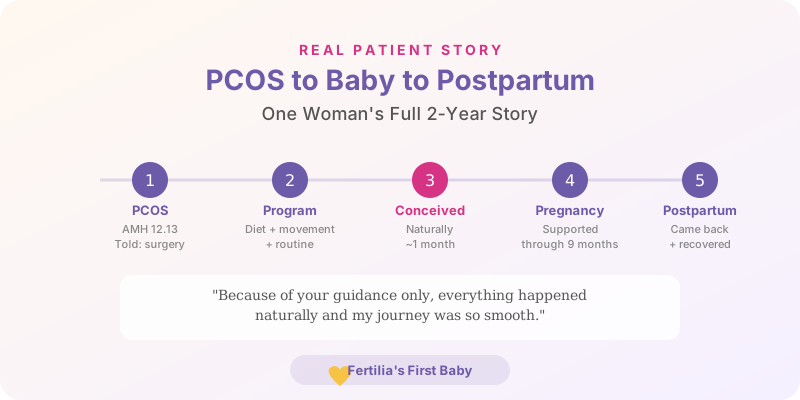
This is someone we’ve been with for almost 2 years. Through PCOS, through conception, through pregnancy, through a C-section, through postpartum struggles, and through recovery.
For more on this, read our guide on PCOS & Pregnancy. And this is also the story of Fertilia’s very first baby. 💛
Her name is Priya. And her journey is the most complete example of what we do, because it didn’t end with a positive pregnancy test.
Where It Started
When Priya first came to us, she was already going through a lot.
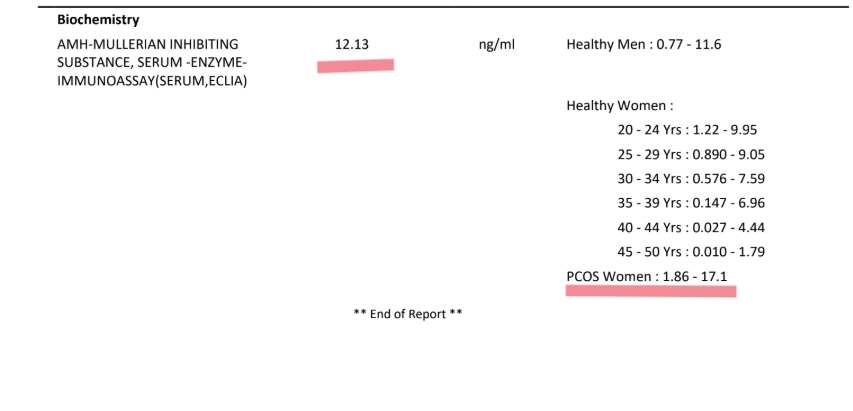
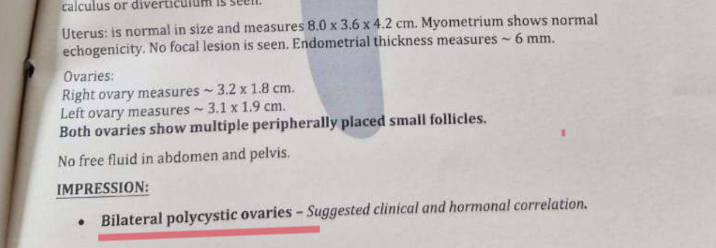
She had been diagnosed with PCOS. Her ultrasound showed bilateral polycystic ovaries: multiple peripherally placed small follicles on both sides. Her AMH was 12.13 ng/mL: significantly higher than the normal range for her age, a hallmark of PCOS.
Because her AMH was high and her PCOS was clinically significant, she had been told that she would likely need laparoscopic ovarian drilling, followed by fertility treatment.
She had already started that process, meeting doctors, doing scans, trying to understand what comes next.
But emotionally, she was not in a good place. There was confusion. There was pressure from all sides. And there was that constant, exhausting thought: “Why is this not working for me?”
What We Found
In our first few conversations, we didn’t jump into giving her a plan.
We spent time understanding her properly:
- Her daily routine
- Her food habits
- Her activity levels
- Her stress, and where it was coming from
Nothing was completely off on its own. But everything together was not aligned.
PCOS was there. Hormones were fluctuating. There was no structure to her routine. And her body was not getting the consistent signals it needed to regulate itself.
We also made one thing very clear from the beginning:
We are not here to replace your gynaecologist. We will work alongside your treatment, and support your body so it responds better.
That mattered to her. She didn’t have to choose between her doctor and us. We were on the same team.
The Plan
We didn’t give her something extreme. We built something she could actually follow.
- A PCOS-friendly diet: practical, not restrictive. Indian meals she could cook at home, not imported superfoods.
- Simple movement: walking, gentle activity. Nothing that felt like punishment.
- A consistent routine: sleep, meals, movement at roughly the same times each day.
But more than the plan itself, it was how we worked with her.
She stayed in touch regularly. She would:
- Send her meal pictures
- Ask small doubts, “Is this okay?” “Can I have this?”
- Share when she felt unsure or overwhelmed
Our nutritionist guided her with small corrections. Not lectures. Not judgement. Just gentle nudges in the right direction.
Over time, something shifted. She stopped asking “Is this right?” She started knowing what was right.
💜 Have PCOS and not sure where to start? Dr. Suganya creates personalised 90-day programs that work alongside your medical treatment, not against it. Start a conversation on WhatsApp, no pressure, just guidance.
The Turning Point
The first change was how she felt.
Within a couple of weeks:
- More energy
- Feeling lighter
- Better mental clarity
And then came a very important moment.
Within 1 month, she got her periods naturally.
No tablets. No induction. Her body, given the right inputs, started doing what it was supposed to do.
And soon after that, she conceived naturally.
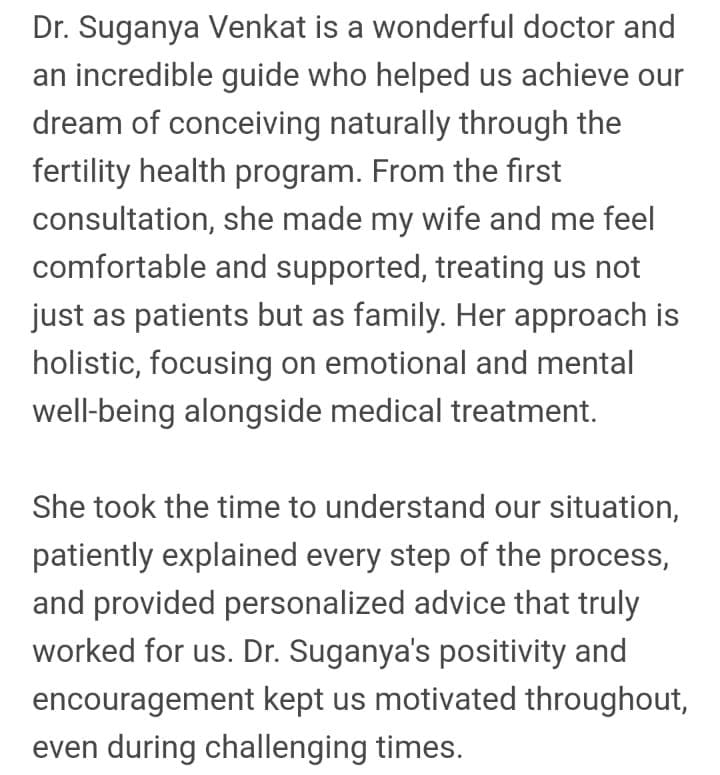
That moment was very special for us. Because this was not just another pregnancy. This was Fertilia’s first baby. The first proof that what we were building (this model of holistic, doctor-led lifestyle support) actually worked in real life, for real women.
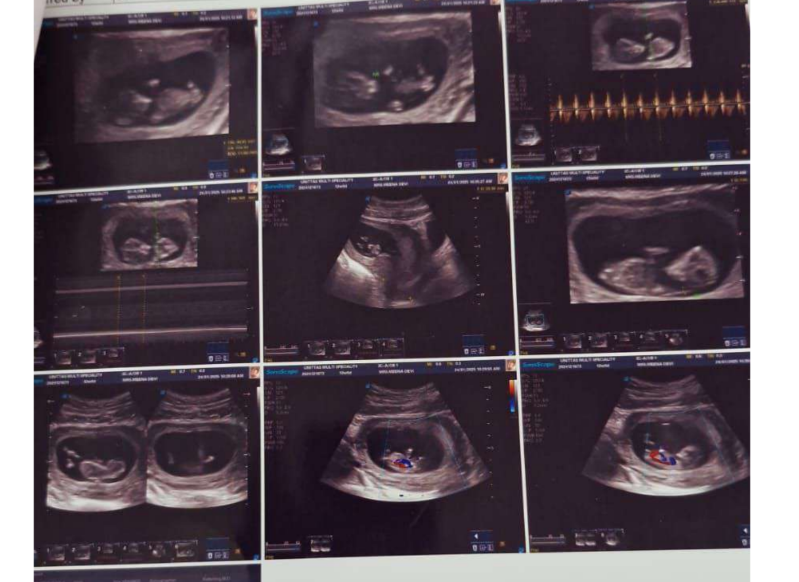
Remember: this is the same woman who was told she would need laparoscopic ovarian drilling and fertility treatment. Instead, her body responded to consistent nutrition, movement, and routine changes, and she conceived without any of that.
Through Pregnancy
Priya’s journey with us didn’t end at the positive test. If anything, this is where the real depth of support began.
Pregnancy after PCOS comes with its own set of worries. Will my hormones stay stable? Will I develop gestational diabetes? Will my blood pressure be okay? These are not irrational fears, they’re genuine risks that need active management.
So we didn’t just celebrate the pregnancy and step back. We stayed with her through every week of it.
Nutrition stayed structured and personalised. Our nutritionist Manisha continued working with Priya on her trimester-wise meal plan, focused on keeping her blood sugar stable, her iron levels up, and her weight gain on track. No crash diets, no extreme restrictions. Just consistent, practical Indian meals that kept her body in balance.
Shobhna Deepak, our wellness coach, guided her through prenatal yoga via direct video calls. Not generic YouTube routines, personalised sessions where Shobhna could see her form, adjust for how she was feeling that day, and progress safely as her pregnancy advanced. This made a real difference to her energy, her sleep, and her confidence about her body changing.
Dr. Varsha Viswanathan, our psychiatrist and psychotherapist, provided mental health support. Pregnancy after years of PCOS (after being told you’d need surgery and fertility treatment) is emotionally complex. The anxiety doesn’t disappear with a positive test. Having a professional to talk to, someone who understood the full context of her journey, was something Priya found deeply beneficial.
And the results showed.
Throughout all 40 weeks, her thyroid stayed in range. No gestational diabetes. Blood pressure normal. She completed her pregnancy smoothly, with no complications.
These aren’t things that happen by accident. They happen when nutrition, movement, and mental health are all being actively supported, together, consistently, for the full duration.
Priya never felt like she was managing pregnancy alone. She had a nutritionist adjusting her meals, a wellness coach guiding her movement, a psychiatrist supporting her mind, and Dr. Suganya overseeing the whole picture. That’s what a holistic pregnancy program actually looks like in practice.
Postpartum: The Part No One Talks About
After delivery, things were not easy.
Priya had a C-section. Recovery took time. Emotionally, it was not simple either.
She shared how certain comments affected her (things like “After doing so much, still C-section?”) the kind of casual judgement that Indian women face constantly, and that can be deeply hurtful when you’re already vulnerable.
At the same time:
- Sleep was disrupted (as it is for every new mother)
- Her routine broke down completely
- Meals became irregular, eating whatever was available, whenever she could
When her baby fell sick, stress increased even more. Slowly, she stopped taking care of herself. The baby came first. She came last.
And then she noticed something that really shook her: she had gained about 6 kg in just one month.
Coming Back
That’s when she reached out to us again.
Not with guilt. With trust.
She knew we wouldn’t judge her. She knew we’d meet her where she was.
This time, we didn’t talk about weight loss. We focused on:
- Getting her routine back: one small change at a time
- Supporting her while breastfeeding: making sure she was eating enough, and eating right
- Making things manageable: realistic goals for a new mother, not fitness influencer targets
She had moved back home. Managing baby, cooking, household work, often on her own. Some days she followed the plan well. Some days she couldn’t. That was okay.
She tried workouts, but had pain from the C-section, so we kept it simple: walking and gradual movement.
Even with that:
- Weight stabilised
- Inch loss started
- Energy improved significantly
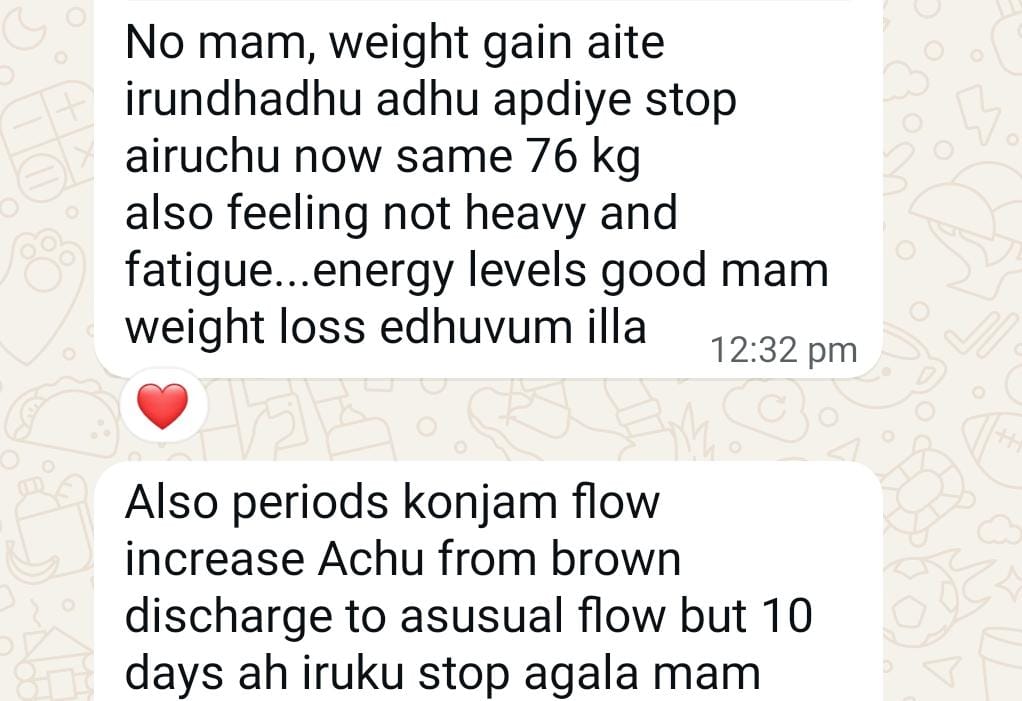
At one point, she had low milk supply: a stressful experience for any new mother. With proper guidance from our team and our lactation professional, it improved.
She also had a mild return of PCOS symptoms and an episode of continuous bleeding postpartum. We guided her through it step by step. No panic. Just clarity and consistent support.
And slowly, her body started responding again.
The Full Picture
If you look at Priya’s journey as a whole:
- She was advised surgery and fertility treatment
- She worked on her body with consistent lifestyle changes instead
- She conceived naturally
- She went through 40 weeks with normal thyroid, sugar, and BP: no complications, with nutrition, yoga, and mental health support throughout
- She handled postpartum challenges. C-section recovery, weight gain, low milk supply, PCOS returning
- And when things slipped, she came back and got back on track
This is not a fairy tale where everything goes perfectly. This is real life, messy, emotional, exhausting, beautiful.
What made the difference was that she never felt alone in any phase.
In Her Own Words
This is what Priya shared with us, close to her delivery:
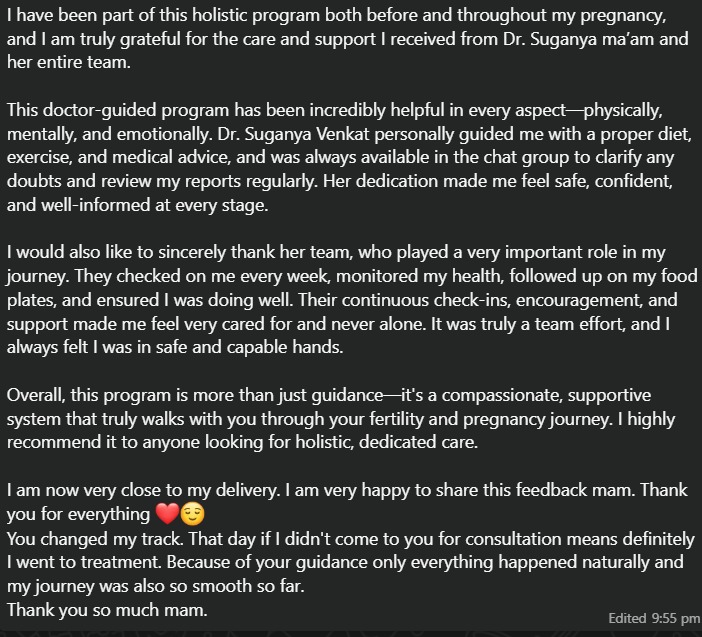
“That day if I didn’t come to you for consultation, I definitely would have gone to treatment. Because of your guidance only, everything happened naturally and my journey was also so smooth so far.”
“They checked on me every week, monitored my health, followed up on my food plates, and ensured I was doing well. Their continuous check-ins, encouragement, and support made me feel very cared for and never alone.”
And her husband wrote:
“Dr. Suganya Venkat is a wonderful doctor and an incredible guide who helped us achieve our dream of conceiving naturally through the fertility health program. She took the time to understand our situation, patiently explained every step of the process, and provided personalised advice that truly worked for us.”
And Today
A woman who was told she would need surgery and fertility treatment.
Who came to us confused, overwhelmed, and unsure if her body would ever cooperate.
Who got her periods back in a month. Who conceived naturally. Who went through pregnancy with support. Who struggled postpartum, and came back without shame.
Today, she’s a mother.

We’ve blurred this image to protect the family’s privacy. But that little blur is the most meaningful thing we’ve ever been a part of.
This was Fertilia’s first baby. And for our team, for Dr. Suganya, for the nutritionists who checked on Priya every week, for everyone who was part of this 2-year journey, this moment meant everything.
Why This Story Matters
We share Priya’s story not because every woman with PCOS will have the same outcome. Every woman’s body is different, and every journey is different.
We share it because it shows what becomes possible when you have the right support at every stage: not just for the dramatic moment of conception, but for the quiet, unglamorous months that follow.
It shows that postpartum struggles are real and normal, and that needing help again is not failure. It’s wisdom.
It shows that a doctor-led program that combines nutrition, lifestyle, and emotional support can transform a woman’s journey, from feeling confused and alone to feeling confident and cared for.
And it shows that sometimes, the body just needs the right environment to do what it already knows how to do.
Frequently Asked Questions
Can PCOS be reversed enough to conceive naturally?
Yes. for many women, addressing the underlying drivers of PCOS through nutrition, movement, sleep, and stress management can restore ovulation and enable natural conception. Priya’s case is one example: her periods returned within 1 month of starting the program, and she conceived naturally without fertility medication. However, every case is different, and some women may still need medical intervention.
For more on this, read our guide on PCOS After 35.
What does an AMH of 12 mean for fertility?
An AMH of 12.13 ng/mL is significantly elevated and is characteristic of PCOS. High AMH indicates a large number of antral follicles in the ovaries, the eggs are there, but they’re not maturing and releasing properly. With the right lifestyle support, many women with high AMH from PCOS can restore ovulation. High AMH from PCOS is actually a more hopeful situation than low AMH, because the egg reserve is abundant.
Do I still need my gynaecologist if I join a lifestyle program?
Absolutely. Fertilia’s programs work alongside your gynaecologist, not as a replacement. Your gynaecologist handles medical assessments, scans, prescriptions, and procedures. We add the lifestyle layer (nutrition, movement, routine, and emotional support) that enhances how your body responds to medical treatment. Priya continued seeing her gynaecologist throughout her journey.
Is it normal for PCOS symptoms to return postpartum?
Yes. Hormonal fluctuations after delivery can trigger a return of PCOS symptoms, irregular periods, weight gain, fatigue. This is common and manageable. The key is to address it early rather than waiting for it to spiral. Priya experienced this, and with proper support, her body stabilised again.
How long does a full program take?
The initial PCOS program is 90 days. But as Priya’s story shows, the most impactful journeys are longer. She stayed with us through preconception, pregnancy, and postpartum. We offer continued support for women who want it, adapting the program to each phase of their journey.
💜 Dealing with PCOS and dreaming of starting a family? Dr. Suganya and her team have been with women through every phase, from diagnosis to baby and beyond. Message us on WhatsApp, your journey could start with a single conversation.
This is the third in our series of patient case studies from our clinic. Every story is real, verified, and shared with the patient’s explicit consent. Names and identifying details are changed to protect privacy.