You just had a baby. You are running on broken sleep, feeding every two hours, and somewhere in the middle of all this, someone asks you when you plan to “get your body back.”
This guide is not for them. It is for you.
Postpartum weight loss is real, it is achievable, and there is solid research behind what actually works. But the timeline looks nothing like what social media suggests, the approach looks nothing like a standard weight loss diet, and your body has specific nutritional needs right now that make restriction actively counterproductive.
Here is what the evidence says, written for the Indian new mother navigating recovery, feeding, and everything else at once.
What Happens to Your Weight After Delivery
At the moment of delivery, several things happen in quick succession. The baby (approximately 2.5 to 3.5 kg; the Indian average sits nearer the lower end), the placenta (approximately 0.5 to 0.7 kg), and amniotic fluid (approximately 0.5 to 1 kg) are no longer inside your body. That is roughly 4 to 5 kg gone immediately.
In the first week, your body sheds the extra blood volume and fluid it accumulated during pregnancy. This can add another 2 to 3 kg of fluid loss, which shows up as increased urination and night sweats. This is your body doing exactly what it is supposed to do.
By the end of two weeks, most new mothers have lost 5 to 7 kg from delivery alone, without any dietary changes. This is not fat loss. This is physiology.
The remaining pregnancy weight (typically 3 to 5 kg for a 10 to 12 kg total pregnancy gain) is actual fat and tissue. This is what takes months to lose, and that is entirely appropriate. Your body stored it for a reason.
What Research Says About Timelines
A prospective study of 1,423 Swedish women followed to one year after delivery (the Stockholm Pregnancy and Weight Development Study) found that, on average, women were about 1.5 kg above their pre-pregnancy weight at 12 months: 30% weighed less than before pregnancy, 56% were within 5 kg, and 14% had retained 5 kg or more. The strongest predictor of how much weight stayed on was how much had been gained during the pregnancy (Ohlin and Rössner, International Journal of Obesity, 1990, PMID 2341224).
The Cochrane review of diet and exercise for weight reduction after childbirth concluded that diet, and diet combined with exercise, help women lose weight after delivery, that combining the two is preferable because it preserves lean mass, and that more evidence is still needed on the effects in breastfeeding women (Amorim Adegboye and Linné, Cochrane Review, 2013, PMID 23881656). The best single trial on the breastfeeding question randomised overweight exclusively breastfeeding women at 4 weeks postpartum to a modest 500 kcal per day deficit plus exercise: they lost about 0.5 kg per week between 4 and 14 weeks with no effect on their infants’ growth (Lovelady et al., New England Journal of Medicine, 2000, PMID 10675424).
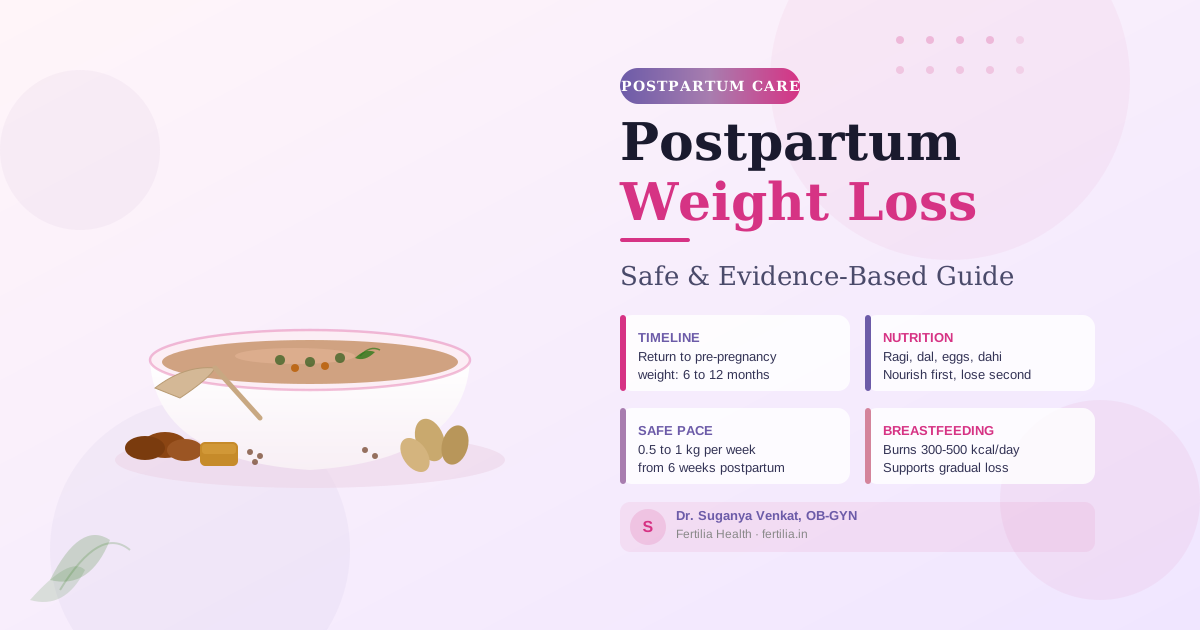
What this means practically: expecting to be back to your pre-pregnancy weight by 3 months is not supported by evidence. Expecting it by 6 to 12 months, with a moderate approach, is realistic and well within normal. When you do start moving, our guide to postpartum exercise covers what is safe at each stage.
Standard obstetric practice, and what I advise, is not to restrict calories deliberately in the first 6 to 8 weeks after delivery regardless of delivery type. The Lovelady trial started its modest deficit at 4 weeks in overweight, well-nourished American women under close supervision; for the average Indian mother arriving at her six-week visit with borderline haemoglobin, I would rather she spend those weeks eating properly. Your body is healing, and your nutrition directly affects that healing.
Why Restrictive Dieting Backfires Postpartum
After delivery, your body needs significant calories to:
- Heal surgical or perineal wounds (tissue repair requires protein and micronutrients)
- Produce breast milk (approximately 500 extra calories per day for exclusive breastfeeding)
- Support hormone rebalancing (oestrogen and progesterone are shifting rapidly)
- Sustain your own energy while caring for a newborn
Cutting calories too early or too aggressively can reduce breast milk supply, slow wound healing, worsen postpartum fatigue, and in some cases contribute to postpartum hair loss (which is already driven by hormonal shifts).
In a small study of well-nourished lactating women who cut their energy intake by about a third for one week, milk intake by the infant was not reduced as long as the mother’s intake stayed at or above 1,500 kcal per day, and milk composition did not change; the authors noted that longer-term studies were needed to define a safe lower limit (Strode et al., Acta Paediatrica Scandinavica, 1986, PMID 3754376). That 1,500 kcal figure is a floor, not a target.
The goal for the first 6 to 8 weeks is not weight loss. It is recovery and nourishment.
The Role of Breastfeeding
Breastfeeding does support postpartum weight loss, but the relationship is more nuanced than most people realise.
Producing breast milk requires approximately 300 to 500 extra calories per day. In theory, this creates a caloric deficit that supports fat mobilisation. In practice, several factors moderate this:
- Breastfeeding increases appetite, which partially offsets the extra calorie demand
- Some women retain a small amount of weight (approximately 1 to 2 kg) while exclusively breastfeeding, which is a protective mechanism ensuring consistent milk supply
- The effect varies significantly by individual, diet quality, and sleep
A systematic review of 45 observational studies found that most reported little or no association between breastfeeding and postpartum weight change, although four of the five highest-quality studies did find a positive association. The authors concluded that the evidence challenges the widely held belief that breastfeeding reliably promotes weight loss (Neville et al., International Journal of Obesity, 2014, PMID 23892523).
The takeaway: breastfeed because it benefits your baby and your health, not primarily as a weight loss strategy. The weight will follow naturally with a balanced approach.
What to Eat for Postpartum Recovery and Weight Management
The traditional Indian postpartum diet (what your mother-in-law calls “pathiya samayal”) was designed for recovery first. It emphasises warming foods, easily digestible proteins, galactagogues, and iron-rich ingredients. With some adjustments, this is also the foundation of a weight-friendly postpartum diet.
Prioritise protein at every meal. Protein is essential for tissue repair, muscle maintenance, and satiety. Aim for 70 to 85 grams per day (higher end if breastfeeding).
Good Indian protein sources: eggs (the most bioavailable complete protein), moong dal, toor dal, rajma, chickpeas, paneer, curd, fish, chicken, and, for iron, calcium, and fibre rather than protein, ragi.
Include iron-rich foods at every meal. Blood loss during delivery depletes iron, and low iron contributes to the fatigue that makes everything harder. Among plant foods, sesame seeds, ragi, and jaggery are the useful contributors; dates, spinach, and beetroot are widely recommended but supply only modest, poorly absorbed amounts. Eggs, chicken, and fish provide iron that is absorbed far better. Pair plant sources with vitamin C (lemon, amla, tomato) to enhance absorption.
Eat enough fibre for gut recovery. The digestive system slows postpartum, particularly after a C-section. Oats, dalia (broken wheat), vegetables, dal, and fruits keep things moving without straining healing tissue.
Do not skip fat. Healthy fats are essential for hormone production, brain recovery, and fat-soluble vitamin absorption. Ghee (one to two teaspoons per day), coconut, til (sesame), and nuts are all appropriate. The old practice of adding ghee to postpartum food was nutritionally sound.
Hydration is underrated. Breastfeeding requires approximately 700 extra ml of fluid per day. Dehydration is commonly misread as hunger. Aim for 2.5 to 3 litres of water, including liquids like rasam, jeera water, warm nimbu pani, and kanji.
Sample Indian Postpartum Meal Plan
This is a template, not a prescription. Adjust portions to your hunger and feeding schedule.
Early morning (6-7 AM): Warm water with a pinch of ajwain or jeera. A handful of soaked almonds and one date.
Breakfast (8-9 AM): Ragi kanji with jaggery or ragi mudde with sambar. Or: two eggs any style with a small bowl of dalia. Or: idli with sambar and coconut chutney (add a katori of curd on the side).
Mid-morning (11 AM): A small bowl of fruits (papaya, banana, or pomegranate). Tender coconut water if available.
Lunch (1-2 PM): Two small chapattis or one cup of rice with dal (toor or moong), a sabzi, and a katori of curd. Include a small piece of jaggery after the meal for iron.
Evening snack (4-5 PM): A glass of haldi milk (turmeric milk) or ragi malt. A small handful of mixed nuts and dry fruits.
Dinner (7-8 PM): A bowl of rasam rice or khichdi with a katori of curd. Or: chapatti with dal and a green vegetable.
Night feed snack (if needed): A small glass of warm milk or a banana. This is not extra. If you are breastfeeding through the night, you need the calories.
This pattern provides approximately 1,800 to 2,200 calories depending on portion size, which is appropriate for a breastfeeding mother in the early postpartum period. If you are not breastfeeding, your nutritionist can adjust this down to 1,600 to 1,800 calories for gradual weight loss.
If you would like a personalised postpartum meal plan built around your specific situation, breastfeeding status, and weight goals, you can reach Fertilia’s nutrition team directly. Message on WhatsApp and we will help you figure out what works for your body right now.
When and How to Start Exercising
The standard medical advice is to wait for your 6-week postpartum check-up before starting any formal exercise. For C-section deliveries, the recommendation is closer to 8 weeks, and your surgeon’s clearance matters.
This is not a formality. Internal stitches heal on a different timeline from external ones. The pelvic floor, which bears the weight of your uterus throughout pregnancy and experiences significant stress during vaginal delivery, needs time to regain tone and coordination before you add impact or load.
Week 1 to 4 (after vaginal delivery): gentle recovery movement. Short walks (starting at 10 minutes and building to 20 to 30 minutes), gentle stretching, and diaphragmatic breathing. Nothing that strains the core or pelvic floor.
Week 4 to 6: Pelvic floor exercises (Kegels) and gentle core reconnection. Your physiotherapist or doctor can guide you on technique. This matters for long-term health more than weight loss.
After 6-week clearance: Walking (30 to 45 minutes daily), postnatal yoga, light bodyweight exercises. Build gradually. A meta-analysis of 32 randomised trials in postpartum women found that diet and physical activity combined produced significantly more weight loss than physical activity alone, and that women who self-monitored (a food or weight diary) lost about three times as much as those who did not (Lim et al., Obesity Reviews, 2015, PMID 26313354).
After 12 weeks (with clearance): Running, HIIT, weight training, and more intense exercise, if desired and if no symptoms of pelvic floor dysfunction (leaking, pressure, pain) are present.
A note on diastasis recti: separation of the abdominal muscles is common after pregnancy (present in 60% of women at 6 weeks postpartum in a Norwegian cohort of first-time mothers, falling to about a third by 12 months; Sperstad et al., British Journal of Sports Medicine, 2016, PMID 27324871). Crunches and sit-ups are not recommended until this has been assessed. A postnatal physiotherapy evaluation is worth the time.
Why Broken Sleep Makes Weight Loss Harder
Sleep deprivation directly impairs your ability to lose weight, regardless of diet and exercise.
When you are chronically sleep-deprived, as every new parent is, cortisol (the stress hormone) rises. Elevated cortisol promotes fat storage, particularly visceral fat. Simultaneously, ghrelin (the hunger hormone) rises and leptin (the satiety hormone) drops, making you feel hungrier and less satisfied after eating.
A meta-analysis of controlled studies found that people who were partially sleep-deprived ate on average 385 kcal more the next day than when adequately rested, with no compensating rise in energy expenditure (Al Khatib et al., European Journal of Clinical Nutrition, 2017, PMID 27804960).
This does not mean you should try to sleep more and eat less in the early postpartum period. It means you should be realistic about what is possible during this phase, ask for help with night feeds when you can, and not interpret a plateau on the scale as personal failure when you have been awake for most of the night.
Weight loss during the newborn phase is genuinely harder than it is at other times. That is physiology, not willpower.
Safe, Realistic Goals for Postpartum Weight Loss
Based on the research reviewed above, here is what a sensible postpartum weight loss approach looks like:
Weeks 1 to 6: Focus entirely on recovery nutrition. No caloric restriction. The scale will likely move on its own from fluid loss and gradual body changes.
Week 6 onwards (with medical clearance): Aim for 0.5 to 1 kg per week at most. This requires a modest caloric deficit of 250 to 500 calories per day, achievable through portion awareness and exercise rather than restriction.
Months 3 to 6: This is when most women see the most consistent progress, as sleep improves slightly, exercise becomes more consistent, and hormones start to stabilise.
12 months: This is the medically appropriate target for returning to near pre-pregnancy weight for most women. Some women will achieve it earlier, some later, and both are normal.
If you are not making any progress at 6 months despite a balanced approach, it is worth speaking with your doctor about thyroid function, as postpartum thyroiditis (inflammation of the thyroid) affects about 5% of women in the first year after delivery (Stagnaro-Green, Journal of Clinical Endocrinology and Metabolism, 2012, PMID 22312089) and can interfere with metabolism. In India, the other thing I check at the same visit is haemoglobin and ferritin: postpartum iron deficiency is far more common here than in the Swedish and American cohorts most of this research comes from, and an anaemic woman will plateau on fatigue alone.
What to Avoid (Without Creating Anxiety About Food)
Rather than a strict “avoid” list, here is a practical framing: some food patterns make postpartum weight loss harder, not because they are forbidden, but because they work against your recovery and satiety.
Skipping meals often backfires because it increases hunger later and reduces energy for feeding and exercise.
Ultra-processed snacks (chips, biscuits, packaged sweets) provide calories without the protein, iron, and fibre your body is actively asking for. They are not banned, but they are not doing you any favours as your main snacks.
Juice cleanses or detox diets have no evidence base in the postpartum period and can reduce milk supply and nutrient availability for healing.
Cutting carbohydrates entirely reduces fibre intake, can worsen postpartum constipation, and removes your body’s preferred energy source during breastfeeding.
The simplest frame: focus on what you are adding (protein, iron, fibre, hydration, good fats) rather than what you are removing. Fibre and hydration also solve the other problem most new mothers do not mention, constipation after delivery.
Frequently Asked Questions
How much weight do you lose immediately after giving birth? Most women lose 5 to 7 kg in the first two weeks after delivery. This comes from the baby, placenta, amniotic fluid, and extra blood volume your body accumulated during pregnancy. This is fluid and physiological weight, not fat loss. Fat loss begins gradually over the following weeks and months.
When is it safe to start dieting after delivery? The earliest safe point to begin a modest caloric deficit is 6 to 8 weeks postpartum and only after your doctor’s clearance. For C-section recoveries, closer to 8 weeks. Before that point, your body needs full nutritional support for healing and milk production. Restrictive dieting in the first 6 weeks can slow healing and reduce breast milk supply.
Does breastfeeding help you lose weight after delivery? Yes, modestly. Producing breast milk uses an additional 300 to 500 calories per day, which supports gradual fat mobilisation. However, breastfeeding also increases appetite, and some women retain 1 to 2 kg while exclusively breastfeeding as a protective mechanism for milk supply. Breastfeeding is beneficial for many reasons, including infant immunity and maternal health, but it is not a reliable weight loss strategy on its own.
How long does it take to lose postpartum weight? Research suggests that most women return to near pre-pregnancy weight between 6 and 12 months postpartum with a balanced diet and moderate activity. Expecting to be back to your starting weight in 3 months is not aligned with what the evidence shows for safe, sustainable loss. The 12-month timeframe is medically appropriate and should be the target, not the fallback.
What Indian foods support postpartum weight loss? High-protein, iron-rich Indian foods are most supportive: ragi (calcium and iron), eggs (complete protein), moong and toor dal, paneer, curd, rajma, dates and jaggery (iron), sesame seeds (calcium and iron), and dry fruits. These foods support recovery, satiety, and gradual fat loss far better than low-calorie processed alternatives. Warm, spiced preparations (rasam, jeera water, haldi milk) also support digestion and hydration.
I am still not losing weight at 4 months postpartum. What should I do? First, check whether you are eating enough protein and managing sleep where possible, as both are commonly under-optimised. Second, rule out postpartum thyroiditis with a TSH test, as thyroid changes after delivery are common and directly affect metabolism. Third, consider speaking with a postpartum nutritionist who can assess your individual dietary patterns and hormonal status. The answer is rarely “eat less.” It is almost always “eat better and address the underlying factors.”
Is it safe to exercise while breastfeeding? Yes, after medical clearance (typically 6 weeks for vaginal delivery, 8 weeks for C-section). In the randomised trial mentioned above, exclusively breastfeeding women who exercised 45 minutes a day, four days a week, alongside a modest calorie deficit saw no effect on their infants’ growth (Lovelady et al., 2000, PMID 10675424), and moderate exercise is not known to reduce milk volume or alter its composition. Some women find that nursing before exercise (rather than right after) is more comfortable. Staying well hydrated on exercise days matters.
Postpartum weight loss is not a race. Your body spent 9 months growing a human being, and it deserves more than a few weeks to begin its recovery. The women who come through this period feeling well in their bodies are typically those who focused on nourishing themselves first and trusted the process.
If you are looking for a structured postpartum nutrition plan tailored to your body, your feeding situation, and your realistic goals, our team at Fertilia is here. Message Dr. Suganya’s team on WhatsApp and we will point you in the right direction. A safe, feeding-friendly plan is part of her Postpartum Recovery program.
Related reading on Fertilia: