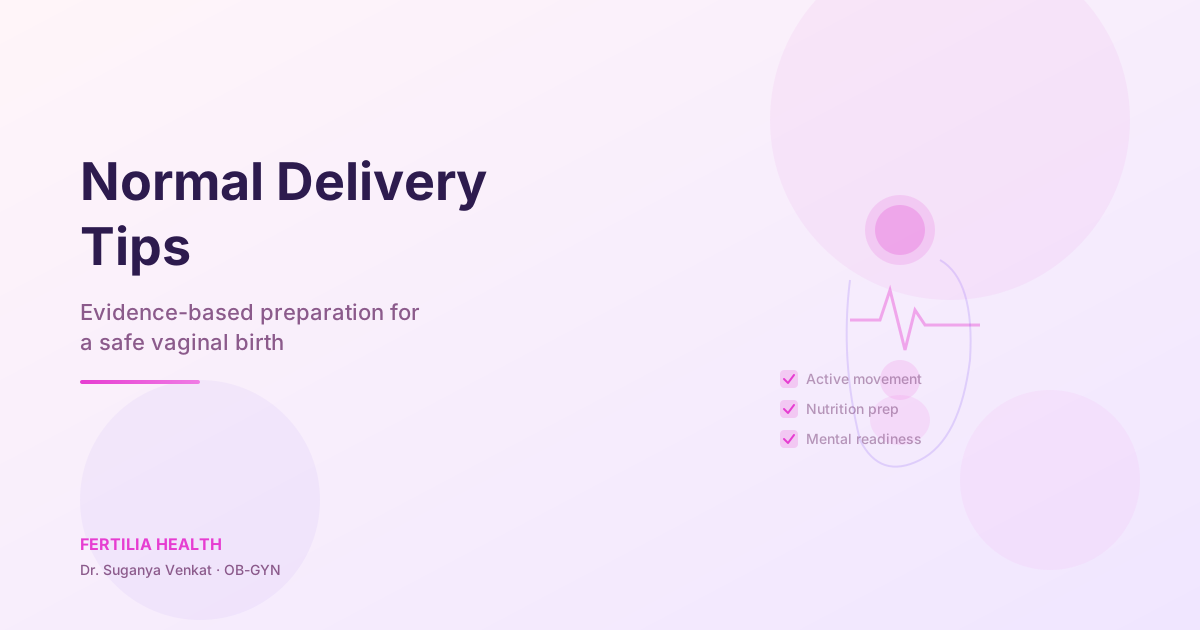
You want a normal delivery. Most women do. And the internet is full of advice, drink ghee, walk more, eat dates, do squats. Some of it works. Most of it is oversimplified or unsupported.
Here’s what the evidence actually says about preparing your body for a vaginal delivery, and what’s within your control.
A note before we begin: Normal delivery isn’t always possible. Certain medical situations (placenta praevia, breech presentation, previous classical caesarean, active infections) make a caesarean the safer choice. The goal isn’t to avoid a C-section at all costs. It’s to give your body the best possible chance at what it’s designed to do, while being ready for whatever your baby needs.
What Influences Your Chances of Normal Delivery?
Research consistently shows that several modifiable factors affect the likelihood of vaginal delivery (Gupta et al., 2017, Cochrane Database of Systematic Reviews):
- Your physical fitness going into labour
- Nutrition during the third trimester
- Baby’s position (which you can influence)
- Perineal tissue preparation
- Your mental readiness and birth environment
- Your support system during labour
Let’s go through each one.
1. Stay Active. But the Right Way
This isn’t about intense workouts in your third trimester. It’s about consistent, gentle movement that builds stamina, strengthens your pelvic floor, and helps your baby settle into a good position.
Walking
The simplest, most underrated preparation for labour. A daily 30-minute walk improves cardiovascular endurance (you’ll need it, active labour is physically demanding), helps manage gestational weight, and encourages your baby to move into the head-down position.
Evidence: A randomised trial by Shojaei et al. (2021, BMC Pregnancy and Childbirth) found that women who walked regularly in the third trimester had shorter active labour and were significantly less likely to need an emergency caesarean.
Pelvic Floor Exercises (Kegels)
Your pelvic floor muscles support your baby’s weight and play a central role during the pushing stage. Strong, flexible pelvic floor muscles help you push more effectively and reduce the risk of perineal tears.
How to do them:
- Identify the muscles, imagine you’re stopping the flow of urine midstream
- Contract and hold for 5 seconds, then release for 5 seconds
- Repeat 10 times, 3 sets a day
- Gradually increase the hold to 10 seconds
Evidence: Boyle et al. (2012, Cochrane Review) found that antenatal pelvic floor training reduced the duration of the second stage of labour and the risk of instrumental delivery.
Prenatal Yoga
Yoga improves flexibility, breath control, and body awareness, all directly useful during labour. Specific poses like the malasana (deep squat), cat-cow, and butterfly pose help open the pelvis and encourage optimal foetal positioning.
A word of caution: Avoid hot yoga, deep backbends, and any pose that puts pressure on your abdomen after 20 weeks. Always practice under guidance from a trained prenatal instructor.
What to Avoid
- High-impact exercise (running, jumping) in the third trimester, joint laxity from relaxin increases injury risk
- Lying flat on your back for extended periods after 20 weeks, this compresses the vena cava and reduces blood flow to your baby
- Abdominal crunches: diastasis recti risk increases
📞 Preparing for Delivery and Want Personalised Guidance?
Every pregnancy is different. Dr. Suganya’s pregnancy program includes trimester-specific nutrition, safe movement guidance, and 1-on-1 support from an OB-GYN who’s delivered hundreds of babies.
Talk to Dr. Suganya on WhatsApp →
2. Nutrition That Supports Normal Delivery
What you eat in the third trimester directly affects your energy reserves for labour, your tissue elasticity, and your baby’s positioning.
Dates. The Evidence Is Surprisingly Strong
This is one of the few traditional recommendations that holds up in research. Eating 6-7 dates daily from 36 weeks onwards has been shown to:
- Increase cervical dilation at admission (meaning you arrive at the hospital more progressed)
- Reduce the need for oxytocin augmentation
- Shorten the first stage of labour
Evidence: Al-Kuran et al. (2011, Journal of Obstetrics and Gynaecology) found that women who consumed dates in the last 4 weeks of pregnancy had significantly higher cervical dilation at admission (3.5 cm vs 2.0 cm) and a lower rate of augmentation.
Protein. Your Labour Fuel
Labour is a marathon, not a sprint. Your muscles need glycogen and amino acids to sustain contractions over hours. In the third trimester, aim for 75-85g of protein daily.
Indian protein sources that work well:
- Paneer (18g per 100g)
- Chana/chickpeas (19g per 100g)
- Dal, moong, masoor, toor (8-9g per cooked cup)
- Eggs (6g each)
- Curd/dahi (5g per 100g)
- Ragi porridge (7g per 100g)
Iron. Build Your Reserves
You’ll lose blood during delivery. That’s normal. But if you go into labour already anaemic (haemoglobin below 11 g/dL), your recovery will be harder and you’ll feel exhausted when you need energy most.
Focus on:
- Jaggery + sesame seeds (traditional and iron-rich)
- Green leafy vegetables, spinach, methi, moringa leaves
- Beetroot
- Pomegranate
- Take your prescribed iron supplements with vitamin C (lime juice) for better absorption
Ghee. What the Evidence Says
The traditional advice is to drink ghee in the ninth month for “easy delivery.” The reality: there’s no clinical evidence that consuming ghee lubricates the birth canal or eases labour. Ghee is a healthy fat, and moderate intake (1-2 teaspoons/day) is fine for cooking, but don’t force it expecting a medical benefit.
Stay Hydrated
Dehydration during labour increases fatigue and can slow contractions. Drink 2.5-3 litres of water daily in the third trimester. Coconut water, buttermilk, and rasam count too.
3. Perineal Massage. Start at 34 Weeks
This is one of the most effective, evidence-based preparations for normal delivery that most women in India don’t know about.
What it is: Gentle stretching of the perineal tissue (the area between the vagina and rectum) to improve elasticity and reduce the risk of tearing during delivery.
Evidence: Beckmann & Stock (2013, Cochrane Review) found that perineal massage starting at 34-36 weeks significantly reduced the likelihood of perineal trauma requiring stitches, especially in first-time mothers.
How to do it:
- Wash your hands thoroughly. Use a natural oil (coconut oil or olive oil)
- Insert your thumbs about 3-4 cm into the vagina
- Apply gentle downward pressure toward the rectum
- Hold the stretch for 1-2 minutes. You should feel a stretching sensation, not pain
- Gently massage in a U-shaped motion
- Do this for 5-10 minutes, 3-4 times a week
Important: This is for uncomplicated pregnancies only. If you have placenta praevia, vaginal infections, or have been advised bed rest, do NOT do perineal massage without consulting your doctor.
4. Optimal Baby Positioning
Your baby’s position at the time of labour makes a significant difference. The ideal position is left occiput anterior (LOA): head down, back facing your left side, chin tucked.
What Helps Baby Get Into Position
Spend time on all fours: The cat-cow position and hands-and-knees positions use gravity to encourage your baby to rotate into the anterior position. Try 10-15 minutes daily from 34 weeks.
Sit upright, lean forward slightly: Avoid reclining on deep sofas for long periods. When sitting, keep your knees slightly lower than your hips. A birthing ball is excellent for this.
Avoid crossing your legs: This closes the pelvis and can discourage optimal positioning.
Swimming (breaststroke): The position and buoyancy help baby turn. Even floating on your belly (in shallow water, supported) can help.
What About Breech?
If your baby is breech after 36 weeks, your doctor may suggest External Cephalic Version (ECV), a manual procedure to turn the baby. Success rates are about 50-60%. This is a medical decision, not something to attempt at home.
5. Mental Preparation. This Matters More Than You Think
Fear of labour activates your sympathetic nervous system (fight-or-flight), which releases adrenaline and catecholamines. These hormones actively work against labour. They reduce blood flow to the uterus, slow contractions, and tighten the cervix.
This isn’t pseudoscience. It’s called the fear-tension-pain cycle, first described by obstetrician Grantly Dick-Read and validated in modern research (Rouhe et al., 2015, Acta Obstetricia et Gynecologica Scandinavica).
What Helps
Childbirth education: Understanding what happens in each stage of labour reduces fear significantly. Know what early labour feels like, when to go to the hospital, what an epidural does, and what happens during the pushing stage.
Breathing techniques: Practice slow, deep breathing (in for 4 counts, out for 6). This activates the parasympathetic nervous system and helps manage pain. Practise during pregnancy so it becomes automatic during labour.
Birth plan: Write down your preferences, not as a rigid script, but as a communication tool for your medical team. Include your preferences for pain management, movement during labour, and who you want in the room.
Positive birth stories: Actively seek out positive birth experiences (not horror stories). The brain doesn’t distinguish between imagined and experienced stress, what you feed it matters.
6. Know When Labour Is Starting
First-time mothers often arrive at the hospital too early (leading to unnecessary interventions) or wait too long at home. Understanding the stages helps:
Early Labour (0-4 cm)
- Contractions are irregular, 5-20 minutes apart, lasting 30-45 seconds
- You can still talk through them
- Stay home. Walk, eat light meals, stay hydrated, rest between contractions
- This phase can last 6-12 hours (sometimes longer for first pregnancies)
Active Labour (4-7 cm)
- Contractions every 3-5 minutes, lasting 45-60 seconds
- They’re intense. You need to concentrate through them
- Go to the hospital when contractions are consistently 5 minutes apart, lasting 1 minute each, for at least 1 hour (the 5-1-1 rule)
Transition (7-10 cm)
- The most intense phase, contractions every 2-3 minutes, lasting 60-90 seconds
- You may feel nauseous, shaky, and overwhelmed
- This phase is usually the shortest (30 minutes to 2 hours)
- Your cervix is almost fully dilated, pushing comes next
The Pushing Stage
- You’ll feel an overwhelming urge to push (like a bowel movement)
- Follow your body’s urge rather than forced pushing, evidence shows spontaneous pushing (pushing when you feel the urge) is more effective than directed pushing (being told “push now!”) (Prins et al., 2011, BJOG)
- Average duration: 1-2 hours for first delivery, 15-45 minutes for subsequent deliveries
7. Choose Your Birth Environment Wisely
Where and with whom you deliver matters. Research consistently shows that:
Continuous support during labour (from a doula, partner, or family member who stays with you throughout) reduces the rate of caesarean delivery, shortens labour, and reduces the need for pain medication (Bohren et al., 2017, Cochrane Review). This is one of the strongest findings in obstetric research.
What this means practically:
- Choose a hospital that allows a support person in the labour room
- If possible, consider a doula in addition to your partner
- Discuss with your doctor beforehand who will be present during delivery
💜 Want a Personalised Delivery Preparation Plan?
Dr. Suganya’s pregnancy program covers trimester-specific nutrition from our nutritionist, safe prenatal yoga with our wellness coach, and regular check-ins with an OB-GYN who’s been through this with hundreds of women. It’s support that adapts to YOUR pregnancy, not generic advice.
Start a WhatsApp Conversation →
What Doesn’t Help (Despite What the Internet Says)
Let’s address some common advice that either has no evidence or can be harmful:
| Advice | Reality |
|---|---|
| ”Eat spicy food to start labour” | No evidence. May cause heartburn and gastric discomfort |
| ”Castor oil induces labour” | Can cause severe diarrhoea, dehydration, and foetal distress. Don’t do this. |
| ”Climb stairs to speed up delivery” | Risk of falls increases in late pregnancy. Not worth it |
| ”Raspberry leaf tea brings on labour” | Limited evidence. May tone the uterus slightly but won’t induce labour |
| ”Don’t eat papaya or pineapple” | The enzyme papain (in raw papaya) can cause uterine contractions in very large amounts. A few pieces of ripe papaya are safe |
The Bigger Picture
Normal delivery is a goal worth preparing for, but it’s not a test you pass or fail. Some women do everything right and still need a caesarean because of cord issues, baby’s size, or labour complications that nobody could have predicted.
What you can control:
- Your fitness going into labour
- Your nutrition in the third trimester
- Your perineal tissue preparation
- Your mental readiness
- Your support system
What you can’t control:
- Your baby’s size relative to your pelvis
- Cord position
- Placental function
- How your body responds to labour
Prepare well, stay informed, and trust your team. That’s the best any mother can do.
Frequently Asked Questions
How can I increase my chances of normal delivery?
Stay active (daily walking, prenatal yoga, pelvic floor exercises), eat well (focus on protein, iron, and dates from 36 weeks), start perineal massage at 34 weeks, and stay mentally prepared through childbirth education. Evidence shows that physical fitness and nutrition are the two biggest modifiable factors (Gupta et al., 2017, Cochrane Database).
Is normal delivery painful? What are my pain management options?
Yes, labour is painful, but the pain is manageable with preparation. Options include breathing techniques, movement during labour (walking, birthing ball), warm water immersion, epidural anaesthesia (which provides excellent pain relief while keeping you awake), and nitrous oxide (gas and air). Discuss your preferences with your doctor before labour starts.
When should I go to the hospital during labour?
Follow the 5-1-1 rule: when contractions come every 5 minutes, last 1 minute each, and this pattern continues for at least 1 hour. Going too early often leads to unnecessary interventions. If your water breaks, notice decreased foetal movement, or see bleeding (not just mucus plug), go immediately regardless of contraction pattern.
Does eating dates really help with normal delivery?
Yes. This is one of the better-studied traditional practices. Al-Kuran et al. (2011) showed that eating 6-7 dates daily from 36 weeks increased cervical dilation at admission and reduced the need for labour augmentation. Dates also provide natural sugars for energy during labour.
Can I have a normal delivery after a previous caesarean (VBAC)?
VBAC (Vaginal Birth After Caesarean) is possible for many women and has a success rate of 60-80% when properly selected (ACOG Practice Bulletin, 2019). Key factors include the type of previous uterine incision (lower segment is safer for VBAC), the reason for the previous C-section, and the interval between pregnancies. This decision must be made with your obstetrician.
What exercises should I avoid in the third trimester?
Avoid high-impact activities (running, jumping), lying flat on your back for extended periods, heavy weight lifting, abdominal crunches, and any exercise that causes pain or breathlessness. Focus on walking, swimming, prenatal yoga, and pelvic floor exercises. These are safe and directly helpful for delivery preparation.
Related Reading
- Pregnancy Diet Plan: Indian Food Guide by Trimester, third trimester nutrition directly supports delivery readiness
- After Delivery Care: Complete Recovery Guide, what to expect in the weeks after delivery
- Postpartum Depression: Signs, Support & Recovery, know the signs before delivery so you can act early
- Implantation Bleeding: Signs & What to Expect, for those planning their next pregnancy