You are 37 weeks pregnant, and your doctor has just told you that a C-section is the safest route for your delivery. Maybe your baby is breech. Maybe your placenta is sitting low. Maybe your previous delivery was by C-section and a repeat is planned. Whatever the reason, you are now trying to prepare yourself for something you had not expected or had not thought through yet.
This is one of the most common situations I see in my clinic. Women who come in with a birth plan built entirely around a vaginal delivery, now needing to reset their expectations in the final weeks of pregnancy. The anxiety is completely understandable. The surgery feels unknown, clinical, and out of their control.
What I tell every one of these women is the same thing I will tell you here: a C-section is major abdominal surgery, and it deserves respect. But it is also one of the most performed surgeries in India, with a well-mapped process from start to finish. Knowing exactly what will happen at each stage is the most effective way to reduce the fear.
This guide walks you through the entire journey: the 24 hours before, the surgery itself, the recovery room, and the weeks at home.
What Is a C-Section?
A caesarean section is a surgical delivery in which your baby is born through two incisions: one through your abdominal wall and one through your uterus. The incisions are almost always horizontal (called a low transverse or “bikini line” cut), placed low enough that they are hidden below the waistband of most clothing once healed.
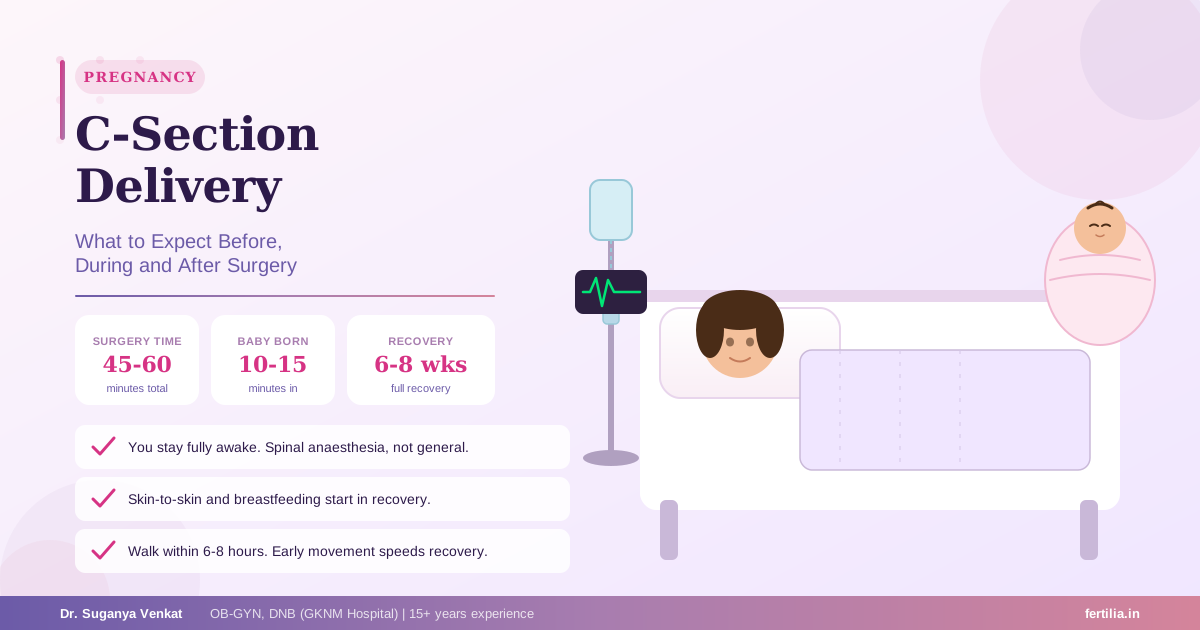
The procedure is performed under regional anaesthesia, usually a spinal block. This means you are fully awake, aware, and able to hear your baby’s first cry. Your partner or support person can typically be present in the operating theatre.
In India, the C-section rate has climbed steadily and now sits at approximately 21% in government facilities and above 47% in private hospitals (National Family Health Survey-5, 2019-21). Every third delivery in many urban hospitals is a C-section. The procedure is genuinely common, genuinely safe when performed by a trained team, and genuinely the right choice in a wide range of clinical situations.
Planned vs Emergency C-Section: What Is the Difference?
Planned (elective or indicated) C-sections are scheduled in advance, typically from 38 to 39 weeks, when your medical team has identified a reason that makes vaginal birth higher risk. Common reasons include:
- Breech or transverse baby position after 36 weeks
- Placenta previa (placenta covering the cervix, see our detailed guide on placenta previa)
- Previous C-section with a classical (vertical) uterine incision
- Twins or higher-order multiples in certain positions
- Severe preeclampsia requiring early delivery
- Active genital herpes outbreak at the time of labour
Emergency C-sections are unplanned and happen when a complication arises during labour that makes immediate delivery necessary. The surgery begins within 30 to 75 minutes of the decision in most facilities. Common triggers include foetal heart rate abnormalities, labour that has stalled despite active management, placental abruption, or umbilical cord prolapse.
The surgical steps in both cases are the same. The difference is how much time you have to prepare. A planned C-section allows you to read this guide, ask questions at your pre-operative appointment, arrange childcare for older children, and pack your hospital bag. An emergency C-section compresses all of that into an hour or less. Knowing the process in advance means that even if your birth becomes an emergency, you will recognise each step and understand why it is happening.
Before Your C-Section: What to Expect in the 24 Hours Before Surgery
Fasting and bowel preparation
You will be asked to stop eating solid food 6 to 8 hours before surgery and stop drinking clear fluids 2 to 4 hours before. This is not arbitrary: anaesthesia carries a small risk of aspiration (inhaling stomach contents), which fasting eliminates. Your anaesthesiologist will give you the exact fasting window at your pre-op appointment.
Admission and preparation
On the morning of surgery, you will be admitted to the ward. Your team will:
- Check your blood pressure, pulse, and foetal heart rate
- Place an intravenous (IV) line in your arm for fluids and medications
- Shave a small section of the pubic hairline if needed
- Insert a urinary catheter to keep your bladder empty during surgery (this typically happens after the spinal anaesthesia takes effect, so you will not feel it)
Spinal anaesthesia
In the operating theatre, an anaesthesiologist will ask you to sit with your back curved or lie on your side. They will clean the skin of your lower back and inject local anaesthetic, then place a thin needle between two vertebrae to deliver the spinal block. The entire process takes 5 to 10 minutes.
Within a few minutes you will feel warmth and heaviness spreading through your legs. You will be unable to move your legs or feel pain below your chest. You will remain fully awake and able to breathe normally. A screen is placed below your chin so you do not see the incision, but you can request a lowered screen at the moment of birth if you want to see your baby arrive.
What Happens in the Operating Theatre
Once the anaesthesia is confirmed effective, the surgical team will begin. Here is what happens in sequence:
Minutes 1 to 5: The scrub nurse cleans your abdomen with antiseptic solution. Sterile drapes are placed. The surgeon confirms you feel no pain by touching the incision line with a cold instrument and asking you to describe the sensation.
Minutes 5 to 15: The first incision is made through the skin and the layers of tissue beneath. Each layer is opened carefully: skin, fat, the fascial sheath (a tough connective tissue layer), the abdominal muscles (usually separated rather than cut), and finally the peritoneum (the lining of the abdominal cavity). The uterus is then opened with a second incision.
Minutes 10 to 15: Your baby is born. You may feel pressure and pulling sensations as the surgeon guides the baby through the opening. This is normal and not painful. You will hear the cord being cut, and if your baby is well, they will often be brought above the drape for you to see immediately.
Minutes 15 to 45: The placenta is delivered. Your uterus and each abdominal layer are closed with sutures. The skin is closed with sutures or staples. You will be given medications through your IV to help the uterus contract (preventing heavy bleeding) and to control pain.
After closure: You are moved to the recovery room, still on the operating table or transferred carefully to a bed.
The First Hours After Surgery: In the Recovery Room
You will spend 1 to 2 hours in the recovery room. Your blood pressure, pulse, oxygen levels, and the firmness of your uterus (which tells the team it is contracting and not bleeding) will be monitored every 15 minutes.
During this time:
- The spinal anaesthesia will wear off gradually over 2 to 4 hours. Sensation and movement return from the top down.
- Your catheter will stay in place for 12 to 24 hours.
- You can typically hold and breastfeed your baby in the recovery room if both of you are stable. Skin-to-skin contact is actively encouraged and is a powerful way to initiate breastfeeding and bonding.
- Pain as the spinal wears off is managed with a combination of paracetamol, anti-inflammatories (NSAIDs), and if needed, mild opioids prescribed by your anaesthesiologist.
The transition from the operating table to the recovery room to the postnatal ward usually happens within 3 to 4 hours of your baby’s birth.
Days 1 to 3 in Hospital: What to Expect
Day 1: Most women are encouraged to sit up in bed within 6 to 8 hours of surgery and attempt standing with assistance. This early movement (called early mobilisation) significantly reduces the risk of blood clots and speeds up recovery. Pain at this stage is typically managed well with regular oral medications.
Day 2: The catheter is removed. You will walk to the bathroom with support. The wound will be checked and redressed. Your team will assess how your uterus is contracting by pressing gently on your abdomen.
Day 3: Most women with an uncomplicated C-section are discharged on day 3. You will receive written instructions on wound care, medications, activity restrictions, and the warning signs to watch for.
Eating: You can typically sip clear fluids 4 to 6 hours after surgery. Solid food follows when bowel sounds return (your team will listen to your abdomen with a stethoscope). By day 2, most women tolerate a normal diet. Indian foods that are easy to digest and support healing include dal soup (moong or masoor), warm rice with ghee, idli with sambar, and ragi porridge with jaggery.
Going Home: Week-by-Week Recovery
Recovery after a C-section is longer than after a vaginal delivery. Your incision goes through seven layers of tissue. Each layer needs time to heal.
For more on this, read our guide on Normal Delivery vs C-Section. Week 1: Rest is the priority. You will have abdominal soreness and fatigue. Accept all help offered. You should not lift anything heavier than your baby. Wound care means keeping the incision dry and clean, and looking at it daily for signs of infection.
Weeks 2 to 3: Soreness reduces significantly. Short walks around the house are encouraged. You can take longer walks outdoors but avoid hills or uneven surfaces. Do not drive (you cannot react quickly enough to brake if needed, and your abdomen cannot absorb the seatbelt force safely).
Weeks 4 to 6: Most women feel close to normal. Light household activity is fine. Continue to avoid lifting heavy items, vigorous exercise, or anything that makes the incision ache.
6 to 8 weeks: Your 6-week postnatal check is a key milestone. Your doctor will examine the incision, check for uterine healing, and assess you for postnatal depression. Read our guide on postpartum recovery: the 40-day plan for what to watch during this window.
Sexual activity: Most doctors advise waiting until at least 6 to 8 weeks after a C-section before resuming sexual activity. Emotional readiness matters as much as physical healing.
The scar: The incision line will be red and slightly raised in the first weeks. Over 6 to 12 months, it typically fades to a flat, pale line. Silicone gel strips, applied from 6 weeks onwards, can reduce scar thickness for women who are concerned about the appearance.
Postpartum bleeding after a C-section
Even after a C-section, you will experience postpartum bleeding (lochia). This is because the uterine lining still sheds after delivery regardless of the birth route. Read our detailed guide on lochia: what is normal after delivery to understand what to expect in the first 4 to 6 weeks.
Warning Signs: When to Call Your Doctor
Most C-section recoveries are straightforward. These signs need same-day evaluation:
- Fever above 38 degrees C
- Increased pain at the incision site or abdomen that is getting worse rather than better after day 4
- Redness, swelling, warmth, or discharge (especially cloudy or foul-smelling) from the wound
- Heavy vaginal bleeding (soaking more than one pad per hour for two consecutive hours)
- Calf pain, swelling, or a red leg (possible blood clot)
- Shortness of breath or chest pain (seek emergency care immediately)
- Signs of postnatal depression: persistent low mood, inability to care for the baby, intrusive thoughts. See our detailed guide on postpartum depression.
None of these are reasons to delay calling. They are all treatable when caught early. Do not wait to see if things improve on their own with any of these symptoms.
What About Your Next Pregnancy?
If this is your first C-section, you have options for future deliveries. Vaginal birth after caesarean (VBAC) is possible for many women, depending on the reason for the first C-section, the type of uterine incision used, and your hospital’s VBAC capacity. This is a conversation to have with your OB-GYN at your 6-week check and again at the beginning of your next pregnancy.
Women who have had three or more C-sections carry a higher risk of placenta previa and placenta accreta in subsequent pregnancies, so the number of planned C-sections is something to discuss actively with your doctor.
Practical Takeaways
- Ask your surgeon before admission: which incision type, expected duration, and the hospital’s skin-to-skin protocol immediately after birth.
- Pack your hospital bag with a front-opening nightgown or shirt (button-down or zip-front) for breastfeeding access without straining the incision.
- Set up your home for recovery before your due date: a firm mattress at a height that does not require deep squatting, a step stool near the bed if needed, and a feeding station so you do not carry the baby across the room repeatedly.
- Take your iron supplement as prescribed. Blood loss during surgery is higher than in vaginal delivery, and iron levels affect your energy and healing. See our guide on folic acid and prenatal vitamins for the broader supplement picture in pregnancy and postpartum.
- Accept the scar. It is evidence that your body carried and delivered your baby safely. Many women find it takes time to feel at peace with the change to their body, and that is a completely valid experience.
Whether you are planning a C-section or hoping for a normal delivery, Dr. Suganya’s Pregnancy Care program helps you prepare your body and your birth plan.
Frequently Asked Questions
Will I feel pain during the C-section?
No. The spinal anaesthesia eliminates pain completely. You will feel pressure, pulling, and movement as the surgeon works, but these are pressure sensations, not pain. If you do feel pain, tell the anaesthesiologist immediately. They can top up the block or convert to general anaesthesia if needed.
Can my husband or family member be in the OT with me?
Most hospitals allow one support person in the operating theatre for a planned C-section. Emergency C-sections vary by hospital policy and how urgent the situation is. Confirm this with your hospital at your pre-admission appointment.
Will a C-section affect breastfeeding?
A C-section does not prevent breastfeeding, but it can delay the initial latch because both you and your baby may feel the effects of medications, and your mobility is limited in the first 12 to 24 hours. Asking for a lactation consultation within the first few hours of delivery makes a significant difference. Most women who had a C-section breastfeed successfully.
How long does the scar take to heal on the inside?
The skin incision is typically healed enough within 4 to 6 weeks for light activity. The uterine incision takes 6 to 12 months to fully heal. This internal healing timeline is why most doctors advise waiting at least 18 months between a C-section and the next pregnancy.
Is a vaginal birth after C-section (VBAC) possible?
Yes, for many women. VBAC success rates in good candidates are approximately 60 to 80% (ACOG Practice Bulletin). The key factors are the reason for the original C-section, the uterine incision type, and whether the next labour is monitored in a facility equipped to handle an emergency if needed. This is a detailed conversation to have with your OB-GYN.
For more on this, read our guide on VBAC in India. What if I wanted a vaginal birth and this is not what I planned?
This is one of the most important emotional aspects of a C-section delivery, and it deserves a real answer. Many women grieve the birth they planned. That grief is valid. It does not mean the C-section was wrong or that you failed in any way. Your delivery route does not define your experience as a mother or the health of your baby. If you are finding it hard to process, please speak to your doctor or a counsellor. You do not have to carry that alone.
When can I go back to exercise after a C-section?
Light walking from week 2, gentle pelvic floor exercises from week 3, and a return to structured exercise after your 6-week check and with clearance from your OB-GYN. Do not rush this. The internal healing takes longer than the external signs suggest, and returning to vigorous exercise too early increases the risk of injury.