You are trying to conceive, or maybe you just found out you are pregnant. One of the first things your doctor says is: “Start folic acid.” You nod, buy a supplement at the chemist, and wonder: when exactly, how much, and does the brand even matter?
These are good questions. Folic acid is one of the most well-researched prenatal nutrients, and getting the basics right is genuinely simple once you understand the reasoning behind each recommendation.
This guide covers everything you need to know, including timing, dose, the different forms of folate supplements available, and which Indian foods give you the best natural top-up.
Why Folic Acid Matters in the Early Weeks
Folic acid (the synthetic form of vitamin B9) plays a central role in cell division and the formation of DNA. In early pregnancy, this matters enormously for one particular reason: the neural tube.
The neural tube is the structure that develops into your baby’s brain and spinal cord. It closes and seals between weeks three and four of pregnancy, which is often before you even realise you are pregnant.
A well-established body of evidence, including the landmark 1991 MRC Vitamin Study and subsequent Cochrane reviews, shows that periconceptional folic acid supplementation significantly reduces the risk of neural tube defects (NTDs) such as spina bifida and anencephaly. The reduction in NTD risk with adequate folic acid supplementation is estimated at 50 to 70 percent (De-Regil et al., 2010, Cochrane Database of Systematic Reviews).
This is why the advice is always: start before you conceive, not after.
When to Start Taking Folic Acid
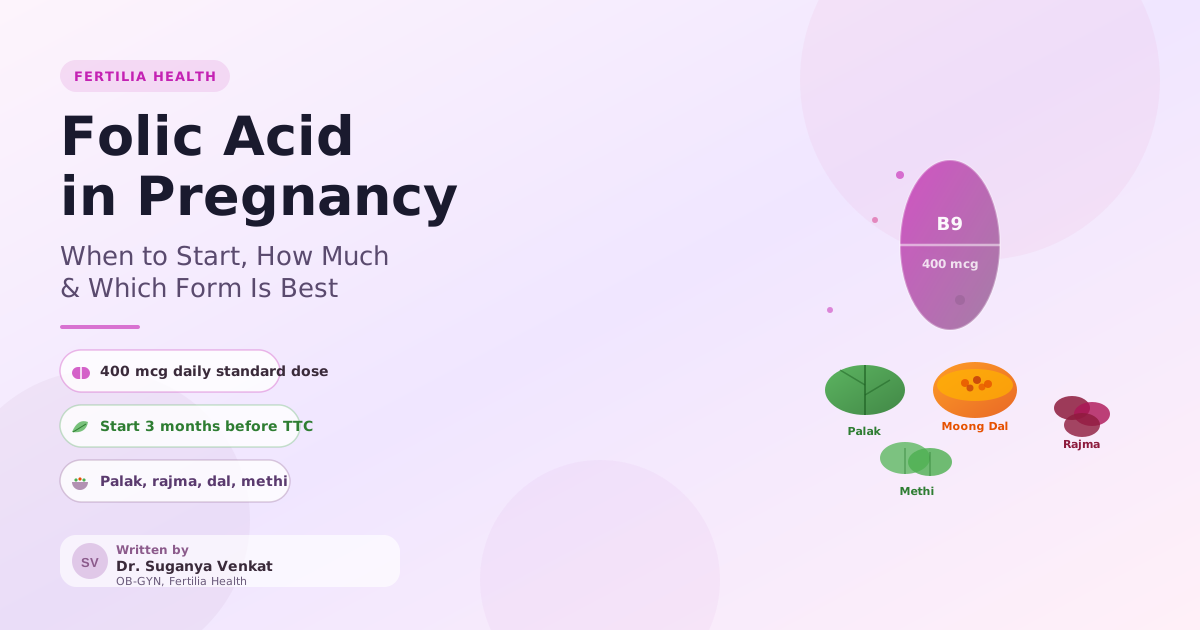
The World Health Organisation (WHO) recommends that women planning a pregnancy start folic acid supplementation at least one month before conception. In practice, most clinicians in India (including at Fertilia) advise starting three months before you begin trying.
The reason for the three-month head start is that it takes time for folate levels in your red blood cells to build up to a protective level. Starting the supplement after a positive pregnancy test means the neural tube has already closed, and you may have missed the window for optimal protection.
If your pregnancy was unplanned, the guidance is simply to start as soon as you know and continue through the first trimester. Some benefit is better than none, and folic acid does more than just close the neural tube; it continues to support cell division throughout pregnancy.
The key point: Do not wait until you see a positive test. If you are at the stage of thinking about pregnancy, that is the time to start.
How Much Folic Acid to Take
For most healthy women, the recommended dose is 400 micrograms (mcg) per day, taken as a daily supplement.
Some women need a higher dose of 5 milligrams (mg) per day. This is specifically for women who:
- Have had a previous pregnancy affected by a neural tube defect
- Have a personal or family history of NTDs
- Are taking anti-epileptic medications (such as sodium valproate or carbamazepine)
- Have certain medical conditions including coeliac disease or type 1 diabetes, which can affect absorption
If any of these apply to you, your doctor will prescribe the 5 mg dose. Please do not self-prescribe the higher dose; for most women, 400 mcg is sufficient and appropriate.
The ICMR (Indian Council of Medical Research) guidelines align with the WHO recommendation of 400 mcg daily for the general population of women planning or in early pregnancy.
One practical note: many standard prenatal vitamin supplements sold in India already contain 400 to 500 mcg of folic acid per tablet. Check the label before adding a separate folic acid tablet to avoid doubling up unnecessarily.
Which Form of Folic Acid Is Best
You may have come across the terms “folic acid,” “folate,” and “methylfolate” (also labelled as 5-MTHF or L-methylfolate) on supplement shelves. Here is what each one means.
Folic acid is the synthetic form used in most supplements and in the food fortification programmes that exist in several countries. It is well-absorbed and well-studied. When you take folic acid, your body converts it to the active form your cells use.
Folate refers to the naturally occurring form of vitamin B9 found in food. Your body absorbs dietary folate well but food sources alone are rarely enough to meet the increased demands of early pregnancy, which is why supplementation is still needed even if your diet is good.
Methylfolate (5-MTHF) is the biologically active form of folate. Some women carry a variant of the MTHFR gene that reduces the efficiency of the enzyme responsible for converting folic acid to its active form. For these women, methylfolate supplements may be a better choice because the body can use the compound directly without the conversion step.
However, a few important caveats:
- Most women with MTHFR variants still convert folic acid adequately and show normal pregnancy outcomes with standard supplementation (Cochrane, 2010 review data)
- The research specifically on methylfolate supplements in pregnancy is less extensive than the decades of data supporting standard folic acid
- If you have been told you carry an MTHFR variant or have concerns about absorption, discuss it with your doctor before switching to methylfolate
The practical advice from Fertilia’s clinical team: standard folic acid at 400 mcg per day is the right starting point for most women. Switching to methylfolate or higher doses should be based on a specific clinical reason, not just general concern.
Thinking about your pregnancy nutrition and not sure where to start? Message us on WhatsApp for a personalised nutrition consultation with Fertilia’s team.
Indian Foods Rich in Folate
Supplements are the reliable, measured dose. Indian food is the reinforcing layer. Together, they work better than either alone.
Folate is found in a wide range of everyday Indian ingredients. Here are the best sources to build into your daily meals:
Legumes and dals (highest folate density per serving)
- Rajma (kidney beans): around 130 mcg per half-cup cooked
- Chana (chickpeas): around 140 mcg per half-cup cooked
- Moong dal: around 100 mcg per half-cup cooked
- Masoor dal (red lentils): around 90 mcg per half-cup cooked
Leafy greens
- Palak (spinach): around 130 mcg per cup cooked
- Methi (fenugreek leaves): a good folate source and rich in iron
- Drumstick leaves (moringa): traditionally eaten in Tamil Nadu and south India, excellent folate content
Other good sources
- Beetroot: a commonly available vegetable with meaningful folate content
- Avarekai (field beans): especially popular in Karnataka cuisine
- Green peas (matar): a practical addition to rice dishes, rotis, and curries
- Peanuts: a simple, affordable folate source; a small handful daily adds up
What reduces folate in food? Boiling vegetables for a long time leaches water-soluble folate into the cooking water. When possible, use the cooking water in gravies or soups. Steaming and light sauteing preserve more folate than prolonged boiling.
A note for vegetarian and vegan women: your diet already tends to be higher in folate than non-vegetarian diets (legumes are the richest source), but the supplement is still essential in the pre-conception and first-trimester window.
Common Mistakes to Avoid
Starting too late. The most frequent mistake is waiting until after a positive pregnancy test. Because the neural tube closes before most women realise they are pregnant, this leaves a gap in protection during the most critical window.
Stopping after the first trimester. Folic acid is most critical in the first 12 weeks, but many doctors recommend continuing it throughout pregnancy because folate supports your baby’s growth and your own cell division through all three trimesters. Follow your doctor’s specific recommendation.
Relying on diet alone. Even a well-planned Indian vegetarian diet typically provides around 200 to 300 mcg of dietary folate per day, which is below the 400 mcg supplement dose recommended for pregnancy. Food helps; it does not replace the supplement.
Skipping on days you feel nauseous. Morning sickness is common in the first trimester, and taking supplements can feel harder on those days. Try taking folic acid with a small meal or just before bed. If you are vomiting frequently and cannot keep supplements down, talk to your doctor about alternative formulations.
Taking it at the same time as calcium supplements. This is a practical one: calcium can interfere with iron absorption (important in pregnancy), so space calcium and iron-containing supplements apart. Folic acid, however, can be taken at any time of day without these concerns.
What About Folate and PCOS
Women with PCOS who are trying to conceive often ask whether they need a higher dose of folic acid. The short answer is no, unless one of the specific clinical risk factors mentioned earlier applies.
That said, PCOS is associated with elevated homocysteine levels in some women, and adequate folate intake supports healthy homocysteine metabolism. This is one more reason why ensuring folate adequacy is worth prioritising if you have PCOS and are planning a pregnancy.
If you are managing PCOS and planning to conceive, the nutrition approach goes well beyond folic acid. Read our PCOS Diet Chart guide and our post on Insulin Resistance and PCOS for a fuller picture of pre-conception nutrition with PCOS.
Putting It Together: A Simple Pre-Conception Nutrition Checklist
Folic acid sits within a broader framework of pre-conception nutrition. Here are the other key pieces:
Iron: Pre-conception iron stores matter because early pregnancy increases iron demands rapidly. A simple blood test (CBC + serum ferritin) before conceiving tells you where you stand.
Vitamin D: Most Indian women are deficient in vitamin D, often without knowing it. Vitamin D deficiency is associated with increased risk of gestational diabetes, pre-eclampsia, and low birth weight. A test + appropriate supplementation before conception is worth discussing with your doctor.
For more on this, read our guide on Gestational Diabetes. Iodine: Essential for foetal brain development. Most women consuming iodised salt and dairy cover their basic needs, but if you follow a very restricted diet, discuss this with your nutritionist.
Omega-3 (DHA): Supports early brain and eye development. Found in fatty fish, flaxseed, and walnuts. Vegetarian women may benefit from an algae-based DHA supplement. Discuss with your doctor.
The foundation is simple: start folic acid early, eat a folate-rich Indian diet built around dal, greens, and legumes, and address any deficiencies (iron, vitamin D) before conception.
Would you like a personalised pre-conception nutrition plan? Our nutritionists at Fertilia work with women at every stage, from planning to postpartum. Reach out on WhatsApp to book a consultation.
Message Dr. Suganya’s team on WhatsApp
FAQ
When exactly should I start taking folic acid before pregnancy?
Ideally, start three months before you begin trying to conceive. The minimum recommendation from the WHO is one month before conception. The earlier you start, the better your red blood cell folate levels will be when you need them most, during the first four weeks of pregnancy when the neural tube closes.
Is 400 mcg enough, or should I take more?
For most women, 400 mcg per day is the correct dose and is well-supported by evidence. A higher dose of 5 mg per day is prescribed in specific high-risk situations: a previous pregnancy with a neural tube defect, personal or family history of NTDs, use of anti-epileptic medications, or certain absorption conditions. Do not increase your dose without your doctor’s guidance.
Can I get enough folate from food alone without supplements?
A well-planned diet rich in dal, rajma, palak, and methi can provide around 200 to 300 mcg of dietary folate per day, but this is below the 400 mcg supplemental dose recommended for the pre-conception period. Food is an important supporting layer, but supplements are still needed for the insurance they provide during this critical window.
Is methylfolate better than regular folic acid during pregnancy?
For most women, standard folic acid is effective and backed by decades of research. Methylfolate (5-MTHF) is an option for women with MTHFR gene variants who have reduced ability to convert folic acid to its active form. However, even women with MTHFR variants often manage well on standard folic acid. If you have concerns about MTHFR, discuss with your doctor before switching supplements.
Do I need to continue folic acid after the first trimester?
The neural tube closes in the first month of pregnancy, but folic acid continues to support cell division, growth, and placental development throughout pregnancy. Many doctors recommend continuing it for the full nine months, or at minimum through the first trimester. Your antenatal care team will guide you on the right duration based on your specific situation.
My prenatal vitamin already contains folic acid. Do I need a separate folic acid tablet?
Check the label of your prenatal vitamin. If it contains 400 mcg or more of folic acid, you do not need a separate tablet. Many standard Indian prenatal supplements contain 400 to 500 mcg per serving. Taking additional folic acid on top of that is generally not harmful (B9 is water-soluble and excess is excreted), but there is no added benefit either.
Is folic acid safe throughout pregnancy, or does too much cause harm?
Folic acid is water-soluble, meaning excess is excreted rather than stored. At the standard 400 mcg dose, there is no documented risk of toxicity. Even at 5 mg (the high-risk dose), safety in pregnancy is well-established. Very high supplemental doses (above 15 mg per day) are not recommended, but these are far above anything typically prescribed.