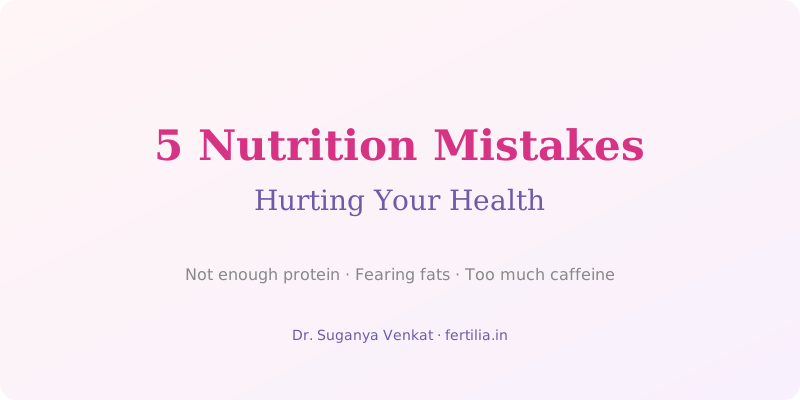
5 Nutrition Mistakes That Are Quietly Hurting Your Health
You eat home-cooked food. You avoid junk. You think you’re doing everything right.
But in 15+ years of practice, I’ve seen the same 5 nutrition mistakes in almost every woman who walks into my clinic, whether she’s dealing with PCOS, fertility issues, fatigue, or unexplained weight gain.
For more on this, read our guide on Jeera Water Benefits. The frustrating part? Most of these “mistakes” are things we’ve been taught are healthy.
Mistake #1: Skipping Breakfast or Eating Too Late
What most women do: Skip breakfast, have a late lunch, then a heavy dinner.
Why it hurts: Your cortisol is highest in the morning. Skipping breakfast keeps it elevated, which raises blood sugar, increases insulin resistance, and promotes belly fat storage. A 2015 study in the Journal of Nutritional Science found that breakfast skippers had significantly higher fasting insulin levels.
The fix: Eat within 1-2 hours of waking. It doesn’t have to be heavy, a ragi porridge with nuts, or 2 idlis with sambar and a boiled egg, or dahi with fruits and seeds.
Mistake #2: Not Eating Enough Protein
What most women do: Eat rice-heavy meals with small amounts of dal and vegetables. Protein comes mainly from one serving of dal or a glass of milk.
Why it hurts: Most Indian women get 30-40g of protein daily. The recommended amount is 0.8-1g per kg of body weight. That’s 50-65g for most women. Low protein means:
- Muscle loss (especially after 30)
- Slower metabolism
- Blood sugar crashes
- Poor hair and skin
The fix: Add protein to every meal:
- Breakfast: Egg, paneer, or sprouts
- Lunch: Dal + dahi + sabzi (aim for 2 protein sources)
- Snack: Handful of nuts, or chana chaat
- Dinner: Fish, chicken, tofu, or a dal-based dish
Mistake #3: Fearing Fats
What most women do: Use minimal oil, avoid ghee, skip nuts because they’re “fattening.”
Why it hurts: Healthy fats are essential for hormone production. Estrogen, progesterone, and testosterone are all made from cholesterol. Too little fat = hormonal imbalance. A study in the Journal of Clinical Endocrinology & Metabolism showed that very low-fat diets can disrupt menstrual cycles.
The fix:
- Cook with: Coconut oil, ghee, or cold-pressed mustard oil (2-3 tsp per meal is fine)
- Daily: A handful of nuts (almonds, walnuts) + 1 tbsp seeds (flax, pumpkin, sesame)
- Weekly: Fatty fish (salmon, mackerel, sardines) 2-3 times
Fats don’t make you fat. Excess calories from any source do.
Mistake #4: Too Much Tea/Coffee, Not Enough Water
What most women do: 3-4 cups of tea or coffee daily, often with sugar and milk. Water intake under 1.5 litres.
Why it hurts: Caffeine in excess raises cortisol, disrupts sleep quality (even if you fall asleep fine), and blocks iron absorption, a big problem when 50%+ of Indian women are already anaemic. Dehydration compounds the fatigue.
The fix:
- Limit to 1-2 cups of tea/coffee daily, before 2 PM
- Drink tea/coffee between meals, not with meals (protects iron absorption)
- Aim for 2-2.5 litres of water daily
- Herbal options: Jeera water, ajwain water, green tea
Mistake #5: Relying on “Healthy” Packaged Foods
What most women do: Buy protein bars, multigrain biscuits, oat milk, and “sugar-free” snacks thinking they’re healthy choices.
Why it hurts: Most packaged “health foods” are ultra-processed with hidden sugars, seed oils, and artificial ingredients. A multigrain biscuit has almost the same sugar content as a regular one. “Sugar-free” products use artificial sweeteners that can worsen insulin resistance.
The fix: Real food over packaged food, always:
- Instead of protein bars: Chana chaat or roasted makhana with nuts
- Instead of multigrain biscuits: Ragi dosa or whole wheat roti
- Instead of oat milk: Regular dahi or buttermilk
- Instead of packaged juice: Whole fruits or fresh nimbu pani
The Bigger Picture
These 5 mistakes don’t exist in isolation. They compound:
Skip breakfast → blood sugar crashes → reach for tea/biscuits → insulin spike → energy crash → skip gym → heavy dinner → poor sleep → repeat.
Fix the foundation (regular meals, enough protein, healthy fats, adequate water) and you’ll be surprised how many “problems” resolve on their own. Energy improves. Sleep improves. Skin clears up. Weight starts moving. And if you’re pregnant or planning to be, these same principles apply with specific additions, see our Indian pregnancy diet guide for the full breakdown.
Frequently Asked Questions
How much protein do Indian women need per day?
0.8 to 1 gram per kilogram of body weight. For a 60 kg woman, that’s 48-60 grams daily. Most Indian women get only 30-40 grams.
Is ghee actually healthy?
Yes, in moderation. Ghee is rich in fat-soluble vitamins (A, D, E, K) and butyrate, which supports gut health. 1-2 teaspoons per meal is beneficial, not harmful.
Can I drink green tea instead of regular tea?
Green tea has less caffeine and contains L-theanine, which can actually reduce cortisol. It’s a better option, but still limit to 2-3 cups daily and avoid it with meals.
How do I know if I’m eating enough?
Signs you’re under-eating: constant fatigue, hair fall, irregular periods, feeling cold all the time, and inability to lose weight despite eating very little. Under-eating slows metabolism.
What if I’m vegetarian, where do I get enough protein?
Combine sources: dal + rice (complete protein), paneer, dahi, sprouts, soy chunks, nuts, and seeds. Aim for 2 protein sources at every meal.
Can I get enough iron from a vegetarian diet?
Yes, but it requires planning. Plant-based (non-heme) iron is less well-absorbed than animal-based (heme) iron. Combine iron-rich foods (spinach, rajma, chana, dates, jaggery) with Vitamin C sources (lemon, amla, orange) to boost absorption. Avoid tea/coffee within an hour of iron-rich meals, tannins block iron absorption by up to 60%.
Why am I always tired despite eating well?
Chronic fatigue in Indian women is most commonly caused by iron deficiency (even without full anaemia), Vitamin D deficiency, Vitamin B12 deficiency (especially in vegetarians), or thyroid issues. Get these four tested before assuming it’s just your schedule. The fix is often surprisingly simple.
Is intermittent fasting good for women’s hormones?
Not always. While intermittent fasting has benefits for some people, aggressive fasting (16+ hours) can disrupt cortisol, thyroid function, and menstrual regularity in women, especially those with PCOS, thyroid conditions, or who are trying to conceive. If you fast, keep it gentle (12-14 hours) and stop if your periods become irregular.
If you’re over 40, nutrition becomes even more critical as hormonal shifts change how your body processes nutrients, our sister site Menolia has a detailed menopause diet plan for Indian women.
This article is for informational purposes. For personalised nutrition guidance, speak with Dr. Suganya Venkat on WhatsApp.