“We’ve been trying for three months and nothing is happening. What are we doing wrong?”
This is one of the most common questions I hear in my clinic. And most of the time, the answer isn’t that something is wrong. It’s that the couple isn’t aware of a few key biological facts that make conception either more or less likely in any given month.
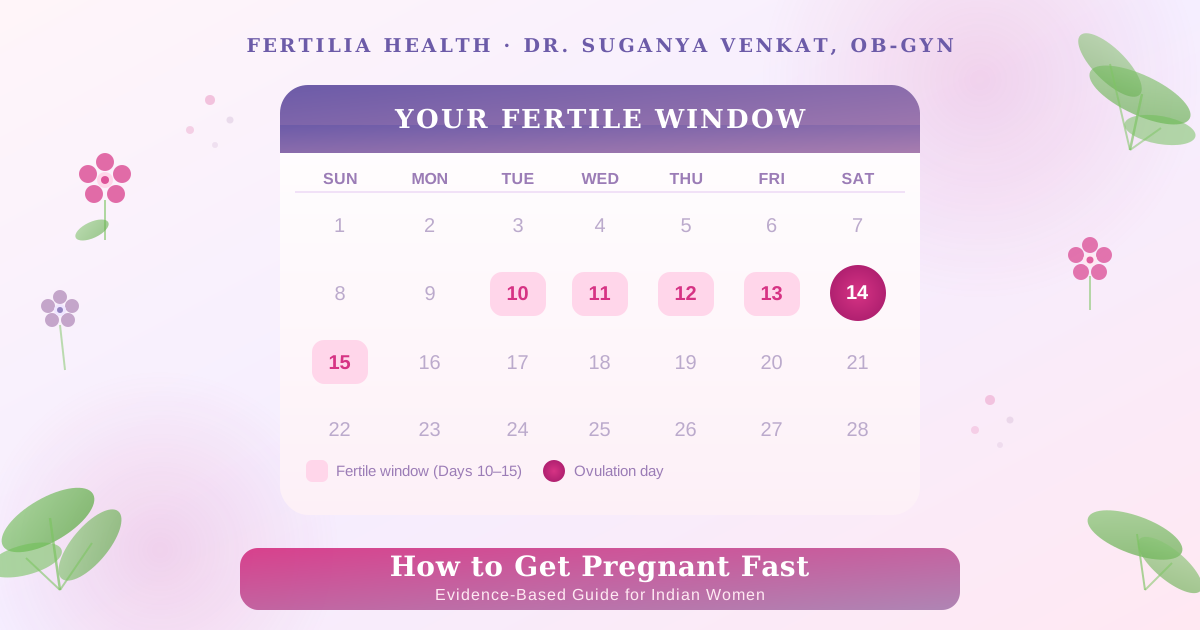
Here is the truth: you can only conceive during a 5–6 day window in each cycle. Miss that window (even slightly) and conception simply cannot happen that month, regardless of how healthy you both are.
This guide is about understanding that window, optimising what happens around it, and making sure nothing else is quietly working against you. These are the same steps I walk every couple through in my fertility clinic, evidence-based, India-relevant, and free of the Instagram myths that waste precious months.
1. Know Your Fertile Window, It’s Shorter Than You Think
The single most impactful thing a couple can do is understand when conception is biologically possible.
An egg lives for just 12–24 hours after ovulation. Sperm, however, can survive in the reproductive tract for up to 5 days under the right conditions. This means the fertile window spans approximately:
- 5 days before ovulation
- The day of ovulation itself
- The day after ovulation (a narrow margin)
For a woman with a 28-day cycle, ovulation typically happens around Day 14: but this varies considerably. A 30-day cycle may see ovulation around Day 16; a 25-day cycle around Day 11. Assuming Day 14 for everyone is one of the most common mistakes I see.
How to identify your actual ovulation day
Cervical mucus observation is the most accessible method. In the days leading up to ovulation, vaginal discharge becomes clear, slippery, and stretchy, often compared to raw egg white. This is a reliable sign of peak fertility. Research consistently shows that intercourse timed with this mucus pattern significantly improves conception rates (Bigelow et al., 2004, Human Reproduction).
Basal Body Temperature (BBT) charting involves taking your temperature every morning before getting out of bed. After ovulation, progesterone causes a small but consistent rise of 0.2–0.5°C. This confirms ovulation has occurred, but the egg is already released, so BBT charting is most useful for understanding your pattern over 2–3 cycles, not for acting in real time.
Ovulation Predictor Kits (OPKs) detect the LH surge that precedes ovulation by 24–36 hours. They’re widely available at pharmacies in India and are reasonably reliable. Start testing from around Day 10 of your cycle if your cycle is 28 days; earlier if your cycle is shorter.
Practical tip: You don’t need to use all three methods simultaneously. I generally recommend cervical mucus observation as the starting point because it’s free, available every day, and correlates closely with peak fertility.
For a full comparison of every ovulation tracking method available to Indian women (including how to interpret mixed LH readings and when BBT is actually useful), see our detailed guide on how to track ovulation: 5 methods ranked by an OB-GYN.
2. Time Intercourse Correctly. Every 1–2 Days in the Window
Once you know your fertile window, the question is: how often should you have intercourse?
Research is clear on this. A large prospective study found that daily intercourse during the fertile window gave a conception rate of 37% per cycle, while intercourse every other day gave 33%, statistically similar (Wilcox et al., 1995, New England Journal of Medicine). Both were significantly higher than intercourse only once per cycle.
My recommendation: Aim for intercourse every 1–2 days during your fertile window. Daily is fine if that feels natural. Every other day is equally effective.
What to avoid:
- Timing intercourse only on ovulation day. By the time you confirm ovulation via BBT or symptom recognition, the egg may already be past its viable window. You want sperm waiting when the egg is released, not arriving after.
- Abstaining for long periods before the fertile window in the belief that it improves sperm quality. Beyond 3–4 days of abstinence, sperm DNA fragmentation increases. Regular ejaculation (every 2–3 days) keeps sperm fresh.
- Using lubricants not specifically designed for fertility. Many common lubricants (including saliva and most commercial products) are toxic to sperm. If you need lubrication, choose a fertility-safe product.
3. Address the Nutritional Gaps That Quietly Delay Conception
In my clinical experience, Vitamin D deficiency and Vitamin B12 deficiency are the two most commonly overlooked factors delaying conception in Indian women, and their partners.
Vitamin D
India has paradoxically high rates of Vitamin D deficiency despite abundant sunlight, largely due to indoor lifestyles, darker skin tone requiring more sun exposure to synthesise equivalent amounts, and low dietary intake. A 2013 meta-analysis in Fertility and Sterility (Lerchbaum & Obermayer-Pietsch) found that Vitamin D deficiency was significantly associated with lower fertility in women.
Vitamin D receptors are present in the ovaries, uterus, and placenta. Deficiency is associated with irregular ovulation, lower AMH levels, and poorer embryo quality.
What to do: Get your Vitamin D levels checked (a simple blood test). If you’re below 30 ng/mL, supplementation is warranted. Food sources include eggs, fatty fish, and fortified milk, but most people in India need supplementation to reach optimal levels. Ask your doctor for the right dose for you.
Vitamin B12
Vegetarian and vegan diets (common in Tamil Nadu and much of South India) carry a significant risk of B12 deficiency, since B12 is found almost exclusively in animal products. B12 plays a direct role in DNA synthesis and cell division, both critical in early embryo development. Low B12 is also associated with elevated homocysteine, which can impair implantation.
What to do: Ask for a B12 test alongside your fertility evaluation. Dairy (dahi, paneer) provides some B12 but often insufficient amounts for fully vegetarian individuals. Supplementation is frequently needed.
Folate (Folic Acid)
This is the better-known one. Start folate supplementation (400–800 mcg/day) at least 3 months before you plan to conceive: not after you get a positive test. Folate protects against neural tube defects in early embryo development, before most women even know they are pregnant. Food sources include methi, palak, and legumes, but supplementation is the standard of care globally. (For a full trimester-wise eating plan once you conceive, see our Indian pregnancy diet chart.)
Iron
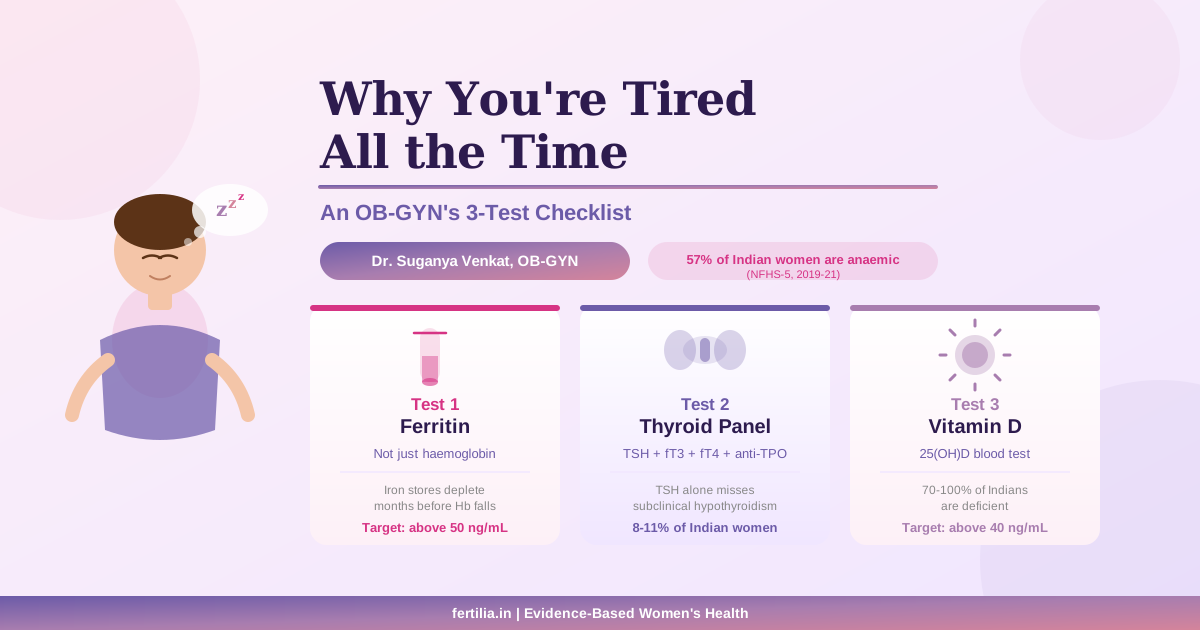
Iron deficiency anaemia is extremely prevalent in Indian women and is associated with anovulatory cycles (cycles where you don’t ovulate). If you feel fatigued, look pale, or have heavy periods, ask your doctor to check your haemoglobin and serum ferritin.
4. Both Partners Matter. Equally
Conception requires two sets of healthy gametes. Yet in clinical practice, male factor fertility is often evaluated only after months of trying, or not at all until it becomes obvious.
Male fertility accounts for approximately 40–50% of fertility issues in couples (Agarwal et al., 2015, Arabian Journal of Urology).
Sperm quality (motility, morphology, count) is significantly influenced by lifestyle:
- Avoid prolonged heat exposure. Tight underwear, long hours of laptop use on the lap, and hot baths can elevate scrotal temperature and reduce sperm production. The testes function optimally at 2–4°C below core body temperature.
- Quit smoking. Smoking is directly associated with reduced sperm count, motility, and increased DNA fragmentation (Vine, 1996, Epidemiology).
- Alcohol and conception. Regular heavy drinking is associated with lower testosterone and sperm quality. Occasional moderate consumption is less conclusive, but given that it has no benefit, limiting it makes sense when trying to conceive.
- Vitamin C, zinc, and CoQ10: these antioxidants support sperm health. Indian foods rich in these: amla (highest natural source of Vitamin C), pumpkin seeds (zinc), and legumes.
- Time to the clinic for a semen analysis if conception hasn’t happened in 6 months (or 12 months if under 35). It’s a simple test and removes guesswork.
5. Common Mistakes That Delay Conception (And Simple Fixes)
After years in clinic, these are the patterns I see most often:
| Common Mistake | Why It Matters | Simple Fix |
|---|---|---|
| Only trying around Day 14 | Ovulation varies; many women ovulate earlier or later | Track cervical mucus across 2–3 cycles to find your pattern |
| Waiting for “the right month” | Biological clocks don’t pause for the right circumstances | Start tracking and timing now |
| Ignoring the male partner’s health | ~40–50% of cases have a male factor | Both partners get evaluated together |
| Treating stress as unavoidable | Chronic stress elevates cortisol, which suppresses LH and disrupts ovulation | Yoga, walking, and sleep are not luxuries, they’re fertility medicine |
| Skipping preconception blood work | Silent deficiencies (D, B12, iron, thyroid) delay conception without symptoms | Ask your doctor for a preconception panel |
| Using regular lubricants | Many lubricants are spermicidal | Switch to a fertility-friendly option |
Ready to Take the Next Step?
If you’ve been trying for a few months and feel like you need a clearer roadmap, one that factors in your specific cycle, your nutrition, and your partner’s health. This is exactly what the Fertilia 90-Day Fertility Program is designed for.
Clients who share what the process has meant to them often say what surprised them most was how quickly things shifted once the right gaps were identified. One client, who had been trying to conceive and struggling with irregular cycles, shared: “I didn’t expect that lifestyle changes would do this magic… I got pregnant in 1 month.” Another said after following the fertility program: “I got pregnant within 16 days of following your fertility diet program.”
Real results come from identifying your specific pattern, not following generic advice.
WhatsApp Dr. Suganya directly to understand what might be working against you, and what to do about it: wa.me/919940270499
6. Lifestyle Habits That Directly Affect Time-to-Conception
Sleep
Sleep is when your body regulates the hormones that govern your cycle. Melatonin (secreted during sleep) has antioxidant properties that protect egg quality. Research shows that sleep deprivation and circadian disruption elevate cortisol and suppress the hormonal signalling (LH and FSH) necessary for regular ovulation (Kloss et al., 2015, Sleep Medicine Reviews).
Target 7–9 hours of uninterrupted sleep. If sleep quality is poor (you wake frequently, feel unrefreshed) that’s worth addressing before other interventions.
Weight
Both underweight and overweight status disrupt hormonal signalling. Excess adipose tissue produces oestrogen, which can suppress ovulation. Underweight women often experience hypothalamic amenorrhoea, where the brain effectively switches off reproductive function due to perceived energy scarcity.
Even a 5–10% change in body weight in the direction of a healthy BMI can restore ovulation in women whose cycles are disrupted by weight. This doesn’t require dramatic transformation, small, consistent steps in the right direction matter.
Physical activity
Regular, moderate exercise improves insulin sensitivity, reduces inflammation, and supports hormonal balance. However, very intense training (marathon preparation, competitive sports) can suppress ovulation. The sweet spot for fertility is 30 minutes of moderate-intensity activity most days: brisk walking, swimming, yoga, or light strength training.
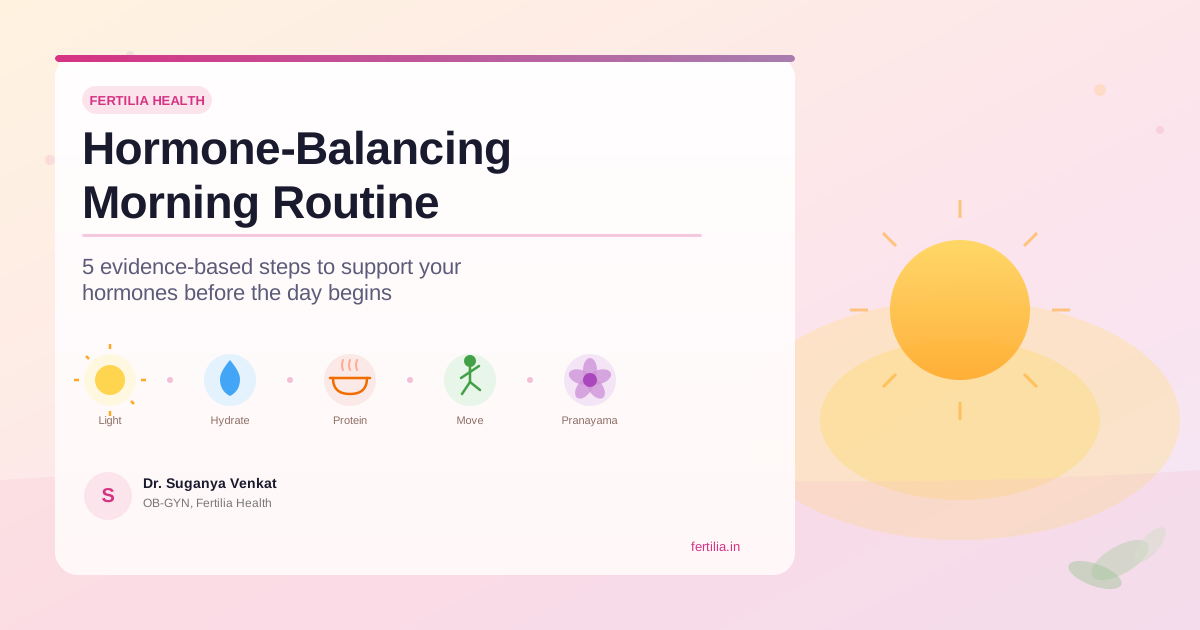
Indian practices like yoga and pranayama have specific evidence for reducing cortisol and supporting HPA axis function, which directly impacts the LH surge that triggers ovulation.
Blood sugar stability
Insulin resistance, present in up to 70% of women with PCOS, but also in women without a formal PCOS diagnosis, is a major cause of irregular ovulation. Meals that spike blood sugar rapidly create hormonal disruption downstream.
Indian dietary pattern adjustments that help:
- Replace white rice with hand-pound rice, ragi, or jowar at least once daily
- Start every meal with fibre (vegetable sabzi, dal, salad) before the carbohydrate
- Include protein at every meal, eggs, curd, lentils, paneer
- Avoid skipping meals, especially breakfast
7. When to See a Fertility Specialist
Knowing when to seek help is as important as knowing what to try at home.
See a specialist if:
- You are under 35 and have been trying for 12 months without conception
- You are 35 or older and have been trying for 6 months
- You have irregular or absent periods: this suggests ovulation may not be occurring regularly
- You have a known diagnosis of PCOS, endometriosis, thyroid disorder, or elevated prolactin
- Your partner has had a previous semen analysis showing abnormalities
- You have had two or more miscarriages
These timelines aren’t arbitrary, they’re based on statistical probability curves. Most couples with no underlying condition conceive within 6–12 cycles of well-timed intercourse. Beyond that, evaluation is warranted.
Seeking help is not giving up. It’s giving yourself better information, and often, specific, targeted guidance makes all the difference.
FAQ: How to Get Pregnant Fast
Q: What is the fastest way to get pregnant?
The fastest route is accurate knowledge of your fertile window (the 5–6 days per cycle when conception is possible) combined with intercourse every 1–2 days during that window. Address any nutritional deficiencies (especially Vitamin D, B12, folate, and iron) at the same time. Both partners’ health matters equally.
Q: Can I get pregnant on the first try?
Yes, it is possible. Studies show that approximately 30% of couples conceive in the first cycle of timed intercourse. However, 85% of couples conceive within 12 months of trying, which means it’s completely normal for it to take several months. Each cycle is a new opportunity.
Q: Does lying down after sex help you get pregnant?
There is no strong scientific evidence that lying down after intercourse improves conception rates. Sperm begin swimming toward the fallopian tubes within seconds of ejaculation, independent of gravity. Relaxing afterward won’t hurt, but you don’t need to lie still for any specific amount of time.
Q: What should I eat to get pregnant fast?
Focus on: folate-rich foods (methi, palak, moong dal), iron-rich foods (rajma, horsegram, dark leafy greens with a squeeze of lemon for absorption), zinc-rich foods (pumpkin seeds, sesame, legumes), and healthy fats (ghee, coconut, nuts). Avoid ultra-processed foods, refined sugar, and excess caffeine. See the PCOS Diet Chart for further guidance on Indian foods that support hormonal health.
Q: Can stress stop me from getting pregnant?
Chronic, unmanaged stress does affect fertility, specifically, it can suppress the LH surge necessary for ovulation. However, worrying about stress making you infertile adds stress, which is counterproductive. Focus on what you can do: regular sleep, moderate exercise, reducing caffeine, and building in daily rest. Yoga and pranayama have good evidence for reducing cortisol.
Q: My cycles are irregular. How do I time intercourse?
Irregular cycles make Day 14 estimates unreliable. In this case, cervical mucus observation is your most practical tool, it reflects real-time hormonal changes, not an average. You might also ask your doctor about a follicular tracking scan (a transvaginal ultrasound series) to identify the actual day of ovulation. If cycles are very irregular, the underlying cause (often PCOS or thyroid dysfunction) should be investigated and addressed. See our guide to Insulin Resistance & PCOS for more.
Q: At what age does fertility start to decline?
Fertility begins to decline gradually in the early 30s, with a more significant decline from 35 onwards. Egg quantity and quality both reduce with age, and the risk of chromosomal abnormalities in embryos increases. This does not mean conception after 35 is unlikely (many women conceive naturally in their late 30s) but it does mean the window for intervention is narrower. See our post on Getting Pregnant After 30 & 35 for a full evidence-based breakdown.
Final Thoughts
Getting pregnant “fast” isn’t really about rushing. It’s about removing the gaps that are quietly working against you and making the most of each cycle you have. For most couples, that means:
- Knowing and using your fertile window (5–6 days per cycle)
- Timing intercourse every 1–2 days during that window
- Addressing nutritional deficiencies (Vitamin D, B12, folate, iron)
- Both partners optimising their health together
- Seeking evaluation if you’ve been trying for 6–12 months without success
Small, evidence-based adjustments often change the outcome significantly.
If you’d like to understand your specific picture (your cycle patterns, hormonal profile, nutritional status) and get a personalised roadmap, I’m here.
Message me on WhatsApp: wa.me/919940270499
Dr. Suganya Venkat. OB-GYN with 15+ years of clinical experience. DNB OB-GYN (GKNM, Coimbatore) · MD Pathology (CMC Vellore) · MBBS with 5 Gold Medals (SRMC).