If you’ve been diagnosed with endometriosis (or you suspect you might have it) and you’re trying to conceive, you probably have a hundred questions running through your mind. Can I get pregnant? Will I need IVF? Is it too late?
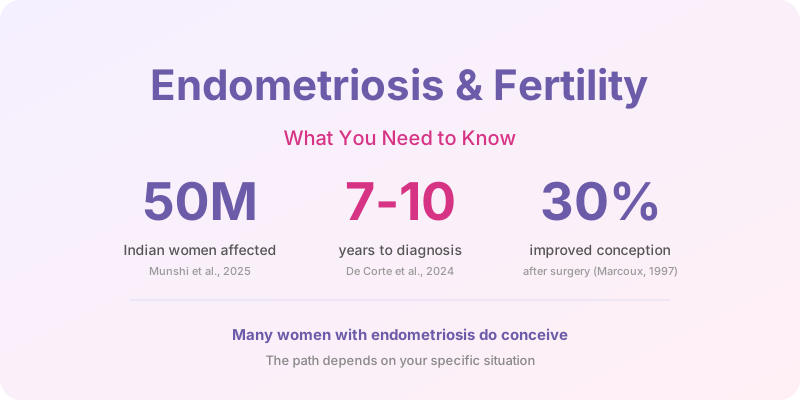
Here’s what I want you to know first: endometriosis does not mean you cannot have a baby. Many of my patients with endometriosis have conceived, some naturally, some with medical support. The path depends on your specific situation, and understanding that is the first step.
As an OB-GYN who has worked with hundreds of women navigating endometriosis and fertility, I want to walk you through what actually happens in your body, how it affects conception, and what your real options are, without the fear, without the confusion.
What Is Endometriosis, Really?
Endometriosis is a condition where tissue similar to the lining of your uterus (the endometrium) grows outside the uterus, on your ovaries, fallopian tubes, the tissue lining your pelvis, and sometimes beyond.
This tissue behaves like endometrial tissue: it thickens, breaks down, and bleeds with each menstrual cycle. But unlike the tissue inside your uterus, it has no way to exit your body. This leads to inflammation, scar tissue (adhesions), and sometimes cysts on the ovaries called endometriomas.
How Common Is It?
- Globally: 10-15% of women of reproductive age have endometriosis (Varghese et al., 2024)
- In India: An estimated 25-50 million women are affected (Munshi et al., 2025, based on World Bank population estimates)
- Among women with infertility: The prevalence jumps to as high as 25-50% (Senapati & Burns, 2011)
These aren’t small numbers. Yet most women go 7-10 years before receiving a correct diagnosis (De Corte et al., 2024). That’s years of pain being dismissed, years of being told “periods are supposed to hurt,” years of not knowing why conception isn’t happening.
How Does Endometriosis Affect Fertility?
This is the question that matters most to you. Let me break it down clearly.
Endometriosis can affect fertility through several mechanisms:
1. Distorted Anatomy
Adhesions and scar tissue can physically change the position of your ovaries, fallopian tubes, and uterus. Your tubes may become blocked or kinked, making it difficult for the egg to travel to where it needs to be.
2. Inflammation in the Pelvis
Endometriosis creates a chronic inflammatory environment in your pelvis. This inflammation can:
- Damage eggs and sperm
- Interfere with the egg being picked up by the fallopian tube
- Affect embryo implantation in the uterus
3. Endometriomas (Ovarian Cysts)
When endometriosis affects the ovaries, it can form chocolate cysts (endometriomas). These can:
- Reduce ovarian reserve (the number of eggs you have)
- Affect egg quality
- Disrupt normal ovulation
4. Changes in the Uterine Environment
Research suggests that endometriosis can alter the lining of the uterus itself, making it less receptive to an embryo trying to implant, even when the endometriosis isn’t directly on the uterus (Lessey & Kim, 2017).
5. Hormonal Imbalances
Endometriosis is associated with progesterone resistance and altered estrogen metabolism, both of which can affect ovulation and early pregnancy support.
But here’s the important part: Not all women with endometriosis have fertility problems. The impact depends on the stage, location, and your individual biology.
Living with endometriosis and trying to conceive?
Dr. Suganya can help you understand your specific situation and create a personalised plan. Book a ₹399 consultation.
WhatsApp Dr. Suganya →The Stages of Endometriosis. And What They Mean for Fertility
Endometriosis is classified into four stages by the American Society for Reproductive Medicine (ASRM):
| Stage | Classification | What It Means |
|---|---|---|
| Stage I | Minimal | Small patches, superficial implants, minimal scarring |
| Stage II | Mild | More implants, slightly deeper, some scarring |
| Stage III | Moderate | Deep implants, endometriomas on ovaries, significant adhesions |
| Stage IV | Severe | Large endometriomas, extensive adhesions, significant organ distortion |
What the Stages Mean for Conceiving
Here’s what many women don’t realise: the stage doesn’t always predict fertility outcomes. Some women with Stage I struggle to conceive, while some with Stage III get pregnant naturally.
- Stages I-II: Many women conceive naturally or with minimal intervention. Monthly fecundity (chance of conceiving per cycle) is estimated at 2-10%, compared to 15-20% in women without endometriosis (Senapati & Burns, 2011)
- Stages III-IV: Natural conception is harder but not impossible. Medical or surgical intervention often improves outcomes significantly
The key factors that matter more than staging:
- Your age: fertility naturally declines with age, and this compounds with endometriosis
- Your ovarian reserve: checked via AMH test and antral follicle count
- Whether your tubes are open: assessed via HSG (hysterosalpingography)
- The specific location of endometriosis
- How long you’ve been trying: time matters in fertility
Can You Conceive Naturally With Endometriosis?
Yes. Many women with endometriosis do conceive naturally, particularly those with Stage I-II disease and no significant tubal damage.
Here’s what the research tells us:
- Women with minimal-mild endometriosis who have been trying for less than 2 years have reasonable chances of natural conception
- Laparoscopic removal of endometriosis implants can improve natural conception rates by up to 30% in mild-moderate cases (Marcoux et al., 1997, a landmark randomised controlled trial)
- Expectant management (trying naturally with monitoring) is a valid first approach for younger women with early-stage disease
When Natural Conception May Be Difficult
- Both tubes are blocked or severely damaged
- Large endometriomas are present on both ovaries
- Significant adhesions have distorted pelvic anatomy
- You’ve been trying for more than 2 years without success
- You’re over 35 and time is a factor
The honest truth: If you have severe endometriosis, waiting too long to seek help can reduce your options. This isn’t about creating urgency. It’s about making informed decisions with your doctor early enough to have choices.
Treatment Options: What Actually Works
1. Laparoscopic Surgery
Keyhole surgery to remove or destroy endometriosis implants, cysts, and adhesions.
When it helps:
- Stages I-II: Can improve natural conception rates
- Endometriomas >3 cm: Removal before IVF often recommended
- Severe adhesions: Restoring normal anatomy improves both natural and assisted conception
Important considerations:
- Surgery on ovaries must be done carefully to preserve ovarian tissue (and therefore egg reserve)
- Repeated surgeries can actually harm fertility by reducing ovarian reserve
- Choose a surgeon experienced in fertility-preserving techniques
2. IUI (Intrauterine Insemination)
Placing washed, concentrated sperm directly into the uterus around ovulation time.
Success rates with endometriosis:
- About 6.5% per cycle for endometriosis vs. 15.3% for unexplained infertility (Nuojua-Huttunen et al.)
- IUI combined with ovulation-stimulating medications (like Letrozole or Clomiphene) can improve these numbers
- Generally recommended for 3-4 cycles before considering IVF
3. IVF (In Vitro Fertilisation)
The most effective assisted reproduction option for endometriosis-related infertility.
Why IVF works well for endometriosis:
- Bypasses tubal damage completely
- Overcomes the hostile pelvic environment
- Allows direct selection of the best embryos
Success rates:
- Women with endometriosis have slightly lower IVF success rates compared to other causes of infertility, but outcomes are still good
- Cumulative live birth rates after 3 IVF cycles: approximately 31% for endometriosis vs. 52% for other indications (Alson et al., 2025)
- GnRH agonist pre-treatment for 3-6 months before IVF can improve outcomes in severe endometriosis
4. Egg Freezing
If you’ve been diagnosed with endometriosis but aren’t ready to conceive yet, egg freezing (oocyte cryopreservation) is worth discussing with your doctor, especially if:
- You have endometriomas that may need future surgery
- Your AMH is declining
- You’re in your early-to-mid 30s
This preserves your options for the future.
What You Can Do Right Now: Nutrition and Lifestyle
While medical treatment addresses the structural and hormonal aspects of endometriosis, your daily choices can meaningfully reduce inflammation and support your fertility. This isn’t about replacing medical care. It’s about giving your body the best possible environment alongside it.
Anti-Inflammatory Nutrition
Research consistently shows that an anti-inflammatory diet can reduce endometriosis symptoms and may improve fertility outcomes (Martire et al., 2025; Boroncsok, 2026).
Foods to include:
- Omega-3 rich foods: Flaxseeds, walnuts, chia seeds, fish (if you eat it). Omega-3 fatty acids (EPA, DHA) have documented anti-inflammatory effects in endometriosis
- Turmeric (haldi): Curcumin has been shown to inhibit endometrial cell growth and reduce inflammation. Add to dals, curries, warm milk
- Green leafy vegetables: Palak, methi, moringa, rich in antioxidants and folate
- Colourful vegetables: Beetroot, carrots, tomatoes, antioxidants combat oxidative stress
- Whole grains: Ragi, jowar, bajra, brown rice, high in fibre, which helps with estrogen metabolism
- Fermented foods: Dahi, idli, dosa batter, kanji, gut health influences inflammation
Foods to reduce:
- Refined sugar and maida: Drive inflammation and insulin resistance
- Processed foods: Preservatives and additives can worsen inflammatory responses
- Excessive red meat: Associated with higher endometriosis risk in some studies
- Trans fats: Found in packaged snacks, bakery items, margarine
- Excessive caffeine: More than 2 cups of coffee/day may affect fertility
Lifestyle Changes That Matter
- Regular movement: 30 minutes of moderate exercise most days. Walking, yoga, swimming, whatever you enjoy. Exercise reduces estrogen levels and inflammation
- Stress management: Chronic stress worsens inflammation. Pranayama, meditation, journaling, find what works for you
- Sleep: 7-8 hours of quality sleep. Your hormones regulate during sleep
- Reduce environmental toxins: BPA (in plastic containers), phthalates (in some cosmetics), pesticides. These are endocrine disruptors that can worsen endometriosis. Use glass containers, choose organic produce where possible
Supplements Worth Discussing With Your Doctor
| Supplement | Evidence | Typical Dose |
|---|---|---|
| Omega-3 (fish oil / flaxseed oil) | Reduces inflammation, may improve pain | 1-2g EPA+DHA daily |
| Vitamin D | Low levels associated with worse endometriosis | Based on your blood levels |
| N-Acetyl Cysteine (NAC) | Antioxidant, some evidence for reducing endometriomas | 600mg 2-3× daily |
| Curcumin | Anti-inflammatory, inhibits endometrial cell growth | 500-1000mg daily |
| Magnesium | Reduces pain, supports muscle relaxation | 200-400mg daily |
Important: Always discuss supplements with your doctor, especially if you’re planning fertility treatment. Some supplements may interact with medications.
Signs You Should Get Checked for Endometriosis
If you’re trying to conceive and experiencing any of these symptoms, it’s worth talking to your gynaecologist about endometriosis:
- Painful periods that interfere with your daily life (not just “normal” period pain)
- Pain during intercourse (deep pain, not surface-level)
- Chronic pelvic pain that isn’t limited to your period
- Heavy or irregular bleeding
- Pain with bowel movements or urination during your period
- Inability to conceive after 12 months of trying (or 6 months if you’re over 35)
- Family history: endometriosis has a genetic component
Diagnosis Methods
- Clinical assessment: Your doctor examines your symptoms and does a pelvic exam
- Ultrasound: Can detect endometriomas (ovarian cysts) but not all endometriosis
- MRI: Better at identifying deep infiltrating endometriosis
- Laparoscopy: The gold standard, direct visualisation and biopsy. But it’s surgery, so it’s not the first step
What I tell my patients: If your periods are genuinely debilitating, not just uncomfortable, but affecting your work, your relationships, your life. That is not normal. You deserve answers, not dismissal.
Suspect endometriosis? Let's talk about your options.
Dr. Suganya has helped many women with endometriosis understand their fertility and plan their next steps. Start with a ₹399 consultation.
WhatsApp Dr. Suganya →Your Action Plan
If you have endometriosis and want to conceive, here’s a clear path forward:
Step 1: Get a proper assessment
- AMH test (ovarian reserve)
- Antral follicle count (ultrasound)
- HSG (tubal patency test)
- Detailed ultrasound to check for endometriomas
Step 2: Understand your specific situation
- What stage is your endometriosis?
- Are your tubes open?
- What is your ovarian reserve?
- How long have you been trying?
Step 3: Decide on your approach with your doctor
- Expectant management with lifestyle optimisation
- Laparoscopic surgery if there are clear structural issues
- IUI for 3-4 cycles if tubes are open
- IVF if other approaches haven’t worked or if time is a factor
Step 4: Optimise your body alongside treatment
- Anti-inflammatory diet (Indian foods are naturally suited for this)
- Regular movement
- Stress management
- Targeted supplements under medical guidance
Frequently Asked Questions
Can endometriosis be cured?
Endometriosis is a chronic condition, it can be managed and treated, but not permanently cured. However, pregnancy itself often improves symptoms (though they can return after delivery). Menopause typically resolves endometriosis as estrogen levels drop.
Does endometriosis always require surgery?
No. Surgery is recommended when there are specific structural problems (large cysts, blocked tubes, severe adhesions) or when other treatments haven’t helped. Many women with mild endometriosis conceive without surgery.
Will endometriosis affect my pregnancy once I conceive?
Women with endometriosis may have slightly higher risks of certain pregnancy complications (preterm birth, placenta previa). However, with proper prenatal monitoring, most women with endometriosis have healthy pregnancies and deliveries.
Can diet alone manage endometriosis?
Diet alone cannot cure or fully manage endometriosis. However, an anti-inflammatory diet can significantly reduce symptoms, lower inflammation markers, and create a better environment for conception, especially when combined with medical treatment.
How long should I try naturally before considering IVF?
This depends on your age, stage of endometriosis, and ovarian reserve. General guidelines:
- Under 35 with Stage I-II: Try naturally for 6-12 months with monitoring
- Over 35 or Stage III-IV: Consider earlier intervention (3-6 months of trying, then reassess)
- Both tubes blocked: IVF is usually the best option from the start
Is endometriosis genetic?
There is a genetic component, if your mother or sister has endometriosis, your risk is 7-10 times higher. However, it’s not purely genetic; environmental factors and immune system function also play a role.
Can I do yoga with endometriosis?
Yes. yoga can be very beneficial. Gentle yoga, especially poses that improve pelvic circulation and reduce stress, can help with both pain management and fertility. Avoid very intense core exercises during menstruation if they worsen your pain.
Dr. Suganya Venkat is an OB-GYN with 15+ years of experience helping women with endometriosis navigate their fertility journey. If you have endometriosis and want personalised guidance, book a consultation.
Related Reading
- AMH Test Cost in India: Price, Results & Meaning, endometriosis can affect your AMH levels
- IUI vs IVF: When Do You Really Need It?, treatment paths for endometriosis-related infertility
- Fertility After 35: What the Science Says, age + endometriosis: what the research shows
- How to Boost Fertility Naturally, lifestyle approaches that support endometriosis management