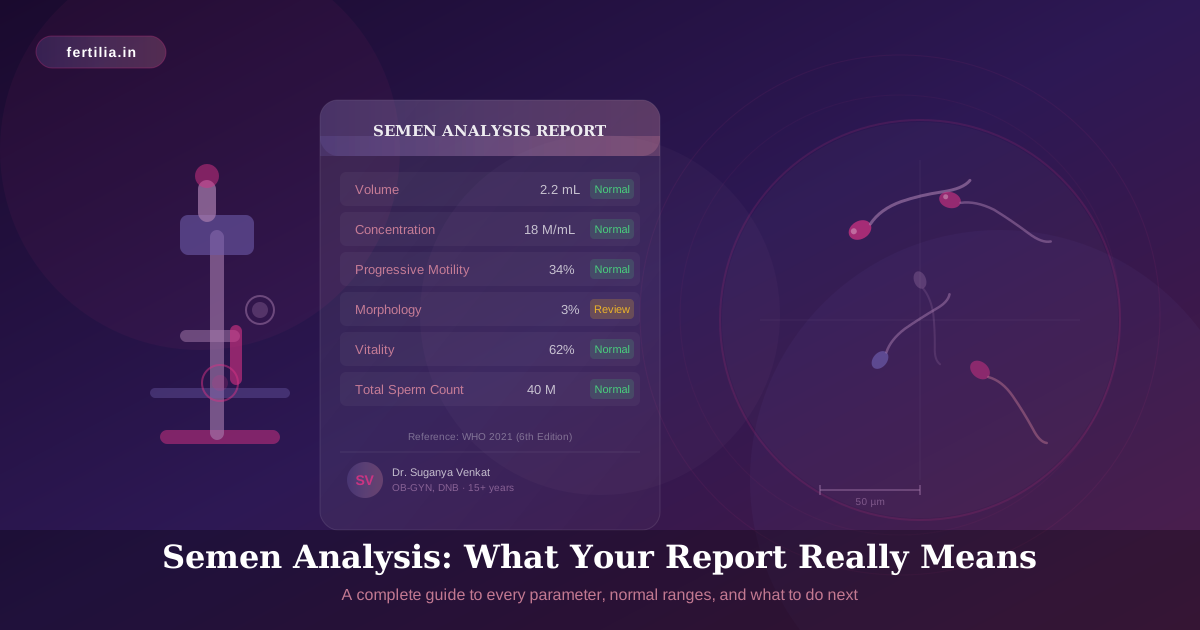
When a fertility workup begins, most of the attention, and most of the anxiety, tends to fall on the woman. Hormone tests, ultrasounds, cycle tracking. But conception takes two people, and roughly 40 to 50 percent of fertility challenges involve a male factor (Agarwal et al., 2015). A semen analysis is one of the most informative, least invasive tests in a fertility evaluation. Yet when the report arrives, most couples stare at the numbers with no idea what they are looking at.
This guide will walk you through every parameter on a standard semen analysis report, what the numbers mean, what qualifies as normal by current WHO standards, and what is genuinely within your control when something needs attention.
What Is a Semen Analysis?
A semen analysis (also called a seminogram or sperm test) examines a fresh sperm sample to evaluate several aspects of sperm quality and quantity. It is the first and most important test in the male fertility evaluation.
The test is straightforward. A sample is collected after 2 to 5 days of abstinence and examined in the lab within one hour. Some labs in larger Indian cities now offer home collection kits with transport media.
One result is not a conclusion. Sperm production takes approximately 72 days, one complete production cycle. A fever, a period of intense stress, disrupted sleep, or illness in the weeks before collection can temporarily suppress parameters. If the first report shows any concern, most fertility specialists recommend repeating the test 4 to 8 weeks later before making clinical decisions.
The Report Parameters: Explained One by One
1. Semen Volume
What it is: The total amount of fluid in the ejaculate, in millilitres.
WHO 2021 lower reference limit: 1.4 mL
Volume comes primarily from the seminal vesicles and prostate gland. Low volume (consistently below 1.5 mL) may point to retrograde ejaculation (sperm entering the bladder), a ductal blockage, or incomplete sample collection. Very high volume can dilute sperm concentration.
Practical note: If volume is low, confirm the sample was fully collected and that abstinence was at least 2 days. Staying well hydrated in the days before the test helps.
2. pH
What it is: The acidity or alkalinity of the semen.
WHO 2021 lower reference limit: 7.2 (semen should be slightly alkaline)
The alkaline pH of semen protects sperm from the acidic environment of the vagina. Low pH combined with low volume can suggest a blockage in the ejaculatory ducts, and warrants a urology review.
3. Sperm Concentration
What it is: The number of sperm per millilitre of semen.
WHO 2021 lower reference limit: 16 million per mL
Common terms on Indian lab reports:
- Oligospermia: Concentration below 16 million/mL (can be mild, moderate, or severe)
- Azoospermia: No sperm found in the ejaculate
Concentration alone does not tell the whole story. A lower concentration with excellent motility may function better in practice than a higher concentration with poor motility. Always read the full report.
4. Total Sperm Count
What it is: Sperm concentration multiplied by semen volume, giving the total number of sperm per ejaculate.
WHO 2021 lower reference limit: 39 million per ejaculate
This number is often more clinically meaningful than concentration alone. Two men with identical concentrations can have very different total sperm counts if their semen volumes differ. Both numbers belong in the picture.
5. Sperm Motility
Motility is divided into three categories:
- Progressive motility (PR): Sperm moving forward in a straight or broadly curved path
- Non-progressive motility (NP): Sperm moving but not advancing (spinning in place, oscillating)
- Immotile: No movement
WHO 2021 lower reference limits:
- Total motility (PR + NP): 42%
- Progressive motility: 30%
Common term: Asthenospermia means below-normal motility.
Progressive motility is the most important of the three. Non-progressive motility counts toward the total motility figure but contributes little to fertilisation. Sperm need to swim forward to reach the egg.
6. Sperm Morphology
What it is: The shape of individual sperm cells. Each sperm is assessed for a normal head, midpiece, and tail under high magnification.
WHO 2021 lower reference limit: 4% normal forms (Kruger strict criteria)
Common term: Teratospermia means fewer than 4% normal forms.
Morphology is the most frequently misunderstood number on the report. Even in men who conceived naturally, only 4% of sperm having a normal shape is considered acceptable. Sperm production naturally generates many imperfect cells, and the body selects for the best ones throughout the female reproductive tract.
Studies show that natural conception can occur even at 2 to 3% normal morphology when other parameters are adequate. Morphology in isolation is a weak fertility predictor. Its weight increases in the context of IUI and IVF decisions.
7. Sperm Vitality (Viability)
What it is: The percentage of live sperm, assessed by dye-exclusion staining.
WHO 2021 lower reference limit: 54% live
This test separates sperm that are immotile-but-alive from sperm that are immotile-and-dead. When motility is low but vitality is normal, the problem may be a structural motility defect. When vitality itself is low, the issue may involve the process of sperm production or storage in the epididymis.
8. White Blood Cells (Leukocytes)
What it is: The count of white blood cells in the semen sample.
WHO 2021 upper limit: Less than 1 million per mL
Some WBCs are expected and normal. Elevated WBCs (called leukocytospermia) can indicate infection or inflammation in the reproductive tract. This usually warrants a urology review and, if an infection is confirmed, treatment before repeating the semen analysis.
9. Liquefaction and Viscosity
What it is: Fresh semen is gel-like and coagulates after ejaculation. Normal liquefaction happens within 60 minutes. Viscosity refers to how thick the semen remains after liquefaction.
If semen does not liquefy normally, sperm become trapped and cannot swim effectively. Abnormal viscosity is a meaningful finding worth flagging to your doctor, though it is rarely the sole issue.
Understanding OAT: When Multiple Parameters Are Low
Many reports will mention OAT, which stands for oligoasthenoteratospermia: low sperm count, low motility, and poor morphology together. This is the most common pattern in male factor subfertility. It often has a multifactorial cause and frequently responds to a structured lifestyle intervention before assisted reproduction is considered.
What Affects Sperm Quality: What Is Actually in Your Control
Sperm production is sensitive to heat, oxidative stress, nutritional status, and hormonal balance. The following areas have consistent evidence behind them.
Heat Exposure
The testes are positioned outside the body because sperm production requires a temperature 2 to 4 degrees Celsius below core body temperature. Prolonged laptop use on the lap, extended sitting in overheated vehicles, and tight underwear all raise scrotal temperature measurably.
The practical action: avoiding heat exposure to that area for at least 3 months, covering a full sperm production cycle.
Oxidative Stress
Sperm are particularly vulnerable to reactive oxygen species (ROS). High ROS levels cause DNA damage within sperm. Smoking is the most consistently documented contributor to elevated oxidative stress in semen (Agarwal et al., 2014). Obesity, high alcohol intake, and a diet heavy in processed food also raise ROS burden.
India-relevant foods that help:
- Zinc sources: Chana dal, rajma, moong dal. Zinc deficiency is linked to reduced testosterone and poor sperm quality.
- Folate sources: Methi (fenugreek leaves), palak (spinach), all dals. Male folate deficiency is associated with higher sperm DNA fragmentation (Young et al., 2008).
- Vitamin D: Deficiency is widespread in Indian men and associated with reduced motility. Safe sun exposure and Vitamin D-fortified foods help.
- Antioxidants: Amla (Indian gooseberry) is one of the richest natural sources of Vitamin C in any diet. Haldi (turmeric) has documented anti-inflammatory and antioxidant properties at the cellular level.
Sleep and Stress
Testosterone production follows a daily rhythm, peaking during sleep. Chronic sleep disruption measurably reduces testosterone levels. Psychological stress elevates cortisol, which in turn suppresses the LH and FSH signals that regulate sperm production. This is not about being “too stressed to have a baby.” It is a direct hormonal mechanism, and it is reversible.
Alcohol
Consistent moderate-to-heavy alcohol intake reduces testosterone and impairs sperm quality. Occasional social drinking is unlikely to cause significant clinical harm. Regular heavy intake is a different picture and worth addressing before drawing conclusions from a semen analysis.
If you are working through a semen analysis report and want personalised guidance on what the numbers mean for your specific situation, Dr. Suganya and the Fertilia team offer structured fertility consultations for couples. WhatsApp us at wa.me/919940270499 to book a session.
When the Report Needs a Specialist, Not Just a Repeat Test
A second semen analysis confirms whether a finding is real. But certain results need a urologist or andrologist involved alongside that repeat test:
- Azoospermia: No sperm found. May be obstructive (blockage) or non-obstructive (production failure). The difference is critical for treatment planning.
- Severe oligospermia: Below 5 million/mL. Lifestyle changes alone are unlikely to close this gap.
- Elevated WBCs: Infection or inflammation needs to be ruled out and treated before the semen picture is clear.
- Low pH with low volume: Possible ductal obstruction worth imaging.
- Consistently low vitality despite normal concentration: Suggests a structural sperm problem worth investigating.
Your fertility specialist and gynec will assess the semen analysis alongside the female partner’s findings before recommending next steps. A borderline male result alongside normal female results carries a different clinical weight than the same result alongside ovulatory dysfunction or a low AMH. For context on what a low AMH finding means and what can be done, see AMH Test Cost in India 2026: Price, Results and Meaning.
What Couples Should Know About “Borderline” Results
The WHO lower reference limits represent the 5th percentile of a study group of fertile men. This means 5 percent of men who conceived naturally during the study period fell below these numbers. A borderline result is not a hard cut-off.
Sperm quality exists on a spectrum. A man with 12 million/mL concentration and 28% progressive motility is subfertile, not infertile. The distinction matters. Subfertility means conception may take longer or may benefit from some assistance. Natural conception is not off the table.
A Cochrane review found that antioxidant supplementation improves pregnancy rates in couples dealing with male factor subfertility (Showell et al., 2020). A 3-month lifestyle intervention targeting the factors above often moves borderline parameters into the reference range. This is worth doing before escalating to assisted reproduction in most cases. For a broader look at evidence-based lifestyle changes for couples, see 7 Evidence-Based Ways to Boost Fertility Naturally. For a real example of how a structured lifestyle programme addressed low morphology before IVF, read Vikram’s case study, teratozoospermia, 1% normal forms, and the journey that followed.
A 90-Day Approach When Results Need Improvement
Because it takes roughly 72 days to produce a new cohort of sperm, three months is the practical minimum window for meaningful change. Here is what a structured approach looks like:
- Remove what harms: Smoking cessation, reduce alcohol, address heat exposure, fix sleep
- Add what helps: Zinc- and folate-rich Indian foods (chana dal, rajma, methi, palak), Vitamin D correction if deficient, moderate regular exercise
- Reduce oxidative load: Amla, haldi, and a diet with fewer ultra-processed foods; targeted supplements (Vitamin C, Vitamin E, CoQ10) if recommended by your doctor
- Address underlying conditions: Varicocele (a dilated scrotal vein affecting sperm in up to 35% of men with male factor infertility), hormonal imbalance, and genital tract infection require specialist management, not lifestyle alone
- Repeat the analysis: After 3 months, to see where parameters have moved before making decisions about assisted reproduction
FAQ: Semen Analysis
Q: Is one semen analysis result enough to know if there is a problem? A single result can be influenced by fever, illness, stress, or disrupted sleep in the weeks before collection. Fertility specialists typically confirm any abnormal finding with a second test 4 to 8 weeks later, collected after 2 to 5 days of abstinence, before drawing clinical conclusions.
Q: What does “2 to 5 days of abstinence” before the test mean? It refers to not ejaculating for 2 to 5 days before giving the sample. Fewer than 2 days and the sperm count may be falsely low because the sample has not fully replenished. More than 5 days and the count may read higher, but motility tends to decline as older sperm accumulate.
Q: My report says morphology is 2%. Does that mean natural conception is not possible? Not necessarily. The 4% lower reference limit is a statistical threshold, not a binary pass or fail for natural conception. Conception has been documented at lower morphology values, especially when other parameters like motility and count are adequate. Morphology alone is a weak predictor. Discuss the full picture with your fertility specialist rather than drawing conclusions from one number.
Q: Can diet changes actually improve sperm quality? Yes, within limits. Specific nutritional deficiencies, particularly zinc, folate, and Vitamin D, have well-documented negative effects on sperm quality, and correcting them produces measurable improvements. Antioxidant-rich foods reduce oxidative damage to sperm DNA. However, diet cannot resolve structural issues like varicocele or azoospermia caused by ductal obstruction. Those require medical evaluation.
Q: What is the difference between sperm concentration and total sperm count? Sperm concentration is the number of sperm per millilitre. Total sperm count is concentration multiplied by total semen volume. A man with 14 million/mL in 3.0 mL has a total sperm count of 42 million, which is above the 39 million lower reference limit, even though the concentration falls below the 16 million/mL threshold. Always check both numbers before drawing conclusions.
Q: We have been trying for one year and the semen analysis is normal. What comes next? A normal semen analysis is useful because it shifts focus to female-side evaluation: ovulation function, tubal patency, uterine anatomy, AMH, and the full hormonal panel. If both partners’ basic workups are normal, the next step is usually a conversation with a fertility specialist about unexplained infertility and whether timed cycles, hormonal support, or IUI makes sense as a starting point. Our guide on IUI vs IVF: When Do You Really Need It? explains how doctors decide between these options.
Q: How should both partners prepare for a first fertility consultation? Bring both partners’ results. For the male partner: the semen analysis report with the collection date. For the female partner: a Day 2 or Day 3 hormone panel (FSH, LH, estradiol, AMH, prolactin, thyroid), and a recent pelvic ultrasound if available. Arriving with both sets of data allows the doctor to see the full picture in one consultation rather than ordering repeat tests.
A semen analysis report is a starting point, not a verdict. The numbers tell you where things stand today, after one collection, under one set of circumstances. The goal is to understand what each number means, address what is modifiable, and work with your medical team on what is not.
If your report has raised questions you would like to work through with a fertility specialist, Dr. Suganya and the Fertilia team are available for a structured consultation. You can start with a ₹399 consultation to discuss your specific situation and get a clear, personalised plan.
Dr. Suganya Venkat is an OB-GYN with 15+ years of clinical experience. DNB OB-GYN (GKNM Hospital, Coimbatore) · MD Pathology (CMC Vellore) · MBBS with 5 Gold Medals (SRMC). She runs the Fertilia 90-day fertility program for couples.