You see the two lines on a home pregnancy test and the first thought is: what happens now? Most women open their phone, type “pregnancy week by week,” and immediately hit a wall of information that assumes unlimited time, easy access to avocados, and no mother-in-law with opinions about papaya.
This guide is written for Indian women, in Indian context. We cover what actually changes in your body each trimester, which tests matter and when, what to eat from your own kitchen, and when something genuinely warrants a call to your doctor.
Here is what we cover:
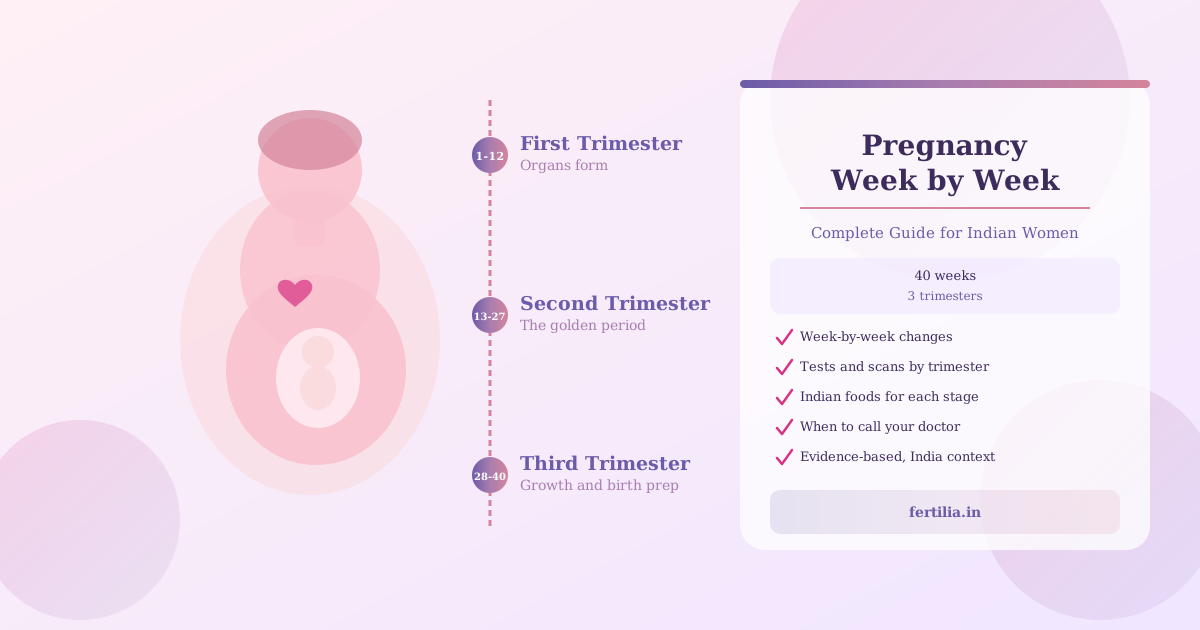
- First trimester (weeks 1 to 12): the invisible but critical phase
- Second trimester (weeks 13 to 27): the golden period
- Third trimester (weeks 28 to 40): the final preparation
- Tests by trimester: a quick reference
- Indian foods that support each stage
- When to call your doctor
- Frequently asked questions
First Trimester: Weeks 1 to 12
How pregnancy is counted
Pregnancy is measured from the first day of your last menstrual period (LMP), not from the day of conception. This means you are technically counted as being 2 weeks pregnant before the egg is even fertilised. At the moment a home pregnancy test turns positive, you are typically around weeks 4 to 5. At your first ultrasound, when the heart rate is confirmed, you are usually weeks 6 to 8.
The full 40 weeks breaks into three trimesters. Weeks 1 to 12 form the first, weeks 13 to 27 the second, and weeks 28 to 40 the third.
Weeks 1 to 4: Conception and implantation
The fertilised egg travels down the fallopian tube and implants into the uterine lining around days 6 to 10 after ovulation. By week 4, the embryo is the size of a poppy seed and has already begun forming two distinct layers of cells: the ones that will become the placenta and the ones that will become the baby.
Most women have no symptoms at this stage. Some notice mild spotting at the time of implantation, which is lighter in colour and briefer than a period. For a detailed explanation of what implantation bleeding looks and feels like, see our guide on Implantation Bleeding: Signs, Timing and What to Expect.
Weeks 5 to 8: Organs begin forming
This is the most critical window of the entire pregnancy for fetal development. The neural tube (which becomes the brain and spinal cord) closes between weeks 3 and 4, which is why folic acid must be started before conception. By week 8, the embryo has a beating heart, forming limb buds, and the beginnings of eyes, ears, and the digestive system.
This is also when symptoms hit hardest. Nausea is driven by the rapid rise of human chorionic gonadotrophin (hCG), the same hormone that makes your pregnancy test positive. hCG peaks between weeks 8 and 10 and then gradually falls. This is why most women feel significantly better by week 14.
For more on this, read our guide on Early Pregnancy Symptoms. Common first-trimester symptoms:
- Nausea, with or without vomiting (affects 70 to 80% of pregnancies)
- Breast tenderness and swelling
- Fatigue that is out of proportion to activity
- Heightened sense of smell
- Food aversions and specific cravings
- Frequent urination, driven by increased blood flow to the kidneys
- Mild pelvic cramping as the uterus grows
Not all of these will affect every woman. Some pregnancies sail through the first trimester with minimal symptoms. This does not mean anything is wrong.
What helps with nausea: Small, frequent meals rather than three large ones. Dry foods such as roasted chana, plain rice with rasam, or dry toast before getting out of bed. Ginger in any form, whether as tea (adrak chai), fresh ginger in dal, or saunf after meals, has good evidence behind it for reducing nausea severity. Cold or room-temperature foods are often better tolerated than hot ones. For a broader look at what to expect in these early weeks, see our First Trimester: Symptoms, Tests and What to Expect guide.
Weeks 9 to 12: First trimester closes
By week 9, the embryo is officially called a fetus. By week 10, the fingers are separated, the kidneys are producing urine, and the heart has all four chambers. By week 12, the fetus is about 6 cm long and most organ systems are in place. Growth from here is primarily about refinement and size.
The first trimester is also when the risk of miscarriage is highest. Around 10 to 15% of confirmed pregnancies end before week 12, the large majority due to chromosomal errors in the embryo. This is not caused by activity, diet, or stress in the vast majority of cases. After a heartbeat is confirmed at 8 weeks, the risk drops significantly.
Your first appointment: Book this as soon as you get a positive test. Your doctor will confirm the pregnancy, estimate your due date, run baseline blood work, and discuss your antenatal schedule. In India, most OB-GYNs see women first at 6 to 8 weeks.
Ready to set up your antenatal care plan? Dr. Suganya consults via WhatsApp for women across India.
Talk to Dr. Suganya on WhatsApp
Second Trimester: Weeks 13 to 27
The golden period
The second trimester has a reputation for being the most comfortable, and it usually earns it. hCG levels have plateaued, nausea typically eases, energy returns, and the pregnancy becomes visibly apparent. For many women, this is the trimester where pregnancy finally feels real.
Weeks 13 to 16: Visible growth begins
The uterus has risen above the pelvic brim, which is why the first trimester nausea eases (the digestive organs have a little more room). By week 16, your doctor can usually measure the uterine fundus (the top of the uterus) abdominally. The fetus is around 11 cm long and weighs about 100 grams. Facial muscles are developing and the fetus can make expressions.
The NT scan (nuchal translucency) is offered between weeks 11 and 13 weeks 6 days, not week 16. If you missed the NT scan window, your doctor will discuss other available screening options.
Fetal movements are felt for the first time around weeks 16 to 20 in a first pregnancy, sometimes earlier in subsequent pregnancies. The initial sensation is often described as flutters or a light tapping rather than kicks.
Weeks 17 to 20: The anatomy scan
The anomaly scan (also called the level 2 scan or mid-pregnancy scan) is the single most important ultrasound of the pregnancy. It is performed between weeks 18 and 20 and checks the structure of every major organ system. This is the scan that identifies major structural problems, placenta position, amniotic fluid levels, and fetal growth.
Schedule this scan at a centre with a trained fetal medicine specialist, not only at a general ultrasound centre. If your placenta is found to be low-lying at this scan, a repeat scan at 32 weeks is typically recommended to see whether it has moved up.
You may also find out the baby’s sex at this scan, if you choose to. In India, the Pre-Conception and Pre-Natal Diagnostic Techniques (PC-PNDT) Act prohibits disclosure of fetal sex. Your sonographer will not tell you.
Weeks 21 to 27: Rapid development
By week 24, the fetus is considered viable (capable of survival outside the womb with intensive support). The lungs are producing surfactant, the coating that will allow them to inflate after birth. The inner ear is developed enough that the fetus can hear your voice, heartbeat, and external sounds.
Weight gain picks up in this period. The fetus goes from around 300 grams at week 20 to over 900 grams by week 27. This is also when gestational diabetes screening begins. The glucose tolerance test is done between weeks 24 and 28. If you have PCOS, a family history of diabetes, or were overweight before pregnancy, your doctor may recommend earlier screening. For full guidance, see our Gestational Diabetes: Complete Indian Guide.
Common second-trimester experiences:
- Round ligament pain: a sharp, brief pain on the sides of the lower abdomen as the ligaments supporting the uterus stretch
- Back pain as the centre of gravity shifts
- Mild swelling in the feet and ankles, especially in the evening
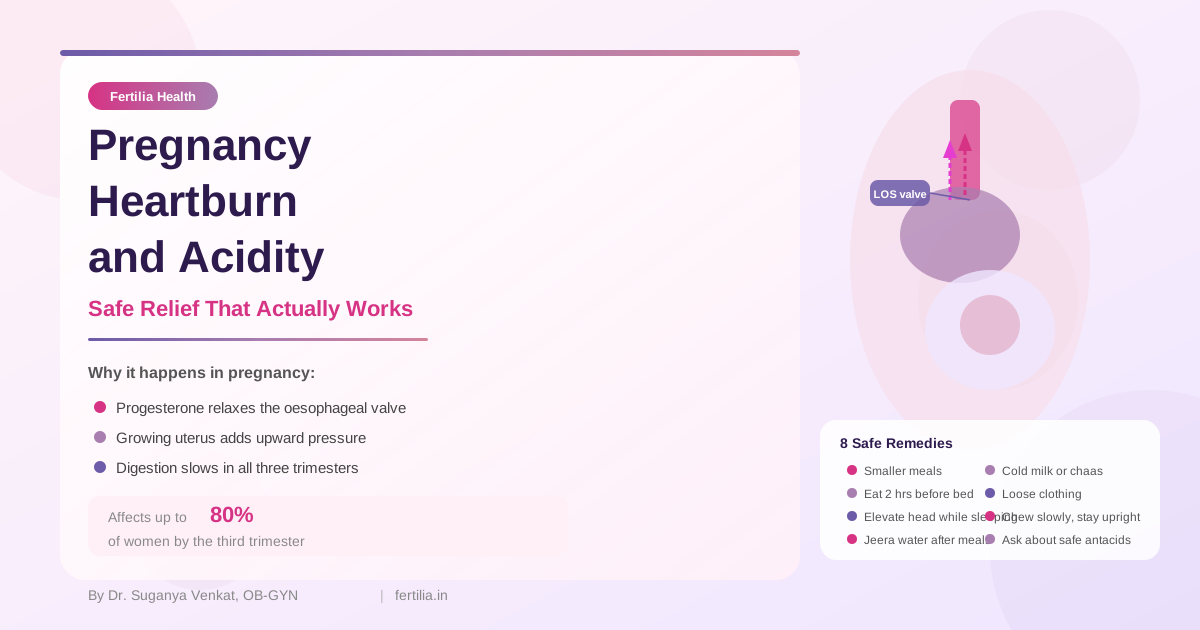
- Heartburn as the growing uterus pushes on the stomach
- Vivid dreams (reported by many women, probably related to hormonal changes and disrupted sleep)
Third Trimester: Weeks 28 to 40
The final preparation
The third trimester is about growth, position, and preparation. The baby’s organs are largely complete. The work now is adding body fat and mass, maturing the lungs, and getting into the optimal position for birth.
Weeks 28 to 32: Rapid weight gain
In these four weeks, the fetus nearly doubles in size. By week 32, most babies weigh around 1.7 to 1.8 kg. The lungs are maturing rapidly. If a baby is born at 28 weeks with intensive care, survival rates in good Indian neonatal units are around 80 to 90%. By 32 weeks, outcomes improve significantly.
Your doctor will check the baby’s position more carefully from week 28 onward. At 28 weeks, around 20% of babies are still in a breech position (bottom down, head up). Most will turn to head-down before 36 weeks. If breech position persists past 36 weeks, your doctor will discuss your delivery options.
Anaemia is common in the third trimester because the baby draws on the mother’s iron stores heavily during this period. Your iron levels should be rechecked at this stage. Good Indian iron sources: drumstick leaves (murungai keerai), ragi, rajma, toor dal, sesame seeds, and jaggery. Vitamin C from amla, guava, or lemon alongside iron-rich meals improves absorption.
Weeks 33 to 36: Growth scans and birth preparation
Growth scans are typically done at 28 to 32 weeks and again at 36 weeks to confirm appropriate growth and confirm fetal position. The 36-week scan also checks placenta position and amniotic fluid levels.
From week 36, Group B Streptococcus (GBS) screening is offered in some centres in India. GBS is a bacterium that colonises the vagina and rectum in some women without causing symptoms. If positive, IV antibiotics during labour protect the newborn.
This is also the window to:
- Confirm your birth plan and which hospital or nursing home you will deliver at
- Understand the signs of labour (regular contractions, rupture of membranes, decreased fetal movement)
- Complete any antenatal classes or physiotherapy sessions
Weeks 37 to 40: Full term
A pregnancy is considered full term from week 37. From this point, the baby is ready to be born at any time. The lungs are mature, the fetus is gaining about 200 grams per week, and the head typically engages into the pelvis (engagement or lightening) in first-time mothers, often 2 to 4 weeks before delivery.
Signs that labour may be approaching:
- Increased pelvic pressure as the head descends
- A show (pink or blood-tinged mucus discharge as the cervical plug releases)
- Irregular practice contractions (Braxton Hicks) becoming more frequent
- Your waters breaking (rupture of membranes), which may be a gush or a slow trickle
Contact your doctor or go to the hospital if: contractions are regular and 5 minutes apart lasting 60 seconds each, your waters break regardless of contractions, or you notice decreased fetal movement.
For a detailed guide to what helps with a normal delivery, see our post on Normal Delivery Tips: What Actually Helps.
Have questions about your antenatal schedule or scan results? Dr. Suganya can review your reports via WhatsApp.
Talk to Dr. Suganya on WhatsApp
Tests by Trimester: Quick Reference
| When | Test | What It Checks |
|---|---|---|
| First visit (6-8 weeks) | Blood group, Rh factor, CBC, blood sugar, thyroid (TSH), rubella, HIV, hepatitis B | Baseline health; infection screening |
| Weeks 11-13+6 | NT scan + dual marker / NIPT | Chromosomal risk screening |
| Weeks 18-20 | Anomaly scan (Level 2) | Fetal structure, placenta, fluid |
| Weeks 24-28 | Glucose tolerance test (GTT) | Gestational diabetes |
| Weeks 28-32 | Growth scan, repeat CBC | Fetal growth, anaemia |
| Weeks 36-37 | Growth scan, GBS screen (if offered) | Position, fluid, infection |
| Throughout | Urine routine at each visit | UTI, protein (preeclampsia screen) |
This table covers routine care for a low-risk pregnancy. Your doctor will add tests based on your individual history, symptoms, or findings.
Indian Foods That Support Each Trimester
The goal is not a perfect diet. It is a consistent diet built from your existing kitchen.
First trimester: Folate, B vitamins, and iron are most critical while organs form. Methi (fenugreek) leaves and drumstick leaves are the richest Indian sources of folate. Rajma, chana, and masoor dal provide both folate and iron. Eat small amounts frequently if nausea is present. Kokum, tamarind rasam, and fresh lemon are often well tolerated when heavier foods are not.
Second trimester: Calcium and vitamin D become the priority as the fetal skeleton mineralises. Ragi (finger millet) is the standout Indian calcium source: 100 grams provides 344 mg of calcium, comparable to dairy. Sesame seeds (til), small fish eaten with bones (where culturally appropriate), curd, and paneer are excellent sources. Soak your ragi overnight for porridge or use ragi flour for rotis and dosas.
For a full breakdown of what to eat across all trimesters, see our Pregnancy Diet Chart: Indian Foods for Each Trimester.
Third trimester: Iron, protein, and omega-3 fatty acids support the baby’s rapid weight gain and brain development. Increase dal servings, add a handful of walnuts or flaxseeds to your diet, and prioritise haldi (turmeric) milk in the evenings for its mild anti-inflammatory effect. Avoid high-sugar foods: the gestational diabetes screening window is now or has just passed, and blood sugar management matters through delivery.
When to Call Your Doctor
Call immediately (do not wait for the next appointment) if you experience:
- Vaginal bleeding at any stage of pregnancy
- Severe headache with visual changes or upper abdominal pain (this combination needs same-day assessment)
- Decreased fetal movement after week 28 (fewer than 10 movements in 2 hours in the evening)
- Fever above 38°C
- Burning or pain on urination (UTIs in pregnancy escalate quickly if untreated)
- Rupture of membranes at any gestational age
- Regular contractions before week 37
For guidance on what normal vaginal discharge looks like during pregnancy and when it should concern you, see our post on White Discharge in Pregnancy: What’s Normal and When to Worry.
Frequently Asked Questions
How is my due date calculated?
Your due date (expected date of delivery, or EDD) is calculated as 280 days or 40 weeks from the first day of your last menstrual period. If your periods are irregular, your doctor will date the pregnancy from the crown-rump length on your first ultrasound. Only around 5% of babies are actually born on the due date; the normal delivery window is weeks 37 to 42.
When will I start showing?
Most first-time mothers notice a visible bump between weeks 12 and 16. Women who have been pregnant before often show earlier, sometimes as early as week 10, because the abdominal muscles are more relaxed from the previous pregnancy. The uterus is below the pelvic brim until around week 12, which is why many women do not look pregnant during the first trimester.
Is it normal to have no symptoms in early pregnancy?
Yes. Symptom severity varies enormously and has no reliable relationship to pregnancy health. Some women with strong, healthy pregnancies have minimal nausea, very little breast tenderness, and no fatigue. The absence of symptoms is not a sign that something is wrong. Concern is more appropriate if symptoms that were present suddenly stop, particularly if this happens before week 10 and is accompanied by bleeding or pain.
How much weight should I gain during pregnancy?
Indian Council of Medical Research (ICMR) guidance recommends a total weight gain of 10 to 12 kg for women who start pregnancy at a healthy BMI. Women who are underweight may need to gain 12 to 18 kg; women who are overweight should aim for 7 to 11 kg. Weight gain should be gradual: roughly 1 to 2 kg in the first trimester and then 0.3 to 0.5 kg per week in the second and third trimesters. Your doctor will track this at each visit.
Can I exercise throughout pregnancy?
For most women with uncomplicated pregnancies, moderate exercise is safe and beneficial throughout all three trimesters. Walking, swimming, prenatal yoga, and light strength training are all well-supported by evidence. Avoid contact sports, high-intensity impact, and exercises that require lying flat on your back after week 20. Always consult your OB-GYN before starting a new exercise routine in pregnancy.
What scans are absolutely essential?
The anomaly scan at 18 to 20 weeks is the most important scan of the entire pregnancy. It is the only scan with the resolution to check fetal organ structure. No other ultrasound replaces it. The NT scan at 11 to 13+6 weeks, the growth scan at 28 to 32 weeks, and the 36-week positioning scan are also standard. Additional scans may be ordered based on your individual findings.
Is it safe to travel during pregnancy?
Air travel is generally safe up to week 36 for uncomplicated pregnancies, though individual airlines have their own policies. Long road journeys are manageable in the second trimester when nausea has eased and mobility is not yet heavily restricted. Avoid long journeys in the first trimester (nausea) and the third trimester (fatigue, discomfort, and distance from your hospital). Always carry your antenatal records when travelling.
Dr. Suganya Venkat is an OB-GYN with 15+ years of clinical experience. DNB OB-GYN (GKNM Hospital, Coimbatore) · MD Pathology (CMC Vellore) · MBBS with 5 Gold Medals (SRMC). She consults in Coimbatore and via WhatsApp for women across India.