One of the most useful things you can do in the weeks after delivery is to know your own body well enough to recognise what is normal, what deserves a call to your doctor, and what needs you to go to hospital without delay. Not in a state of panic, but with the clarity that comes from having thought about it beforehand.
This guide is not here to alarm you. The great majority of postpartum complications are rare, and the great majority of what you will feel in the first six weeks falls squarely within normal. This guide is here so that when something does not feel right, you already have a clear frame of reference.
This is part of the complete post-delivery care guide for Indian mothers, which covers the full six-week recovery arc. Specific topics, including normal bleeding patterns, wound care, and mood changes, are covered in detail in the linked guides throughout.
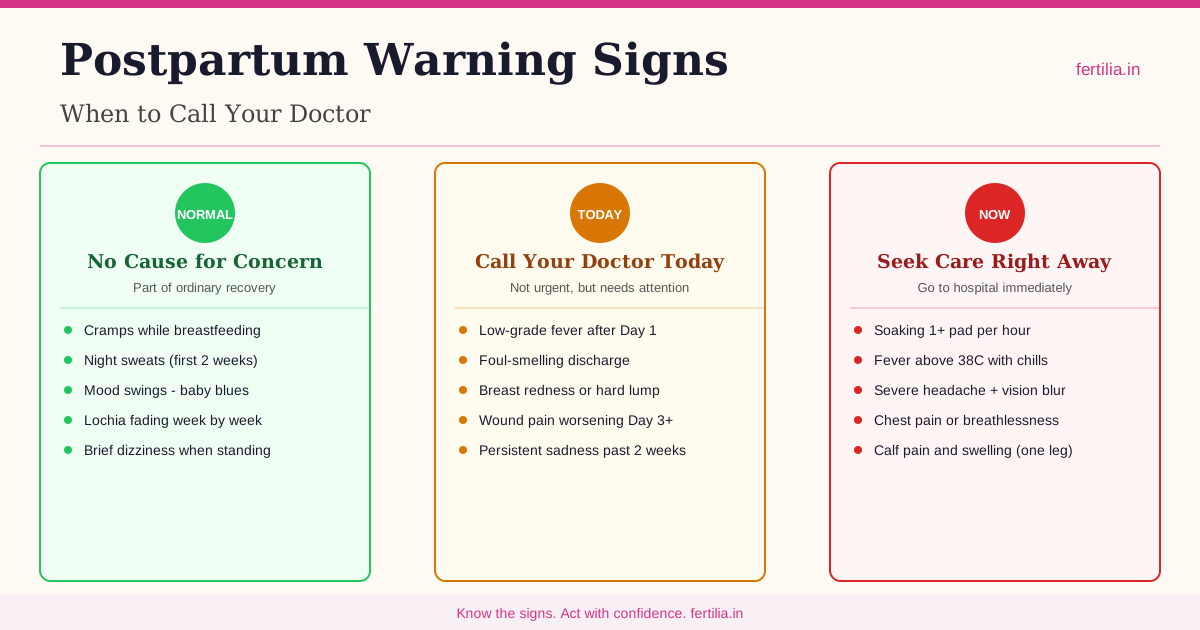
The simplest way to organise postpartum signs is a three-zone triage system:
- Green: Normal postpartum physiology. No action needed.
- Yellow: Worth a call or clinic visit today. Not an emergency, but not something to wait on.
- Red: Seek care within the hour. These signs respond best to rapid assessment.
Most women will spend their entire postpartum period entirely in the green zone. Knowing where the lines are simply means you spend less time wondering.
Green Zone: What Is Normal in the First Six Weeks
Understanding the expected range makes everything else easier to read. These experiences are part of ordinary postpartum recovery and do not need medical attention.
Mild cramping during breastfeeding. When your baby latches, the hormone oxytocin is released. Oxytocin stimulates uterine contractions, which can feel like moderate period cramps, especially in the first week. This is how the uterus returns to its pre-pregnancy size (a process called involution) and it is a sign that your body is working correctly. The cramping usually eases by the end of Week 2.
Lochia changing colour week by week. The postpartum discharge called lochia starts heavy and red in the first few days, transitions to a brownish-pink between Days 4 and 10, and fades to a yellowish-white by Weeks 3 to 4. A gradual lightening is expected. If you are unsure what to expect at each stage, the postpartum bleeding and lochia guide has a day-by-day timeline of normal flow patterns.
Night sweats in the first two weeks. After delivery, the body releases the extra fluid retained during pregnancy through sweat overnight. Waking up drenched in the first week to ten days is common and resolves on its own as fluid balance normalises.
Mood swings in the first two weeks. Many women experience a period of tearfulness and emotional variability around Days 3 to 5, when oestrogen and progesterone drop sharply after delivery. This is called the baby blues and it is distinct from postpartum depression. Baby blues typically resolves within two weeks, does not usually prevent you from caring for your baby, and does not need treatment. If low mood or tearfulness persists beyond two weeks, that belongs in the yellow zone.
Occasional dizziness when standing up. Blood pressure is lower in the postpartum period, and the body is redistributing its blood volume. Rising quickly from lying or sitting can cause a brief lightheadedness, particularly in the first week. Standing slowly and staying well hydrated is usually enough.
Soreness at a wound site in the first five days. Pain at an episiotomy repair or a C-section incision in the first few days is a normal part of tissue healing. What changes the picture is pain that worsens rather than improves after Day 3 to 5. That belongs in the yellow zone.
Yellow Zone: Call Your Doctor Today
These signs are not emergencies. A hospital visit in the middle of the night is not usually what they require. But each one deserves a call to your gynaecologist within the same day, because catching them early means simpler treatment.
Fever After Delivery: The Basics
A mild temperature in the hours immediately after delivery is common and related to the exertion of labour itself. The sign that warrants attention is a persistent low-grade fever (below 38 degrees Celsius) that begins after the first 24 hours and does not settle. Classically in obstetric medicine, a fever after delivery that starts between 24 hours and 10 days postpartum is called puerperal fever. The clinical term used in research is puerperal morbidity, defined as a temperature of 38 degrees or higher on any two of the first 10 days excluding the first 24 hours (Mackeen, Packard, and Ott, Obstetrics and Gynecology, 2015). The source could be the uterus (endometritis), urinary tract, wound, or breast tissue. A clinical examination will identify it quickly and antibiotics when given early work very well.
Foul-Smelling or Off-Colour Vaginal Discharge
Lochia carries a mild smell similar to menstrual blood. A foul or noticeably strong smell, especially when the colour changes to grey, green, or frothy, suggests possible endometritis (infection of the uterine lining). Endometritis is one of the more common postpartum complications and responds well to antibiotics when treated promptly. Do not wait to see if it resolves on its own.
Breast Redness, Warmth, or a Hard Painful Lump
These are the early signs of mastitis, which is inflammation of the breast tissue affecting roughly 10% of breastfeeding women in the first three months (Amir, BMJ Clinical Evidence, 2014). Mastitis starts as a localised hardness and tenderness and can progress to a wedge-shaped red area with flu-like aches. When identified in the early stages (local tenderness, no fever above 38 degrees), frequent feeding and warm compresses often resolve it. Once a fever develops, antibiotics are usually needed. Call your doctor or a lactation consultant on the same day rather than managing alone.
Worsening Wound Pain After Day 3
The pain at a healing wound should follow a clear direction: it should gradually decrease, not increase. Pain at an episiotomy repair that is worsening after Day 3, or pain at a C-section incision that is not improving through the second week, warrants a clinical look at the wound. For a full guide to what a normal healing timeline looks like, the episiotomy care and recovery guide and the C-section recovery week-by-week guide cover expected wound milestones from Day 1 through Week 6.
Difficulty Urinating or a Burning Sensation
Urinary tract infections are more common in the postpartum period because of the pressure the uterus placed on the bladder during pregnancy and, in many hospital deliveries, catheter use during labour. A burning sensation when passing urine, frequent urge to go but little output, or lower abdominal discomfort between feeds all suggest a UTI. This is reliably treated once identified. Call your doctor and describe the symptoms.
Persistent Sadness or Tearfulness Beyond Two Weeks
The baby blues (mood variability in the first two weeks) is a normal hormonal adjustment, not postpartum depression. When low mood, tearfulness, persistent anxiety, difficulty bonding with the baby, or intrusive worrying continues past the two-week mark, it is worth raising with your doctor. You do not need to wait until it is severe and you do not need to push through alone. The postpartum depression guide and the postpartum anxiety guide describe what to expect from an initial assessment and what treatment typically involves. Both conditions are common and both respond well to support.
Red Zone: Seek Care Within the Hour
These signs mean going to hospital directly, or calling your gynaecologist for immediate direction to emergency care. They are not a reason to panic. They are a reason to act quickly, because assessment and treatment within the hour makes a real clinical difference.
Heavy Bleeding: More Than One Pad Per Hour
Postpartum haemorrhage is the single largest cause of maternal death worldwide, accounting for approximately 27% of maternal deaths globally (Say, Lancet, 2014, PMID 24797575). At home, the practical indicator is straightforward: soaking through one full pad per hour, or passing large clots (larger than a lime), or feeling faint or dizzy alongside the bleeding. The ACOG Practice Bulletin defines severe haemorrhage as blood loss of 1000 mL or more with signs of instability (ACOG Practice Bulletin 183, 2017). Secondary postpartum haemorrhage, which can occur between 24 hours and 12 weeks after delivery, is less common but can appear suddenly. If you are soaking a pad in under an hour, go to hospital.
Fever Above 38 Degrees Celsius With Chills or Shaking
A temperature above 38 degrees Celsius (100.4 degrees Fahrenheit) combined with rigors (shaking chills) is the clinical picture of significant infection, not a minor one. Possible sources include endometritis tracking deeper into tissue, a wound infection spreading to surrounding structures, or a septic process affecting the whole body. The WHO’s postnatal care guidance lists fever with chills as a key danger sign requiring immediate clinical review (WHO Recommendations on Postnatal Care of the Mother and Newborn, 2013). Do not take paracetamol and wait for the fever to break. Go in.
Severe Headache With Vision Changes
Postpartum preeclampsia is a rise in blood pressure that can develop after delivery and continue up to six weeks postpartum, even in women who had no hypertension during pregnancy. The headache is typically frontal and tight, often described as a band around the head. It comes with visual changes including bright spots, flashing lights, or blurring. Some women also notice swelling in the face, hands, or feet that is worse than before. Postpartum preeclampsia can progress to eclamptic seizure without treatment. This is a same-hour presentation, not a morning-appointment situation.
Chest Pain or Shortness of Breath at Rest
Pulmonary embolism (a blood clot in the lung) is one of the leading causes of preventable maternal death in the postpartum period. The MBRRACE-UK national audit of maternal deaths identifies thromboembolism as a consistently preventable cause, with risk highest in the three weeks after delivery and declining through three months. Sudden chest pain, breathlessness that comes on at rest or is out of proportion to any activity, or a racing heart without clear cause all need emergency evaluation. If the chest pain is left-sided and accompanied by nausea or sweating, that is cardiac territory and equally urgent.
Calf Pain With Swelling in One Leg
Deep vein thrombosis (DVT) is more common in the postpartum period because of physiological changes in clotting factors and reduced mobility after delivery. A calf pain that is unilateral (affecting one leg, not both), with or without swelling, warmth, or redness in that leg, is suspicious for a clot. Do not massage the leg. Go to hospital for a Doppler ultrasound. A clot in the calf can dislodge and travel to the lung, which is the pulmonary embolism described above.
A Wound That Has Opened, Is Leaking Pus, or Has a Strong Smell
A wound infection that has broken the skin surface, whether at a C-section incision or an episiotomy repair, needs clinical assessment the same day. Wound dehiscence (where the edges separate) can occur with infection, excessive strain, or for no obvious reason. Even if it looks minor from the outside, a wound opening requires proper cleaning and management. Do not pack it yourself or apply home remedies like haldi paste or coconut oil to an open wound. Go to your doctor.
Thoughts of Harming Yourself or Your Baby
Postpartum psychosis is a rare but serious psychiatric emergency that typically appears within the first two weeks after delivery. It can include confusion, rapidly shifting mood, intrusive thoughts, or thoughts of self-harm or harm to the baby. It is distinct from postpartum depression and it is a medical emergency. If you are having thoughts of this kind, or a family member is concerned about your thinking or behaviour, go to hospital or call your doctor immediately. These thoughts are symptoms of a treatable condition. They are not your character and they are not your fault.
If you are unsure whether what you are experiencing belongs in this zone, message Dr. Suganya on WhatsApp and describe what is happening. A quick response is available.
Navigating Care in India: Hospital, Phone, or Wait?
A question that comes up often during the 40-day rest period (pathu madam in Tamil, used for rest and recovery across Tamil Nadu) is a practical one: should I go to hospital, call my doctor, or wait and see?
Go to hospital directly for any red zone sign. Do not wait for the hospital to open in the morning, and do not wait for someone to accompany you if the delay is significant. Red zone signs exist precisely because timing matters.
Call your gynaecologist first for yellow zone signs. For most yellow zone concerns, a phone call to your doctor or their clinic is the right first step. Describe what you are seeing, when it started, whether it is getting better or worse, and your temperature if you have measured it. Your doctor can tell you whether to come in the same day or monitor for 24 hours.
What to tell your doctor on the phone: Your delivery date, the type of delivery (normal or C-section), the symptom you are seeing, when it started, your temperature, and whether the baby is feeding well. These six pieces of information give your doctor the core picture they need to advise you accurately.
Numbers to keep ready before discharge: Programme your gynaecologist’s clinic number, the number of the hospital where you delivered, and the Tamil Nadu ambulance service (108) into your phone and into your caregiver’s phone before you leave hospital. Having these ready means one less thing to manage in a stressful moment.
For women in joint families: During the pathu madam period, decisions often flow through elders or family members. If a family member is dismissing your concern about your own body, you are entitled to call your doctor yourself. A persistent sense that something is not right is valid clinical information. You do not need permission from anyone to contact your own doctor.
Working With Your Gynaecologist
It is worth saying clearly: the medical management of postpartum complications belongs with your gynaecologist and the team that supported your delivery. This guide supplements that relationship.
Your doctor and you are on the same side. Their job is to assess and treat. Your job is to report what you are experiencing accurately and early, before minor issues need more complex management. Early reporting is not an inconvenience to your doctor. It is what makes most postpartum complications manageable with straightforward treatment.
If you had a high-risk pregnancy, gestational hypertension, gestational diabetes, a complicated delivery, or a wound that required attention in hospital, your risk window for some red zone signs is longer than average. Your doctor may want a follow-up sooner than the standard six-week check. Follow their guidance on the timing of your review visits.
Frequently Asked Questions
What is puerperal fever and when does it become serious?
Puerperal fever is classically defined as a temperature of 38 degrees Celsius or higher occurring on any two of the first 10 days after delivery, excluding the first 24 hours. It signals an infection somewhere in the reproductive tract, urinary system, wound, or breast tissue. A fever meeting this definition needs clinical evaluation on the same day. When it is accompanied by rigors (shaking chills), a temperature above 38.5 degrees, or signs of systemic illness (rapid heart rate, confusion, pallor), it belongs in the red zone rather than the yellow zone.
How do I know whether my bleeding is normal lochia or abnormal haemorrhage?
Normal lochia is heaviest in the first two to three days and may contain some clots. Clots up to the size of a small lime during the first 48 hours are within the range described in clinical practice. What signals a problem is rate of loss, not volume alone: soaking a pad in under an hour, passing clots larger than a lime, or feeling dizzy or faint alongside the bleeding are all red zone signs. Lochia that increases after a period of being lighter (for example, you were doing more activity than advised) can also warrant a call. The postpartum bleeding guide has a week-by-week comparison of normal and abnormal patterns.
My C-section incision looks a little red. Do I need to go to hospital?
Mild redness directly along the incision line in the first week is part of the normal healing response and does not, by itself, require an emergency visit. The signs that do need a clinic visit are: redness that is spreading outward beyond the scar edges, warmth that is more intense than the surrounding skin, swelling that is increasing, any discharge of pus or cloudy fluid from the wound, or fever accompanying the local changes. Any combination of those findings warrants same-day assessment. The C-section recovery guide describes what the incision should look like at each stage of healing from Day 1 through Week 6.
What is the difference between baby blues and postpartum depression?
Baby blues is the normal emotional variability that peaks around Days 3 to 5 after delivery when oestrogen and progesterone drop sharply. It typically resolves within two weeks, does not prevent you from caring for your baby, and does not need treatment beyond rest and practical support. Postpartum depression involves persistent low mood, tearfulness, or anxiety beyond two weeks, significant difficulty bonding with the baby, or intrusive thoughts. Estimates of PPD prevalence range from 10 to 20% of mothers in the first year (Wisner, JAMA Psychiatry, 2013, PMID 23487525). It is common, it is not a reflection of your love for your baby, and it responds well to treatment. The postpartum depression guide explains both conditions side by side.
When should I call an ambulance versus calling my doctor first?
Call 108 (Tamil Nadu ambulance) or go directly to the nearest hospital emergency for red zone signs: soaking through a pad in under an hour, fever above 38 degrees with chills, severe headache with vision changes, chest pain or breathlessness, calf swelling with unilateral pain, a wound that has opened or is leaking pus, or thoughts of harming yourself or your baby. For yellow zone signs, calling your gynaecologist first is appropriate. If you are genuinely unsure which zone a symptom belongs to, call your doctor rather than waiting. Most doctors would rather receive a call that turns out to be nothing than not receive a call that turned out to matter.
My family says all these symptoms are normal during the rest period. How do I know when to listen to my own instinct?
Your instinct about your own body is valid clinical information. Research into delays in postpartum care-seeking consistently finds that many women or their families recognised warning signs but delayed seeking help because they second-guessed themselves or were advised to wait. The MBRRACE-UK national audit found this pattern in a significant proportion of preventable maternal deaths. The framework in this guide is designed to give you a clear reference point independent of anyone else’s reassurance. If you feel genuinely unwell, or something feels different from how it felt even the day before, that is reason enough to call your doctor.
Knowing Lets You Act
The value of reading a guide like this is not that you spend the postpartum weeks scanning your body for problems. It is the opposite: a clear map of what is normal means you can relax when you see it, and a clear map of warning signs means you can act quickly and calmly when you need to.
The postpartum period is a significant physical recovery. Most women move through it with the expected exhaustion, gradual healing, and the steep learning curve of caring for a newborn. This guide is here for the moment when something feels off and you want a clear reference.
Download the Postpartum Care Guide for a printable summary of warning signs, wound care, nutrition, and the week-by-week recovery timeline for both normal delivery and C-section. And if you would like Dr. Suganya to review your specific recovery questions personally, a message on WhatsApp is the easiest way to get a direct, personalised response. Her Postpartum Recovery program keeps that support going through the full six weeks.