When your baby is two weeks old, you might already be wondering when you can start moving again. Between the feeds, the 3 AM wake-ups, and the sheer exhaustion, there is also this deep need to feel like yourself again. To move. To breathe. To do something that belongs just to you.
This instinct is healthy and worth honouring.
But the advice out there is wildly inconsistent. Your mother-in-law says rest for 40 days and do nothing. Your friend was at a Zumba class at four weeks. Your neighbour says she walked on day one. And somewhere in all of this, someone told you to “wait for your six-week check” before doing anything at all.
Here is the honest clinical picture, grounded in what the evidence actually shows.
What this post covers
- Why postpartum recovery has a different timeline from any other kind of physical recovery
- What you can safely do in the first six weeks after vaginal delivery
For more on this, read our guide on Postpartum Bleeding (Lochia).
- What the “six-week clearance” really means, and what it does not mean
- A separate, slower timeline for C-section recovery
- Which exercises to begin with, and how to build from there
- Warning signs that tell you to ease off
- How nutrition supports your return to movement
- Answers to the questions I hear most often in clinic
Why the postpartum recovery timeline is different
Your body goes through four significant changes after delivery, and each one affects when and how you can exercise safely.
Uterine involution: After delivery, your uterus is roughly the size of a large watermelon and weighs about 1 kg. Over six weeks, it contracts back to its pre-pregnancy size (approximately 60 to 70 grams). This process is called involution, and you feel it as uterine cramping in the first week, especially during breastfeeding. Your uterus is actively working. This process needs to be respected.
Pelvic floor trauma: Whether you delivered vaginally or by C-section, your pelvic floor muscles supported a pregnancy for 40 weeks under increasing load. A vaginal delivery adds the stretch and possible tearing of delivery itself. Returning to high-impact exercise before the pelvic floor has had time to recover leads to symptoms such as urinary leaking, pelvic heaviness, or, in some cases, prolapse. These symptoms are not signs of weakness. They are signs of overloading tissue that is still healing.
Diastasis recti: Research shows that around 60% of women have some degree of abdominal muscle separation at six weeks postpartum (Sperstad et al., 2016, British Journal of Sports Medicine). Certain exercises (crunches, full sit-ups, and heavy lifting) can worsen this separation if started too early or progressed too aggressively. For a detailed guide to checking yourself and managing diastasis safely, read Diastasis Recti: How to Check Yourself and 5 Safe Exercises.
Relaxin: The hormone relaxin, which loosens your joints and ligaments during pregnancy, does not immediately drop to pre-pregnancy levels after delivery. In breastfeeding women, relaxin may remain elevated for several months. This means your joints are more mobile, but also more vulnerable to injury, particularly under high-impact or heavy loading conditions.
Understanding these four factors makes it much easier to choose movement that supports your recovery rather than interrupts it.
Week 1 to 6 after vaginal delivery: gentle is productive
The first six weeks after an uncomplicated vaginal delivery are not a passive rest period. They are an active recovery phase where specific, gentle movements support healing rather than delay it.
Days 1 to 3: Gentle movement begins here. Ankle pumps (gently circling your ankles while lying in bed), diaphragmatic breathing (breathing fully into your belly and feeling your lower ribs expand), and short walks within the ward or around the house. Nothing strenuous. The goals are preventing blood clots, reducing stiffness, and supporting circulation.
Week 1 to 2: Begin pelvic floor activation. Lie on your back with your knees bent. Gently draw up the muscles you would use to stop the flow of urine, hold for 3 to 5 seconds, and then release completely. This is a Kegel. You do not need to feel a strong contraction. A gentle, consistent effort is what counts. A 2014 systematic review by Morkved and Bo, published in the British Journal of Sports Medicine, found that regular pelvic floor muscle training after childbirth significantly reduces urinary incontinence and supports pelvic floor recovery over time.
Add short walks outside if you feel comfortable. Start with 5 to 10 minutes and build gradually as your energy allows.
Week 2 to 4: Continue daily Kegels, working toward 10 to 15 repetitions two to three times a day. Add diaphragmatic breathing with a gentle pelvic floor connection: breathe in fully, then breathe out and softly draw up the pelvic floor at the same time. This coordinated breathing and pelvic floor activation is the foundation of safe core rehabilitation postpartum. It is far more useful in these early weeks than any abdominal exercise.
Walks can extend to 20 to 30 minutes at a comfortable, conversational pace.
Week 4 to 6: If your walks feel comfortable and you have no leaking, pain, or pelvic heaviness, you can add very gentle core work. The heel slide is a good starting point: lie on your back with knees bent, gently draw your lower abdomen in (not a hard sucking-in), and slowly slide one heel along the floor until the leg is straight, then slide it back. Keep breathing throughout. This activates the deep core muscles (the transverse abdominis) without pressurising the pelvic floor.
The six-week mark: what clearance actually means
The six-week postpartum check is a standard clinical appointment to assess healing and address any complications. It is not a blanket permission to resume all exercise immediately.
What “cleared for exercise” typically covers: walking at a good pace, swimming once any stitches have fully healed, postpartum yoga, light bodyweight exercises, and gradually increasing general activity.
What it does not automatically include: running, HIIT classes, heavy gym work, or any high-impact activity. The American College of Obstetricians and Gynecologists (ACOG, 2020) recommends a graduated return to exercise, noting that women with uncomplicated deliveries can begin low-intensity movement much earlier than six weeks, but that a stepwise approach is important for higher-intensity activities.
A 2019 clinical guidance paper by Goom, Donnelly, and Brockwell, published in the British Journal of Sports Medicine, recommends waiting until at least 12 weeks postpartum before returning to running, and only after meeting a set of functional benchmarks: single-leg balance without difficulty, pain-free walking of 30 minutes, no urinary leaking, and adequate pelvic floor strength. This is not about being overly cautious. It is about protecting the pelvic floor from impact loading before it is ready. Women who return to running too early often develop pelvic floor symptoms that take significantly longer to resolve than a patient return would have required.
For a broader understanding of what is happening in your body in this period, Postpartum Belly: Why It Stays and How to Heal and Post Delivery Care: Day 1 to Week 6 Guide for Indian Mothers cover the recovery foundations in depth.
If you would like a personalised postpartum exercise plan or are unsure where you are in your recovery, our team is here to help. Message Dr. Suganya on WhatsApp.
For more on this, read our guide on Postpartum Exercises by Week. You can also download our complete postpartum recovery resource at fertilia.in/resources/normal-delivery-postpartum-care/.
For more on this, read our guide on Sex After Delivery.
After C-section: a different, slower timeline
A C-section is major abdominal surgery. Multiple layers of tissue are cut through and sutured: skin, fascia, the uterine muscle itself. The external scar heals in four to six weeks, but deeper tissue recovery continues for 12 weeks and beyond.
Week 1 to 2: Short walks are encouraged from the day after surgery to prevent blood clots and support circulation. Avoid lifting anything heavier than your baby. Gentle Kegels can begin when they feel comfortable, usually within the first week. Do not attempt any abdominal exercises.
Week 2 to 6: Gradually extend walks. Continue Kegels daily. Avoid driving for at least six weeks, or per your surgeon’s specific advice. No lifting beyond your baby’s weight.
Week 6 onwards: At your six-week check, if healing is confirmed, you can begin gentle core rehabilitation (diaphragmatic breathing with pelvic floor connection, heel slides). The progression is slower than after vaginal delivery and should be guided by how your scar feels, not by a fixed schedule.
Week 10 to 12: Only if core and pelvic floor feel strong and symptom-free, you can gradually begin walking at a brisker pace, add light resistance training, and introduce bodyweight movements. High-impact exercise should wait until at least 12 weeks and only if you have passed the functional benchmarks described above.
For a complete guide to the C-section recovery process, C-Section Delivery: What to Expect Before, During and After covers each stage in clinical detail.
Phase-by-phase guide
| Phase | Timeline (Vaginal) | Timeline (C-Section) | Safe Activities |
|---|---|---|---|
| Phase 1 | Days 1 to 7 | Days 1 to 7 | Ankle pumps, diaphragmatic breathing, short walks (5 to 10 minutes), gentle Kegels |
| Phase 2 | Weeks 2 to 6 | Weeks 2 to 6 | Longer walks (up to 30 min), Kegels (10 to 15 reps, 2 to 3 times daily), heel slides, pelvic floor breathing |
| Phase 3 | Weeks 6 to 12 | Weeks 6 to 10 | Swimming, postpartum yoga, bodyweight squats, glute bridges, light resistance work |
| Phase 4 | Week 12 onwards | Week 12 onwards | Gradual return to higher-impact activities, only when fully symptom-free |
These timelines are starting points. How you feel matters more than a fixed schedule. Your delivery experience, your sleep, your nutrition, whether you are breastfeeding, and whether you had any complications all affect your individual recovery rate. Your doctor and, where available, a pelvic floor physiotherapist are the right people to individualise this for your situation. Their guidance takes priority over any general timeline.
Warning signs that mean ease off
Your body gives clear signals when you are asking for more than it is currently ready for. These are not causes for worry. They are useful information. If any of the following appear during or after exercise, reduce the intensity or stop, and speak with your doctor:
- Increased lochia (vaginal discharge) or bleeding that had stopped and has returned
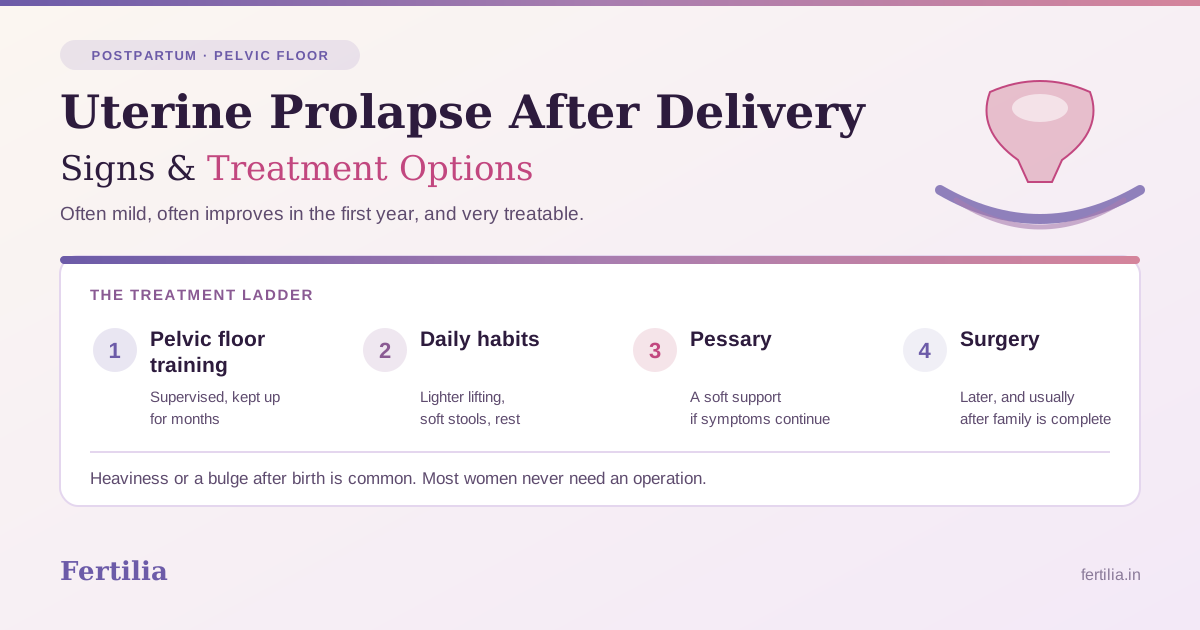
- A feeling of heaviness, pressure, or bulging in the vaginal area (this can indicate pelvic floor strain or early prolapse)
- Urinary or bowel leaking during or after exercise
- Pain at the C-section scar site during or after movement
- Significant lower back or pelvic pain that worsens with activity
- Coning or doming at the midline of your belly during any effort (this indicates diastasis recti strain)
If you are managing postpartum physical recovery alongside mood changes, low energy, or feeling overwhelmed by more than just tiredness, please read Postpartum Depression: Signs, Support and Recovery. Mental health recovery is part of postpartum recovery, and it affects how your body heals.
Nutrition to support your return to movement
Exercise and nutrition work together in postpartum recovery. Many Indian women enter the postpartum period with iron deficiency or anaemia from blood loss during delivery. This directly affects energy levels, recovery speed, and the capacity to exercise at all.
For more on this, read our guide on Postpartum Hair Loss. Before thinking about intensity, make sure the basics are in place:
Iron: Palak, rajma, chana, ragi, and methi are excellent plant-based iron sources. Pair them with amla or a small amount of lemon juice (vitamin C) to improve iron absorption. If blood tests show low haemoglobin, work with your doctor on supplementation alongside diet.
Protein: Required for tissue repair and, if you are breastfeeding, for milk production. Dal, paneer, dahi, eggs, and rajma provide solid protein across Indian meals. Aim for approximately 1.2 to 1.5 grams per kilogram of body weight daily.
Calcium: Ragi is one of the richest plant-based calcium sources available in India. Dahi, til ladoo, and methi also contribute meaningfully. Calcium is particularly important during breastfeeding, when the body draws from bone reserves to meet milk calcium demands.
Hydration: Especially important if you are breastfeeding and exercising. Traditional warm drinks such as jeera water, ajwain water, and haldi doodh have a long history in Indian postpartum care and many new mothers find them both comfortable and hydrating. Water is equally important.
For more on this, read our guide on Constipation After Delivery.
For more on this, read our guide on Postpartum Yoga. ACOG (2020) confirms that moderate-intensity exercise does not reduce breast milk volume or nutritional quality. Exercising while breastfeeding is safe. Make sure to eat and drink enough before and after any session.
For detailed postpartum nutrition, After Delivery Food for Indian Mothers: What to Eat and Avoid covers every food category with portions and a week-by-week guide. For the weight-related aspects of recovery, Postpartum Weight Loss: Safe and Evidence-Based Guide addresses what actually works and what timeline to expect.
Frequently asked questions
Q: Can I start exercising before my six-week check?
Yes, for low-intensity movement. For uncomplicated vaginal deliveries, gentle activities such as walking, Kegels, and diaphragmatic breathing are safe from day one or within the first week. ACOG (2020) recommends resuming physical activity as soon as you feel comfortable for low-intensity exercise. The six-week check is important for assessing healing and clearing you for more progressive exercise, not for starting gentle movement.
Q: My mother-in-law says complete rest for 40 days. Is that right?
The traditional 40-day rest (called jaappa or maas in many parts of India) is about protecting the new mother from household demands and ensuring she is well-fed and supported. This wisdom is sound. But “rest” does not mean complete physical immobility. Gentle Kegels, breathing exercises, and short walks within the first few weeks support recovery rather than delay it. You can fully honour the spirit of the traditional rest period while still doing the therapeutic movement that helps your body heal.
Q: Can I run after my six-week check?
Running is a high-impact activity that places significant load on the pelvic floor with every stride. Clinical guidance from Goom et al. (2019, British Journal of Sports Medicine) recommends waiting until at least 12 weeks postpartum before returning to running, and only after you meet specific functional benchmarks (no leaking, no pelvic heaviness, 30 minutes of comfortable walking, adequate single-leg strength). Many women return to running comfortably between 12 and 16 weeks. If you experienced pelvic floor symptoms or have diastasis recti, give yourself additional time.
Q: I had a C-section. When can I start?
Short walks and gentle Kegels can begin in the first week after surgery. More progressive exercise starts after your six-week check, assuming healing is confirmed. High-impact exercise and full core work generally need to wait until 10 to 12 weeks at the earliest. Your surgeon’s specific advice takes priority, and a pelvic floor physiotherapist can guide your progression safely.
Q: Is it safe to exercise while breastfeeding?
Yes. ACOG (2020) confirms that moderate-intensity exercise does not reduce breast milk volume or nutritional quality. Some mothers notice their baby is fussier after feeding immediately post-exercise; this may be due to a slight increase in lactic acid in the milk. If this happens, feeding or expressing before your workout session usually resolves it. Stay well hydrated and ensure you are eating enough calories to support both recovery and milk production.
Q: How do I know if my pelvic floor is ready to progress?
A useful self-check: if you can walk for 30 minutes without any leaking, pelvic heaviness, or discomfort, and manage single-leg activities (such as climbing stairs one step at a time) without symptoms, your pelvic floor is likely ready for the next phase. If you have any doubt, a pelvic floor physiotherapist can assess you directly. This specialised support is becoming more available in larger hospitals and women’s health clinics across Tamil Nadu.
Q: What exercises should I absolutely avoid in the first six weeks?
Avoid crunches, sit-ups, leg raises, heavy lifting, running, jumping, planks, and HIIT. These activities load the pelvic floor and abdominal wall before healing is complete and can worsen diastasis recti or trigger pelvic floor symptoms. The general rule: if it makes you hold your breath or bear down, it is too much for this stage.
Getting support for your postpartum recovery
Every woman’s postpartum recovery is different. If you are dealing with pelvic floor symptoms (leaking, heaviness, pain at the scar site), or if you are unsure how to progress safely after a complicated delivery, a pelvic floor physiotherapist is the right specialist to involve. Many hospitals and women’s health clinics in Tamil Nadu now offer postnatal physiotherapy.
If you have questions about your specific recovery timeline, whether you have diastasis recti, or when to return to a particular activity or sport, Dr. Suganya is happy to help you work through your individual situation.
Ready to return to exercise safely after your delivery? Dr. Suganya and our team are here to guide you, step by step. Message us on WhatsApp to get started.
Returning to movement safely is built into Dr. Suganya’s Postpartum Recovery program.