One of the questions new mothers ask most, and get the least consistent answer to, is this: when will my period come back?
The answer is not the same for everyone, and the difference almost entirely comes down to one thing: whether you are breastfeeding, and how often. Understanding your own timeline is useful for a practical reason that surprises many women, and we will get to that shortly.
This post is part of our complete post-delivery care guide, which covers the full first six weeks and beyond.
What Stops Your Period After Delivery
During pregnancy, high levels of oestrogen and progesterone suppress ovulation and menstruation. After delivery, both hormones drop sharply within 24 to 48 hours.
What keeps periods away in the weeks and months that follow is a different hormone: prolactin.
Prolactin drives milk production. Every time a baby feeds at the breast, the act of suckling signals the pituitary gland to release prolactin. Elevated prolactin suppresses GnRH (gonadotropin-releasing hormone), the signal from the hypothalamus that normally starts the chain of events leading to ovulation. Without GnRH pulses, the ovaries do not prepare a follicle, oestrogen does not rise, and the menstrual cycle does not begin.
This mechanism was characterised in detail by McNeilly and colleagues (McNeilly AS, Journal of Reproduction and Fertility, 1994, PMID 8064852). Their key finding was that the suppression of GnRH is tied directly to the frequency and intensity of suckling. As long as prolactin remains elevated through frequent, unrestricted feeding, the hypothalamus stays quiet and periods stay away.
This is the biology behind breastfeeding amenorrhea: the absence of menstruation during active breastfeeding.
How Long Will Your Period Stay Away?
The answer depends on your feeding pattern.
If You Are Exclusively Breastfeeding
Exclusive breastfeeding means the baby receives only breastmilk, is fed on demand (typically 8 to 12 times in 24 hours), and takes no bottles, formula, or solid foods.
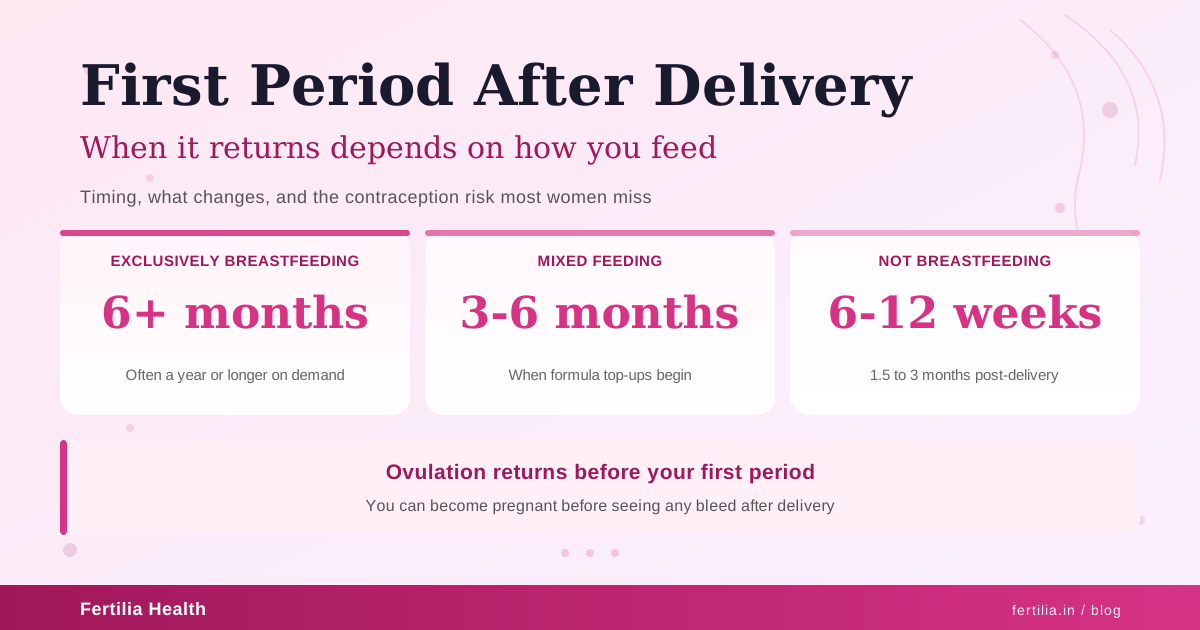
Under these conditions, the prolactin surge from each feed is frequent enough to keep GnRH suppressed. Most women who are exclusively breastfeeding will not have a period for the first 6 months. Some will go considerably longer, particularly if they are breastfeeding through the night.
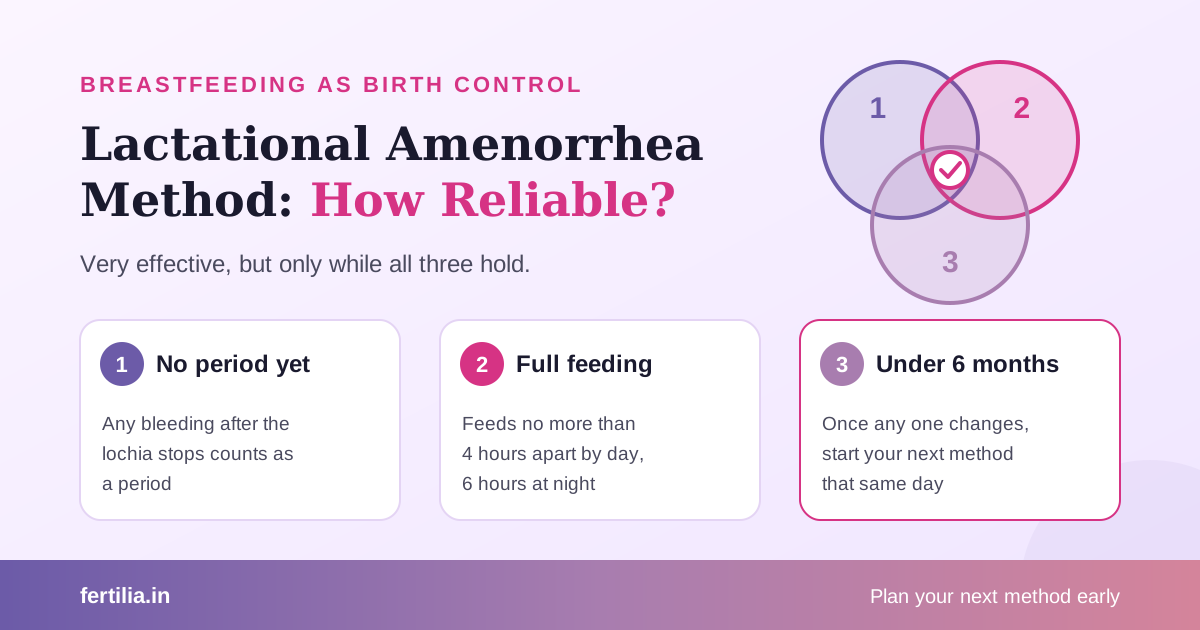
The Bellagio Consensus (WHO, 1988) and subsequent work by Kennedy and colleagues (Kennedy KI et al., Contraception, 1989, PMID 2656086) established that exclusive, frequent breastfeeding provides reliable contraceptive protection in the first 6 months after delivery, provided three conditions are all met: menstruation has not yet returned, the baby is under 6 months old, and feeding is fully exclusive. This framework is known as the Lactational Amenorrhoea Method (LAM). The moment feeds become less frequent, or a bottle of formula is introduced, the reliability of this protection falls.
If You Are Mixed Feeding
Mixed feeding, where breastmilk is combined with formula or supplementary feeds, reduces the number of suckling episodes per day. Fewer feeds means lower prolactin levels and a weaker suppression of GnRH. Periods tend to return earlier with mixed feeding, though there is significant individual variation. Some women see cycles return within 3 months; others take 5 to 6 months.
If You Are Not Breastfeeding
If you are not breastfeeding at all, prolactin levels fall back to pre-pregnancy levels within 2 to 3 weeks. Without prolactin suppression, the hypothalamic-pituitary-ovarian axis reactivates on its own timeline. For most non-breastfeeding mothers, the first period returns between 6 and 12 weeks after delivery.
For more on this, read our guide on Back Pain After Delivery.
After a C-Section: Does the Mode of Delivery Change Things?
Whether your delivery was vaginal or caesarean does not, by itself, affect when your period returns. The hormonal mechanism of prolactin suppression through suckling is the same regardless of how the baby was born.
If you had a C-section and are exclusively breastfeeding, your period is just as likely to stay away for 6 months or more as it would be after a vaginal delivery. If you are not breastfeeding after a C-section, the typical return window is the same 6 to 12 weeks.
Lochia vs Your First Period: Understanding the Difference
During the 40-day rest period that is traditional in most Indian households, many new mothers notice postpartum discharge and wonder whether their period has already returned. In the majority of cases, what they are seeing is lochia, not a period.
Lochia is normal postpartum bleeding and discharge that begins right after delivery. It starts as heavy, red bleeding, transitions to a pinkish or brownish discharge over the following weeks, and tapers off by around 4 to 6 weeks. This is the uterus shedding the lining built during pregnancy and healing from where the placenta was attached. It is not a menstrual period.
A true first period appears after lochia has stopped, involves the cyclic cramping pattern you would recognise from before pregnancy, and lasts 4 to 7 days with a recognisable flow pattern.
If you are seeing red discharge in the first 4 to 6 weeks after delivery, it is almost certainly still lochia. If bleeding starts after that window, stops, and returns with a rhythm, that is your cycle resuming. Occasionally, women who have done more physical activity than usual, or who have had an especially busy day, see a temporary increase in lochia. This is distinct from a period and settles with rest.
For women who had stitches after vaginal delivery, the first period can occasionally bring a brief increase in perineal discomfort on the first day or two. Our guide on normal delivery stitches and perineal care covers what is expected during healing and when additional discomfort is worth flagging.
What the First Period After Delivery Is Like
Many women are surprised to find that their first postpartum period is noticeably different from their usual pre-pregnancy cycles.
Jackson and colleagues (Jackson E, Obstetrics and Gynecology, 2011) found that the first postpartum period is commonly heavier, longer, and more painful than pre-pregnancy periods. This makes physiological sense. The uterus is still completing the process of returning to its pre-pregnancy size (involution), and the endometrium is rebuilding for the first time in many months. Prostaglandin activity, which governs cramping, may be temporarily amplified.
Practically, this means several things. The flow may be heavier than you are used to, and passing small clots on the first one or two days is within the normal range when the clots are smaller than a 10-rupee coin. The period may last 6 to 7 days rather than your usual 4 to 5. Cramping may be more prominent, particularly on Day 1 and Day 2. Cycle length may be irregular for the first 2 to 3 months before settling into your familiar pattern.
Second and third cycles after delivery are generally much closer to your pre-pregnancy baseline.
When to call your doctor: If the flow is soaking through more than one thick pad per hour for more than 2 to 3 consecutive hours, if clots are larger than a golf ball, or if the bleeding is accompanied by fever or a foul smell, contact your doctor the same day.
The Contraception Point Most Women Miss
This is clinically the most important thing to understand about the return of fertility after delivery.
Ovulation returns before your first period, not after it.
When the hypothalamic-pituitary-ovarian axis reactivates, the ovary releases an egg first. If that egg is not fertilised, the period follows approximately two weeks later. This means that by the time you see your first postpartum period, you have already had at least one ovulatory cycle, during which pregnancy was possible.
Campbell and colleagues confirmed this sequence clearly (Campbell OM and Gray RH, American Journal of Obstetrics and Gynecology, 1993, PMID 8333476). They tracked the return of ovulation after delivery and found that in most women, ovulation preceded the first menstrual bleed, regardless of breastfeeding status. The first period is therefore a retrospective signal that ovulation has already occurred.
For women who are exclusively breastfeeding, LAM provides a degree of protection in the first 6 months, but only when all three conditions (fully exclusive feeding, no period yet, baby under 6 months) are met simultaneously. Once any of those changes, that protection is no longer reliable.
If you are not breastfeeding at all, treating yourself as potentially fertile from around 4 to 6 weeks after delivery is appropriate. A discussion about contraception at your 6-week postnatal check is the right time to address this with your doctor.
The options most commonly considered in India at this stage include the progestogen-only pill (safe for breastfeeding mothers), the combined oral contraceptive pill (generally avoided in the first 6 weeks of breastfeeding due to its theoretical effect on milk supply), copper IUD, and hormonal IUD. Our birth control pill guide covers the combined pill in detail. Our copper IUD and Mirena guide walks through intrauterine options with Indian prescribing context.
If you would like a quick read on whether your postpartum contraception plan makes sense for your specific situation, message Dr. Suganya on WhatsApp.
When Irregular Cycles Deserve a Closer Look
After the first couple of cycles, most women find their pattern settling into something close to their pre-pregnancy norm. Some irregularity in the first 3 to 4 months of return is expected as the hormonal axis re-establishes itself.
The following situations are worth a consultation:
- Your period has not returned within 3 months of stopping breastfeeding completely
- You are not breastfeeding and your period has not returned by 12 weeks after delivery
- Cycles remain very irregular, meaning gaps longer than 35 days or shorter than 21 days, for more than 4 to 6 months after periods have returned
- You had PCOS before pregnancy and are concerned the irregular cycles represent a return of the same pattern
- Other symptoms accompany the cycle changes: significant hair shedding, unexplained fatigue, palpitations, or mood changes
Postpartum thyroiditis, an autoimmune inflammation of the thyroid, affects an estimated 7 to 8% of women in the first year after delivery (Nicholson et al., Thyroid, 2006, PMID 16839259). It can cause cycle disruption alongside other symptoms, and it is one of the more common reasons for prolonged irregularity beyond the first few months.
For more on this, read our guide on Postpartum Thyroiditis.
The India Context: 40-Day Rest, Family Questions, and Getting the Timeline Right
In Tamil Nadu and across much of India, the 40-day jappa kaalam or maal period carries both cultural and practical meaning. New mothers are cared for, given specific foods, and generally kept away from household work. From a biological standpoint, this extended rest is genuinely supportive of recovery.
During this period, families sometimes notice that the new mother has what looks like a period-type bleed around days 20 to 30 after delivery. In most cases this is a late or fluctuating phase of lochia, not the menstrual cycle returning. Increased activity, less rest, or a busier day can bring a temporary increase in discharge. Understanding the distinction helps avoid unnecessary concern.
The other culturally significant point is the timing of questions about the second child. These often begin on or shortly after the 40th day. WHO guidance recommends a minimum of 18 to 24 months between delivery and the next pregnancy to allow full maternal recovery. The return of your period, the regularity of your cycles, and your own physical and mental readiness are the markers that matter, and that timeline belongs to you.
Understanding when your fertility has returned is not about feeling pressured by these questions. It is about being the informed person in the room when the conversation comes up.
Tracking Your Cycle Once It Returns
Once your period resumes, tracking it serves two purposes: it tells you whether cycles are regularising, and it gives you useful information for family planning.
Simple approaches include recording Day 1 of each period in an app or calendar, which makes cycle length visible across 2 to 3 months. You can also watch for ovulation symptoms that return alongside your cycles: mid-cycle mucus changes, mild one-sided lower abdominal sensation, and a slight rise in basal body temperature. Our ovulation tracking guide for Indian women walks through the practical methods ranked by accuracy.
For most women, the first 2 to 3 cycles are informational. By month 4 to 5 after your period returns, a clear picture of cycle length and regularity has emerged. If you want to look at your overall postpartum recovery, including periods, energy, weight, and breastfeeding, alongside a personalised plan, message Dr. Suganya on WhatsApp.
For more on this, read our guide on Perineal Tear Degrees.
Frequently Asked Questions
When does my period return if I am breastfeeding?
If you are exclusively breastfeeding on demand, your period may not return for 6 months or longer. Some women who breastfeed into the second year do not have a period until weaning. The more frequently the baby feeds, the longer periods stay away. Once formula top-ups or solid foods are introduced, feed frequency drops, prolactin falls, and the cycle can restart. There is significant individual variation, and some exclusively breastfeeding mothers see cycles return at 4 months while others wait 14 months.
Can I get pregnant before my first period after delivery?
Yes. Ovulation returns before your first period, not after it. This means if you have unprotected sex after delivery and before you have seen any period, pregnancy is possible. Exclusively breastfeeding on demand provides reasonable protection in the first 6 months only when all three LAM conditions are met: fully exclusive feeding, no menstrual period yet, and baby under 6 months. Once any of those conditions changes, the protection is no longer reliable.
Is a heavy, painful first period after delivery normal?
It is very common. The first postpartum period is often heavier and more painful than pre-pregnancy cycles, for the reasons described above (uterine involution, elevated prostaglandins). Passing small clots on Day 1 or 2 is within the normal range when the clots are smaller than a 10-rupee coin. Bleeding that soaks through more than one thick pad per hour for more than 2 to 3 hours, or large clots, is worth calling your doctor about promptly.
When does the period return after a C-section?
The timing is the same as after a vaginal delivery. If you are exclusively breastfeeding, your period is likely to stay away for 6 months or more. If you are not breastfeeding, the typical return is 6 to 12 weeks after delivery. The mode of delivery does not by itself affect the hormonal mechanism that regulates period return.
What contraception is safe while breastfeeding?
The progestogen-only pill (mini pill) is generally considered safe during breastfeeding and does not affect milk supply. Copper IUDs and hormonal IUDs can be inserted from about 4 to 6 weeks after delivery and are suitable for breastfeeding mothers. The combined oral contraceptive pill (containing both oestrogen and progesterone) is usually avoided in the first 6 weeks of breastfeeding. Your doctor will recommend the most appropriate option based on your feeding status, medical history, and preferences. Our birth control pill guide and IUD guide cover these in detail.
Will my cycles go back to normal after the first period?
In most cases, yes, within 2 to 3 cycles. The first postpartum period is usually the most irregular. By the second and third cycle, most women find their pattern returning close to their pre-pregnancy baseline. If cycles remain very irregular, with gaps longer than 35 days or shorter than 21 days, after 4 to 6 months of return, a check for thyroid changes or other hormonal factors is a reasonable step.
What if my period has not returned 3 months after I stopped breastfeeding?
This is worth a clinic visit. Three months post-weaning without a period is outside the expected range for most women and warrants checking prolactin, thyroid function (TSH, free T4, anti-TPO), and a general hormonal profile. If you had PCOS before pregnancy, this is also a good time to reassess. Message Dr. Suganya on WhatsApp if you want to understand what testing makes sense for your specific situation before booking an appointment.
Your Period Will Come Back on Its Own Timeline
The biology of postpartum menstruation is not random. It follows a logical sequence: frequent breastfeeding keeps prolactin high and periods away; as feeding frequency drops or stops, the hypothalamus wakes up, ovulation returns first, and a period follows. The first period is often heavier and more uncomfortable, and then cycles settle.
What matters is understanding where you are in that sequence, particularly the contraception point (ovulation precedes the first period), so you can make informed decisions about spacing and family planning on your own terms.
For a complete review of your postpartum recovery, download our Period Health resource or message Dr. Suganya directly on WhatsApp. Her Postpartum Recovery program supports the full picture of healing, not just your cycle.