Many women expect the back pain they had in the third trimester to clear up once the baby arrives. For some it does. For many others, a new kind of back pain settles in during the first weeks and months after delivery, and it catches them off guard because nobody warned them this could happen.
Back pain after delivery is one of the most common physical complaints in the postpartum period. In a large Swedish cohort study, Gutke, Östgaard and Öberg found that pelvic girdle pain and lumbar back pain affect a substantial proportion of women in the first year after birth, with many still reporting symptoms at 12 months (Gutke, Östgaard, Öberg, Spine, 2006). The causes are specific, the right response to each one is different, and most cases resolve with targeted changes to posture, movement, and daily habit.
This is part of the complete post-delivery care guide for Indian mothers, which covers recovery from Day 1 to Week 6. This post goes deep on back pain specifically: the four reasons it happens after delivery, what provides reliable relief, and when professional input is worth seeking.
This post covers:
- The four causes of back pain after delivery
- Correct breastfeeding posture and how to fix it
- Three stretches that are safe and specifically helpful
- India-specific adjustments for floor feeding, sleeping surfaces, and carrying
- Foods that support musculoskeletal recovery
- When to see a physiotherapist
- A 7-question FAQ covering epidurals, belts, knee pain, and yoga
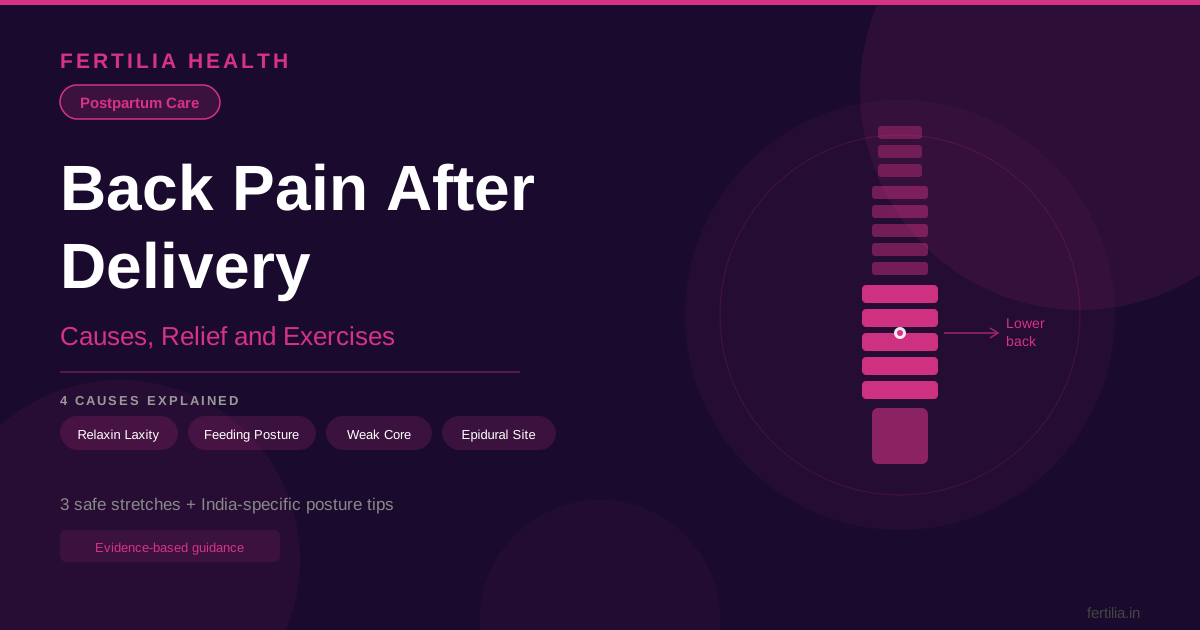
The Four Reasons Back Pain Happens After Delivery
Understanding which cause applies to your situation matters because the right response to each is different. Many women have more than one driver at the same time.
1. Relaxin and Ligament Laxity
During pregnancy, your body produces a hormone called relaxin. Its primary job is to loosen the ligaments in the pelvis so the baby can pass through the birth canal. Relaxin does not confine its effects to the pelvis. It affects joint ligaments throughout the body, including the lumbar spine, sacroiliac joints, knees, and hips.
The crucial point that most women are not told: joint and ligament laxity does not return to its pre-pregnancy state the moment the baby is born. It can persist for months. Worth knowing, though, is that the mechanism is less tidy than it is usually presented. Marnach and colleagues (Obstetrics & Gynecology, 2003) measured joint laxity through pregnancy and found that although laxity clearly increases, it did not correlate with serum relaxin, oestradiol or progesterone levels. So the laxity is real; blaming it neatly on one hormone is not supported.
Looser ligaments mean less joint stability. The lumbar spine and sacroiliac joints, which normally carry load through a stable ligamentous system, are now working with less passive support. The muscles surrounding those joints have to work harder to compensate, and sustained muscle overactivation produces the deep, dull ache in the lower back and buttocks that is the most common back pain pattern in the first few months after birth.
This cause is present regardless of whether you had a normal delivery or a C-section. Both groups experience the same relaxin-driven laxity because the hormone was active throughout the pregnancy.
For more on this, read our guide on Perineal Tear Degrees. If you also have knee joint pain after delivery, particularly a feeling of looseness, clicking, or aching in the knees after standing for a while or climbing stairs, relaxin is the most likely explanation. The knee ligaments are affected by the same generalised laxity. Gentle strengthening of the quadriceps and glutes supports joint stability while the ligaments regain their tone.
2. Breastfeeding Posture
The way most women naturally feed a newborn places sustained strain on the upper and mid-back. Picture the position: sitting, baby on the lap or in the arms, shoulders rounded forward, and the body hunching down to bring the breast to the baby’s level. This posture repeats every 2 to 3 hours, day and night, for months.
Sustained forward head posture and rounded shoulders load the cervical spine, the upper thoracic spine, and the muscles of the neck and mid-back. Over time, this pattern produces aching between the shoulder blades, neck stiffness, and often a dull mid-back ache that is worse on the side favoured during feeding.
In India, the problem is compounded by the feeding environment. Many new mothers sit on the floor, on a low charpai, or on a low chair without back support. The floor position, while culturally normal and comfortable for many women, demands that the mother fold herself forward toward the baby, which puts additional load on the lumbar spine through every feed.
The fix is a single principle: bring the baby to the breast, not the breast to the baby. A firm pillow under the arm that is supporting the baby raises the baby to breast height without any need to lean forward. The shoulders stay back, the back stays upright, and the pillow does the heavy holding work instead of the mother’s spine.
3. Diastasis Recti and Weak Core
The rectus abdominis muscles run vertically along the front of the abdomen. As the uterus grows during pregnancy, these muscles are pushed apart, creating a gap along the midline called diastasis recti. A Norwegian longitudinal study found that a clinically significant separation was present in a majority of women at 6 weeks postpartum, with gradual recovery over the first year but a meaningful residual gap still present in many women at 12 months (Sperstad et al., British Journal of Sports Medicine, 2016).
The rectus abdominis, the transverse abdominis, the obliques, and the pelvic floor together form the core system that stabilises the lumbar spine from below and in front. When this system is weakened by diastasis and by the general deconditioning of pregnancy, the lumbar spine loses its anterior support. The back muscles then take on stabilisation work they were not designed to carry as primary stabilisers, and the result is a persistent aching pattern in the lower back.
This is also the link between abdomen pain after delivery and back pain. The two are often expressions of the same core weakness: some women feel a pulling sensation or odd pressure along the midline of the abdomen with certain movements, alongside the lower back ache. Both symptoms point to the same underlying deficit.
The right response is not rest. It is specific core rehabilitation that begins with diaphragmatic breathing, progresses to deep core activation, and builds pelvic floor function alongside abdominal recovery. Our guide to diastasis recti: how to check yourself and safe exercises explains how to assess whether you have a gap and which exercises are safe to start first.
Do not start planks, crunches, or sit-ups until you have assessed and addressed any diastasis. These exercises compress the core in ways that can worsen the separation before it has healed. The week-by-week postpartum exercise programme gives a clear timeline and safe progression for both normal delivery and C-section recovery.
4. Epidural Site Tenderness
If you had an epidural during labour, localised tenderness at the injection site in the lower back is common for a few weeks after delivery. This shows up as a specific point of soreness when pressing on the lumbar spine, or as a dull localised ache in one spot.
This tenderness is not a sign of nerve damage, spinal injury, or long-term complications. It is tissue-level healing at the needle insertion site, and it resolves on its own in the vast majority of women within a few weeks to a few months. You do not need an MRI or a neurology referral on this basis alone, unless the symptoms are severe, worsening over time, or associated with leg weakness, numbness travelling down the leg, or changes in bladder or bowel control.
If your back pain began specifically after an epidural, is located at the injection site, and is otherwise stable, the reassuring answer is that it will resolve. If you are uncertain whether what you are feeling is normal healing or something that needs a review, a quick message on WhatsApp can help clarify whether monitoring at home is the right plan or whether a clinic check makes more sense.
What Relieves Postpartum Back Pain
Correct the Breastfeeding Position First
For upper and mid-back pain specifically, posture correction is the single highest-yield change you can make. The principle: bring the baby to you, not yourself to the baby.
Use a firm cushion or a folded bedsheet under the arm supporting the baby so the baby is at breast height. Keep your shoulders back and relaxed. Sit in a chair with back support rather than hunching forward on a low surface. If feeding on the floor, sit against a wall and place a pillow behind the lower back to maintain its natural curve.
Most women notice a reduction in upper back aching within a week or two of consistently using this position.
Three Stretches That Help
These three can be started from around 6 to 8 weeks postpartum. They are gentle, safe, and specifically useful for the lower back patterns described above. If you have had a C-section, check the week-by-week exercise guide for appropriate timing before adding any floor work.
Cat-cow stretch: Start on hands and knees with wrists under shoulders and knees under hips. As you breathe in, let the belly drop toward the floor, lift the head gently, and arch the lower back. As you breathe out, round the back up toward the ceiling, tucking the chin and the tailbone. Move slowly and match the movement to your breath. Do 8 to 10 rounds, twice a day. This gently mobilises the full length of the spine and is particularly effective for the morning stiffness that builds overnight when joints are held still.
Child’s pose: From the hands-and-knees position, sit the hips back toward the heels, extend both arms forward on the floor, and let the forehead rest on the ground or a folded cloth. Hold for 30 to 60 seconds, breathing slowly and letting the lower back release. This stretches the lumbar extensors and the sacroiliac joint ligaments and is one of the most soothing positions for the ache from ligament laxity.
Pelvic tilt: Lie on your back with knees bent and feet flat on the floor. Gently tighten the lower abdominal muscles and press the lower back flat against the floor. Hold for 5 seconds, then release. Repeat 10 times. This activates the deep core muscles without any loading through a diastasis gap, and it is one of the foundational exercises in early postpartum core rehabilitation.
For a fuller yoga-based routine that supports back recovery in the first three months, the postpartum yoga guide includes poses specifically designed for the early recovery period.
Warm Compress and Hot Water Bottle
Applying a warm compress or hot water bottle to the lower back for 15 to 20 minutes relaxes the muscle spasm that builds up around unstable joints. It is safe and effective for the dull aching back pain from ligament laxity and muscular compensation. Use it particularly in the evenings after a day of feeding and carrying.
Do not use ice on postpartum back pain unless there has been a very specific acute injury, such as a sudden sharp pain from one particular movement. Cold reduces blood flow to the area, and postpartum back pain is not an acute inflammatory injury that benefits from ice. Warmth is the right choice here.
India-Specific Adjustments
Floor feeding positions: Sitting on the floor for feeding is perfectly normal and comfortable for many Indian women. If you prefer this position, add back support. Sit against a wall. Use a cylindrical bolster or rolled pillow behind the lower back. Cross-legged sitting tends to be easier on the lumbar spine than kneeling forward, which creates more lumbar flexion load.
Sleeping surface: A firm mattress is better than a soft one for postpartum back pain. When lying on your side, placing a pillow between the knees keeps the hips and lumbar spine in alignment. Sleeping directly on the floor on a thin mattress or chatai is a traditional practice in some households and is not harmful if the surface is firm enough to support the spine. A deeply soft mattress that allows the hip to sink down creates asymmetric loading on the sacroiliac joint through the night.
Carrying the baby: Most women default to carrying a newborn on one arm and hip, which loads the lumbar spine and sacroiliac joint asymmetrically. Alternate sides as often as you can. When you need both hands free for cooking or other work, a baby carrier that distributes the baby’s weight symmetrically across both shoulders and the hips is far less demanding on the back than a one-arm hip carry.
When picking up the baby from a cot, from the floor, or when lifting any low-height object, bend at the knees rather than bending forward at the waist. Keep the load close to your body and rise through the legs. This habit, applied consistently, significantly reduces the cumulative load on the lumbar spine through the day.
Foods That Support Recovery
Back pain after delivery is driven primarily by hormonal and structural factors rather than directly by nutritional deficiency. But your rate of recovery is shaped by how well your muscles repair, how quickly your core rebuilds functional strength, and how much energy you have to move well through the day.
Protein supports muscle repair. Ragi is a good source of both calcium and protein and works well in morning porridge or as ragi roti flour. Dal at every meal provides plant protein without heaviness. Rajma and chana add both protein and iron. Dahi contributes protein and supports gut health. Adding a small handful of soaked almonds or walnuts through the day fills in amino acids that postpartum women often fall short on.
Calcium is relevant specifically to bone and joint health. Til (sesame seeds) has a high calcium content and can be added to rice, rotis, or chutneys with very little effort. Ragi is the richest plant-based calcium source in the Indian kitchen. Palak, methi, and fenugreek leaves all contribute minerals and are standard in traditional postpartum cooking for this reason.
Vitamin D activates calcium absorption and supports muscle function directly. Indian women have among the highest rates of Vitamin D deficiency globally, and this deficiency affects musculoskeletal recovery. Sunlight exposure is the primary source. If you are spending most of your day indoors, a 25(OH) vitamin D blood test is worth requesting at your 6-week review.
The complete nutrition guide for the postpartum period, including meal plans for breastfeeding mothers, is available in the postpartum recovery resource.
For more on this, read our guide on First Period After Delivery.
When to See a Physiotherapist
Most postpartum back pain responds to posture correction, the three stretches above, and time. But a women’s health physiotherapist adds genuine value in specific situations.
Consider a physiotherapy consultation if:
- Your back pain is limiting your ability to care for the baby or manage daily tasks after 6 to 8 weeks
- You have significant diastasis recti (a gap of more than two finger-widths along the midline) alongside the back pain
- You also have pelvic floor symptoms: leaking urine with coughing, sneezing, or standing; a feeling of heaviness or pressure in the pelvis; or difficulty with bladder control
- You had a pre-existing back condition, disc problem, or previous injury that the postpartum changes seem to have reactivated
- Your upper back and neck pain from breastfeeding posture has not improved after 4 to 6 weeks of consistent posture correction
A women’s health physiotherapist, sometimes called a pelvic floor physiotherapist, assesses the core, pelvis, and spine as a connected system. This is more useful for postpartum back pain than a general physiotherapy assessment, which may treat the lumbar spine without addressing the pelvic floor and core weakness that is driving the problem.
For a broader view of when professional input is warranted after delivery, the postpartum exercise and safety guide covers the principles of graduated return to activity and the patterns that benefit from clinical oversight.
When to Call Your Doctor
Postpartum back pain is almost always musculoskeletal, meaning it comes from muscles, ligaments, and joints rather than from any structural pathology. But a few patterns should prompt a medical review rather than watchful waiting.
Contact your doctor if you have:
- Severe back pain that came on suddenly after a specific movement
- Back pain associated with fever, even a mild one (this can indicate infection, including rare cases of post-epidural infection)
- Back pain with leg weakness, numbness radiating from the lower back down the leg, or any difficulty controlling the bladder or bowel
- Pain that is constant, severe, and completely unaffected by change in position or movement
- Tenderness at the epidural site that is getting progressively worse over weeks rather than gradually improving
These patterns are uncommon, and they are different in character from the musculoskeletal back pain described in this article. They warrant prompt evaluation.
For the full range of symptoms worth tracking after delivery, the postpartum belly changes guide covers the abdominal side of early recovery.
If you are not sure whether your back pain falls in the normal category or whether it needs a clinical review, you can describe your symptoms to Dr. Suganya directly on WhatsApp. Most questions are resolved quickly with a short description of what you are experiencing, and she can tell you whether you should see a doctor near you in person.
Frequently Asked Questions
How long does back pain after delivery usually last?
The main cause of postpartum back pain, the joint laxity from relaxin, gradually resolves over 3 to 6 months as hormone levels return to baseline. Back pain from poor breastfeeding posture can improve within 1 to 2 weeks of posture correction. Back pain from diastasis recti and weak core takes longer, typically 3 to 6 months of consistent rehabilitation. Most women find their back pain is substantially better by the 6-month mark, and fully resolved by 9 to 12 months.
Is back pain after normal delivery different from back pain after C-section?
The underlying causes are largely the same. Relaxin laxity, breastfeeding posture, and core weakness affect both groups. Women who had a C-section have one additional factor: the abdominal incision directly affects the anterior core muscles, which means the back often has to compensate for longer while the abdominal wall heals. Core rehabilitation after C-section follows a more conservative timeline in the first 6 to 8 weeks, with a slower progression to loaded exercises.
Can an epidural cause permanent back pain?
No. The evidence consistently shows that epidural analgesia during labour does not cause long-term back problems. Studies comparing women who had epidurals with those who did not have found no significant difference in back pain rates at one year postpartum. The localised tenderness at the injection site in the early weeks is tissue-level healing, not nerve damage, and it resolves. If the pain at the injection site is worsening over time rather than improving, that specific pattern warrants a clinical review, but the prognosis for full resolution is excellent.
Is it safe to use a hot water bottle on my back while breastfeeding?
Yes, a warm compress or hot water bottle applied to your own lower back is completely safe during breastfeeding. Heat on the mother’s back does not affect breast milk composition or the baby in any way. Keep the temperature comfortable enough that you would not feel any discomfort leaving it in place for 20 minutes, and avoid placing it over any area that has a recent wound or suture.
Should I wear a postpartum belt for back pain?
A postpartum support belt can provide useful compression-based comfort for lower back and pelvic girdle pain in the early postpartum period, particularly during standing and walking when ligament laxity is most symptomatic. It acts as external support while the ligaments are recovering. However, a belt does not address the root cause of the back pain, and wearing one continuously may reduce the demand for the deep core muscles to activate on their own. Use it for specific activities when it helps, combine it with the core rehabilitation exercises described in the diastasis recti and exercise guides, and gradually reduce reliance on it as your core strength builds.
I have knee joint pain after delivery as well. Is it related to my back pain?
Very likely yes. Relaxin affects ligaments throughout the body, not just the pelvis. Knee ligament laxity creates the same instability and compensatory muscle loading pattern that causes back pain. The knees may feel loose, click, or ache after standing for extended periods or after climbing stairs. The management principle is the same: gentle progressive strengthening of the quadriceps and glutes to support the joint while the ligaments tighten. If the knee pain is severe or associated with significant swelling, a clinical review is worth arranging to rule out any structural issue.
Can I do yoga for postpartum back pain?
Yes, gentle yoga is well suited to postpartum back pain and specifically helpful for the postural and muscular tension patterns involved. The cat-cow and child’s pose stretches described above are standard yoga poses. The postpartum yoga guide has an 8-pose programme designed for the recovery period, with clear guidance on which poses to hold off on until the core and pelvic floor are ready for the load.
Back Pain After Delivery Is Manageable
Postpartum back pain has four specific causes, and each one has a clear path toward resolution. The ligament laxity from relaxin improves progressively over months as hormone levels normalise. Breastfeeding posture pain responds quickly to position correction. Core weakness and diastasis recti improve with the right rehabilitation programme. Epidural site tenderness heals on its own.
The common thread across all four is that the body is designed to recover from all of them. The work in the first 6 months is to support that process: feed well, keep moving gently, use good posture during feeds, and give the core-building exercises the consistency they need to work.
If you would like help building a postpartum recovery plan that addresses back pain alongside your overall healing, energy, and return to activity, message Dr. Suganya on WhatsApp. The postpartum recovery resource is also available as a free download with week-by-week guidance through the first 6 weeks after delivery. For ongoing support beyond those first weeks, Dr. Suganya’s Postpartum Recovery program carries the plan further.
For more on this, read our guide on C-Section Scar.