Your period has its own unpredictable schedule. Some months it arrives two weeks early. Other months it disappears entirely. And when it does show up, you have no idea whether to expect it in three weeks or six.
This is not a small inconvenience. An irregular cycle is your body telling you that ovulation is not happening reliably, which affects not just your period but your energy, your skin, your mood, and if you are trying to conceive, your ability to get pregnant. Understanding the signs that ovulation has returned can help you track whether your body is responding to treatment.
The good news is that most irregular period patterns have identifiable root causes, and many of those causes respond well to targeted lifestyle changes before any medication is needed. This post walks you through what irregular actually means, the most common reasons it happens, and what the evidence says about getting your cycle back on track.
What “Irregular” Actually Means
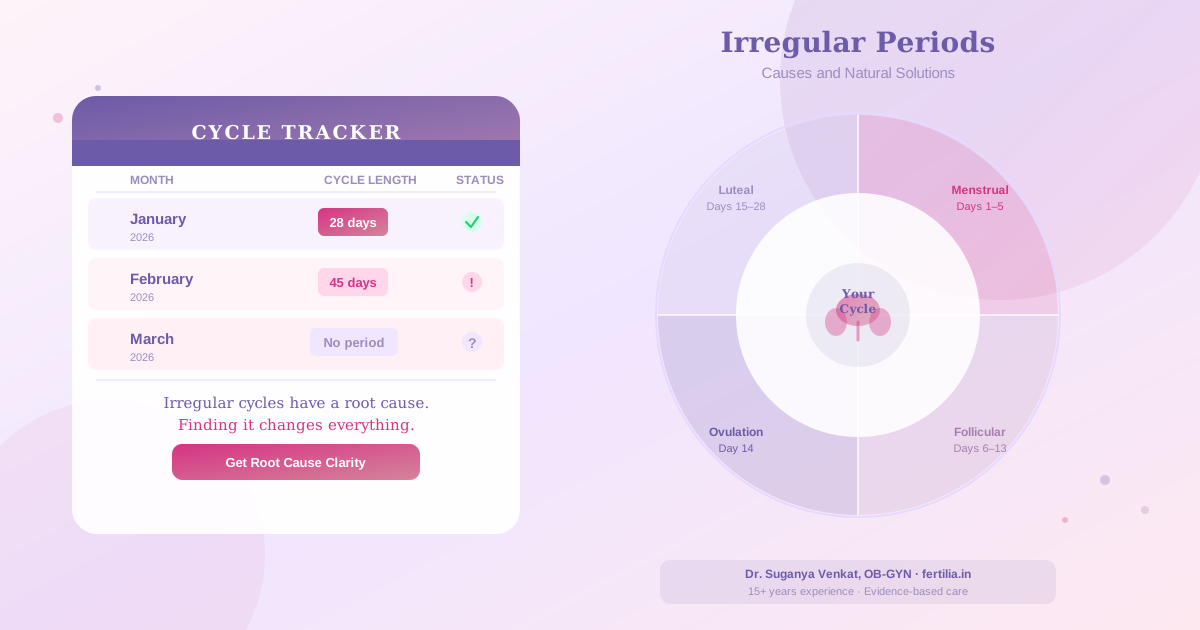
A normal menstrual cycle runs between 24 and 38 days, measured from the first day of one period to the first day of the next (Munro et al, FIGO Menstrual Disorders Committee, 2018). Some month-to-month variation is normal: up to 7 to 9 days difference between your shortest and longest cycles in a year.
Your cycle is irregular when:
- The gap changes by more than 7 to 9 days from month to month (for example, 26 days one month and 44 days the next)
- Cycles consistently run longer than 38 days (oligomenorrhoea, defined as fewer than 8 periods per year)
- Cycles run shorter than 21 days consistently (polymenorrhoea)
- Periods are absent for three or more months in a row (amenorrhoea), not explained by pregnancy or breastfeeding
A single late or early period is rarely a reason for concern. Two or more consecutive irregular cycles, or cycles that have never settled into a predictable pattern since puberty, are worth investigating properly.
The Most Common Causes of Irregular Periods
1. PCOS: The Most Frequent Driver
PCOS (polycystic ovary syndrome) is the single most common hormonal cause of irregular periods in women of reproductive age. One of the three diagnostic criteria under the Rotterdam Consensus (ESHRE/ASRM, 2004) is oligomenorrhoea or anovulation, meaning cycles that are infrequent or cycles where ovulation is not occurring regularly.
For more on this, read our guide on PCOS and Periods. The core mechanism in most women with PCOS is insulin resistance. When cells do not respond efficiently to insulin, the pancreas produces more of it. Elevated insulin then signals the ovaries to produce excess androgens (male hormones), which disrupts the normal LH/FSH signalling that drives ovulation. Without ovulation, there is no period, or only a very delayed one.
Research by Dunaif (1997) established that insulin resistance is present in 50 to 70 percent of women with PCOS, regardless of body weight. This is why PCOS-related irregular cycles affect both women with higher body weight and women who are lean.
If your cycles have been irregular since your teens and you also notice acne, excess hair on the face or chin, or weight that clusters around your belly, PCOS is worth ruling out with a blood panel and ultrasound.
Related reading: PCOS Symptoms, Root Causes and Natural Treatment and Insulin Resistance and PCOS: Signs, Diet and What to Do. For a real patient story, see how Harini, 15, got her periods back naturally after 5 months without a cycle.
2. Thyroid Dysfunction
The thyroid gland and the reproductive axis are closely linked. Both an underactive thyroid (hypothyroidism) and an overactive thyroid (hyperthyroidism) can disrupt menstrual regularity.
In hypothyroidism, elevated TRH (thyrotropin-releasing hormone) stimulates excess prolactin production. High prolactin suppresses GnRH pulsatility, which reduces LH and FSH release, interfering with ovulation and causing cycles to become infrequent, heavy, or prolonged. Krassas et al (2010) reviewed this pathway comprehensively and confirmed that thyroid disorders are among the most commonly missed causes of menstrual irregularity.
In India, subclinical hypothyroidism is widespread. A TSH above 4.5 mIU/L, even without obvious symptoms, can cause subtle cycle disruption. Once identified and treated, cycles typically normalise.
Related reading: Thyroid and Fertility: The Hidden Connection
3. Stress and the Hormonal Axis
The hypothalamic-pituitary-adrenal (HPA) axis and the hypothalamic-pituitary-ovarian (HPO) axis share regulatory pathways. When chronic stress keeps cortisol elevated, the HPA axis suppresses HPO axis function. The result: GnRH pulses become irregular, LH surges flatten, ovulation is skipped, and periods become unpredictable.
This is documented physiology, not a vague connection. Chrousos and colleagues (1998) showed that CRH (corticotropin-releasing hormone) released during stress directly inhibits GnRH secretion at the hypothalamic level.
This pattern is especially common in women managing exam pressure, major life transitions, or carrying a full professional and household load simultaneously. It is extremely common in urban India.
4. Significant Weight Changes
Body fat is a site of oestrogen production through the aromatase enzyme. At very low body weight (BMI below 18.5 kg/m²), oestrogen production drops to the point where the hypothalamus reduces GnRH secretion. The body, perceiving an energy-deficient state, deprioritises reproduction. This is called hypothalamic amenorrhoea.
At the other extreme, excess adipose tissue increases aromatase activity and oestrogen levels, disrupting the feedback loop between the brain and ovaries.
Significant rapid weight gain or loss, even without reaching either extreme, can also temporarily disrupt cycles during the adjustment period.
5. Coming Off Hormonal Contraception
After stopping the oral contraceptive pill (OCP) or hormonal injections, cycles may take several months to return. The pill suppresses GnRH by providing a constant external hormone signal. After withdrawal, the HPO axis needs time to re-establish its own pulsatile pattern.
In most women, periods return within 3 months. In some, especially those who already had irregular cycles before starting contraception, it may take up to 6 months. If cycles have not returned to a predictable pattern after 6 months, it is worth checking whether PCOS or thyroid issues were present before the pill.
6. Nutritional Deficiencies
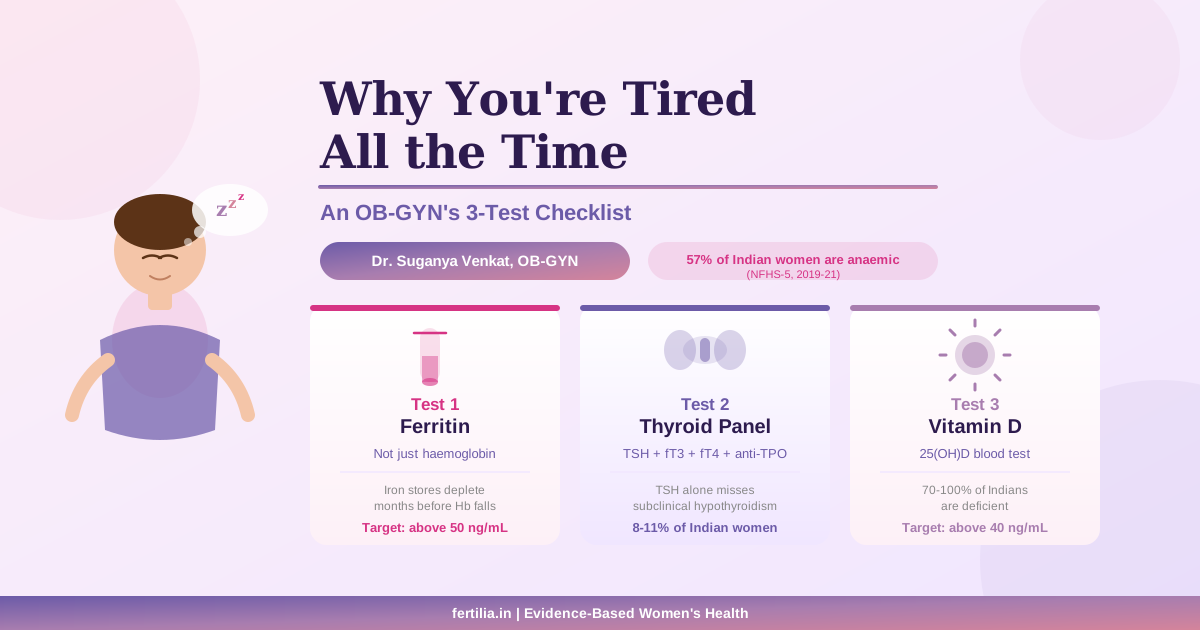
Vitamin D and iron deficiency are particularly relevant in India. Vitamin D receptors are present in ovarian tissue, and low levels are associated with impaired follicular development and irregular ovulation (Lerchbaum and Obermayer-Pietsch, 2012). Iron deficiency anaemia can cause or worsen heavy and irregular bleeding.
Both deficiencies are widespread in Indian women across income groups because of dietary patterns and limited sun exposure from indoor and office-based lifestyles. Both are easily corrected once identified with a blood test.
Natural Solutions That Are Evidence-Based
Stabilise Blood Sugar Through Your Meals
For PCOS-related irregular cycles, the most impactful change is bringing insulin and blood sugar patterns under better control. This does not mean eliminating carbohydrates. It means choosing foods that release glucose steadily and support insulin sensitivity.
Indian kitchen staples that support this directly:
- Ragi (finger millet): High fibre, low glycaemic index. Use in dosas, rotis, or morning porridge.
- Moong dal: Moderate protein, low GI, easy on digestion. Ideal as a mid-meal or as dal with lunch.
- Dahi (curd): Combines protein and probiotics, both of which support insulin sensitivity and gut health.
- Bajra and jowar rotis: Replace maida-based options at at least one meal daily.
- Haldi (turmeric): Anti-inflammatory; curcumin has been studied for its effect on androgen levels and inflammatory markers in PCOS contexts (Neelakantan et al, 2018).
A meta-analysis by Marsh et al (2010) found that a consistent low-GI diet significantly improved menstrual regularity in women with PCOS compared to a conventional healthy diet, even without significant weight loss.
For detailed food guidance: PCOS Diet Chart: What to Eat and Avoid (Indian)
Move Consistently, Not Just Intensely
Both aerobic exercise and resistance training lower androgen levels and improve insulin sensitivity in women with irregular cycles. A 2016 study by Kogure et al found that resistance training reduced free androgen index and improved menstrual frequency in women with PCOS after 16 weeks.
Consistency matters more than intensity here. Very high-intensity training without adequate recovery can suppress ovulation in some women. A practical combination: 30 minutes of brisk walking five days a week, plus two sessions of bodyweight resistance work per week.
For structured guidance: PCOS Exercise: What Actually Helps
Protect Your Sleep
Sleep regulates cortisol rhythms, melatonin secretion, and LH pulsatility. Research has linked disrupted sleep patterns, including shift work and irregular sleep timing, to higher rates of menstrual irregularity (Davis and Mirick, 2006). Going to bed and waking at consistent times, even on weekends, stabilises the circadian rhythm and, over weeks, supports the hormonal regularity that underpins ovulation.
Practical targets: 7 to 8 hours of sleep, consistent sleep and wake times across weekdays and weekends, and screens off 45 minutes before bed.
Address Stress Before It Disrupts Your Cycle Further
If stress is the primary driver, dietary changes alone will not override it. Targeted stress reduction becomes the priority.
Evidence-based approaches with documented effects on menstrual regularity:
- Yoga: A 2012 randomised controlled trial by Nidhi et al found that a 12-week yoga intervention significantly improved hormonal profiles and menstrual regularity in adolescent girls with PCOS.
- Structured breathwork: Diaphragmatic breathing reduces cortisol in measurable ways within single sessions and builds long-term resilience with daily practice.
- Pattern recognition: If your cycles consistently disrupt during exams, career transitions, or travel, mapping that pattern helps you plan recovery periods around predictable stressors.
Check and Correct Key Deficiencies
If vitamin D is below 30 ng/mL, correcting it with supplementation (typically 2000 to 4000 IU daily under medical supervision) supports better follicular development. Iron supplementation for diagnosed iron deficiency anaemia supports cycle regularity and reduces fatigue.
Both need a blood test first. Self-supplementation without testing is less targeted and occasionally counterproductive (excess vitamin D, for example, has its own side effects). Spending five minutes on a blood draw gives you the information to supplement with precision.
What to Expect When You Get the Root Cause Right
A Fertilia patient who had been dealing with irregular periods for five years put it directly in her Google review: “Since I started the diet plan with Fertilia, my periods have been regular every month. I had gone to many doctors but it was only working temporarily.” A second patient shared simply: “My irregular cycles became normal in the past 3 months.”
These are not unusual outcomes. They reflect what happens when the hormonal root cause receives focused, consistent attention through the right lifestyle inputs.
Ready to Find Your Root Cause?
If your periods have been irregular for more than three months, a focused 30-minute consultation with Dr. Suganya will give you a clear picture of what is driving your cycle disruption and a concrete, personalised plan.
Start the conversation on WhatsApp: wa.me/919940270499
When to See a Doctor
Irregular periods are a symptom, not a diagnosis. See a doctor when:
- Cycles have been irregular for more than 3 consecutive months
- Periods are absent for 3 or more months and you are not pregnant
- Cycles are shorter than 21 days consistently
- Bleeding is very heavy (soaking more than one pad per hour for several hours)
- You are trying to conceive and cycles are irregular or absent (once pregnant, see our Indian pregnancy diet guide for trimester-by-trimester nutrition)
- You have accompanying symptoms: significant unexplained weight change, excess facial hair, acne, or sudden hair thinning
A practical first-step blood panel covers: TSH, Prolactin, LH, FSH, fasting insulin, fasting glucose, vitamin D, and a complete blood count to check for anaemia. If PCOS is suspected, a Day 2 to 5 hormone panel and a pelvic ultrasound on Day 2 to 5 of the cycle give the clearest picture.
If you’re in your late 30s or 40s and your cycles are becoming unpredictable, it may not be PCOS at all, it could be early perimenopause. Understanding the difference matters for getting the right support.
Related reading: Period Delay: 12 Reasons Your Period Is Late and How to Track Ovulation: Indian Woman’s Guide
Frequently Asked Questions
How do I know if my irregular periods are caused by PCOS?
PCOS is likely if you have two of these three features under the Rotterdam Criteria: irregular cycles (fewer than 8 per year or cycles consistently longer than 35 days), signs of elevated androgens (acne, facial hair, or scalp hair thinning), and polycystic-appearing ovaries on ultrasound. A diagnosis requires a doctor’s assessment. A practical pointer: if your cycles have been irregular since your teens and you have even mild acne or facial hair, PCOS is worth investigating.
Can diet alone regulate irregular periods?
For insulin-driven irregularity, which is most commonly linked to PCOS, a consistent low-GI diet has been shown to improve menstrual regularity even without weight loss (Marsh et al, 2010). However, if the cause is thyroid dysfunction, a prolactin issue, or a structural problem, diet alone will not correct it. Dietary changes are most effective when they are targeting the right root cause.
How long does it take to see cycle improvement with lifestyle changes?
Most women notice a change in cycle timing within 2 to 3 months of consistent changes to diet, sleep, and movement. The ovarian follicle cycle that produces the next period begins approximately 90 days before that period. Influencing the follicular environment takes at least one full cycle to show results, so consistency over 3 months is the right benchmark.
Are irregular periods normal in your 20s?
Cycles take 2 to 3 years to stabilise after puberty. Outside that window, irregular cycles in your 20s are not “normal” in the sense of being harmless. They indicate that ovulation is not happening reliably, which affects both cycle regularity and fertility. It is worth investigating rather than waiting.
Can stress actually stop your period?
Yes. Chronic or acute severe stress suppresses GnRH pulsatility at the hypothalamic level, which reduces LH release and prevents the LH surge needed for ovulation. Without ovulation, there is no period. This is documented physiology. Once the stress resolves, cycles typically return, but the timeline varies depending on how long and how severe the stress was.
Is it normal for periods to be irregular after stopping the pill?
Yes, for up to 3 to 6 months. The HPO axis needs time to re-establish its own hormonal rhythm after relying on external hormones. If cycles have not returned to a predictable pattern after 6 months, it is worth checking whether PCOS or thyroid issues were present before you started contraception.
What tests should I ask for at my first appointment for irregular periods?
A practical first panel: TSH, Prolactin, LH, FSH, fasting insulin, fasting glucose, vitamin D, and a complete blood count to check for anaemia. If PCOS is suspected, add a Day 2 to 5 hormone panel (testosterone, DHEAS) and a pelvic ultrasound on Day 2 to 5 of your cycle. This set of tests covers the most common root causes efficiently and gives any doctor a clear foundation to work from.
Take the First Step Towards a Predictable Cycle
Irregular periods are one of the most treatable hormonal patterns, especially when the root cause is identified early. Whether the driver is PCOS, thyroid, stress, or nutritional deficiency, there is a clear, evidence-based path to more predictable cycles and better overall hormonal health.
Dr. Suganya Venkat offers 30-minute consultations focused on understanding exactly what is driving your cycle disruption, with practical steps tailored to your lifestyle, diet, and goals.
Send a WhatsApp message to get started: wa.me/919940270499
Dr. Suganya Venkat, OB-GYN with 15+ years of clinical experience. DNB OB-GYN (GKNM, Coimbatore) · MD Pathology (CMC Vellore) · MBBS with 5 Gold Medals (SRMC).