You have confirmed your pregnancy. You have told your family. Now comes the harder question: what does a healthy pregnancy actually require, and what do you need to do to get there?
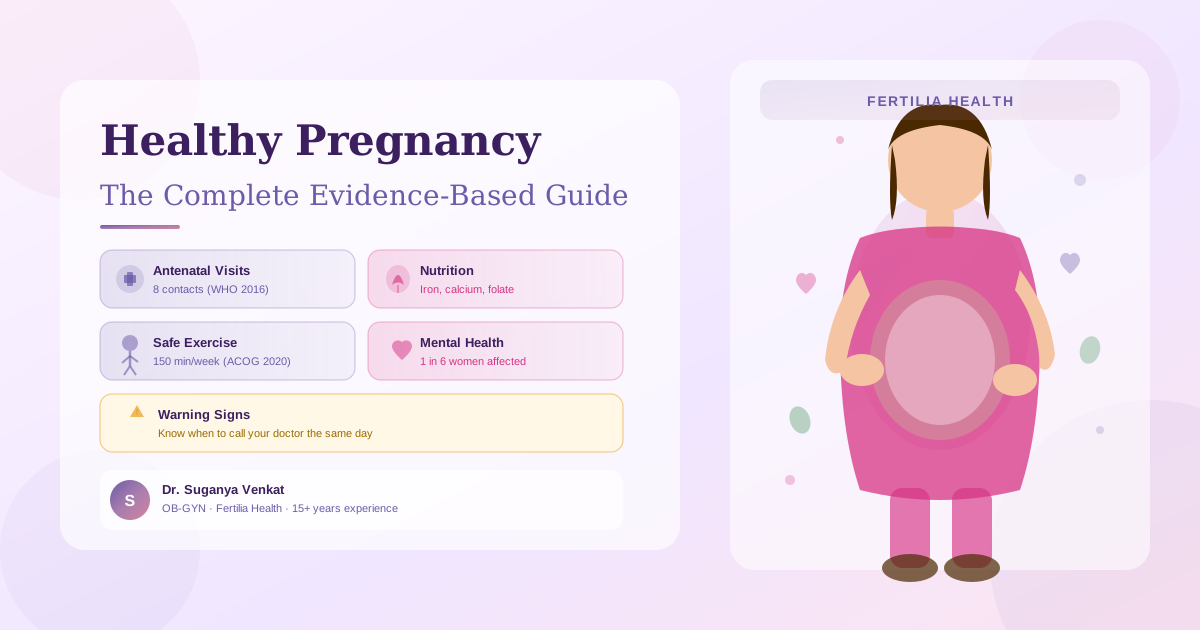
The answer is not a single checklist item. It is a set of five overlapping pillars, each backed by clinical evidence, each specific enough to act on. Miss one and the others cannot fully compensate.
This post lays out all five in plain language, with the Indian-specific context most online guides miss.
What this post covers
- Why antenatal visits matter more than most women realise
- Nutrition essentials for pregnancy (what, how much and when)
- Safe exercise during each trimester
- Why mental health is a clinical priority, not a bonus
- Warning signs that need same-day attention
Pillar 1: Antenatal Visits and Tests
The National Family Health Survey (NFHS-5, 2019-21) found that fewer than 60% of Indian women complete even four antenatal visits across their entire pregnancy. The World Health Organization, in its 2016 ANC guidelines, recommends a minimum of eight contacts with a health provider.
That gap matters. Each antenatal visit does something a home monitoring kit cannot: it compares your current numbers against your trajectory. Blood pressure readings are only meaningful when compared against three previous readings. Fundal height measurements are only useful when tracked week by week. A one-time measurement is a snapshot. A series of measurements is a story.
Key visits and what happens at each
| Visit | Timing | Key Checks |
|---|---|---|
| 1st | Before 12 weeks | Blood group, Rh factor, haemoglobin, HIV, hepatitis B, thyroid (TSH), urine for infection, dating scan |
| 2nd | 14-16 weeks | Anomaly scan booking, blood pressure, urine |
| 3rd | 18-20 weeks | Anomaly scan (fetal structure), placental position |
| 4th | 24-28 weeks | Gestational diabetes screen, haemoglobin recheck, blood pressure |
| 5th | 28-32 weeks | Growth scan, liquor (amniotic fluid), fetal position |
| 6th | 32-36 weeks | Haemoglobin, blood pressure, weight, fetal presentation |
| 7th-8th | 36 weeks onwards | Birth planning, fetal wellbeing assessment |
The gestational diabetes screen at 24-28 weeks is especially important for Indian women. South Asian women have a higher risk of gestational diabetes mellitus (GDM) than many Western populations. If caught at 24 weeks, GDM is manageable with diet and, if needed, medication. If caught at 32 weeks, the fetal effects are already compounding. Skipping the 24-28 week visit is not a neutral choice.
For more on what to expect as your pregnancy unfolds, see Your First Trimester: Symptoms, Tests & What to Expect.
Pillar 2: Nutrition for a Healthy Pregnancy
The ICMR-NIN 2020 guidelines give Indian pregnant women specific targets: 350 additional kilocalories per day in the second trimester and 600 additional kilocalories in the third. Three micronutrients are most commonly deficient, and their absence carries the highest measurable risk.
Folic acid (400-500 mcg/day)
Start ideally before conception and continue through at least the first trimester. The MRC Vitamin Study (Lancet, 1991) demonstrated a 72% reduction in neural tube defect recurrence with periconceptional folic acid. Czeizel and Dudas (NEJM, 1992) confirmed first occurrence prevention. The neural tube closes by day 28 of pregnancy, often before many women know they are pregnant. Starting early is not optional.
Folate-rich Indian foods: palak (194 mcg/100g), chana (172 mcg/100g), moong dal (159 mcg/100g), rajma (130 mcg/100g), methi leaves and drumstick leaves. For the full breakdown of folic acid versus methylfolate and who needs the higher 5 mg dose, see Folate vs Folic Acid in Pregnancy: Which Form, How Much.
Iron (27 mg/day)
NFHS-5 shows 52.2% of Indian pregnant women are anaemic. Iron deficiency anaemia increases the risk of preterm birth, low birth weight and postpartum haemorrhage. Take iron on an empty stomach if your gut tolerates it, or with a small amount of Vitamin C (amla juice, tomato, nimbu). Do not take iron and calcium at the same meal. Iron-rich Indian foods: methi leaves, palak, rajma, til (sesame seeds), drumstick leaves and ragi. For the complete food list with portion guidance, see Iron-Rich Indian Foods for Pregnancy.
Calcium (1,200 mg/day)
The Cochrane review by Hofmeyr GJ et al. (Cochrane Database of Systematic Reviews, 2014, PMID 24960615) pooled 13 trials and 15,730 women and found that calcium supplementation reduced the risk of pre-eclampsia by 55% overall, with the effect greatest in women whose diets were low in calcium. Indian women typically consume 400-700 mg/day from food alone. The deficit is real and the consequence is measurable.
Indian calcium sources: ragi (364 mg/100g, the highest plant-based source in the Indian diet), black til (351 mg/30g), dahi (240 mg/200g), milk (300 mg/250ml), paneer and moringa leaves. For the full guide including supplement timing and the iron-calcium absorption conflict, see Calcium in Pregnancy: When to Start & Best Indian Sources.
An Indian plate that works
Fill half your plate with vegetables (palak, lauki, drumstick, tomatoes), one quarter with complex carbohydrates (ragi, jowar, bajra, brown rice, whole wheat roti) and one quarter with protein (dal, rajma, chana, paneer, eggs). Add one serving of dahi daily for calcium and gut health. A nimbu wedge with dal adds Vitamin C that helps iron absorption at the same meal.
For a full trimester-wise Indian food plan, see What to Eat During Pregnancy: Indian Diet Guide.
Pillar 3: Safe Exercise Throughout Pregnancy
The American College of Obstetricians and Gynecologists (ACOG Committee Opinion 804, 2020) recommends 150 minutes of moderate-intensity aerobic exercise per week for healthy pregnant women. This is the same target as for non-pregnant adults. What changes is the type of exercise, not the goal.
Tobias DK et al. (Diabetes Care, 2011, PMID 20876206) pooled seven prepregnancy and five early-pregnancy studies and concluded that higher levels of physical activity before pregnancy or in early pregnancy are associated with a significantly lower risk of developing gestational diabetes. A randomised controlled trial of supervised exercise run through pregnancy, by Barakat R et al. (American Journal of Obstetrics and Gynecology, 2016, PMID 26704894), found lower rates of pregnancy-induced hypertension among the women who exercised.
By trimester
In the first trimester, nausea and fatigue are real and may limit what you can do. Walking, prenatal yoga and swimming are well-tolerated. Continue strength training at reduced intensity if you were already doing it.
In the second trimester, most women find this is the most comfortable period for exercise. Walking, swimming, modified strength training with lighter weights and low-impact aerobics are all appropriate. Avoid lying flat on your back after 20 weeks as uterine pressure on the vena cava can reduce blood return to the heart.
In the third trimester, your centre of gravity shifts and balance changes. Walking remains the safest and most accessible option for most Indian women. Pelvic floor exercises (Kegels) become increasingly important as delivery approaches, strengthening the muscles that support the bladder, uterus and bowel.
What to avoid throughout pregnancy: high-impact contact sports, scuba diving, activities with a significant fall risk (cycling on uneven roads, gymnastics), and hot yoga in rooms above 35 degrees Celsius.
For a complete trimester-by-trimester guide with specific exercises, see Pregnancy Exercises: Safe Workouts by Trimester.
If you have questions about what is safe for your specific pregnancy, whether it is exercise, nutrition or any other concern, send me a message on WhatsApp. I will walk you through what your stage of pregnancy needs.
Pillar 4: Mental Health in Pregnancy
Antenatal depression and anxiety are more common than most women expect, and more consequential than most antenatal visits address within the standard 10-minute slot.
Biaggi A et al. (Journal of Affective Disorders, 2016, PMID 26650969) reviewed 97 papers on which women are most at risk of antenatal anxiety and depression. Separate research links untreated antenatal anxiety with increased rates of preterm labour, low birth weight and postpartum depression. It is not a personality trait or a mindset problem. Chronic stress keeps the HPA axis activated and cortisol raised.
Indian-specific pressures compound the biological: family expectations around fetal sex, financial uncertainty, decisions being made by extended family members around birth location and practices, and the absence of a culturally accepted language to say “I am not coping.”
Signs that warrant a conversation with your doctor
- Persistent worry that does not respond to reassurance over several days
- Difficulty sleeping even when physically exhausted
- Racing thoughts about the baby’s health or about your own safety
- Loss of interest in things you previously enjoyed
- Irritability that feels disproportionate to the situation
You do not need a formal diagnosis before raising this. “I have not been feeling like myself” is enough to open the conversation at your next antenatal visit.
What helps
Pranayama in the morning and Yoga Nidra at night are simple practices that need no equipment and cost nothing. A meta-analysis of 42 randomised trials by Pascoe MC et al. (Psychoneuroendocrinology, 2017, PMID 28963884) found that practices including yoga postures were associated with reduced waking and evening cortisol compared with an active control, though those trials were run in general populations rather than in pregnancy.
Social support is clinically protective. Women who report adequate partner or family support have measurably lower rates of postpartum depression. If your support structure is limited, naming this to your obstetrician opens the door to referral, including community health worker support which exists within India’s public health system.
If you have experienced a previous pregnancy loss, anxiety in a subsequent pregnancy is expected and normal. Tell your provider early so additional monitoring can be planned rather than waiting for a symptom to appear.
Pillar 5: Warning Signs That Need Same-Day Attention
The following symptoms are not situations to monitor at home or resolve with a Google search. Each one warrants a phone call or a clinic visit within hours of onset.
Contact your doctor the same day for:
Vaginal bleeding at any stage of pregnancy beyond light spotting after intercourse. Any flow that resembles a period, or is associated with cramping, needs assessment.
Severe abdominal or pelvic pain that is persistent or worsening. Round ligament pain is common and comes and goes in sharp, brief twinges. Pain that builds, stays, or spreads to the back is different.
Absence of fetal movement after 28 weeks for more than 12 hours. By 28 weeks your baby will have established a movement pattern you recognise. A departure from that pattern, particularly sustained quietness, needs same-day evaluation. Lie on your left side and count. Fewer than 10 movements in 2 hours is a reason to call.
Severe, persistent headache that does not respond to paracetamol, especially if accompanied by visual disturbance (blurring, flashing lights, spots), nausea or swelling. This combination is the classic presentation of preeclampsia.
Sudden swelling of the face, hands or feet, particularly if asymmetric or appearing quickly. Some ankle swelling at the end of the day is normal in late pregnancy. Swelling that develops rapidly, involves the face or hands, or occurs alongside headache is not.
Fever above 38 degrees Celsius. Infection during pregnancy carries higher risk than outside it. Urinary tract infections in particular can ascend rapidly to the kidneys during pregnancy.
Fluid leaking from the vagina before 37 weeks. Premature rupture of membranes requires hospital assessment regardless of whether contractions have started.
Uncontrolled gestational hypertension and preeclampsia are among the leading preventable causes of maternal mortality in India. Both are identifiable in advance with regular blood pressure monitoring, and both are treatable when caught early. For detailed clinical guidance, see Gestational Hypertension: Signs, Risks & What to Do and Gestational Diabetes: The Complete Indian Guide.
A Trimester-by-Trimester Healthy Pregnancy Checklist
First trimester (by 12 weeks)
- Start folic acid 400-500 mcg daily if not already started
- Book your first antenatal visit and schedule all 8 contacts
- Get blood group, Rh factor, haemoglobin, thyroid, HIV and hepatitis B tested
- Book the dating ultrasound (8-12 weeks)
- Start prenatal iron if haemoglobin is below 11 g/dL
Second trimester (14-28 weeks)
- Anomaly scan at 18-20 weeks (do not skip)
- Gestational diabetes screen at 24-28 weeks
- Begin calcium supplementation to reach 1,200 mg/day total
- Aim for 150 minutes per week of moderate movement
Third trimester (28-40 weeks)
- Begin fetal movement tracking from 28 weeks
- Growth scan at 28-32 weeks
- Confirm your birth plan with your doctor by 36 weeks
- Save your doctor’s emergency contact and know the nearest hospital with a labour room
Download the free Pregnancy Care Guide for a printable antenatal visit tracker, trimester nutrition table and a warning signs reference card you can keep on your phone.
Frequently Asked Questions
How do I know if my pregnancy is progressing normally? Regular antenatal visits are the most reliable way to track a healthy pregnancy. Your doctor monitors fetal growth, your blood pressure, your weight gain and blood counts at each visit. A healthy pregnancy is not defined by the absence of symptoms. Nausea, fatigue and mild discomfort are normal. It is defined by parameters within expected ranges on clinical monitoring, which is why visits cannot be replaced by apps or home devices.
What should I eat for a healthy pregnancy in India? A practical framework: half your plate with vegetables (palak, lauki, drumstick, tomatoes), one quarter with complex carbohydrates (ragi, jowar, bajra, whole wheat roti), one quarter with protein (dal, rajma, chana, paneer, eggs). Add dahi daily for calcium and gut health. The three nutrients most Indian women fall short on are iron (from methi, til, rajma), calcium (from ragi, dahi, til) and folate (from moong dal, chana, palak). Pair your iron-rich foods with a nimbu wedge or amla to improve absorption.
Is exercise safe throughout pregnancy? Yes. ACOG 2020 recommends 150 minutes per week of moderate exercise for most healthy pregnant women. Walking, swimming and prenatal yoga are safe at all stages. Stop and call your doctor if you experience vaginal bleeding, shortness of breath out of proportion to effort, chest pain or contractions during exercise. See the complete Pregnancy Exercises Guide for trimester-specific modifications.
Which supplements are essential during pregnancy? At minimum: folic acid 400-500 mcg/day from before conception through the first trimester (5 mg if you have a previous history of neural tube defects or are on antiepileptic medication), iron as prescribed (typically 27 mg/day elemental iron), and calcium to reach 1,200 mg/day total from food and supplements combined. Vitamin D (600-1,000 IU/day) is also commonly prescribed in India given the high prevalence of deficiency. Do not exceed recommended doses without guidance. For weight gain targets see Pregnancy Weight Gain: How Much Is Normal?.
When should I worry about reduced fetal movement? After 28 weeks, your baby will have an established movement pattern you recognise. If you notice significantly fewer movements than usual, lie on your left side and count. Fewer than 10 movements in 2 hours is a reason to contact your doctor the same day. Do not wait for the next scheduled visit. The assessment is quick and non-invasive (a cardiotocograph or kick count chart) and provides direct reassurance.
Can stress affect the baby during pregnancy? Chronic, sustained stress has been linked with preterm birth and lower birth weight. Acute stress from an isolated event does not cause harm. The clinical concern is unmanaged, persistent stress across weeks or months. Pranayama, adequate sleep, social support and early discussion with your doctor are all effective strategies. If you are experiencing anxiety that feels beyond your control, raise it at your next visit.
How many antenatal visits should I have? WHO 2016 ANC guidelines recommend a minimum of 8 contacts with a health provider during pregnancy. The NFHS-5 survey found that fewer than 60% of Indian women complete even 4 visits. More visits mean more opportunities to catch gestational diabetes, anaemia, blood pressure changes and fetal growth concerns before they become emergencies. If cost or distance is a barrier, discuss a minimum schedule with your doctor and prioritise the 8-12 week, 18-20 week, 24-28 week and 32-36 week visits.
The best pregnancy outcome does not come from perfection in any one area. It comes from consistent attention across all five pillars, regular monitoring so small problems are identified before they escalate, and a clear, open channel to your doctor when something feels different.
If you are pregnant and want to talk through any aspect of your antenatal care, from your first booking visit to your birth plan, message me on WhatsApp. We can look at your specific situation and build a plan that fits your trimester, your body and your life. That ongoing plan is what my Pregnancy Care program is built around.