Your doctor calls with your 36-week swab result: Group B Strep positive. Before the worry sets in, here is what that actually means in plain language.
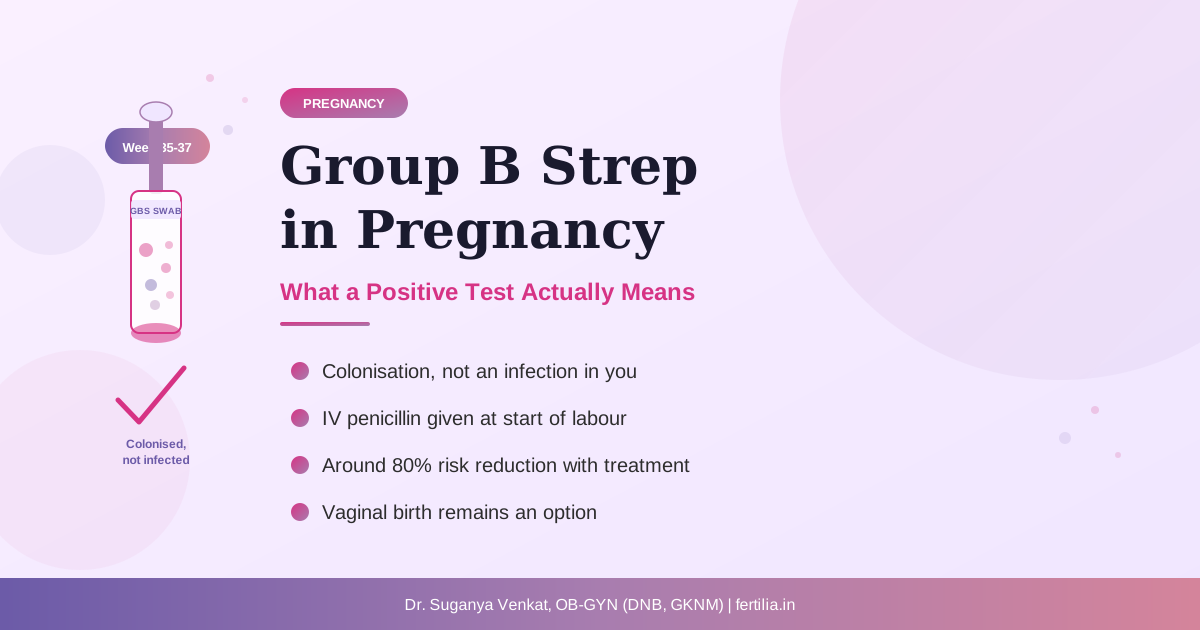
Group B Streptococcus (GBS) is a bacterium that lives naturally in the gut and lower genital tract of many healthy adults. Finding it in a vaginal-rectal swab does not mean you have an infection. It does not mean something is wrong with you. It means you are colonised, which is an entirely different thing. Your job now is to make sure your labour team knows, so they can give you IV antibiotics when labour begins. That one step makes your baby’s risk extremely small.
This post covers what GBS is, why it is tested late in pregnancy, what a positive result means for your delivery plan, and what it does not mean.
What Is Group B Streptococcus?
Streptococcus agalactiae, the bacterium named Group B Strep, is part of the normal bacterial population that lives in the gut and rectum of many adults. It is not a sexually transmitted infection. It is not a sign of poor hygiene. It does not cause any symptoms in the mother. The word “colonised” describes its presence accurately: the bacteria are living on or in your body without causing harm to you.
GBS becomes relevant in pregnancy because during vaginal delivery, the baby passes through the birth canal and can come into contact with the bacteria. In a small number of cases, the bacteria can cause early-onset infection in the newborn, which is why we screen and treat proactively.
How Common Is GBS in India vs Globally?
Global studies show that GBS colonisation varies widely by geography and by the method used to collect and culture the sample. Western studies (United States, United Kingdom, Europe) report carriage rates of 10-30% among pregnant women.
Indian data consistently shows lower carriage rates. Kothari et al., writing in the Indian Journal of Medical Microbiology (2006), found GBS colonisation rates of approximately 3-6% in Indian pregnant women, which is lower than Western estimates. Similar findings have been reported from several regional Indian studies. The reasons for this difference are not fully established, but it is consistent across multiple research groups.
This does not mean GBS is not a concern in India. It means the baseline frequency of positive results in Indian women is lower. But when a positive result does occur, the management approach is the same.
One important point: GBS colonisation is intermittent. Some women test positive at 28 weeks and negative at 36 weeks, or vice versa. This is why the swab is taken specifically at 35-37 weeks, as close to delivery as is practical. See where this falls in our pregnancy week by week guide.
When and How Is the GBS Test Done?
Current guidance (ACOG Committee Opinion 797, 2020, PMID 31977793, which replaced the obstetric components of the CDC’s 2010 guidelines) recommends a combined vaginal-rectal swab at 36 0/7 to 37 6/7 weeks of pregnancy. The timing matters because colonisation status from a swab taken within 5 weeks of delivery predicts status at the time of delivery with reasonable accuracy.
The test involves a single swab that is first passed through the lower vagina and then around the rectum. Some clinics allow self-collection by the patient, which can feel more comfortable. Others collect the sample in the clinic. The swab is sent to a lab for culture, which takes 2-5 days. Some larger facilities now offer a rapid PCR-based test (NAAT) that gives results within hours, though this is not yet universally available in India.
What Happens If Your Result Is Positive?
The Plan: IV Antibiotics When Labour Begins
A positive GBS result does not mean antibiotics start now. You do not take antibiotics during pregnancy to clear the bacteria. This approach does not work: the bacteria return after treatment stops, and the point of testing is to know your status at delivery.
The treatment plan is straightforward. When you go into labour, your labour ward team gives you IV antibiotics at the start of labour. They continue every 4 hours until your baby is born.
Penicillin G is the first-choice antibiotic for GBS prophylaxis. It is narrow-spectrum (targets GBS specifically without disrupting your baby’s developing microbiome more broadly), highly effective, and well-studied in pregnancy. Ampicillin is an acceptable alternative.
If you have a penicillin allergy, tell your doctor before delivery. The type of penicillin reaction matters. If your allergy was a rash without systemic features, cefazolin is safe and effective. If your allergy involved anaphylaxis (throat swelling, blood pressure drop, collapse), your team will check clindamycin sensitivity of your specific GBS strain or use vancomycin instead.
What Is the Actual Risk to Your Baby?
Without IV antibiotics during labour, early-onset GBS disease occurs in approximately 1 in 100 to 1 in 200 babies born to GBS-colonised mothers, based on pre-prevention-era data. With intrapartum penicillin, this risk drops by approximately 80% (Verani et al., MMWR 2010, PMID 21088663). The treated risk is very low.
To give this context: the antibiotic protocol for GBS in labour is one of the most effective interventions in all of obstetric care. It has reduced neonatal early-onset GBS disease rates dramatically in countries that have adopted universal screening.
Early-onset GBS disease in a newborn (when it occurs) can cause septicaemia, pneumonia, or meningitis in the first 7 days of life. This is why we take a positive swab seriously. But the word “seriously” here means “administer antibiotics in labour,” not “worry all the way to delivery.”
Recognising Early-Onset Newborn GBS Disease
Even with antibiotics given in labour, your paediatrician or neonatologist will monitor your baby in the first 24-48 hours. If your baby is born to a GBS-positive mother, the hospital team will already know and will observe for signs of infection: fever, poor feeding, fast breathing, unusual lethargy, or jaundice appearing very early.
Most babies born to GBS-positive mothers who received appropriate antibiotics have no complications at all. Monitoring is precautionary.
What If Your Result Is Negative?
A negative GBS result at 35-37 weeks means IV antibiotics for GBS are not required during your labour, unless you have other risk factors that your obstetrician judges warrant empirical treatment (for example, fever in labour with unknown GBS status, very prolonged membrane rupture, or a previous baby affected by GBS disease).
If your membranes rupture before labour begins and your GBS status is unknown (no test done, or swab done more than 5 weeks ago), your team will manage this using a risk-factor-based approach according to clinical guidelines.
A negative result at 35-37 weeks is reliable for approximately 5 weeks. This is why the test is timed to fall within 5 weeks of your expected delivery date.
Have questions about your GBS result or your third-trimester care? Message Dr. Suganya directly on WhatsApp. She answers pregnancy care questions personally.
Special Situations
If You Are Having a Planned C-Section
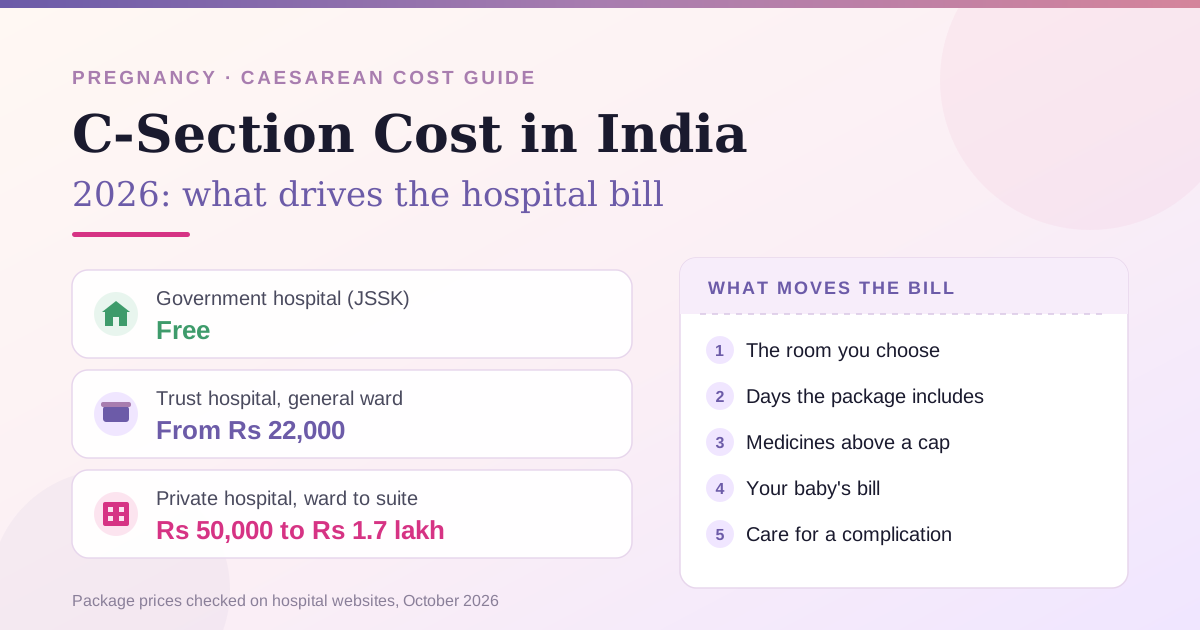
Elective caesarean delivery (planned before labour starts, with intact membranes) is a specific exception. According to ACOG Committee Opinion 797, women having a planned C-section who are GBS-positive do NOT need GBS-specific IV antibiotics for this reason, provided labour has not started and membranes have not ruptured.
This is because GBS transmission to the baby occurs during passage through the birth canal in labour, not during a planned surgical delivery. You will still receive the routine pre-surgical antibiotic (typically cefazolin) given to all women having a C-section, which covers other surgical site infection risks.
If you are GBS-positive and your planned C-section turns into an emergency C-section after labour has started or membranes have ruptured, your team will administer GBS-specific antibiotics.
For more on what to expect during a caesarean, including the antibiotic protocol, read our complete C-section guide.
In Future Pregnancies
A positive GBS result in one pregnancy does not automatically apply to the next. GBS colonisation is intermittent. A woman who was positive at 36 weeks in her first pregnancy may be negative at 36 weeks in her second, or positive again. The swab is repeated at 35-37 weeks in every pregnancy.
India-Specific Context: Getting Your GBS Swab
GBS screening is not uniformly done across Indian hospitals and clinics. Many private maternity hospitals and larger government medical colleges do screen routinely. Smaller nursing homes and clinics may not offer it as part of their standard third-trimester package.
Practically, here is what to do:
At your 34-35 week visit, ask your obstetrician directly: “Should I have a GBS swab?” If your clinic offers the test, they will arrange it. If not, ask for a referral to a diagnostic lab with a microbiology section that offers vaginal-rectal GBS culture. Most major cities in India (Chennai, Mumbai, Delhi, Bengaluru, Hyderabad, Coimbatore) have labs that process this.
If you have difficulty accessing the test, be open about it with your delivery team. A history of GBS-negative status in a recent previous pregnancy, combined with an uneventful current pregnancy, factors into clinical decision-making. Your team will guide you on whether empirical prophylaxis is warranted.
For everything else you need to track and verify at each antenatal visit, our complete healthy pregnancy guide covers the full checklist.
What a Positive GBS Result Does Not Mean
It can help to name what a positive swab does not indicate, because anxiety often fills in the wrong picture.
A positive GBS result does not mean you are sick. You have no infection to treat now. It does not mean you cannot have a vaginal delivery: the vast majority of GBS-positive women deliver vaginally without complications. It does not mean something was wrong with your hygiene: GBS lives in the gut of many adults regardless of hygiene. It does not mean your baby will definitely be affected: with appropriate antibiotics in labour, the risk is very small. And it does not mean your previous pregnancy was at risk simply because you were not tested: GBS status can change between pregnancies.
For broader reassurance about what is normal in pregnancy, our pregnancy do’s and don’ts guide addresses many late-pregnancy concerns evidence-by-evidence.
Questions about your third trimester, GBS result, or birth plan? Dr. Suganya is available to discuss your specific situation.
Chat with Dr. Suganya on WhatsApp
Frequently Asked Questions
Can I have a vaginal birth if I test positive for GBS?
Yes. A GBS-positive result is not a reason for a C-section. The management plan is IV antibiotics during labour, which reduces the risk to your baby significantly. Your delivery mode is determined by the usual obstetric factors, not by GBS status alone.
Will the antibiotics given during labour affect my baby?
The antibiotics (typically penicillin G or ampicillin) are given intravenously to you, and a small amount crosses the placenta. Studies have not shown harmful effects on the baby from this exposure. The benefit of preventing neonatal GBS infection far outweighs the theoretical concern about brief antibiotic exposure. Your neonatologist will monitor the baby as standard practice.
What if my labour is very fast and I don’t get time for antibiotics?
Ideally, antibiotics are given at least 4 hours before delivery for maximum protection. If labour is very rapid and there is not enough time, your baby will be monitored more closely after birth. Your delivery team will document the situation in the notes, and the paediatrician will observe the baby over 48 hours. This scenario is manageable and your team will know how to handle it.
I never had a GBS test in my last pregnancy. Does that mean my baby was at risk?
Not necessarily. GBS status changes between pregnancies, and many women who were GBS-positive at one pregnancy were negative at another. If your previous baby was born healthy with no signs of infection, there is no basis for retrospective concern. For this pregnancy, getting the swab at 35-37 weeks gives your team the information they need to act proactively.
I am 38 weeks and was never tested. What should I do?
Tell your obstetrician now. Depending on how far into the third trimester you are, they may be able to do a rapid GBS test before delivery. If not, your team will manage you according to risk-factor guidelines during labour. You may receive empirical antibiotics if you have any risk factors (prolonged membrane rupture, fever in labour, previous baby with GBS, GBS in urine during this pregnancy). Be upfront with your labour ward team.
Can I take antibiotics during pregnancy to get rid of GBS before delivery?
Taking antibiotics during pregnancy to clear GBS does not work reliably. The bacteria return after treatment ends. The well-established and effective approach is IV antibiotics at the start of labour. Do not try to “treat” a GBS-positive result with oral antibiotics during pregnancy without your obstetrician’s guidance.
Does a positive GBS swab mean I have a urinary tract infection?
Not necessarily. GBS can occasionally cause a urinary tract infection (GBS bacteriuria), which IS treated during pregnancy because it is associated with a higher risk of intrapartum GBS transmission than vaginal colonisation alone. A vaginal-rectal swab positive for GBS is different from GBS found in a urine culture. Your doctor will distinguish between these. If GBS was found in your urine earlier in this pregnancy (bacteriuria), that is automatically treated as a GBS-positive result for delivery purposes, even if your 36-week swab comes back negative.
Understanding where GBS fits in the larger picture of third-trimester care can reduce the worry significantly. It is one of the more straightforward findings in obstetric medicine: identifiable on a simple swab, manageable with a well-established antibiotic protocol, and largely preventable in terms of impact on your baby. The system works when you know your status and your labour team knows your plan.
If you would like to go over your full third-trimester schedule, birth plan, or any specific test results with a senior OB-GYN, Dr. Suganya is available for a consultation on WhatsApp. Her Pregnancy Care program covers your third-trimester schedule and birth plan in the same supportive way.