Your mother-in-law says rest. Your friend went to a Zumba class until week 36. Your neighbour walked to the market every day throughout both her pregnancies. And your doctor at the last visit said “stay active” without explaining what that actually means.
If you are pregnant and trying to figure out whether, when, and how to exercise, you are not alone in this confusion. Indian women receive strikingly different messages about activity during pregnancy, ranging from complete bed rest to continuing intense workouts. The truth sits firmly in the middle, and it is backed by a large and consistent body of research.
This guide covers what exercise is actually safe across all three trimesters, why it matters for you and your baby, and how to build a simple routine that fits your real life.
What this post covers
- Why movement during pregnancy is good medicine, not a risk to manage
- A trimester-by-trimester breakdown of safe activities
- Pelvic floor exercises and why every pregnant woman should do them
- What to avoid and why
- How to know when to stop and call your doctor
- The most common questions I hear in clinic
Why exercise in pregnancy is good medicine
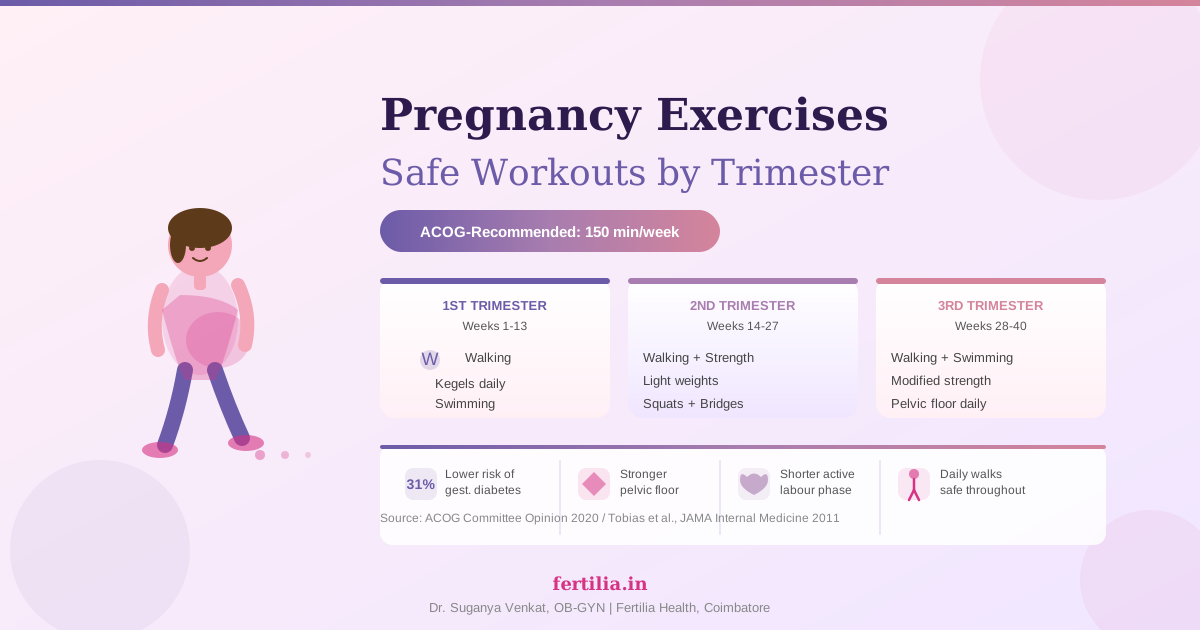
The evidence on this is remarkably consistent. A 2020 Committee Opinion from the American College of Obstetricians and Gynaecologists (ACOG) states that, in the absence of complications, pregnant women should engage in at least 150 minutes of moderate-intensity aerobic exercise per week throughout pregnancy. This is not a new or fringe recommendation. It has been reinforced by multiple large-scale guidelines, including the 2019 Canadian Physical Activity Guidelines for pregnant women (Mottola et al., British Journal of Obstetrics and Gynaecology, 2018).
The documented benefits are meaningful:
For you: Regular moderate exercise in pregnancy is associated with reduced risk of gestational diabetes (Tobias et al., Diabetes Care, 2011, found a 31% lower risk in active women), reduced risk of gestational hypertension and pre-eclampsia, lower rates of excessive gestational weight gain, and improved mood and sleep quality. Women who exercise during pregnancy also tend to have shorter active labour phases in studies comparing active versus sedentary pregnant women (Barakat et al., 2016, multiple RCTs).
For your baby: Exercise does not reduce birth weight or harm foetal growth in healthy pregnancies. Foetal heart rate may temporarily increase during maternal moderate exercise, which is normal and not a sign of stress. Studies consistently show no increased risk of preterm birth, low birth weight, or neonatal complications in women who exercise at recommended intensity levels.
For labour and recovery: Stronger pelvic floor and core muscles from consistent exercise throughout pregnancy are associated with easier pushing during labour and faster postpartum recovery.
One thing to note before we go further: these benefits apply to uncomplicated pregnancies. If you have placenta praevia, cervical incompetence, severe anaemia, uncontrolled hypertension, or a history of preterm labour in a prior pregnancy, your doctor may advise modified or restricted activity. Always check with your OB-GYN before starting or changing an exercise routine in pregnancy.
First trimester: weeks 1 to 13
The first trimester is often the hardest trimester in which to exercise, not because activity is unsafe, but because nausea and fatigue can make the idea of moving feel impossible. If you are surviving on idlis and ginger tea and doing very little else, that is an entirely reasonable response to the first trimester.
If you do have the energy to move, here is what works well.
Walking
Walking is safe, requires no equipment, and can be adjusted entirely to how you feel on a given day. Start with 20 to 30 minutes on days you feel well. Walking after meals helps with the bloating and acidity that are common in the first trimester. You do not need to walk fast. A comfortable pace where you can hold a conversation is exactly right.
Swimming
If you have access to a clean pool, swimming is an excellent first-trimester option. The water supports your body weight, which relieves the heaviness and nausea many women feel. Gentle laps, aqua walking, or simply moving in the water for 20 to 30 minutes is enough.
Continuing your existing routine with modifications
If you were running, cycling, or doing strength training before pregnancy, you can generally continue in the first trimester at a reduced intensity. The key principle: you should be able to hold a conversation while exercising (the “talk test”). If you are too breathless to speak, ease off.
Pelvic floor exercises: start now
Pelvic floor exercises should begin in the first trimester and become a daily habit throughout pregnancy. This is one of the highest-return investments you can make in your body, and it takes less than five minutes a day.
To perform a Kegel: sit or lie comfortably. Gently draw up the muscles you would use to stop the flow of urine. Hold for five seconds. Release completely. Repeat 10 times. Do this two to three times a day.
The “release” is as important as the hold. Many women do Kegels but forget to fully relax the muscle between contractions. Full relaxation trains the pelvic floor to function, not just to contract.
What to watch for in the first trimester
Any bleeding, severe pelvic pain, or cramping during exercise is a reason to stop and call your doctor immediately. Mild breathlessness and increased heart rate are expected. Dizziness, chest pain, calf swelling, or reduced foetal movement later in pregnancy are signals to stop.
For more on this, read our guide on Pelvic Girdle Pain in Pregnancy.
Second trimester: weeks 14 to 27
For most women, the second trimester is the most comfortable period for exercise. Nausea usually eases, energy returns, and the baby is not yet large enough to significantly restrict movement. This is the window to build or establish a consistent routine.
Walking
Continue daily walking, building toward 30 to 45 minutes on most days. Walking in the morning or early evening suits the Indian climate better than midday. Wear supportive shoes. Your ligaments are looser from relaxin (the pregnancy hormone that loosens joints to prepare for delivery), which makes flat or unsupported footwear a joint-strain risk.
Swimming
Swimming becomes even more beneficial in the second trimester as your bump grows. The buoyancy of water offloads the weight your spine, hips, and knees are beginning to carry. Many swimming pools in Indian cities have women-only timings. Backstroke and breaststroke are both safe. Avoid breath-holding exercises like competitive diving or underwater swimming.
Modified strength training
Light-to-moderate strength training is safe and beneficial in the second trimester. Use dumbbells you can comfortably lift for 12 to 15 repetitions per set. Good second-trimester strength exercises:
- Standing or seated dumbbell shoulder press (supports posture as your centre of gravity shifts)
- Seated dumbbell bicep curls (keeps upper body functional for carrying the baby later)
- Glute bridges (lying on your back is still safe at this stage, for short durations, until 16 weeks; move to standing hip extensions with a resistance band from 16 weeks onward)
- Squat variations (bodyweight or light goblet squats support hip and pelvic strength; avoid jumping squat variations)
- Seated row with resistance band (helps counter the forward rounding that comes with a growing bump)
Avoid holding your breath during any lift. Breathe out during the effort phase of each repetition.
Exercise on your back after 16 weeks
After 16 weeks, avoid lying flat on your back for more than a couple of minutes at a time. The uterus can compress the inferior vena cava (the large vein returning blood to your heart), which can cause dizziness, nausea, and reduced blood flow. Prop yourself on your left side with a pillow, or switch to standing and seated variations of any exercise that previously had you lying flat.
Continuing yoga and stretching
Gentle prenatal yoga is a natural complement to the exercises in this guide. For a full breakdown of safe yoga poses trimester by trimester, see Pregnancy Yoga: Safe Poses for Each Trimester.
Third trimester: weeks 28 to 40
The third trimester requires the most modification, but it is not a reason to stop moving. In fact, maintaining gentle activity in the third trimester is associated with better foetal positioning and reduced risk of prolonged labour in several studies.
Walking
Daily walking remains the most accessible and safest option in the third trimester. Reduce intensity and duration if needed. 20 to 30 minutes at a comfortable pace, once or twice a day, is enough. Walk on flat surfaces. Avoid uneven ground that increases fall risk.
Many women find that walking in the evening after dinner helps with the third-trimester backache that builds through the day. A gentle walk after meals also helps with the heartburn and fullness that are common as the baby takes up more abdominal space.
Swimming
Swimming often becomes the most comfortable option in the third trimester because it fully offloads the weight of the bump. Gentle laps or simply moving through the water for 20 to 30 minutes provides cardiovascular benefit without joint strain. Many women continue swimming until very close to their due date.
Pelvic floor exercises
Continue Kegels daily. In the third trimester, add “perineal massage” from 34 weeks onward if your provider recommends it, as a separate practice. This is distinct from pelvic floor strengthening and specifically aims to improve perineal elasticity for delivery.
For more on this, read our guide on Perineal Massage in Pregnancy.
Modified strength and mobility
Keep resistance light and repetitions moderate. Focus on movements that support posture (which is increasingly challenged by the bump), hip mobility, and pelvic stability. Walking lunges, side-lying clamshells, seated resistance-band rows, and standing wall push-ups are all manageable in the third trimester.
Stop lying on your back completely in the third trimester, except for brief checks with your healthcare provider. Use a wedge pillow or stack pillows to elevate your right side if you need to rest.
Ready to build a personalised pregnancy exercise plan?
Every pregnancy is different. If you would like guidance on safe exercise timing, modifications for your specific situation, or support through your pregnancy journey, Dr. Suganya Venkat and the Fertilia team are here to help.
Chat with us on WhatsApp to get started.
Exercises to avoid during pregnancy
These are general contraindications for uncomplicated pregnancies. Your doctor may advise differently based on your individual history.
Contact sports: Cricket (batting/fielding), basketball, football, martial arts, and any sport with collision risk should be avoided. The risk is not to the baby through the amniotic sac (which provides excellent protection for most normal movements) but to the mother through falls and abdominal impact.
High-altitude activities: Trekking above 2,500 metres is not recommended in pregnancy due to altitude-related oxygen changes. If you live at altitude, your body is acclimatised; if you are travelling to altitude during pregnancy, check with your doctor first.
Hot yoga and hot environments: Exercising in heated environments (heated yoga studios, exercising outdoors in peak afternoon heat in India, saunas, steam rooms) raises your core temperature in ways that may affect foetal development, particularly in the first trimester. Exercise in cool, well-ventilated spaces.
Scuba diving: The pressure changes associated with scuba diving create gas bubble risk for the foetus. Avoid entirely during pregnancy.
Lying flat on your back after 16 weeks: As described above.
High-impact jumping and plyometrics: Jumping exercises, burpees, skipping at high intensity, and plyometric drills create pelvic floor stress and joint-loading that is disproportionate to the benefit in pregnancy. Modify all jumping movements to step variations.
Heavy lifts and Valsalva manoeuvre: Avoid maximal-effort lifts that require breath-holding. The Valsalva manoeuvre (bracing by holding your breath during a heavy lift) significantly increases intra-abdominal pressure in ways that are not appropriate in pregnancy.
How much is safe: the practical guide
For uncomplicated pregnancies:
- Frequency: 5 days a week of some form of moderate movement is the target
- Duration: 30 minutes per session (accumulated through the day is fine, if continuous sessions are hard)
- Intensity: Moderate. The talk test (you can hold a conversation) is your guide. Heart rate monitoring is less reliable in pregnancy because normal pregnancy increases resting heart rate by 10 to 20 bpm. Use perceived exertion instead
- Type: Aerobic (walking, swimming) plus pelvic floor (Kegels) plus light strengthening as tolerated
You do not have to do all of this at once. Walking to a shop in the morning, doing Kegels while feeding the baby later (or as you wait for your dal to cook), and a short swim or home strength session in the evening adds up perfectly well.
When to stop and call your doctor
Stop exercising and contact your OB-GYN if you experience:
- Vaginal bleeding or fluid leaking
- Chest pain or palpitations that feel abnormal
- Severe shortness of breath that does not ease with rest
- Uterine contractions occurring regularly (distinct from the occasional Braxton Hicks that ease on rest)
- Severe abdominal or pelvic pain
- Calf pain, swelling, or redness in one leg
- Decreased foetal movement (always worth reporting, regardless of exercise)
- Dizziness or feeling faint during or after exercise
These warrant a call to your doctor the same day, not waiting for a scheduled appointment.
For your full pregnancy journey, including what to expect at each trimester and how to prepare for delivery, read First Trimester: Symptoms, Tests and What to Expect.
Frequently asked questions
Is it safe to exercise in the first trimester if I have never exercised before?
Yes. Starting a moderate exercise programme (walking, swimming, light stretching) during pregnancy is safe for previously sedentary women, provided there are no obstetric complications. The ACOG guidelines specifically include previously inactive women in the recommendation for 150 minutes per week. Begin gently, build slowly, and use the talk test to monitor intensity. Walking is the easiest starting point.
For more on this, read our guide on PCOS During Pregnancy. Can walking every day cause preterm labour?
No. Regular moderate walking does not increase the risk of preterm labour in uncomplicated pregnancies. Multiple large studies, including the meta-analysis by Nascimento et al. (British Journal of Sports Medicine, 2012), found no increased preterm birth risk with moderate aerobic exercise. Walking on uneven ground at a brisk pace in the third trimester is worth avoiding for fall-risk reasons, but flat-surface walking at a comfortable pace is safe throughout.
Is swimming safe in all three trimesters?
Yes, in a clean pool with appropriate supervision. Swimming is one of the safest forms of exercise in pregnancy because the water supports body weight, reduces joint strain, and makes overheating less likely. Avoid pools with strong chemical treatments if they cause irritation, and avoid hot pools and jacuzzis. Gentle open-water swimming is generally fine in the second trimester in calm, supervised conditions, but check with your doctor if you plan to do this regularly.
How do I know if I am pushing too hard?
Use the talk test: if you cannot hold a short conversation while exercising, ease off. Additional signs you are overdoing it: excessive breathlessness that takes more than a minute to settle after stopping, dizziness, nausea during exercise (distinct from first-trimester nausea at rest), or unusual pelvic pressure or heaviness. If these symptoms appear, slow down, rest, and mention them at your next appointment.
My mother-in-law says I should not exercise at all during pregnancy. How do I explain this to my family?
This is one of the most common conversations I have in clinic. The traditional advice of complete rest in pregnancy comes from a time when medical complications in pregnancy were more common and poorly understood, and rest was the safest conservative option available. Today, the evidence clearly shows that moderate movement is protective, not risky, in uncomplicated pregnancies. You can share that the recommendation to stay active during pregnancy is now standard advice from OB-GYNs across India, not a Western import. The key word is “moderate”: no one is recommending intense training. Daily walks and gentle swimming are as Indian as dal and roti.
Do I need special equipment to exercise during pregnancy?
No. Walking requires only supportive shoes. Kegels can be done anywhere, without any equipment. Swimming requires a pool membership. Resistance bands (available online for a few hundred rupees) cover most of the light strengthening exercises that are useful in the second and third trimesters. You do not need a gym membership or any specialised prenatal equipment.
When can I get back to regular exercise after delivery?
The postpartum timeline is different from pregnancy exercise guidelines. For a detailed, phase-by-phase guide to safe return to exercise after delivery, including different timelines for vaginal delivery and C-section, read Postpartum Exercise: When to Start and What’s Safe.
The one thing to remember
Movement during pregnancy is not about maintaining fitness or managing your weight. It is about giving your body the circulation, strength, and pelvic floor function that support a healthy pregnancy and a smoother recovery. Thirty minutes of walking on a cool morning, daily Kegels while the chai brews, a swim on the weekend when you have energy: these small, consistent habits matter more than any single intense workout.
Every woman’s pregnancy is different, and what feels manageable varies enormously from one trimester to the next, and from one woman to another. If you are navigating a specific pregnancy condition or simply want a personalised plan, the Fertilia team is here.
Connect with us on WhatsApp for a consultation with Dr. Suganya Venkat. Safe movement is one part of her Pregnancy Care program, which supports you through each trimester.
For women in our pregnancy support programme, the full exercise guide with trimester-wise videos and a weekly schedule is available in the Pregnancy Safe Exercises Resource Guide.
Women who have been where you are and come through it with healthy pregnancies share their stories at Fertilia Stories. Reading how others navigated this can be more reassuring than any clinical summary.
Dr. Suganya Venkat is a DNB OB-GYN from GKNM Hospital, Coimbatore, with an MD in Pathology from CMC Vellore and 5 Gold Medals from SRMC. She has 15+ years of clinical experience supporting women through fertility, pregnancy, and postpartum care.