Every day in my clinic, women ask me a version of the same question. They are holding two prenatal vitamins: one says “folic acid 400 mcg,” the other says “methylfolate 400 mcg.” Their pharmacist said one thing. A friend in their pregnancy WhatsApp group said another. And the internet gave them a third opinion involving a gene mutation they had never heard of before.
I understand why this is confusing. Supplement labels do not explain the biology, and the biology matters here because this particular vitamin, in the weeks before and just after conception, does something irreplaceable. It closes the neural tube, the structure that becomes your baby’s brain and spine. That closure happens between 21 and 28 days after conception, usually before you even know you are pregnant.
This post gives you the complete picture: what each form is, how your body uses them, which women need to think more carefully about the choice, and exactly how much to take and when to start.
A related post covers the timing and dosing in more detail: Folic Acid in Pregnancy: When to Start and How Much. This one focuses specifically on the form question.
What this post covers
- The three forms of this nutrient and how each works in the body
- Why standard folic acid has solid evidence behind it for most women
- What the MTHFR gene variant is, who it actually affects, and what to do about it
- How much to take, when to start, and high-risk situations that change the dose
- The best Indian food sources of folate and how to preserve them in cooking
Three forms, one nutrient
The word “folate” technically describes the whole family. In practice, three forms are relevant to pregnancy supplementation, and they work differently in the body.
Dietary folate is the naturally occurring form found in food: fresh methi (fenugreek leaves), palak (spinach), rajma, chana, moong dal, and drumstick leaves. Your gut absorbs it, your liver processes it, and your cells convert it through a series of enzymatic steps into the form they can actually use: 5-methyltetrahydrofolate, or 5-MTHF. Food folate is absorbed at roughly 50% efficiency as part of a mixed meal, which is lower than supplemental forms.
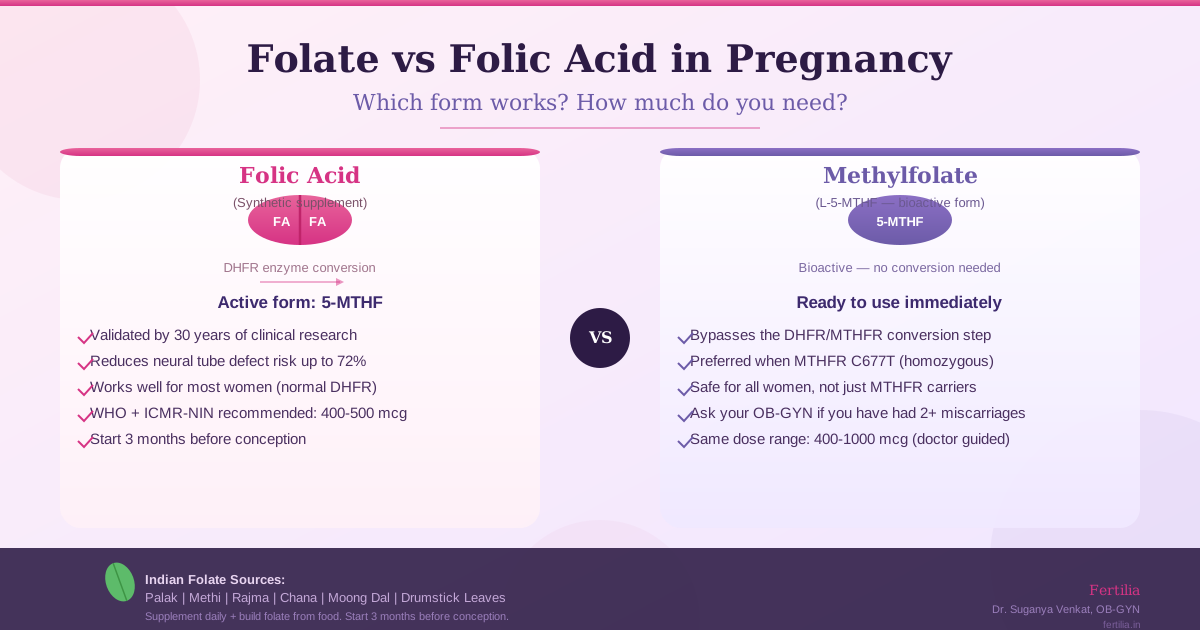
Folic acid is the synthetic, oxidised form used in supplements and fortified foods. It is chemically stable, inexpensive to produce, and has been the global standard for supplementation for three decades. Your body converts it to the active form through an enzyme called DHFR (dihydrofolate reductase). When that conversion works normally, folic acid is highly effective, absorbed at around 85% efficiency when taken without food.
Methylfolate (labelled as L-methylfolate or 5-MTHF on supplement packaging) is the bioactive form that skips the conversion entirely. It goes straight to work without needing the DHFR enzyme. It is more expensive than folic acid and is increasingly included in premium prenatal vitamins.
Most women do well on standard folic acid. The evidence supporting it is among the strongest in all of obstetrics.
Why standard folic acid has three decades of evidence behind it
The landmark MRC Vitamin Study (Lancet, 1991) demonstrated that folic acid supplementation reduced the recurrence risk of neural tube defects by 72% in women who had already had an affected pregnancy. A year later, Czeizel and Dudas (NEJM, 1992) confirmed that folic acid reduced the risk of a first occurrence in a randomised controlled trial. These findings changed prenatal care globally.
The WHO and ICMR-NIN both base their recommendations on this evidence. ICMR-NIN’s 2020 Recommended Dietary Allowances set folate intake at 500 mcg per day during pregnancy. WHO recommends 400 mcg daily starting before conception and continuing through the first trimester at minimum.
For women whose DHFR conversion works normally, standard folic acid works well. Virtually all the neural tube defect prevention data was built on regular folic acid, not methylfolate. Switching without a specific clinical reason does not add benefit and adds cost.
The MTHFR gene: who it affects and what it actually means
MTHFR stands for methylenetetrahydrofolate reductase, the enzyme responsible for one of the steps that converts folate into its active form. The gene that codes for this enzyme has two common variants: C677T and A1298C.
Here is what those variants mean in practice.
One copy (heterozygous): Enzyme activity is reduced by roughly 30-40%. For most women, the body compensates for this naturally and standard folic acid continues to work fine.
Two copies of C677T (homozygous): Enzyme activity may be reduced by up to 70%. In this situation, folic acid may not convert efficiently enough. Unmetabolised folic acid can accumulate rather than becoming active 5-MTHF. Methylfolate is preferred here because it bypasses the bottleneck entirely.
The homozygous C677T variant is estimated to affect approximately 10-15% of the global population, with meaningful variation across ethnic groups. Data from Indian cohort studies suggests the prevalence in South Asian populations is likely lower than in Mediterranean populations, though research continues.
Critically: having an MTHFR variant does not automatically cause pregnancy complications. Many women with MTHFR variants conceive and carry pregnancies to term without any specific intervention. The variant becomes more clinically significant in the context of recurrent pregnancy loss, a family history of neural tube defects, or during a formal infertility evaluation.
Your doctor may suggest MTHFR testing if:
- You have had two or more miscarriages
- A previous pregnancy was affected by a neural tube defect
- You are in an infertility workup and your specialist recommends it
MTHFR testing is not currently recommended as routine screening before every pregnancy. If you have not been tested and have no specific risk factors, standard folic acid is appropriate.
How much to take and when to start
Standard recommendation for most women:
- 400-500 mcg folic acid or folate daily
- Start at least 3 months before trying to conceive
- Continue through the first trimester; many guidelines recommend continuing throughout pregnancy
The 3-month lead time is important because folate accumulates gradually in red blood cells, and it takes consistent supplementation to reach tissue concentrations high enough to be protective. Since neural tube closure happens at 21-28 days after conception (usually before a positive pregnancy test), starting only after you see two lines means you will have missed the most critical window. Starting early is the single most reliable way to ensure adequate levels.
For women preparing their bodies for conception, our complete preconception preparation guide outlines the full checklist including folate, iron, vitamin D, and timing recommendations.
If you have a confirmed homozygous MTHFR C677T variant:
Your doctor will guide both the dose and the form. Many specialists recommend switching to methylfolate (L-5-MTHF) at 400-1000 mcg per day. This decision should come from your OB-GYN or reproductive endocrinologist, based on your complete clinical picture.
High-risk situations that require prescription-strength dosing:
- Prior pregnancy affected by a neural tube defect: 4-5 mg (4000-5000 mcg) folic acid daily, by prescription
- Women on antiepileptic medications, which interfere with folate metabolism
- Poorly controlled pregestational diabetes entering pregnancy
- Long-term metformin use: metformin reduces folate absorption over time. Women with PCOS on metformin should discuss folate status with their OB-GYN. Read more about metformin’s role in PCOS management here
In all high-risk situations, dose management belongs with your specialist. Do not try to reach prescription-level doses by stacking standard supplements.
Start here if you’re planning a preconception checkup
Dr. Suganya’s preconception consultations include a complete supplement review, MTHFR risk assessment, and a 3-month preparation plan tailored to your history. Chat on WhatsApp to get started.
Indian food sources of folate
Food-based folate does not replace supplementation in the preconception and first trimester window. But it supports your overall folate status year-round and helps maintain levels throughout the second and third trimesters. The following are the most folate-dense foods in everyday Indian cooking:
| Food | Approximate Folate per 100g | Notes |
|---|---|---|
| Palak, raw (spinach) | 194 mcg | Reduces significantly when boiled and water is discarded |
| Chana, cooked (chickpeas) | 172 mcg | Dal form retains folate; excellent regular source |
| Moong dal, cooked | 159 mcg | Easy to digest; good daily base |
| Rajma, cooked (kidney beans) | 130 mcg | Dal soups and rasam retain the folate |
| Methi leaves, fresh | 57 mcg | Steep in cooking; add to paratha, dal, sabzi |
| Drumstick leaves (moringa) | High | Traditional South Indian kitchen staple; excellent overall nutrition |
| Peanuts, roasted | 240 mcg | Folate-dense; a handful as a snack adds meaningfully |
Cooking note: Folate is water-soluble and heat-sensitive. Boiling vegetables and discarding the water removes a large share of the folate content. Steaming, light sauteing, or eating in soups and dals where the liquid is consumed (sambar, rasam, dal) preserves significantly more. Raw palak in a salad or raita retains more than boiled palak from which the water is drained.
Even with a folate-rich Indian diet, reliably reaching 400-500 mcg daily through food alone is very difficult, particularly when cooking methods reduce content. Supplementation is the non-negotiable layer; food builds on top of it.
For a broader look at how nutrition supports egg quality and early pregnancy, see How to Improve Egg Quality: Diet, Supplements and Lifestyle and the complete guide to getting pregnant naturally for couples.
Which form should you take? A simple guide
Standard folic acid (400-500 mcg) is right for you if:
- No history of recurrent miscarriage
- No personal or family history of neural tube defects
- No confirmed homozygous MTHFR C677T variant
- No medications that affect folate absorption (antiepileptics, metformin)
Discuss methylfolate with your doctor if:
- You have confirmed homozygous MTHFR C677T by blood test
- You have had two or more miscarriages and MTHFR testing is part of your evaluation
- Your OB-GYN or fertility specialist specifically recommends it
Ask your specialist about prescription-dose folic acid if:
- You have had a previous pregnancy with a neural tube defect
- You are on antiepileptic drugs
- You have poorly controlled diabetes entering pregnancy
For the large majority of women planning a first pregnancy with no prior complications, a standard prenatal vitamin containing 400-500 mcg folic acid, started 3 months before trying to conceive, is the correct choice. If your prenatal already contains methylfolate rather than folic acid, that works too. Both are safe and effective. The choice between them matters primarily in specific clinical situations.
The bigger risk is starting too late or not starting at all. On that point, there is no ambiguity.
Frequently asked questions
What is the difference between folate and folic acid?
Folate is the naturally occurring form found in foods like methi, palak, rajma, and moong dal. Folic acid is the synthetic form used in supplements and fortified foods. Both need to be converted to the active form (5-MTHF) before the body can use them, though they take different pathways. Methylfolate is already in the active form and skips the conversion. For most women, the body handles these conversions well and all three forms are effective.
Should I test for MTHFR before trying to conceive?
Routine MTHFR testing before every pregnancy is not recommended by major obstetric guidelines. It becomes relevant if you have had recurrent miscarriages, a family history of neural tube defects, or if your specialist includes it in an infertility workup. If you have no specific risk factors, start standard folic acid and discuss testing with your OB-GYN if you have concerns.
Is it safe to take methylfolate even if I do not have the MTHFR variant?
Yes. Methylfolate is safe regardless of MTHFR status. The body uses what it needs and excretes the rest. The consideration is practical: if you have no clinical reason to prefer methylfolate, standard folic acid is equally effective and considerably cheaper. Many quality prenatal vitamins now include methylfolate by default; using one of these is perfectly fine.
When should I start folic acid before pregnancy?
Start at least 3 months before you plan to try to conceive. Neural tube closure happens at 21-28 days after conception, often before a positive pregnancy test. Starting supplementation after the positive test means you may have already passed the most critical window. If you are currently thinking about trying to conceive within the next year, start now. Learn more about first trimester development and what to expect once pregnant: First Trimester: Symptoms, Tests and What to Expect.
Can I get enough folate from Indian food alone?
Indian cooking includes excellent folate sources: palak, rajma, chana, moong dal, methi, and drumstick leaves. However, cooking significantly reduces folate content, and consistently reaching 400-500 mcg daily through food alone is very difficult. Food folate is an important foundation and helps throughout pregnancy, but supplementation is necessary in the preconception period and first trimester. Treat them as complementary layers, not alternatives.
My prenatal vitamin already has folate. Do I need a separate supplement?
Check the label for the dose. Most standard prenatal vitamins contain 400-500 mcg folic acid or L-methylfolate, which is sufficient for most women. If your prenatal reaches that amount, you do not need a separate folic acid tablet. If you are in a high-risk category (prior NTD pregnancy, antiepileptic medication), you will need prescription-strength folic acid at 4-5 mg, which is not available in standard prenatal doses. Your OB-GYN will prescribe it separately.
I had a previous pregnancy with a neural tube defect. What do I need this time?
You need prescription-dose folic acid at 4-5 mg (4000-5000 mcg) daily, started at least 3 months before your next conception attempt and continued through the first trimester. This is not available over the counter at that dose. Please do not try to reach it by stacking standard supplements. Discuss it with your OB-GYN at your next visit so it is prescribed and managed under clinical supervision.
Preconception supplementation is one of the highest-leverage steps you can take before pregnancy, and the decisions are straightforward once you have the right information. If you are preparing for a pregnancy and want a complete preconception review tailored to your history, including which supplements make sense for you, Dr. Suganya offers focused consultations through Fertilia’s fertility program.
Chat with Dr. Suganya on WhatsApp
Getting the right nutrients in place is one of the first things Dr. Suganya sets up in her Pregnancy Care program.