You step on the scale at your antenatal visit, and the number is either lower than you expected or much higher. Your mother says she gained a particular amount in her pregnancies. Your sister-in-law lost weight in her first trimester. Your friend was told to “eat for two.” Your obstetrician glanced at the number and moved on without saying whether it was right or wrong.
If you are pregnant in India and trying to understand what healthy weight gain actually looks like, you are working with a confusing mix of family lore, internet charts written for Western women, and an antenatal visit that often does not have time to explain the science.
This guide gives you the clinical answer, in numbers and in plain language, with adjustments specifically for Indian body composition.
What this post covers
- Why pregnancy weight gain matters at all
- How much weight gain is healthy, by your pre-pregnancy BMI
- Why Indian women should use slightly lower BMI cutoffs than Western charts show
- Where the kilos actually go (it is not all baby)
- A trimester-by-trimester pace guide
- What supports healthy weight gain in the Indian diet
- When the number on the scale is a real concern
Why pregnancy weight gain is a clinical conversation, not a vanity one
Pregnancy is the only time in adult life when gaining weight is biologically required. Your body is building a baby, growing a placenta, doubling its blood volume, and laying down energy stores for breastfeeding. None of that happens without weight gain.
The clinical question is not “will you gain weight?” (yes, you will) but “how much, and at what pace?”
A landmark 2017 meta-analysis published in JAMA looked at over 1.3 million pregnancies (Goldstein et al., JAMA. 2017;317(21):2207-2225). It compared women who gained within the recommended range with those who gained too little or too much. The findings were clear in both directions.
Women who gained less than the recommended range had a higher risk of small-for-gestational-age babies (smaller than 90 percent of babies at the same gestational age) and preterm birth.
Women who gained more than the recommended range had a higher risk of large-for-gestational-age babies, gestational hypertension, gestational diabetes, caesarean delivery, and postpartum weight retention beyond the first year.
For more on this, read our guide on Preeclampsia. The middle of the recommended range is where outcomes for both mother and baby are best. This is the entire reason your OB-GYN tracks the number at every visit.
How much weight gain is normal: the numbers
The most widely used global guidelines are from the Institute of Medicine (now the National Academy of Medicine), published in 2009 and reaffirmed by the American College of Obstetricians and Gynaecologists in 2020 (Rasmussen and Yaktine, eds., Weight Gain During Pregnancy: Reexamining the Guidelines, National Academies Press, 2009).
The recommended range depends on your pre-pregnancy BMI, calculated as weight (kg) divided by height (m) squared. Use your weight from before you became pregnant, not your current weight.
| Pre-pregnancy BMI (WHO standard) | Category | Total recommended gain |
|---|---|---|
| Below 18.5 | Underweight | 12.5 to 18 kg |
| 18.5 to 24.9 | Normal weight | 11.5 to 16 kg |
| 25.0 to 29.9 | Overweight | 7 to 11.5 kg |
| 30 and above | Obese | 5 to 9 kg |
For twin pregnancies the targets are higher (17 to 25 kg for normal-BMI women) and your obstetrician will give you a specific plan.
Why Indian women should adjust the chart
The BMI categories above use Western cutoffs. A WHO Expert Consultation published in The Lancet in 2004 (vol. 363:157-163) reviewed body composition data from Asian populations and concluded that Asian Indians develop diabetes, hypertension, and cardiovascular risk at lower BMI values than European populations. The reason is body fat distribution: Asian Indians tend to carry more visceral fat at any given BMI, particularly around the abdomen.
This produced a separate set of cutoffs widely used by Indian physicians:
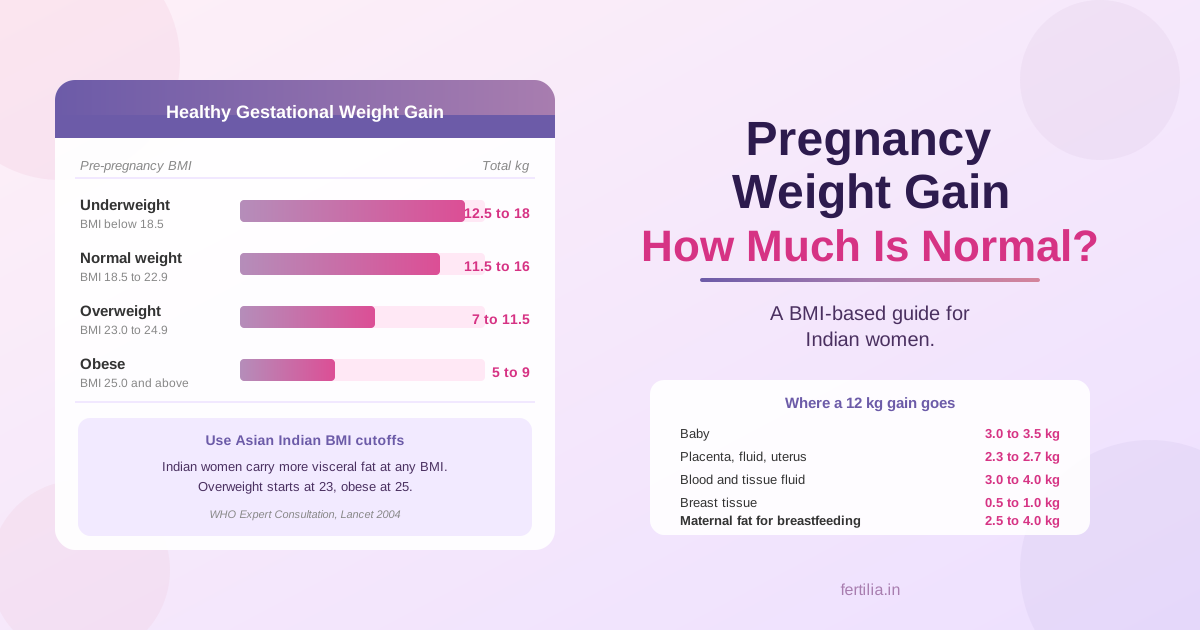
| Pre-pregnancy BMI (Asian Indian) | Category | Total recommended gain |
|---|---|---|
| Below 18.5 | Underweight | 12.5 to 18 kg |
| 18.5 to 22.9 | Normal weight | 11.5 to 16 kg |
| 23.0 to 24.9 | Overweight | 7 to 11.5 kg |
| 25.0 and above | Obese | 5 to 9 kg |
The practical difference: if your pre-pregnancy BMI was 23.5, the Western chart would call you “normal weight” and recommend up to 16 kg of gain. The Indian-adjusted chart would call you “overweight” and recommend a more conservative 7 to 11.5 kg. The Asian Indian chart is the right one to use.
In clinical practice, I find this matters most for women with a pre-pregnancy BMI in the 22 to 25 range, which is a very common Indian profile. Aiming for the lower end of the recommended range in this group reduces the risk of gestational diabetes, which the National Family Health Survey-5 data show is on the rise across urban India.
Where the kilos actually go
A common worry is “if I gain 13 kilos, how am I supposed to lose 13 kilos after delivery?” The answer becomes much less alarming when you see what you are gaining.
Here is the typical breakdown for a healthy 12 kg gain in a normal-BMI woman:
| Component | Approximate weight |
|---|---|
| Baby | 3 to 3.5 kg |
| Placenta | 0.5 to 0.7 kg |
| Amniotic fluid | 0.8 to 1 kg |
| Enlarged uterus | 1 kg |
| Breast tissue | 0.5 to 1 kg |
| Increased blood volume | 1.5 to 2 kg |
| Tissue fluid (oedema) | 1.5 to 2 kg |
| Maternal fat and protein stores | 2.5 to 4 kg |
Notice that only about a quarter of your gain is the baby. Most of the rest is functional: blood, fluid, placenta, uterus, breast tissue. All of this either leaves your body during delivery and the early postpartum period, or is reabsorbed within the first few weeks after birth.
The maternal fat stores (about 2.5 to 4 kg) are deliberately laid down by your body to fuel breastfeeding. Exclusive breastfeeding burns roughly 500 to 700 extra kcal per day. Those kilos are an evolutionary insurance policy.
Trimester-by-trimester pace
Total numbers are useful, but the pace matters too. A woman who gains 14 kg evenly across her pregnancy has a very different clinical picture from one who gains 2 kg in the first 30 weeks and then 12 kg in the last 10.
First trimester (weeks 1 to 13): 0.5 to 2 kg total
In the first trimester, weight gain should be small. Many women gain almost nothing, and some lose a kilo or two due to nausea and food aversions. Both are normal.
If you are losing more than 5 percent of your pre-pregnancy weight, vomiting many times a day, or unable to keep fluids down, that is a different condition called hyperemesis gravidarum and your OB-GYN should know. Call earlier rather than later.
Second trimester (weeks 14 to 27): about 0.3 to 0.5 kg per week
This is when most women feel best and weight gain becomes steady. For a normal-BMI woman, expect around 1.5 to 2 kg per month, or about 5 to 6 kg across the second trimester.
If your pre-pregnancy BMI was in the underweight range, your target pace is closer to 0.5 kg per week. If your pre-pregnancy BMI was in the overweight range, the target is closer to 0.3 kg per week.
For more on this, read our guide on Pregnancy Week by Week. If your pre-pregnancy BMI was in the obese range, the target is closer to 0.2 kg per week.
Third trimester (weeks 28 to 40): about 0.4 kg per week
Pace is similar to the second trimester for most women, with some natural slowing in the final two weeks as the baby drops into the pelvis. Total third-trimester gain for a normal-BMI woman is roughly 4 to 5 kg.
If you suddenly gain more than 1 kg in a week, particularly with swelling of the face and hands, headache, or visual changes, that is a flag for pre-eclampsia and warrants a same-day call to your obstetrician. This is one of the few situations where rapid weight gain is a clinical signal, not a dietary issue.
Have a question about your weight gain so far?
If you are pregnant and unsure whether your weight gain is on track for your BMI, send me a message on WhatsApp. I will help you understand what your numbers mean and what to focus on next.
What supports healthy weight gain (the Indian diet version)
Most international “pregnancy nutrition” advice assumes access to imported grains, niche greens, and expensive seafood. None of that is necessary. The Indian thali, when balanced thoughtfully, is one of the most pregnancy-friendly diets in the world.
The ICMR-NIN 2020 Recommended Dietary Allowances for Indians suggest the following adjustments during pregnancy:
- First trimester: no additional calories needed; focus on quality, not quantity.
- Second trimester: an extra 350 kcal per day (roughly one extra small meal, like a moong dal cheela with a glass of milk).
- Third trimester: an extra 600 kcal per day (roughly one extra meal, like a small dal-rice-sabzi plate or a paneer paratha with dahi).
- Protein: an extra 9.5 g per day in the second trimester and 22 g per day in the third. Most Indian women fall short here, particularly vegetarians.
A practical Indian pregnancy plate looks like this:
- One-quarter: dal, paneer, dahi, eggs, fish, or chicken (the protein source).
- One-quarter: roti, rice, bajra, jowar, or ragi (the complex carbohydrate).
- Half: vegetables across at least two colours, plus a small portion of fruit.
- A small daily addition: ghee, til, alsi, or aakhrot for healthy fats and omega-3.
Iron, folate, calcium, and Vitamin D should come from both food and your prescribed antenatal supplements. For more detail on iron sources, see our guide to iron-rich Indian foods for pregnancy. For the full nutrition framework, our pregnancy diet guide covers each trimester.
What “eat for two” actually means
The phrase is a kind of cultural shorthand that has caused real harm. You are not eating for two adults. You are eating for one adult and a baby that, until the third trimester, weighs less than a kilogram. Even at full term, your baby’s daily energy need is met by a small extra meal, not double portions.
Doubling food intake is the most common reason I see women cross the recommended range, particularly in the third trimester. The result is usually gestational diabetes, a heavier baby, and a harder postpartum recovery.
Movement is part of weight regulation
Healthy weight gain is supported by 150 minutes per week of moderate activity in uncomplicated pregnancies (ACOG Committee Opinion 804, reaffirmed 2020). Walking, prenatal yoga, swimming, and gentle strength work all qualify. Our trimester-by-trimester pregnancy exercise guide walks you through what is safe at each stage.
Activity does not “burn off” the baby. It helps your body use carbohydrates more efficiently, keeps blood sugar in range, supports good sleep, and reduces the risk of gestational diabetes by roughly 30 percent (Tobias et al., Diabetes Care, 2011).
When the number is actually a concern
Most weight changes during pregnancy fall within the normal range and need no intervention. A few patterns are worth flagging to your OB-GYN.
Inadequate gain (less than 0.2 kg per week in the second or third trimester for a normal-BMI woman): This may signal poor calorie intake, untreated hyperemesis, thyroid dysfunction, or in some cases foetal growth restriction. A growth scan, basic blood work, and a dietary review usually clarify the cause.
Sudden rapid gain (more than 1 kg in a week, particularly after week 20): This is one of the early signs of pre-eclampsia, especially when accompanied by facial or hand swelling, headache, blurred vision, or upper abdominal pain. It needs same-day clinical attention. Pre-eclampsia is treatable when caught early, and the weight signal is one of the more reliable ones.
Total gain well above the recommended range: This raises the risk of gestational diabetes, a large baby, and a harder labour. The right response is not strict dieting (which is unsafe in pregnancy) but a structured nutrition review, blood sugar testing, and often a referral to a dietitian.
Weight loss after the first trimester: Mild loss in the first trimester from nausea is normal. Loss in the second or third trimester is not, and warrants both a blood panel and a growth scan.
If any of these apply to you, your OB-GYN is the right first call. None of them is an emergency in itself, but each is a signal worth investigating.
For a deeper dive on related antenatal screening, see our guides to first trimester symptoms and tests, gestational diabetes screening, and gestational hypertension.
What to expect after delivery
Most of the immediate weight loss happens in the first two weeks after delivery: about 5 to 7 kg in the first 24 to 48 hours (baby, placenta, amniotic fluid), and another 3 to 4 kg over the following two weeks as fluid and blood volume normalise.
The remaining 3 to 5 kg (the maternal fat and protein stores) typically reduces over the first 6 to 12 months postpartum if you are eating well and moving regularly. Breastfeeding speeds this up for most women.
There is no hurry to “get back” to your pre-pregnancy weight. Your body has just done a year of construction work. Our postpartum weight loss guide covers a safe and sustainable approach for new mothers.
Frequently asked questions
1. I am in my second trimester and I have only gained 2 kg total. Is that a problem? At 18 to 20 weeks, that is on the lower end but often fine. The pace from now matters more than the total so far. Aim for about 0.3 to 0.5 kg per week from this point. If gain stays below 0.2 kg per week for several weeks, a growth scan and a dietary review with your OB-GYN will tell you whether to act.
2. I gained 4 kg in my first trimester. How worried should I be? This is on the higher end but not unusual, particularly if you had no nausea and increased your food intake early. The right response is not to restrict food now (your baby is in active organ formation), but to slow further gain to about 0.3 kg per week through better food quality and consistent walking. A blood sugar check at the routine time (24 to 28 weeks) is more important than ever.
3. My pre-pregnancy BMI was 17.5. How much should I gain? You fall in the underweight category. The recommended range is 12.5 to 18 kg, aiming for the higher end. Weight gain in underweight women particularly benefits the baby’s birth weight and reduces preterm risk. Adding an extra meal of dal, dahi, ghee, and dry fruits per day is usually the simplest intervention.
4. My OB-GYN told me I am gaining too fast and asked me to “watch the carbs.” Does that mean cut rice? No. It usually means choosing complex carbs (whole-wheat roti, jowar, bajra, brown rice, oats) over refined ones (maida, biscuits, sugary drinks, white bread), and pairing carbs with protein and fat at every meal so blood sugar rises slowly. Cutting rice entirely is rarely necessary or wise.
5. I am pregnant with twins. Do these numbers change? Yes, significantly. For a twin pregnancy with a normal pre-pregnancy BMI, the recommended gain is 17 to 25 kg. Underweight twin mothers may need more, and overweight twin mothers a little less. Your obstetrician should give you a specific target.
6. I had gestational diabetes in my last pregnancy. Should I gain less this time? A history of gestational diabetes raises the risk of recurrence to about 40 to 60 percent. Aiming for the lower end of your BMI’s recommended range, getting an early HbA1c and oral glucose tolerance test (often at 12 to 16 weeks rather than 24 to 28), and starting consistent activity from the first trimester all reduce that risk. Your obstetrician will plan the screening calendar with you.
7. Is bed rest in pregnancy a reason to gain less or more? Strict bed rest reduces calorie burn, but the baby’s needs do not change. The result is often more rapid maternal weight gain. If you are on prescribed bed rest, your dietitian should adjust your plan, usually by reducing portions slightly while maintaining protein, iron, and folate. Do not self-restrict food without guidance.
The bottom line
Healthy pregnancy weight gain is a range, not a single number, and your range depends on your pre-pregnancy BMI. For most Indian women with a normal pre-pregnancy BMI, the target is roughly 11 to 16 kg, gained mostly in the second and third trimesters at a pace of about 0.3 to 0.5 kg per week.
Most of what you gain is not fat: it is baby, placenta, blood, fluid, breast tissue, and the energy stores your body needs to feed your child. The number on the scale is one signal among many. Your antenatal blood work, your blood pressure, your scan, and how you feel matter just as much.
If you are pregnant and want a personalised look at your weight, your nutrition, or any other part of your antenatal care, message me on WhatsApp. We can walk through your numbers together and build a plan that fits your body and your trimester. That plan is her Pregnancy Care program.
For the full antenatal picture, our free pregnancy guide covers nutrition, tests, and trimester milestones in one PDF you can keep on your phone.
Dr. Suganya Venkat is an OB-GYN with 15+ years of clinical experience. DNB OB-GYN (GKNM Hospital, Coimbatore). MD Pathology (CMC Vellore). MBBS with 5 Gold Medals (SRMC). She is the founder of Fertilia Health.
Sources:
- Rasmussen KM, Yaktine AL, eds. Weight Gain During Pregnancy: Reexamining the Guidelines. Institute of Medicine, National Academies Press, 2009.
- Goldstein RF, Abell SK, Ranasinha S, et al. Association of gestational weight gain with maternal and infant outcomes: a systematic review and meta-analysis. JAMA. 2017;317(21):2207-2225.
- WHO Expert Consultation. Appropriate body-mass index for Asian populations and its implications for policy and intervention strategies. Lancet. 2004;363:157-163.
- ACOG Committee Opinion No. 548 (Reaffirmed 2020). Weight gain during pregnancy.
- ACOG Committee Opinion No. 804 (Reaffirmed 2020). Physical activity and exercise during pregnancy and the postpartum period.
- ICMR-NIN. Recommended Dietary Allowances and Estimated Average Requirements for Indians. National Institute of Nutrition, Hyderabad, 2020.
- Tobias DK, Zhang C, van Dam RM, et al. Physical activity before and during pregnancy and risk of gestational diabetes mellitus: a meta-analysis. Diabetes Care. 2011;34(1):223-229.
- Misra A, Khurana L. Obesity and the metabolic syndrome in developing countries. J Clin Endocrinol Metab. 2008;93(11 Suppl 1):S9-30.