Your body is building an entire skeleton for your baby. Not just bones but teeth, nerves, muscles, and the systems that will regulate heartbeat for a lifetime. The raw material for most of this is calcium, and if your diet is not delivering enough, your baby draws it from your own bones.
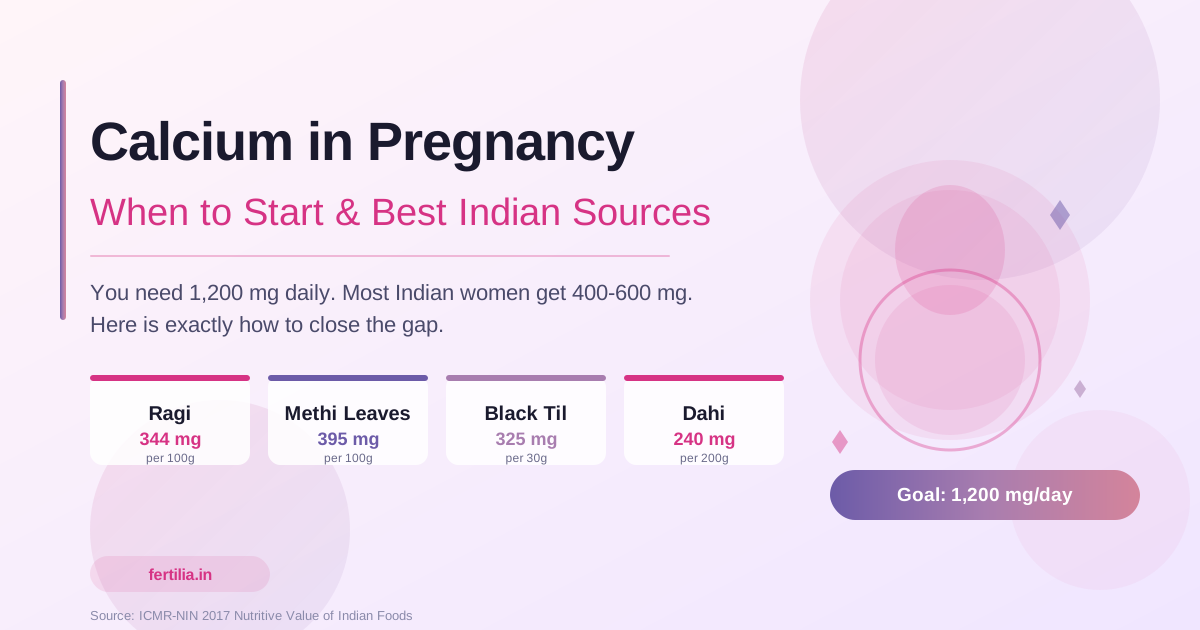
This is not a scare story. It is biology, and knowing it changes how you approach your daily meals and supplement routine. Most Indian women get between 400 and 600 mg of calcium from food each day. Pregnancy requires 1,200 mg. That gap is the part no one explains clearly.
For more on this, read our guide on Badam (Almonds) During Pregnancy. This post covers exactly that:
- How much calcium you need in pregnancy and why
- When to start (earlier than most people think)
- The best Indian food sources with actual milligram values
- Why iron and calcium should never be taken together
- Which supplement form to take and when
Why Calcium Matters in Pregnancy
Calcium has two distinct jobs during pregnancy: building your baby and protecting you.
Building your baby: Fetal bone mineralisation begins in the first trimester but accelerates sharply from week 24 onwards. By the third trimester, your baby is absorbing approximately 250 to 300 mg of calcium per day through the placenta (Kovacs CS, Endocrinol Metab Clin North Am, 2011). That is calcium that has to come from somewhere. If your diet is short, it comes from your vertebrae, hip bones, and teeth.
For more on this, read our guide on Dates in Pregnancy. Protecting you from pre-eclampsia: This is the less known part. A Cochrane Review by Hofmeyr and colleagues (2014, Cochrane Database Syst Rev, PMID 24960615) analysed 13 randomised trials involving over 15,000 women and found that calcium supplementation reduced the risk of pre-eclampsia by 55% in women with low dietary calcium intake. In India, where average dietary calcium intake among pregnant women is well below recommended levels, this is a clinically significant finding. Pre-eclampsia is the leading cause of maternal mortality in South Asia.
Calcium also plays a role in muscle contraction (including uterine function), nerve signal transmission, and blood clotting. You need it. Your baby needs it. And neither of you can afford to run short.
How Much You Need (and What Most Indian Women Get)
The Indian Council of Medical Research and National Institute of Nutrition (ICMR-NIN 2020) sets the RDA for calcium during pregnancy at 1,200 mg per day. This is the figure your prenatal care should be working toward.
The problem is that typical Indian diets, even relatively varied ones, deliver 400 to 600 mg of calcium daily. The gap between what you eat and what you need is roughly 600 to 800 mg. That gap must be closed through a combination of targeted food choices and supplementation.
A common misconception is that simply drinking more milk will solve this. A 250 ml glass of cow’s milk provides roughly 300 mg of calcium. You would need four to five glasses per day to meet your requirement from milk alone, which is neither practical nor desirable. The better approach is a combination of multiple high-calcium foods across the day, topped up with a supplement.
When to Start Calcium in Pregnancy
The simple answer is: from the beginning of your pregnancy, ideally from the first trimester.
Fetal calcium demand increases through pregnancy, so the earlier you establish good calcium intake habits, the better your reserves going into the high-demand third trimester. If you are planning a pregnancy, starting calcium-rich foods and assessing your supplement need before conception is even better. Your bone bank benefits from deposits made before the withdrawals begin.
For more on this, read our guide on Banana During Pregnancy. In clinical practice, most antenatal protocols in India initiate calcium supplementation at the first antenatal visit, typically between 8 and 12 weeks. WHO’s current antenatal care recommendations (2016) advise 1.5 to 2.0 g of elemental calcium a day in populations with low dietary calcium intake to reduce the risk of pre-eclampsia, and note that there is no clear evidence on the best time to start, so supplementation may reasonably begin at the first antenatal visit. (WHO’s earlier 2013 calcium guideline, now superseded, was the one that specified starting from 20 weeks.) From a bone health standpoint, starting earlier makes sense.
The practical message: do not wait until the third trimester to think about calcium. Start now, wherever you are in your pregnancy.
Best Indian Sources of Calcium: A Food-First Approach
Supplements are a safety net. Food should be your first strategy. The good news is that Indian cuisine has several excellent calcium sources that most women already eat, just not in the right quantities.
| Food | Serving | Calcium (approx) | Source |
|---|---|---|---|
| Ragi (finger millet, raw) | 100g | 364 mg | ICMR-NIN 2017 |
| Methi leaves (fresh fenugreek) | 100g | 395 mg | ICMR-NIN 2017 |
| Black sesame seeds (til) | 30g (2 tbsp) | ~325 mg | ICMR-NIN 2017 |
| Drumstick leaves (moringa) | 50g | ~220 mg | ICMR-NIN 2017 |
| Paneer | 100g | 208 mg | ICMR-NIN 2017 |
| Milk, cow’s | 250 ml (1 glass) | ~300 mg | ICMR-NIN 2017 |
| Dahi (curd/yoghurt) | 200g (1 bowl) | ~240 mg | ICMR-NIN 2017 |
| Palak (spinach) | 100g (cooked) | ~73 mg | ICMR-NIN 2017 |
A few things worth noting:
Ragi is exceptional. At 364 mg per 100g, ragi is one of the most calcium-dense foods in the Indian kitchen. A bowl of ragi kanji, ragi mudde, or ragi dosa every day contributes meaningfully to your daily target without any supplementation at all. This is why ragi is traditionally given to new mothers and pregnant women in South India, long before anyone understood the science.
Methi and moringa are underused. Fresh fenugreek leaves have more calcium per 100g than milk does per 100 ml. If you are adding methi to your roti or making methi dal, you are getting a meaningful calcium hit. Similarly, drumstick leaves added to sambar or cooked as a poriyal deliver real calcium alongside iron.
Til is concentrated. Two tablespoons of black sesame seeds (til) sprinkled on your food or stirred into chutney podi provide more calcium than a glass of milk. Til laddoo, til chutney, and ellu sadam are all practical ways to increase intake.
Dairy counts, but variety matters. A bowl of dahi after lunch plus a glass of milk in the evening gives you 540 mg from dairy alone. Adding ragi, methi, and til across the day takes you closer to 1,200 mg from food.
Spinach calcium is partially absorbed. Palak contains oxalates, which bind to calcium and reduce absorption. It is still worth eating for iron and folate (see our guide to iron-rich foods in pregnancy for practical combinations), but do not rely on it as your primary calcium source.
Need help building a calcium-rich pregnancy diet that fits your food habits? Dr. Suganya works with you through each trimester to build a practical, India-specific nutrition plan.
The Iron and Calcium Conflict: Take Them Separately
This is one of the most important and least explained aspects of prenatal supplementation.
Both calcium and non-heme iron (the form found in plant foods and iron supplements, and covered in detail in our pregnancy iron guide) compete for the same transport mechanism in the small intestine, specifically the divalent metal transporter (DMT-1). When you take them together, they interfere with each other’s absorption (Hallberg L et al., Eur J Clin Nutr, 1992).
The practical implication: taking your iron tablet with a glass of milk, or taking your calcium supplement at the same time as your iron tablet, significantly reduces how much of each you actually absorb.
What to do instead:
- Take iron on an empty stomach or with a small amount of food, ideally with vitamin C (a small glass of lemon water or amla juice helps absorption)
- Take calcium with food, at a separate meal or at least 2 hours after your iron supplement
- A common and workable schedule: iron with breakfast (or on waking), calcium with lunch or dinner
Most Indian women are prescribed both iron and calcium supplements during pregnancy. The pharmacist hands you both bottles but does not always explain this timing. Your prenatal doctor may assume you know. Often, neither happens, and women spend months taking both together with no benefit from either.
About Calcium Supplements: Forms and Dosing
When you cannot meet your calcium requirement from food alone, a supplement fills the gap. There are two main forms:
Calcium carbonate (the most common in India): Contains 40% elemental calcium. Carbonate needs stomach acid for absorption, so it works best when taken with food. If you have pregnancy-related acid reflux and are using antacids regularly, carbonate absorption may be reduced.
Calcium citrate: Contains 21% elemental calcium per tablet, so you need more tablets to match the dose. The advantage is it does not require stomach acid, so it can be taken with or without food and is better tolerated if you have reflux or are on iron therapy. It is also slightly better absorbed overall.
For more on this, read our guide on Iron Tablets in Pregnancy. Dosing principle: The gut cannot absorb more than 500 mg of elemental calcium at a single sitting. If your prescription is for 1,000 mg per day from supplements, take it in two doses of 500 mg, not all at once. Spreading the doses also reduces constipation, which is already a challenge in pregnancy.
Vitamin D and calcium: Calcium absorption depends on vitamin D. Your overall pregnancy nutrition plan, including which supplements work together, is also covered in our evidence-based pregnancy guide. Research from India (Ritu G and Gupta A, Nutrients, 2014, PMID 24566435) found that vitamin D deficiency is widespread across Indian women, including during pregnancy. If your vitamin D levels are low, even adequate calcium intake is partially wasted. Most antenatal prescriptions in India now include both. If yours does not, ask your doctor whether your vitamin D has been checked.
Do not self-supplement above your prescription dose. Excess calcium is not harmless: very high supplemental calcium has been associated with constipation, kidney stones, and in some studies, cardiovascular concerns. Work within what your doctor prescribes, and if you are uncertain, ask.
A Sample Day Hitting 1,200 mg
Here is what a calcium-rich Indian pregnancy day looks like in practice:
Morning: Ragi dosa or ragi kanji (100g ragi) = 364 mg Mid-morning: A glass of cow’s milk (250 ml) = 300 mg Lunch: Sambar with drumstick leaves + methi dal side dish = 150 to 200 mg (approximate) Evening snack: Bowl of dahi (200g) = 240 mg Dinner: Roti with til chutney podi (1 tsp til) = 80 to 100 mg
Total from food: approximately 1,100 to 1,200 mg
On days when your appetite is lower (common in first trimester nausea) or you miss one of the above, a supplement covering the shortfall keeps you on track.
You do not need to be precise about milligrams every single day. What matters is having calcium-rich food habits that run through your week consistently, backed by a supplement your doctor prescribes for the gaps.
FAQ
Q: Is 500 mg calcium enough during pregnancy? A: No. The ICMR-NIN 2020 recommends 1,200 mg per day during pregnancy. 500 mg may be the dose from a single supplement tablet, but that covers only part of your requirement alongside dietary sources.
Q: Can I get enough calcium from food alone without supplements? A: It is possible if you eat ragi daily, include dairy at two meals, and use til and moringa regularly. Most Indian women, particularly those with food preferences or appetite changes in pregnancy, find a modest supplement helpful to close the gap consistently.
Q: Which is better: calcium carbonate or calcium citrate? A: Both work. Calcium carbonate is cheaper and more widely available. Take it with food for best absorption. Calcium citrate is easier on digestion and can be taken with or without food, which makes it preferable if you have reflux or are on iron therapy. Ask your doctor which was prescribed and why.
Q: Why do I need calcium if I am already taking a prenatal multivitamin? A: Most prenatal multivitamins contain 100 to 250 mg of calcium, far below the 1,200 mg daily requirement. A prenatal multi does not replace a dedicated calcium supplement or calcium-rich foods. They serve different purposes and both are often needed.
Q: My doctor gave me an iron supplement and a calcium supplement. Can I take both together? A: It is best to separate them by at least two hours. Both compete for the same absorption pathway in the intestine, and taking them together reduces how much of each you absorb. A common approach is iron in the morning and calcium with a later meal.
Q: Does calcium intake affect the baby’s development if I start late? A: Starting late is better than not starting at all. If you are in the second or third trimester and have not focused on calcium yet, begin now. Fetal bone mineralisation is most active in the third trimester, so there is still meaningful impact. The goal is to build and maintain your own bone density while meeting fetal demand.
Q: Can too much calcium harm the baby? A: From food sources, excess calcium is unlikely because your gut regulates absorption. From supplements, staying within the prescribed dose is important. Very high supplemental intake (above 2,500 mg/day total) can cause hypercalcaemia, constipation, and kidney stone risk. This is about staying within prescribed limits, not avoiding calcium itself.
Calcium is one of those nutrients where the gap between what women need and what they typically get is large and measurable. The good news is that it is also one of the easiest gaps to close with the right food habits and a straightforward supplement routine.
Your body has the systems to manage this well. Understanding the numbers just makes it easier to give those systems what they need.
Want help reviewing your prenatal supplement routine and calcium intake? Dr. Suganya offers evidence-based pregnancy guidance tailored to Indian diet preferences and clinical needs through the 90-day Pregnancy Care program.
For a complete guide to what to eat through each trimester, see our pregnancy diet chart for Indian women. For iron, folate, and other key nutrients alongside calcium, read our pregnancy iron guide.
Download our free Pregnancy Guide for a printable supplement timing chart and trimester nutrition plan.
Dr. Suganya Venkat is an OB-GYN with 15+ years of clinical experience. DNB OB-GYN (GKNM Hospital, Coimbatore) · MD Pathology (CMC Vellore) · MBBS with 5 Gold Medals (SRMC).