
Walk into any pharmacy in India and you will find an entire shelf dedicated to stretch mark creams for pregnancy. Cocoa butter, almond oil, vitamin E, Centella asiatica, collagen boosters, bio-oil, shea butter. Every single one makes the same promise: use this, and your skin will stay smooth.
I understand why these products sell. Stretch marks worry women. And when something worries us, we want to feel like we are doing something about it.
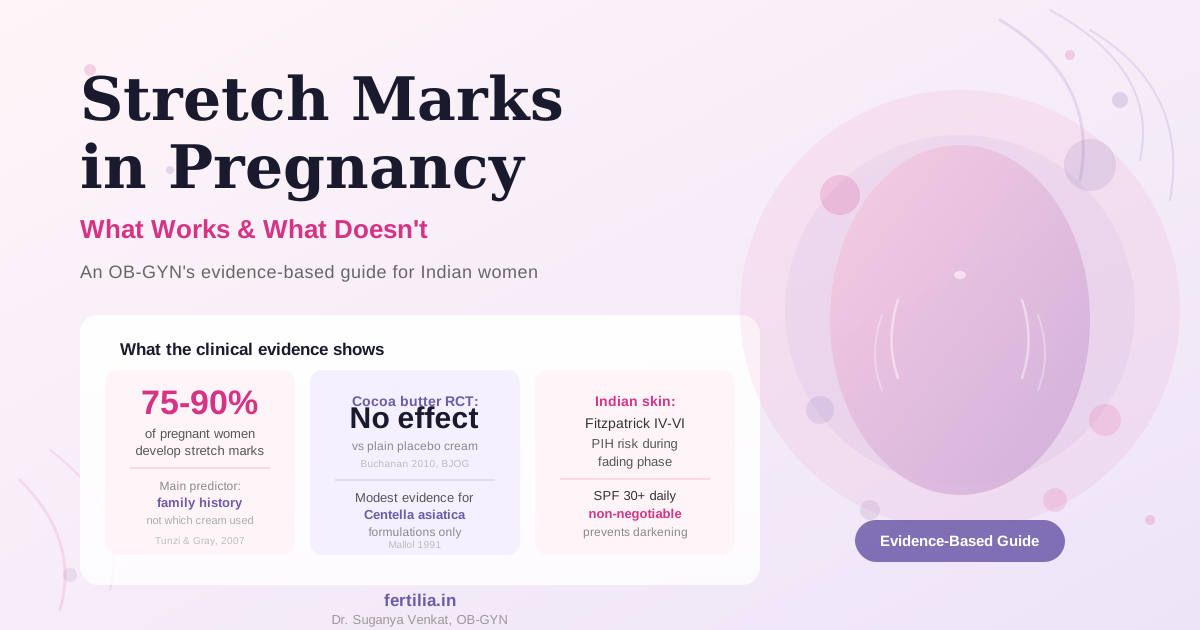
Here is what I want you to know before you spend money on anything: about 75 to 90 percent of pregnant women will develop stretch marks at some point during pregnancy (Picard et al., Journal of the American Academy of Dermatology, 2015). Most of the time, this is not because they chose the wrong cream or skipped a massage. It is because of a biological process happening inside the skin that no topical product can fully prevent.
That does not mean nothing works. It means we have to be clear about what the clinical evidence actually shows, rather than what marketing suggests.
This post covers:
- What stretch marks are and why they form in pregnancy
- Who is more likely to get them (hint: it is mostly genetics)
- What the research shows about prevention
- What actually helps them fade after delivery
- What Indian skin specifically needs to know
- A practical action plan for the rest of your pregnancy
What Are Stretch Marks?
Stretch marks in pregnancy are called striae gravidarum. They form in the dermis, the middle layer of the skin, which provides strength and elasticity through a structural scaffold of collagen and elastin fibres.
During pregnancy, the abdomen, breasts, hips, and thighs expand rapidly. At the same time, elevated cortisol levels during pregnancy suppress fibroblasts, the cells responsible for producing collagen and elastin (Salter et al., American Journal of Obstetrics and Gynecology, 2005). This combination of rapid mechanical stretch and cortisol-driven suppression of collagen production causes those fibres to tear at a microscopic level. The result is the visible streak on the skin surface.
In the early stage, stretch marks appear as pink, red, or purple lines. That colour comes from the underlying blood vessels showing through the damaged dermis. Over months to years after delivery, the blood vessels contract, the marks become flatter, and they fade to silver or white. Fading happens naturally with time. Treatment can accelerate it.
Stretch marks most commonly appear on:
- The lower abdomen and flanks
- Breasts and upper arms
- Thighs and hips
- Buttocks
They are not a sign of poor health or inadequate nutrition. They are a structural response to the speed and extent of skin stretching.
Who Is More Likely to Get Them?
The single strongest predictor of striae gravidarum is family history (Tunzi and Gray, American Family Physician, 2007). If your mother or older sister developed stretch marks during pregnancy, your likelihood increases substantially. Genetics determines how much collagen your skin produces at baseline and how elastically it responds to stretching. No topical cream changes your genetics.
Other factors associated with greater stretch mark development include:
- Younger age at first pregnancy (younger skin may have less baseline laxity before the stretch begins)
- Higher pre-pregnancy BMI
- Larger or more rapid weight gain during pregnancy, particularly in the second trimester
- Multiple pregnancy (twins or more)
- Larger baby
- Prior stretch marks on the body from adolescent growth
Factors that do not meaningfully predict stretch marks: which oil you apply, whether you massage daily, or how moisturised the skin feels on the surface.
What the Evidence Actually Shows About Prevention
This is where most women receive incorrect information, including from product marketing.
Cocoa Butter: Extensively Studied, Disappointing Result
Cocoa butter is the most popular and the most studied stretch mark prevention product in pregnancy. A double-blind randomised controlled trial published in the British Journal of Obstetrics and Gynaecology found no statistically significant difference in stretch mark incidence between women who used cocoa butter cream daily and women who used a plain, fragrance-free placebo cream (Buchanan et al., BJOG, 2010). The only variable that significantly predicted stretch marks in that study was family history of stretch marks.
Almond Oil and Olive Oil: No Convincing Evidence
A study by Soltanipour et al. (Iranian Red Crescent Medical Journal, 2014) tested sweet almond oil against no treatment and found some differences in stretch mark severity, but the study had significant limitations including lack of blinding. Olive oil has no published randomised controlled trial evidence supporting its use for stretch mark prevention in pregnancy.
Both almond oil and olive oil are safe to use during pregnancy and may reduce the tightness and itch that come with skin stretching. That comfort benefit is real. Preventing stretch marks is not something they reliably do.
Centella Asiatica and Hyaluronic Acid Formulations: Modest Evidence
This is the most promising category. A study by Mallol et al. (International Journal of Cosmetic Science, 1991) tested a topical formulation containing Centella asiatica, alpha tocopherol, and collagen-elastin hydrolysates against placebo in 100 pregnant women. The treatment group showed a statistically significant reduction in stretch mark development. The benefit was most pronounced in women who had experienced stretch marks with a prior pregnancy.
This is a single, older study with a specific formulation. The effect was modest, not a guarantee. More recent products combining Centella asiatica with hyaluronic acid are available at Indian pharmacies. If you want to use something beyond a plain moisturiser, these formulations are a reasonable choice with appropriate expectations.
Tretinoin: Must Never Be Used During Pregnancy
Tretinoin (retinoic acid, the topical vitamin A derivative) is one of the few topical ingredients with published evidence for improving the texture and appearance of stretch marks, specifically early red or pink ones. But it is teratogenic. It can cause serious harm to the developing baby. Tretinoin must never be used during pregnancy or while breastfeeding. This caution extends to over-the-counter retinol products. If a product label lists “retinol,” “retinoic acid,” “retinal,” or “retinaldehyde,” it is not for use until after breastfeeding is complete. This is a conversation to have with your dermatologist after your baby has weaned.
What Actually Makes a Difference: The Pace of Weight Gain
The most modifiable factor associated with stretch mark severity is not what you apply to your skin. It is how quickly weight is gained, particularly in the second trimester when the abdomen expands most rapidly.
Gaining weight within the recommended range for your pre-pregnancy BMI, and gaining it gradually rather than in rapid surges, reduces the sheer speed at which the dermis is asked to stretch. For Indian women, the relevant BMI thresholds are lower than Western guidelines: the Asian WHO cutoffs classify overweight as starting at BMI 23 kg/m², not 25. If you want to understand the full trimester-by-trimester weight gain targets applicable to your BMI, see our pregnancy weight gain guide.
Staying within these ranges does not guarantee you will not develop stretch marks. But it removes one of the modifiable contributors to the speed of skin stretch.
If you have questions about your pregnancy skin changes or want personalised guidance, reach out to Dr. Suganya on WhatsApp. A 15-minute conversation can help you separate what is worth doing from what is just marketing.
What Helps Fade Stretch Marks After Delivery
Once stretch marks are present, the goal shifts from prevention to fading. This is where a few interventions have better clinical evidence.
Tretinoin (0.1% topical cream): Applied nightly to early pink or red stretch marks after delivery (and after breastfeeding is complete), tretinoin has been shown in clinical studies to measurably reduce the length and width of striae and improve their texture. Results require consistent use over several months, and daily SPF is non-negotiable alongside tretinoin because it increases photosensitivity. This requires a dermatologist’s prescription. It improves appearance; it does not erase marks.
Pulsed-dye laser: Targets early red or purple stretch marks by shrinking the underlying blood vessels that give them their colour (Tay and Kwok, Journal of Cosmetic and Laser Therapy, 2008). It works best on fresh, pigmented marks. Multiple sessions are typically needed.
Fractional CO2 or Erbium laser: Used for the white or silver phase of older stretch marks. Stimulates new collagen formation in the dermis, improving texture over a series of treatments.
Microneedling: Creates controlled micro-injuries that stimulate collagen production. Emerging evidence for texture improvement, though most published studies are small and short-term.
Time: The majority of stretch marks that appear vivid at delivery are noticeably lighter by the end of the first year. Before investing in any treatment, give it six to twelve months. Many women find that the marks they were most worried about at delivery have faded substantially on their own.
For a general guide to what your body goes through in the postpartum period, see our evidence-based healthy pregnancy guide.
What Indian Skin Specifically Needs to Know
Indian women typically have skin classified as Fitzpatrick type IV to VI, meaning higher melanin content and a greater tendency toward post-inflammatory hyperpigmentation (PIH). When the dermis is injured or inflamed, melanocytes (pigment cells) often produce extra melanin as part of the repair response. This means that for many women with Indian skin, the pink-to-red phase of stretch marks can transition to a darker brown or greyish-brown before eventually lightening. That transition can take longer to fade than the same marks on lighter skin.
Two practical implications follow from this.
First, daily SPF 30 or higher is especially important. A stretch mark that is still in the pink-to-brown transition phase will darken further and persist longer if exposed to UV light without protection. Using a broad-spectrum sunscreen on exposed stretch mark areas from the second trimester onward, and continuing after delivery, is a simple and evidence-consistent habit. This matters particularly during the Indian summer months when UV index is high.
Second, if you are considering any active treatment after delivery, discuss the risk of PIH with a dermatologist before starting. Tretinoin, lasers, and microneedling all carry a risk of PIH in darker skin tones if not used at appropriate starting doses or settings. A dermatologist with experience in Indian skin will start conservatively and monitor carefully before increasing intensity.
Stretch marks in Indian skin are not a cosmetic emergency. They are the physical record of a pregnancy in a dermis that was doing its best to keep up. They fade. Most women, at their baby’s first birthday, find they are far less visible than they were in the delivery room.
This is a separate process from linea nigra, the dark vertical line that often appears on the abdomen during pregnancy. If you want to understand pregnancy skin pigmentation more broadly, see our guide to linea nigra and pregnancy skin changes.
What to Actually Do During Pregnancy: A Practical Plan
Based on the clinical evidence, here is what is worth doing:
1. Adjust your expectations now. If your mother had prominent stretch marks in pregnancy, yours will likely appear too. No cream on the market has been shown to override genetic predisposition. Knowing this saves money and prevents disappointment.
2. Manage the pace of weight gain. Work with your OB-GYN to stay within your personalised target range and gain weight gradually. This matters for blood sugar, blood pressure, and the baby’s growth, independent of stretch marks.
3. Moisturise for comfort, not prevention. Any plain unscented moisturiser, applied after bathing while skin is still slightly damp, reduces the itch and tightness that come with skin stretching. If you want to use a Centella asiatica formulation, it is a reasonable choice with modest evidence behind it.
4. Do not use retinol or tretinoin. Not during pregnancy. Not during breastfeeding. Store them for a conversation with your dermatologist after weaning.
5. Apply SPF to exposed areas. If your lower abdomen or other stretching areas are exposed to sunlight, use SPF 30 or higher. This is particularly relevant in the second and third trimesters when stretch marks are actively forming.
6. After delivery, give it time first. Most marks that look stark at delivery fade considerably by month six. Before scheduling laser sessions or buying prescription tretinoin, wait and watch.
7. See a dermatologist if you want to treat. After breastfeeding is done, a dermatologist experienced with Indian skin can advise on tretinoin concentrations or laser options appropriate for your skin tone. Your OB-GYN and dermatologist work as a team in this, not in competition.
For a complete picture of what to expect at each stage of pregnancy, including nutrition, antenatal visits, and warning signs, see our healthy pregnancy guide.
If you would like personalised guidance on managing your pregnancy skin changes, connect with Dr. Suganya on WhatsApp for a consultation. Skin changes are one small part of the support in her Pregnancy Care program.
You can also download our free Pregnancy Resource Guide which covers nutrition, exercise, and trimester-by-trimester expectations.
Frequently Asked Questions
Can stretch marks completely disappear after pregnancy?
Stretch marks do not disappear completely. They fade significantly over one to two years after delivery, moving from pink or red to silver or white, becoming flatter and less noticeable over time. With consistent use of treatments such as tretinoin (after breastfeeding) or laser therapy, the improvement in appearance can be meaningful, but complete resolution is not a realistic expectation from any current intervention.
I massaged my belly with coconut oil every day. Will that prevent stretch marks?
Massaging with coconut oil makes the skin feel comfortable and reduces the tightness and itch of stretching skin, which is a genuine benefit during pregnancy. However, clinical trials have not shown that massage or any oil, including coconut, almond, or olive oil, prevents stretch marks in controlled studies. The most consistent predictor of stretch mark development remains genetics, not skin care routine.
My mother had severe stretch marks. Does that mean I definitely will too?
Family history substantially increases the likelihood, but it is not an absolute guarantee. Some daughters of women with prominent striae gravidarum develop none. It is the single strongest predictor we have, which is why it is worth knowing, but it is a probability, not a certainty.
Is it safe to use any stretch mark cream during the first trimester?
Plain moisturisers and Centella asiatica formulations are safe from any point in pregnancy. What is not safe at any point during pregnancy or breastfeeding are products containing retinol, retinaldehyde, retinoic acid, or any other retinoid. Check the ingredient list before buying, especially for products marketed as anti-ageing or stretch mark repair.
Why does my skin itch so much where the stretch marks are forming?
The itch at the site of new stretch marks comes from the dermis being physically stretched and the collagen fibres tearing at a microscopic level. Applying a moisturiser, particularly after bathing while skin is damp, reduces this sensation. If the itching is intense, covers a wide area, or is accompanied by raised red bumps, mention it to your OB-GYN at the next visit. A condition called PUPPP (pruritic urticarial papules and plaques of pregnancy) can cause significant itching at stretch mark sites and needs separate assessment.
I am in my third trimester and stretch marks are appearing now. Is there anything I can do at this stage?
At this stage, prevention is less relevant. Focus on two things: keep the stretching skin comfortable with a plain moisturiser, and start applying SPF 30 or higher to exposed areas to prevent UV-driven darkening. After delivery, allow six to twelve months for natural fading before deciding whether to pursue any active treatment.
My stretch marks look very dark and prominent. Will they look this dark forever?
No. The darkest and most visible phase of stretch marks is the early pink-to-red-to-brown phase, when active blood vessels are showing through the damaged dermis. This phase typically lasts six to eighteen months. After that, the marks become silver or white and noticeably flatter. For women with Indian skin (Fitzpatrick IV-VI), the transition through the pigmented phase can take a little longer, and UV protection during this period helps prevent the marks from darkening further. Most women are pleasantly surprised by how much fading occurs in the first two years.