You are 29, building a career you love. Or 33, in a relationship that feels right but not yet ready for a child. Or 36, newly diagnosed with endometriosis and wondering what it means for your future. Somewhere in the background of each of these lives is the same quiet question: what about my eggs?
Egg freezing, the medical term is oocyte cryopreservation, has moved from experimental technology to a well-established fertility preservation option. It is now available at accredited clinics across India. It is not a guarantee of a future pregnancy. But for the right woman at the right time, it can be a meaningful way to preserve reproductive options.
This post covers exactly what the process involves, what it realistically costs at Indian clinics, which age gives you the best outcome, and the specific questions to ask before making any decision.
What this post covers:
- How egg freezing works, step by step
- Realistic cost breakdown for Indian clinics in 2025-2026
- Age and success rates: what the research actually shows
- Who benefits most from the procedure
- Questions to ask before choosing a clinic
- Frequently asked questions
What Is Egg Freezing and How Does It Work?
Oocyte cryopreservation is a procedure in which eggs are retrieved from your ovaries, frozen using a technique called vitrification, and stored in liquid nitrogen until you are ready to use them.
When you decide to proceed, the stored eggs are thawed, fertilised with sperm in a laboratory (the same process as IVF), and the resulting embryos are transferred to your uterus in a separate cycle.
The key advance that made this clinically viable was vitrification, a form of ultra-rapid flash freezing that replaced the older slow-freeze technique. Vitrification dramatically improved egg survival after thawing. Published studies report survival rates of approximately 80 to 90 percent for vitrified eggs, compared to significantly lower rates with the older slow-freeze method. The American Society for Reproductive Medicine (ASRM) formally removed the “experimental” designation from egg freezing in 2012, after data confirmed that babies born from frozen eggs have similar rates of birth defects and chromosomal abnormalities to those from fresh eggs.
In India, the procedure is now governed by the ART (Assisted Reproductive Technology) Regulation Act, 2021, which requires clinics offering egg freezing to be accredited and sets standards for consent, documentation, and storage.
The Step-by-Step Process
Step 1: Baseline Evaluation
Before the cycle begins, your gynaecologist will assess your ovarian reserve and overall health. The key tests are:
- AMH (Anti-Mullerian Hormone): This measures the functional reserve of your ovaries. A higher AMH suggests more eggs are likely to be retrieved per stimulation cycle. The AMH test guide covers this in detail, including what your numbers mean.
- Antral follicle count (AFC): An ultrasound count of the small resting follicles in both ovaries. This gives a direct visual assessment of your reserve alongside the AMH.
- Day 2 FSH and oestradiol: Baseline hormone levels that help predict how your ovaries will respond to stimulation.
- Thyroid function: Thyroid levels affect ovarian response and egg quality. If yours have not been checked recently, they should be. The post on thyroid and fertility explains why.
These tests help your doctor set a realistic retrieval target and an appropriate stimulation protocol before you spend money on a cycle.
Step 2: Ovarian Stimulation (10-14 Days)
You will self-administer daily hormone injections (gonadotropins) to stimulate your ovaries to mature multiple eggs simultaneously. Normally, your body matures one egg per cycle. The medications prompt several follicles to develop at once.
Your clinic will schedule monitoring ultrasounds every 2-3 days and blood tests to track your oestrogen levels. The results guide dose adjustments and determine the right moment for the trigger injection.
Most women produce between 8 and 15 mature eggs in a single stimulation cycle, though this varies considerably based on age and ovarian reserve. Women with low AMH may produce fewer; women with PCOS need careful monitoring because their ovaries can over-respond.
Step 3: Trigger Injection and Egg Retrieval
When the follicles reach the right size, a trigger injection is given (either hCG or a GnRH agonist). Approximately 36 hours later, the egg retrieval takes place.
The retrieval is a minor surgical procedure done under sedation. You are not awake. Using transvaginal ultrasound guidance, a thin needle passes through the vaginal wall into each follicle to aspirate the fluid and the egg inside. The procedure takes approximately 20-30 minutes. Most women rest for 2-4 hours at the clinic and return home the same day.
Mild cramping and bloating for 1-2 days is normal and expected. Most women return to desk work the following day. Strenuous activity is avoided for about a week.
Step 4: Vitrification and Storage
The embryologist identifies the mature eggs (specifically the MII stage eggs, which are the ones ready for fertilisation) under a microscope. These are flash-frozen in liquid nitrogen at -196 degrees Celsius and placed in individually labelled storage containers.
Your eggs remain in storage until you are ready to use them, subject to the annual storage fee and your clinic’s storage policy.
Egg Freezing Cost in India: A Realistic Breakdown
The headline numbers on clinic websites often exclude key costs. Here is a complete picture.
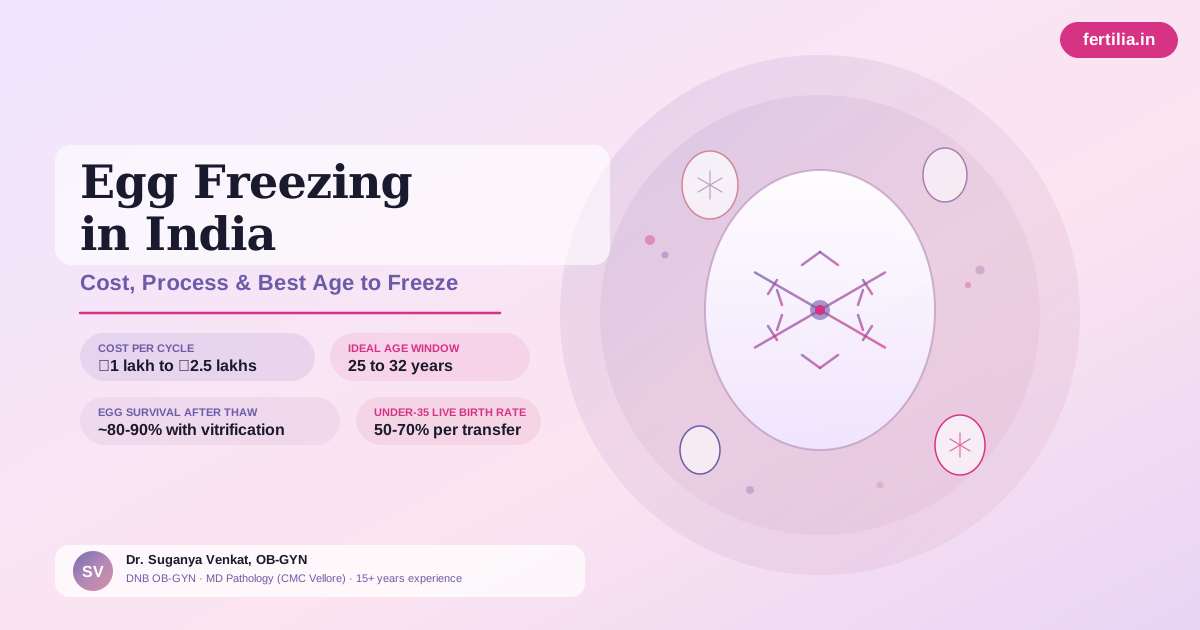
Procedure cost per cycle: approximately ₹1,00,000 to ₹2,50,000
This covers stimulation monitoring appointments, the egg retrieval procedure, embryologist fees, and vitrification. Prices vary across city and clinic type. Major fertility chains in metro cities typically fall in the ₹1,20,000 to ₹1,80,000 range. Boutique IVF clinics and hospital-based fertility units may go higher. These figures were cross-checked against current Indian clinic pricing as of April 2026 and should be confirmed directly with your clinic before committing, as prices change frequently.
Medications: ₹20,000 to ₹50,000 additional
Gonadotropin injections are expensive and are almost always billed separately. The exact cost depends on which protocol your doctor uses and for how many days. When you receive your cycle quote, ask specifically: “Are medications included?” and “What is the estimated medication budget for my protocol?”
Monitoring tests: ₹5,000 to ₹15,000 additional
Some clinics include monitoring ultrasounds and blood tests in the package fee. Others bill them separately. Clarify this before the cycle starts.
Annual storage fees: ₹25,000 to ₹50,000 per year
Most clinics include the first year of storage in the cycle cost. From year two onward, an annual fee applies. If you plan to store eggs for 5 or 10 years, work out the cumulative cost.
Realistic total for the first year:
| Tier | Procedure | Meds | Monitoring | Storage | Total |
|---|---|---|---|---|---|
| Budget | ₹1,00,000 | ₹20,000 | ₹5,000 | Included | ₹1,25,000 |
| Mid-range | ₹1,50,000 | ₹35,000 | ₹10,000 | ₹25,000 | ₹2,20,000 |
| Premium | ₹2,50,000 | ₹50,000 | ₹15,000 | ₹50,000 | ₹3,65,000 |
A note on multi-cycle packages: Some clinics offer 2-cycle or 3-cycle packages at a reduced combined rate. For women who may need more than one cycle to bank enough eggs (typically those over 36 or with lower AMH), these can represent meaningful savings.
Have Questions About Egg Freezing?
If you are trying to decide whether this is the right step for you, a conversation with Dr. Suganya is a good starting point. She can review your ovarian reserve results, explain what they mean for your specific situation, and help you make a decision without pressure or guesswork.
WhatsApp Dr. Suganya directly: wa.me/919940270499
Age and Success Rates: What the Research Actually Shows
This is the most important section of this post, because the age at which you freeze your eggs has the greatest influence on the outcome.
Egg quality and quantity decline with age. This decline accelerates after 35. When you freeze eggs at 29, you are storing 29-year-old eggs. If you use them at 40, they carry the quality profile of a 29-year-old ovary, not a 40-year-old one. That is the core clinical rationale for the procedure.
Recommended window: before 35, ideally between 25 and 32
The ASRM recommends freezing before 35 for the best outcomes. Here is why the age matters:
Egg survival after thawing is relatively consistent across ages (approximately 80-90% for vitrified eggs). The difference shows up at fertilisation and in chromosomal quality. Younger eggs fertilise more reliably and are more likely to produce chromosomally normal embryos that can implant successfully.
Approximate success rates by age at freezing:
The following figures are drawn from large vitrified oocyte cohort data (Cobo A et al., Fertility and Sterility 2016; ASRM Practice Committee, Fertility and Sterility 2013). Live birth rates per warming cycle vary meaningfully by clinic quality, number of eggs thawed, and individual ovarian reserve.
| Age at Freezing | Approximate Live Birth Rate per Transfer |
|---|---|
| Under 35 | 40-60% |
| 35-37 | 30-50% |
| 38-40 | 20-35% |
| 41-42 | 10-25% |
These are population-level ranges, not individual predictions. A woman at 38 with strong ovarian reserve may perform above these ranges. Someone with diminished reserve at 32 may fall below them. Your specific AMH and AFC results give a more personalised picture than age alone.
How many eggs should you aim to bank?
Published models suggest that banking 10-20 mature eggs gives a reasonable chance of achieving one live birth for women under 35 (Cil AP et al., Fertility and Sterility 2013; 100(2):492-499). Women over 37 typically need more, because a higher proportion of their eggs are chromosomally abnormal. In practical terms, this often means planning for more than one stimulation cycle.
Who Benefits Most From Egg Freezing?
Medical fertility preservation (oncofertility)
Women about to begin chemotherapy, pelvic radiation, or surgery that may affect ovarian function. Preserving eggs before cancer treatment is a well-established, ASRM-supported indication and is often prioritised by oncology teams.
Declining ovarian reserve
Women diagnosed with low AMH who are not yet ready to try to conceive. Freezing eggs now, while some reserve remains, is clinically more valuable than waiting for the situation to deteriorate further. In some cases, rapidly declining AMH can signal premature menopause, which makes early action even more important.
For more on this, read our guide on Chemical Pregnancy. Endometriosis
Endometriosis can progressively damage ovarian tissue, particularly when it involves the ovaries as endometriomas. For women with a confirmed diagnosis who are not yet trying to conceive, the conversation about egg freezing is worth having with your gynaecologist. The post on endometriosis and fertility covers this relationship in more detail.
Genetic conditions
Women who know they carry genetic variants that may affect ovarian function earlier than expected (such as BRCA carriers, Turner mosaics, or fragile X carriers) often choose to preserve eggs as a precaution.
Elective social freezing
Women who are not ready to have children due to personal, professional, or relationship circumstances. This is now the most common indication in Indian metro cities. It is a legitimate and clinically supported use of the technology, provided expectations are realistic.
Questions to Ask Before You Choose a Clinic
The difference in outcomes between clinics is real and it matters. Ask these specific questions:
1. What is your vitrification survival rate? Any clinic that handles egg freezing regularly should be able to quote this. Aim for 80% or higher.
2. How experienced is your embryologist with vitrification? This procedure is technically demanding. The embryologist’s skill affects outcomes as much as the equipment does. Ask how many egg freezing cycles they have performed.
3. What is your retrieval-to-mature-egg ratio? Not every retrieved egg is mature enough to freeze. Ask what percentage of retrieved eggs are typically mature and suitable for vitrification.
4. Is medication included in the quoted price? In most clinics, it is not. Get a fully itemised estimate in writing before you sign anything.
5. What are your storage terms and annual fees? Ask explicitly: what happens to the eggs if you want to move to a different clinic? What is the process for transport? What is the annual fee from year two onward?
6. Are you accredited under the ART Regulation Act, 2021? This is a legal requirement for clinics providing ART services in India. Ask to see their registration.
Practical Steps to Take Now
If egg freezing is something you want to explore, here is a sensible order of actions:
-
Get a baseline ovarian reserve assessment first. AMH and antral follicle count (AFC) will tell you how much time you realistically have and whether one cycle is likely to retrieve enough eggs.
-
If your AMH is in the normal range and you are under 32, there is no urgency. You likely have 2-4 years before the timing becomes clinically significant.
-
If your AMH is declining or you are already over 35, a gynaecologist’s input on timing is worth getting sooner rather than later.
-
Compare at least 2-3 clinics. Ask for fully itemised cost breakdowns, not headline numbers. Ask for their specific vitrification survival data.
-
Be honest with yourself about the realistic use case. Egg freezing is a form of biological insurance. It increases your options; it does not guarantee a baby. That framing leads to better decisions than treating it as a certainty.
Frequently Asked Questions
Is egg freezing painful?
The daily injections cause mild discomfort at the injection site, similar to any subcutaneous injection. The egg retrieval is done under sedation, so you will not feel it. Post-procedure cramping and bloating for 1-2 days is normal. Most women find this manageable with rest and a mild painkiller if needed.
Can I work during the stimulation phase?
Yes, for most desk-based roles. The daily injections take a few minutes and can be done at home. You will need to attend the clinic for monitoring ultrasounds and blood tests (typically 3-5 visits over 10-14 days). Strenuous physical work may need to be modified during stimulation.
What is ovarian hyperstimulation syndrome (OHSS)?
OHSS occurs when the ovaries over-respond to stimulation, causing bloating, abdominal discomfort, and fluid retention. Mild OHSS occurs in approximately 20-33% of IVF and egg retrieval cycles (Delvigne A and Rozenberg S, Human Reproduction Update 2002; 8(6):503-521). Severe OHSS, which requires hospital management, affects approximately 0.5-2% of cycles. Your clinic will monitor hormone levels and follicle size closely throughout the cycle to identify early signs and adjust the protocol accordingly. Women with PCOS have a higher baseline risk and should inform their treating doctor at the outset.
At what age should I freeze my eggs?
Most reproductive endocrinologists recommend before 35, with 25-32 considered the optimal window. After 35, egg quality and retrieval numbers decline more steeply, meaning more cycles may be required and success rates per thaw cycle are lower. If you are in your late 30s and considering this, it is still worth a consultation. Your ovarian reserve results will guide the conversation far better than age alone.
How long can frozen eggs be stored?
Storage policies in India are governed by the ART Regulation Act, 2021 and the specific terms of your clinic’s consent agreement. Ask your clinic directly for their maximum storage period and their protocol for extending storage with consent.
Does egg freezing deplete your future natural egg supply?
No. The stimulation cycle uses eggs that your ovaries recruited that month but would have been lost in the normal process (your ovaries recruit many follicles each cycle, but only one reaches ovulation naturally). Freezing the additional eggs does not draw from any future supply beyond what would have occurred anyway.
Can frozen eggs be used for IUI?
No. Frozen eggs require in-vitro fertilisation (IVF) laboratory conditions. Once thawed, the egg is fertilised with sperm, cultured to a blastocyst stage if possible, and transferred as an embryo in a subsequent cycle. IUI uses sperm, not eggs, so the two procedures are not interchangeable.
Making the Decision
Egg freezing is worth seriously considering for any woman who wants children in the future but is not ready now, particularly if you are approaching 35 or have a diagnosis that affects ovarian reserve.
It works best as a decision made with clear information: your own AMH and AFC numbers, a clinic whose data you trust, and a realistic understanding of what success looks like. It is a meaningful option. It is not a guarantee, and no honest doctor will tell you otherwise.
If you want help thinking through whether this makes sense for your situation, read the AMH guide first, then reach out.
Dr. Suganya reviews your results, answers your questions, and helps you decide without pressure. WhatsApp her directly: wa.me/919940270499