Indian summers and watermelon have always gone together. In many Tamil Nadu, Andhra, and Maharashtra households, a whole tarbooz arrives on the kitchen counter in April or May, and the family works through it over a few days. For a pregnant woman in the middle of a hot South Indian summer, a cold slice of watermelon is one of the most natural things to reach for.
The good news is that the instinct is sound. Watermelon is mostly water, light on the stomach, widely available through the season, and inexpensive. This post covers what is inside it nutritionally, how much to eat at each trimester, how to choose a good one at the market, what to do with the seeds, and five simple Indian recipes you can make with it.
What Is in Watermelon? USDA Nutrition Data
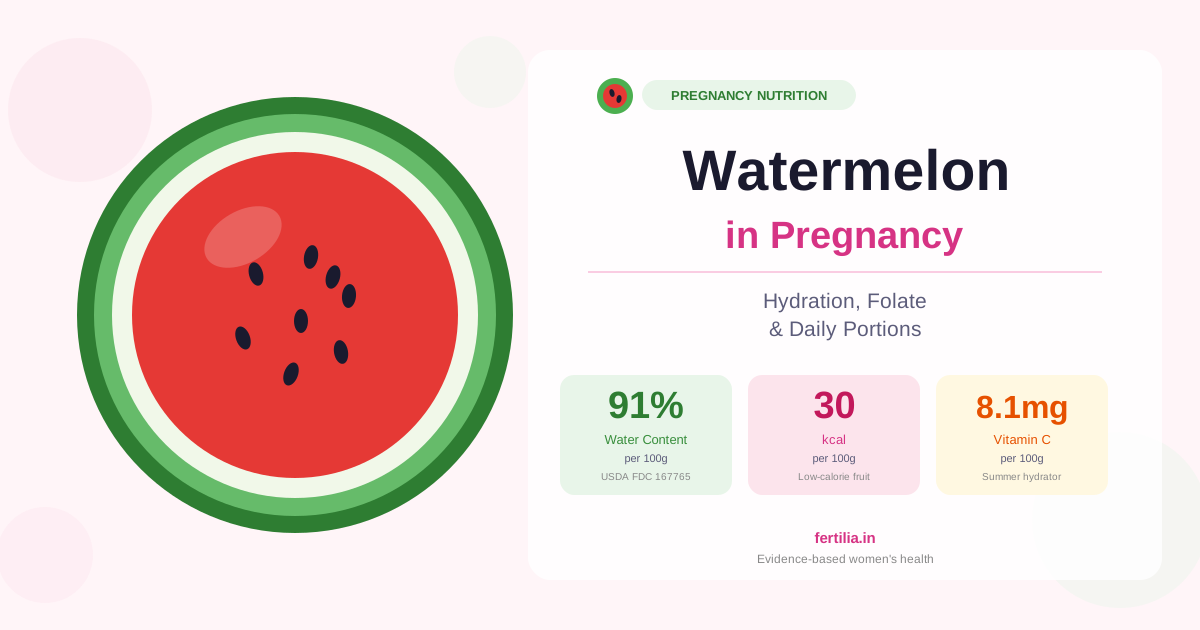
All figures below come from USDA FoodData Central, FDC ID 167765 (Watermelon, raw).
Per 100g watermelon:
| Nutrient | Per 100g | Per 200g serving | Per 300g serving |
|---|---|---|---|
| Energy | 30 kcal | 60 kcal | 90 kcal |
| Water | 91.4g | 182.8g | 274.2g |
| Carbohydrates | 7.6g | 15.2g | 22.8g |
| Sugars | 6.2g | 12.4g | 18.6g |
| Dietary fibre | 0.4g | 0.8g | 1.2g |
| Protein | 0.6g | 1.2g | 1.8g |
| Vitamin C | 8.1mg | 16.2mg | 24.3mg |
| Folate DFE | 3mcg | 6mcg | 9mcg |
| Iron | 0.24mg | 0.48mg | 0.72mg |
| Potassium | 112mg | 224mg | 336mg |
| Magnesium | 10mg | 20mg | 30mg |
| Calcium | 7mg | 14mg | 21mg |
| Lycopene | 4,532mcg | 9,064mcg | 13,596mcg |
A few things to notice from this table:
Water content (91.4%): A 300g serving delivers approximately 274ml of water from the fruit itself, which is what makes watermelon so naturally refreshing. On a hot summer day, it contributes meaningfully to total fluid intake alongside water, chaas, and rasam.
Calories (30 kcal per 100g): Very low. A generous 300g portion adds only 90 kcal, which makes it easy to enjoy without worrying about calorie load at any trimester.
Folate (3mcg per 100g): Watermelon has a small amount of folate. A 300g serving contributes about 9mcg of folate DFE toward the ICMR-NIN 2020 pregnancy RDA of 570mcg per day. Watermelon is a welcome part of a varied diet but not a significant folate source on its own. Your main pregnancy folate foods are palak, chana, moong dal, and methi. For the complete picture on folate forms and dosing in pregnancy, read our folate in pregnancy guide.
Vitamin C (8.1mg per 100g): A 300g serving provides about 24mg, contributing roughly a third of the ICMR-NIN 2020 pregnancy target of 80mg per day.
Iron (0.24mg per 100g): A modest amount of non-haem iron. Your stronger iron sources during pregnancy are palak, rajma, til, bajra, and drumstick leaves. See our guide to iron-rich foods in pregnancy for a full list.
Lycopene (4,532mcg per 100g): Watermelon is one of the richest dietary sources of lycopene, the red pigment that gives watermelon and tomatoes their colour. Fresh watermelon provides more lycopene per 100g than raw tomatoes.
How Much Watermelon Per Day in Pregnancy?
Because watermelon is low in calories and high in water, most women can enjoy a generous daily portion without concern. The table below gives practical guidance by life stage.
| Life Stage | Suggested Daily Portion | Notes |
|---|---|---|
| First trimester | 200-300g (1.5-2 cups diced) | Safe daily; light option when nausea makes heavier foods unappealing |
| Second trimester | 200-300g | Fine to enjoy once or twice a day during the season |
| Third trimester | 200-300g | Same amount; smaller portions are fine if appetite is limited |
| Postpartum (breastfeeding) | 200-300g | Good hydration support in summer months |
| PCOS | 200-300g once daily | Pair with a protein source (a katori of dahi, a handful of roasted makhana) for a balanced snack; see our PCOS diet guide for full meal planning |
| Gestational diabetes | Consult your care team | Portion size and meal timing both matter; see our gestational diabetes guide |
When to eat it: Watermelon works best as a standalone snack between meals. Eating a large amount immediately after a full cooked meal can occasionally cause bloating, because watermelon ferments quickly when combined with heavier foods. A mid-morning or mid-afternoon window tends to work better.
Buying Watermelon in India: A Practical Guide
Common Indian Varieties
Watermelon is sold at markets and roadside carts across India, often without a specific variety name. A few you may come across:
- Round dark green (Sugar Baby, Kiran): Small to medium, very sweet, thin rind. Common in South India and Maharashtra.
- Oblong striped (Arka Manik, Arka Jyoti): Larger, alternating light and dark green stripes, red flesh. Widely available on carts across Tamil Nadu, Andhra, and Karnataka.
- Yellow-flesh varieties: Less common but available in some supermarkets. Milder flavour, same nutritional category.
Regional Names
| Language | Name |
|---|---|
| Hindi | Tarbooz / Tarbooz |
| Tamil | Tharboosakkai |
| Telugu | Puchakaya |
| Kannada | Kallangadi |
| Malayalam | Thannimathan |
| Marathi | Kalingad |
| Bengali | Tarbuj |
| Gujarati | Tarabuch |
The Three-Signal Selection Method
Use all three signals together for the best result:
1. Sound test: Knock the rind firmly with your knuckles. A ripe watermelon gives a deep, hollow thump. An overripe one sounds dull and flat. An underripe one sounds higher, like knocking on a solid wall.
2. Ground spot: Flip the watermelon over. A ripe one has a creamy yellow or orange patch where it rested on the ground. A pale white or greenish spot means it was picked early.
3. Weight: For its size, a ripe watermelon should feel noticeably heavy. That weight comes from the high water content inside.
Additional check: Look for a firm rind with no soft patches or bruised areas. A small dried stem end is completely normal.
A note on pre-cut watermelon
Pre-cut watermelon displayed at room temperature on open-air carts in summer heat can pick up bacteria quickly on the wet, sugary flesh surface. Buying a whole watermelon and cutting it at home is the safer choice during pregnancy.
Can You Eat the Seeds?
Yes. Watermelon seeds are edible and safe to eat during pregnancy.
Swallowing whole seeds is perfectly fine. They pass through the digestive system intact, as with most seeds. There is no need to spit every seed out. Seedless varieties are widely available if you find seeds inconvenient.
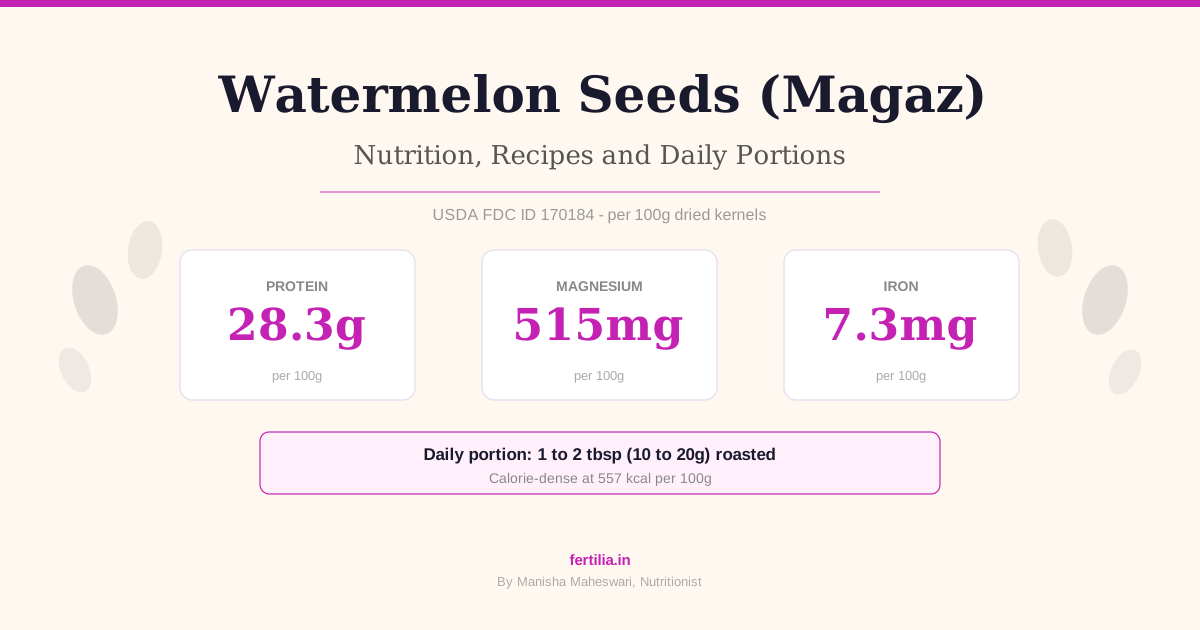
Making roasted magaz at home: Roasted watermelon seeds, called magaz in many parts of India, are a traditional snack with a satisfying crunch.
- Collect seeds from the watermelon and rinse well under running water.
- Spread on a plate and sun-dry for 1-2 days. Alternatively, dry in an oven at 100°C for about 45 minutes.
- Dry-roast in a kadai on a low flame with a pinch of salt, kala namak, or chaat masala, stirring often until crunchy and lightly golden. This takes about 8-12 minutes.
- Cool completely and store in an airtight jar.
One tablespoon of roasted magaz makes a crunchy garnish for raita or kheer, or works as a standalone snack.
Storage Guide
| Watermelon Form | Storage Method | How Long |
|---|---|---|
| Whole, uncut | Cool, shaded room temperature | Up to 2 weeks |
| Whole, fully ripe | Refrigerator | 3-5 days |
| Cut or diced | Airtight container in refrigerator | 3-5 days |
| Cut (to slow browning) | A squeeze of lemon juice, covered tightly | Extends by 1-2 days |
Before cutting: Rinse the whole watermelon thoroughly under running water, even if you are not eating the rind. This prevents any surface bacteria from transferring to the flesh when you cut through it.
Are you looking for personalised pregnancy nutrition guidance tailored to your trimester? Dr. Suganya Venkat and the Fertilia team are here to help. Chat with us on WhatsApp to get started.
5 Cooling Indian Recipes for Pregnancy
1. Watermelon Pudina Sharbat
Ingredients (serves 2):
- 400g watermelon pieces, seeds removed
- 15-20 fresh pudina (mint) leaves
- 1 tablespoon lime juice
- A pinch of kala namak (black salt)
- 100ml cold water
- Ice cubes (optional)
Method:
- Blend watermelon with pudina, lime juice, kala namak, and water until smooth.
- Strain through a sieve for a clear drink, or leave it as-is for more fibre.
- Add ice cubes if desired and serve immediately.
Why this works: No added sugar, gentle on the stomach, and one of the most refreshing drinks in a South Indian or North Indian summer. The kala namak adds a tangy, mineral note.
2. Watermelon Dahi Raita
Ingredients (serves 2-3):
- 200g watermelon, diced small (seeds removed)
- 200g fresh dahi (curd), full-fat
- 1/2 teaspoon roasted jeera powder
- 8-10 fresh pudina leaves, torn
- A pinch of kala namak and regular salt
Method:
- Whisk dahi in a bowl until smooth.
- Add diced watermelon and stir gently so the pieces stay whole.
- Season with roasted jeera powder, kala namak, and salt.
- Top with torn pudina leaves.
- Chill for 10-15 minutes before serving.
Serving suggestion: A cooling side dish alongside parathas or jeera rice, or as a standalone mid-afternoon snack.
3. Watermelon Chaat
Ingredients (serves 2):
- 300g watermelon, cubed
- 1/2 small cucumber, cubed
- 1/2 teaspoon chaat masala
- 1/2 teaspoon roasted jeera powder
- 1 tablespoon lime juice
- A small handful of fresh dhania (coriander) leaves
Method:
- Combine watermelon and cucumber in a bowl.
- Sprinkle chaat masala, jeera powder, and lime juice over the top.
- Toss gently to coat.
- Garnish with dhania leaves and serve immediately, before the watermelon releases too much juice.
Note: If you are managing heartburn or acidity during pregnancy, skip the chaat masala and simply use lime juice and a pinch of jeera. A plain watermelon-cucumber combination is still satisfying.
4. Watermelon Lassi
Ingredients (serves 2):
- 250g watermelon pieces
- 200g fresh dahi
- 1/4 teaspoon elaichi (cardamom) powder
- 4-6 ice cubes
- 1 teaspoon jaggery or honey (optional, to taste)
- A few kesar (saffron) strands for garnish (optional)
Method:
- Blend watermelon until smooth.
- Add dahi, elaichi, ice cubes, and sweetener if using.
- Blend together until frothy and combined.
- Pour into glasses, garnish with kesar strands, and serve cold.
Tip: For a thicker lassi, use hung curd or chill the dahi before blending.
5. Watermelon Nariyal Cooler
Ingredients (serves 2):
- 300g watermelon pieces
- 200ml tender nariyal pani (coconut water)
- Juice of 1 lime
- A 1cm piece of fresh adrak (ginger), peeled and grated
- A pinch of regular salt
- Ice cubes
Method:
- Blend watermelon until liquid.
- Combine watermelon juice with nariyal pani, lime juice, grated adrak, and salt in a jug.
- Stir well, pour over ice, and serve cold.
Why this combination works: Both watermelon and nariyal pani are naturally hydrating Indian summer staples. This cooler contains no added sugars.
Watermelon in Your Weekly Fruit Rotation
Watermelon is available most reliably from April through July across India. Here is a simple weekly rotation for a pregnancy diet during the summer season:
| Day | Fruit Serving |
|---|---|
| Monday | Watermelon (200-300g, mid-morning snack) |
| Tuesday | Banana + 4-6 soaked badam |
| Wednesday | Guava (whole, with skin) |
| Thursday | Watermelon dahi raita as a side at lunch |
| Friday | Apple (with skin, washed well) |
| Saturday | Anar (pomegranate arils) |
| Sunday | Watermelon chaat with cucumber |
This rotation provides variety across the week. Watermelon appears twice because it is low in calories, easy to pair with other foods, and seasonally abundant.
For a complete picture of what to eat throughout pregnancy, see our healthy pregnancy guide. For a broader fruit and dry fruit guide, see our pregnancy fruits and dry fruits guide and our recent apple in pregnancy guide.
Frequently Asked Questions
Q1: Is watermelon safe to eat in the first trimester? Yes. Watermelon is safe throughout pregnancy, including the first trimester. It is easy to digest and light on the stomach. Many women who experience nausea in the first trimester find watermelon tolerable when heavier foods are not. Start with a smaller portion (150-200g) if you are cautious, and increase as your appetite allows.
Q2: I have been told watermelon causes cold or cough. Should I avoid it? This is a common family concern, particularly around chilled fruit. There is no nutritional basis for avoiding watermelon in pregnancy on grounds of cold or cough. If you prefer eating it at room temperature rather than straight from the refrigerator, that is completely fine. The nutritional content is unchanged at room temperature.
Q3: Is watermelon high in sugar? I have gestational diabetes. Watermelon contains natural sugars (6.2g per 100g). A 200g serving has about 12.4g sugars and 15g total carbohydrates. If you have been diagnosed with gestational diabetes, your care team will give you specific guidance on fruit portion sizes and meal timing. Our gestational diabetes guide covers dietary management in more detail. Do not skip fruit entirely without guidance.
Q4: Does watermelon help with pregnancy swelling? We will not make that claim here. Watermelon is genuinely hydrating at 91% water, and staying hydrated is important during pregnancy. However, there is insufficient evidence to say watermelon specifically reduces pregnancy oedema. If you have concerns about swelling, speak to your doctor.
Q5: Can I drink watermelon juice every day? Freshly blended watermelon at home (as in the sharbat and nariyal cooler recipes above) is essentially the same as eating the fruit, and is fine to have daily during the season. Commercial packaged watermelon juice often contains added sugars and preservatives. Check the ingredient label before buying packaged juice, and prefer fresh blending at home.
Q6: Are watermelon seeds safe to swallow during pregnancy? Yes. Watermelon seeds are harmless when swallowed whole. They pass through the digestive system intact. Roasting the seeds at home (magaz) makes them into a nutritious crunchy snack and is perfectly safe during pregnancy in small quantities (1-2 tablespoons per day).
For more on this, read our guide on Custard Apple (Sitaphal) in Pregnancy.
For more on this, read our guide on Ghee During Pregnancy. Q7: How does watermelon compare to muskmelon (kharbooz) in pregnancy? Both are common Indian summer fruits and both are safe throughout pregnancy. Muskmelon contains more folate (~21mcg per 100g vs 3mcg in watermelon) and more vitamin A, while watermelon has significantly more lycopene and a higher water content (91% vs roughly 90%). They complement each other well. If both are available at your market, alternating between them through the season gives good variety.
For more on this, read our guide on Guava in Pregnancy.
Navigating pregnancy nutrition in an Indian kitchen involves many practical decisions: which fruits to eat, how much, and how to build a balanced plate across all three trimesters. The Fertilia team, led by Dr. Suganya Venkat, supports pregnant women through exactly these choices with guidance grounded in clinical evidence and Indian food culture, all woven together in the 90-day Pregnancy Care program.
Chat with us on WhatsApp to book a consultation or ask a nutrition question. We are here to help.
For trimester-wise nutrition guidance throughout pregnancy, download our free Pregnancy Nutrition Guide.