Amrood is one of the most overlooked fruits in Indian kitchens. It is inexpensive, available year-round in most parts of India, and has a nutritional profile that makes it stand out clearly from other common fruits. A single medium guava delivers more vitamin C than a large orange, a bowl of papaya, and a glass of lime water combined. And yet it rarely comes up in conversations about what to eat during pregnancy.
This post covers what guava contains nutritionally, how much to eat at each stage of pregnancy, how to pick a ripe one at the market, what the different varieties look like, and five practical recipes you can make with it at home.
What Is in Guava? USDA Nutrition Data
All figures below are from USDA FoodData Central, FDC ID 173044 (Guavas, common, raw).
Per 100g raw guava:
| Nutrient | Per 100g | Per 150g (1 medium guava) |
|---|---|---|
| Energy | 68 kcal | 102 kcal |
| Water | 80.8g | 121.2g |
| Carbohydrates | 14.3g | 21.5g |
| Sugars | 8.92g | 13.4g |
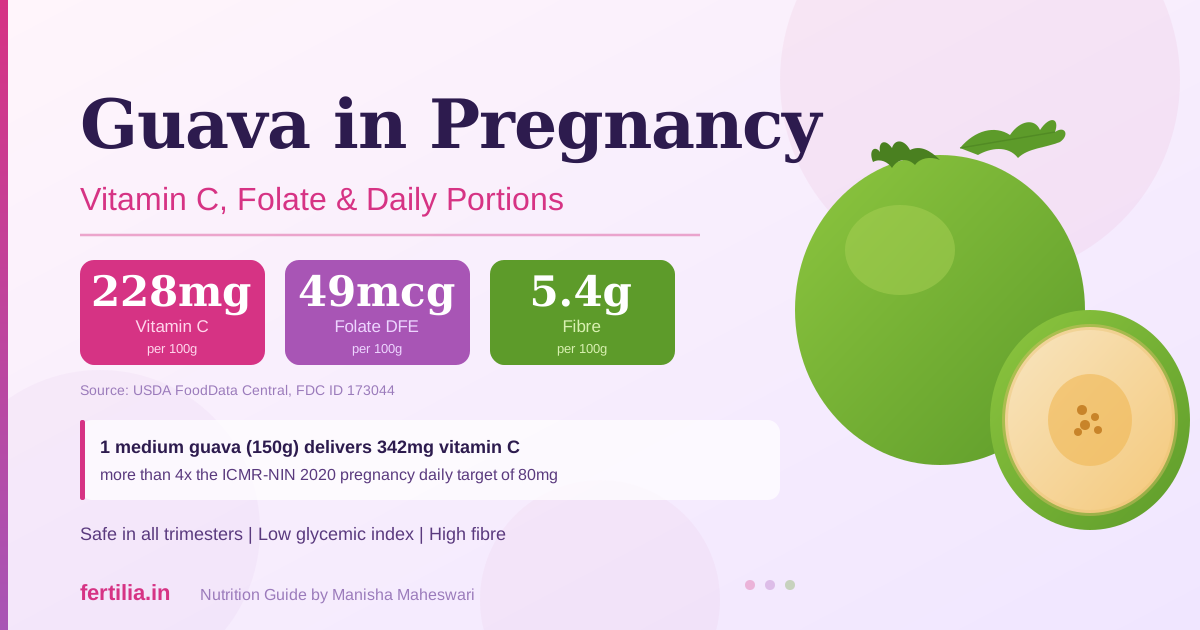
| Dietary fibre | 5.4g | 8.1g |
| Protein | 2.55g | 3.8g |
| Fat | 0.95g | 1.4g |
| Vitamin C | 228mg | 342mg |
| Folate DFE | 49mcg | 74mcg |
| Potassium | 417mg | 626mg |
| Magnesium | 22mg | 33mg |
| Calcium | 18mg | 27mg |
| Iron | 0.26mg | 0.39mg |
| Vitamin A, RAE | 31mcg | 47mcg |
| Lycopene | 5,200mcg | 7,800mcg |
A few things in this table are worth noting:
Vitamin C (228mg per 100g): This is the standout number. For context, a medium orange provides about 53mg of vitamin C, and a medium lemon provides around 53mg. One medium guava at 150g delivers 342mg of vitamin C, which is more than four times the ICMR-NIN 2020 pregnancy target of 80mg per day. Of common Indian fruits, only amla has higher vitamin C content.
For more on this, read our guide on Ghee During Pregnancy.
For more on this, read our guide on Watermelon During Pregnancy. Folate (49mcg DFE per 100g): A 150g guava contributes about 74mcg folate DFE toward the ICMR-NIN 2020 pregnancy RDA of 570mcg per day. Folate from fruit is a useful addition to the diet, but the main sources remain dark leafy greens, dal, and chana. For the full picture on folate in pregnancy, read our folate and folic acid guide.
Fibre (5.4g per 100g): One medium guava at 150g provides 8.1g of dietary fibre, which is a significant contribution. Guava has more fibre per 100g than most common fruits including mango, papaya, and watermelon.
Lycopene (5,200mcg per 100g): Guava is one of the richest dietary sources of lycopene, the red-pink pigment found in certain fruits. Pink and red-fleshed guava varieties contain noticeably higher lycopene than white-fleshed ones.
Iron (0.26mg per 100g): A useful but modest amount of plant-source iron. For your main pregnancy iron sources, see our iron-rich foods guide.
Calcium (18mg per 100g): A small amount. Your main calcium sources during pregnancy are dahi, ragi, til, and paneer. See our calcium in pregnancy guide for the full list.
Regional Indian Names for Guava
| Language | Name | Script |
|---|---|---|
| Hindi / Urdu | Amrood | अमरूद |
| Tamil | Koyya pazham | கொய்யாப்பழம் |
| Telugu | Jama pandu | జామ పండు |
| Kannada | Seebe hannu | ಸೀಬೆ ಹಣ್ಣು |
| Malayalam | Perakka | പേരക്ക |
| Bengali | Peyara | পেয়ারা |
| Marathi | Peru | पेरू |
| Gujarati | Jaam | જામ |
| Punjabi | Amrood | ਅਮਰੂਦ |
| Odia | Pijuli | ପିଜୁଳି |
How Much Guava Per Day in Pregnancy?
Guava is safe to eat throughout all three trimesters. It is one of the lower-calorie fruits with a low glycemic index, which makes it a practical daily fruit choice. For how guava fits into a PCOS-supportive meal plan, read our PCOS diet guide.
| Life Stage | Suggested Daily Portion | Notes |
|---|---|---|
| First trimester | 1 medium guava (150g) | Good choice when nausea limits heavier foods; the mild flavour of slightly unripe guava is often well-tolerated |
| Second trimester | 1 medium guava (150g) | Fine daily; the fibre helps with the constipation that commonly develops in this trimester |
| Third trimester | 1 medium guava (150g) | Continue daily; keep portions moderate if bladder pressure makes large drinks or bulky fruits uncomfortable |
| Postpartum and breastfeeding | 1 medium guava (150g) | Good fruit option; see our after delivery food guide for the full postpartum eating plan |
| PCOS | 1 medium guava (150g) daily | One of the best fruit choices for women managing PCOS; read our low-GI Indian foods guide for more |
| Gestational diabetes | Consult your care team | Guava has a low GI; portion size and meal timing both matter; see our gestational diabetes guide for the full food framework |
When to eat guava: Guava works well as a mid-morning or mid-afternoon snack. Because it is fibrous and mildly filling, it pairs nicely with a small katori of dahi or a handful of roasted makhana if you want a more sustained snack.
About the seeds: Guava seeds are small, hard, and completely safe to eat. Most people swallow them whole without chewing. If you prefer, you can scoop out the soft seedy centre with a spoon and eat just the firm flesh around the edges, or buy low-seed hybrid varieties. There is no need to remove seeds during pregnancy.
About the skin: The skin of a ripe guava is edible and nutritious. Washing thoroughly under running water and eating with the skin is fine. If the skin is very thick and waxy, as in some large Thai varieties, peeling is a personal preference rather than a safety requirement.
Need a personalised pregnancy nutrition plan? WhatsApp Dr. Suganya for a conversation about what to eat at each stage of your pregnancy.
Guava Varieties in India: A Practical Guide
Indian markets carry several guava varieties. Here is what you will commonly encounter:
| Variety | Skin Colour | Flesh Colour | Taste | Where Common |
|---|---|---|---|---|
| Allahabad Safeda | Yellow-green when ripe | White | Mild, fragrant, classic | North India, widely available |
| Lucknow-49 | Yellow-green | White | Sweet, soft | Pan-India, supermarkets |
| Lalit | Greenish-yellow | Pink-orange | Sweeter, aromatic | South India, Maharashtra |
| Thai guava / Crystal guava | Light green, stays hard | White to pale pink | Mild, crisp, low aroma | Urban supermarkets |
| Arka Mridula | Green-yellow | White | Sweet | Andhra, Karnataka |
Allahabad Safeda and Lucknow-49 are the most common varieties in Indian bazaars. Both are white-fleshed, fragrant, and available from October to March as the main crop.
Pink and red-fleshed varieties like Lalit have higher lycopene content and a slightly sweeter flavour. These are more commonly available in South India and in larger urban markets.
Thai guava (the large, hard, apple-shaped variety sold in packets in supermarkets) has a milder flavour and stays crisp even when ripe. It has a lower aroma but is convenient for chaat and raita.
Buying and Storing Guava in India
Choosing a Ripe Guava
- Skin colour: Look for yellow-green to creamy yellow skin. A fully green guava is unripe. A dull brownish or mushy skin means it is overripe.
- Give test: Press gently. A ripe guava gives slightly but does not collapse. Very hard means unripe; very soft means overripe.
- Smell test: Ripe guava has a clear, sweet, tropical fragrance. If it has no smell, it is likely not ripe yet.
- Weight: A good guava feels heavy for its size, which indicates full juice and flesh development.
Storing Guava
| State | Storage | Duration |
|---|---|---|
| Unripe | Room temperature, out of direct sun | 2-4 days to ripen naturally |
| Ripe, whole | Refrigerator vegetable drawer | 4-5 days |
| Cut guava | Airtight container in the refrigerator | 1-2 days |
Guava releases a strong fragrance in the refrigerator, so an airtight container or sealed bag prevents the smell from spreading to other foods.
5 Indian Recipes Using Guava
1. Amrood Jaljeera (Guava Jaljeera Drink)
A cooling drink that uses guava as its base, brightened with jaljeera spices.
Makes: 2 glasses
Ingredients:
- 1 medium ripe guava (150g), deseeded and chopped
- 1.5 cups cold water
- 1 tsp bhuna jeera powder
- Half tsp kala namak (black salt)
- Juice of half a lemon
- 10-12 fresh pudina (mint) leaves
- Small piece of ginger (optional)
- 1-2 tsp jaggery or to taste
Method:
- Blend guava pulp with cold water until smooth.
- Strain through a fine mesh or muslin to remove seed fragments, or leave unstrained if you prefer texture.
- Add bhuna jeera powder, kala namak, lemon juice, jaggery, and pudina leaves.
- Blend briefly or muddle the pudina leaves in.
- Chill and serve over ice.
Tip: Adjust jaggery to taste. The kala namak gives a characteristic jaljeera tang that works well with the sweet-tart guava base.
2. Guava Dahi Raita
A quick side dish that pairs well with roti, poha, or rice.
Makes: 2 servings
Ingredients:
- 1 medium guava (150g), diced into small cubes (ripe but firm)
- 200g full-fat dahi (curd), whisked smooth
- Half tsp bhuna jeera powder
- Quarter tsp kala namak
- Salt to taste
- Fresh coriander leaves, chopped
- Pinch of red chilli powder (optional)
Method:
- Dice the guava into small cubes, removing the very hard seed core if preferred. The skin can be left on or peeled.
- Whisk dahi until smooth.
- Mix in guava, bhuna jeera, kala namak, and salt.
- Garnish with coriander and chilli powder.
- Serve immediately or refrigerate for up to 2 hours.
Tip: Use ripe but firm guava so the pieces hold their shape and do not turn the raita watery.
3. Amrood Chaat
The classic street-food way to eat guava, ready in five minutes.
Makes: 2 servings
Ingredients:
- 2 medium guavas (300g), washed and sliced into wedges or cubes
- 1 tsp chaat masala
- Quarter tsp kala namak
- Juice of half a lemon
- Green chutney (pudina-coriander chutney), 1-2 tsp
- 2 tbsp pomegranate arils (anar dana, optional)
- Fresh coriander, chopped
Method:
- Slice guavas into wedges or bite-sized cubes.
- Sprinkle chaat masala, kala namak, and lemon juice over the pieces.
- Drizzle green chutney on top.
- Scatter pomegranate arils and coriander.
- Toss gently and serve immediately.
Tip: Slightly firm guava (not fully ripe) gives a better texture for chaat. Fully ripe guava becomes too soft when tossed.
4. Raw Guava Sabzi (Kaccha Amrood Ki Sabzi)
A simple cooked vegetable dish made from firm, semi-ripe guava. Traditional in parts of Rajasthan, Bihar, and UP. The result is mild and pleasantly textured.
Makes: 2 servings
Ingredients:
- 2 firm guavas (300g), peeled and diced into 2cm pieces (seeds can stay)
- 1 tbsp oil
- Half tsp jeera (cumin seeds)
- Pinch of hing (asafoetida)
- 1 green chilli, slit (adjust to preference)
- Quarter tsp haldi
- Salt to taste
- Fresh coriander to garnish
Method:
- Heat oil in a kadai over medium flame.
- Add jeera and let it splutter. Add hing and green chilli.
- Add diced guava, haldi, and salt.
- Stir to coat, reduce heat to low-medium, cover and cook for 8-10 minutes until guava softens but still holds its shape.
- Garnish with coriander. Serve with roti or as a side.
Tip: Use only firm, semi-ripe guava here. Ripe guava will turn mushy and lose its texture when cooked.
5. Koyya Pazham Pachadi (Guava Pachadi, South Indian Style)
A South Indian-style pachadi where guava is cooked with coconut and tempered with curry leaves and mustard. A traditional Tamil Nadu and Kerala preparation.
Makes: 2 servings
Ingredients:
- 2 ripe guavas (300g), peeled, deseeded, and mashed or finely chopped
- Half cup fresh grated coconut (or 3 tbsp dry desiccated coconut)
- 1 green chilli
- Quarter tsp jeera
- 150g full-fat dahi, whisked
- Salt to taste
For tempering:
- 1 tsp oil
- Half tsp mustard seeds
- 1 sprig curry leaves (kadi patta)
- Pinch of hing
Method:
- Grind coconut, green chilli, and jeera to a coarse paste with a little water.
- In a pan over low heat, warm the mashed guava with salt for 2-3 minutes.
- Remove from heat and mix in the coconut paste and whisked dahi.
- Prepare tempering: heat oil, add mustard seeds, let them pop, add curry leaves and hing.
- Pour tempering over the guava-dahi mixture. Stir gently.
- Serve at room temperature alongside rice and sambar.
Tip: Do not heat the dahi or it will curdle. Mix it in off the heat.
Planning your pregnancy nutrition and not sure where to start? WhatsApp Dr. Suganya for a personalised consultation.
Foods like guava slot into the trimester-wise meals in Dr. Suganya’s 90-day Pregnancy Care program.
Frequently Asked Questions
Is guava safe to eat during pregnancy?
Yes, guava is safe throughout all three trimesters. Wash it thoroughly under running water before eating, and choose ripe or semi-ripe fruit. Avoid guava leaf extracts, guava supplements, or herbal preparations made from guava bark or leaf during pregnancy, as these have not been adequately studied for pregnancy safety. Fresh fruit is what this guide covers.
How many guavas can I eat per day during pregnancy?
One medium guava (around 150g) per day is a good daily portion. This provides 68-102 kcal and about 342mg of vitamin C. Eating two medium guavas (300g) is fine occasionally, but there is no particular reason to eat more than one per day as the vitamin C content is already well above daily requirements.
Can I eat guava in the first trimester?
Yes. Guava is safe from the first trimester onward. Some women find slightly unripe guava (which is milder and less fragrant) more tolerable during the nausea phase of early pregnancy than fully ripe guava.
Which is better: white guava or pink guava?
Both are nutritionally good choices. Pink and red-fleshed guava varieties tend to have higher lycopene content and are slightly sweeter. White-fleshed guava has a more classic, mildly tart flavour. There is no need to seek out one over the other; eat whichever variety is fresh and available in your local market.
Can I eat guava seeds during pregnancy?
Yes, guava seeds are safe to swallow. They are small and hard but not harmful. If you prefer, you can scoop out the seedy centre and eat only the firm flesh. The choice is entirely about preference and texture, not safety.
Is guava good for pregnancy constipation?
Guava is a high-fibre fruit, providing 5.4g of fibre per 100g. Including it as part of a fibre-rich diet alongside palak, dal, rajma, and whole grains is a practical food-first approach to the constipation that commonly develops in the second and third trimesters. For a broader look at diet and constipation in pregnancy, see our pregnancy constipation guide.
Can I eat guava if I have gestational diabetes?
Guava has a low glycemic index, which places it among the safer fruit choices for women managing blood sugar in pregnancy. For the full food and management framework, read our gestational diabetes guide.
Written by Ms. Manisha Maheswari, Nutritionist at Fertilia Health.