Walk into almost any Indian home when a woman is pregnant and two things are guaranteed: advice about resting and advice about ghee. The conversation tends to split into two camps. One side of the family encourages more ghee, especially in the last trimester, saying it will help with delivery. The other side worries about calories and wonders if ghee is actually safe.
For more on this, read our guide on Watermelon During Pregnancy.
For more on this, read our guide on Guava During Pregnancy. Both sides mean well. This post takes neither extreme. It covers what ghee contains nutritionally, what a practical daily amount looks like at each trimester, how homemade and packaged ghee compare, and five recipes that use ghee as part of a regular Indian pregnancy diet.
For more on this, read our guide on Karela (Bitter Gourd).
What Is in Ghee? Nutritional Profile
Ghee is clarified butter. Milk is simmered until the water evaporates, and the milk solids (lactose, casein, whey proteins) separate and are skimmed off. What remains is almost entirely fat.
All figures below come from USDA FoodData Central, FDC ID 171394 (Butter oil, anhydrous; nutritionally equivalent to ghee).
Per 100g ghee:
| Nutrient | Per 100g | Per 1 tsp (5g) | Per 1 tbsp (13g) |
|---|---|---|---|
| Energy | 876 kcal | 44 kcal | 114 kcal |
| Total fat | 99.5g | 5.0g | 12.9g |
| Saturated fat | 61.9g | 3.1g | 8.1g |
| Monounsaturated fat | 28.7g | 1.4g | 3.7g |
| Polyunsaturated fat | 3.7g | 0.2g | 0.5g |
| Protein | 0g (trace) | 0g | 0g |
| Carbohydrate | 0g | 0g | 0g |
Fat-soluble vitamins in ghee (per 100g, USDA FDC ID 171394):
| Vitamin | Amount per 100g |
|---|---|
| Vitamin A | 824 mcg RAE (2,745 IU) |
| Vitamin E | 2.8mg |
| Vitamin K | 8.1 mcg |
| Vitamin D | trace |
A few things worth noting about this data.
Ghee is very calorie-dense. A single teaspoon adds about 44 kcal. That is not a reason to avoid it, but it does explain why amount matters.
The lactose and casein are removed. The clarification process takes out milk solids, which is why people who are mildly lactose intolerant often find ghee easier to digest than butter or cream.
Ghee does not provide protein, iron, or folate. These are nutrients that pregnant women need in greater amounts. Ghee contributes fat-soluble vitamins and energy, not the key micronutrients pregnancy demands. For those, the iron-rich Indian foods for pregnancy guide and the calcium in pregnancy guide cover what matters most.
How Much Ghee Per Day During Pregnancy?
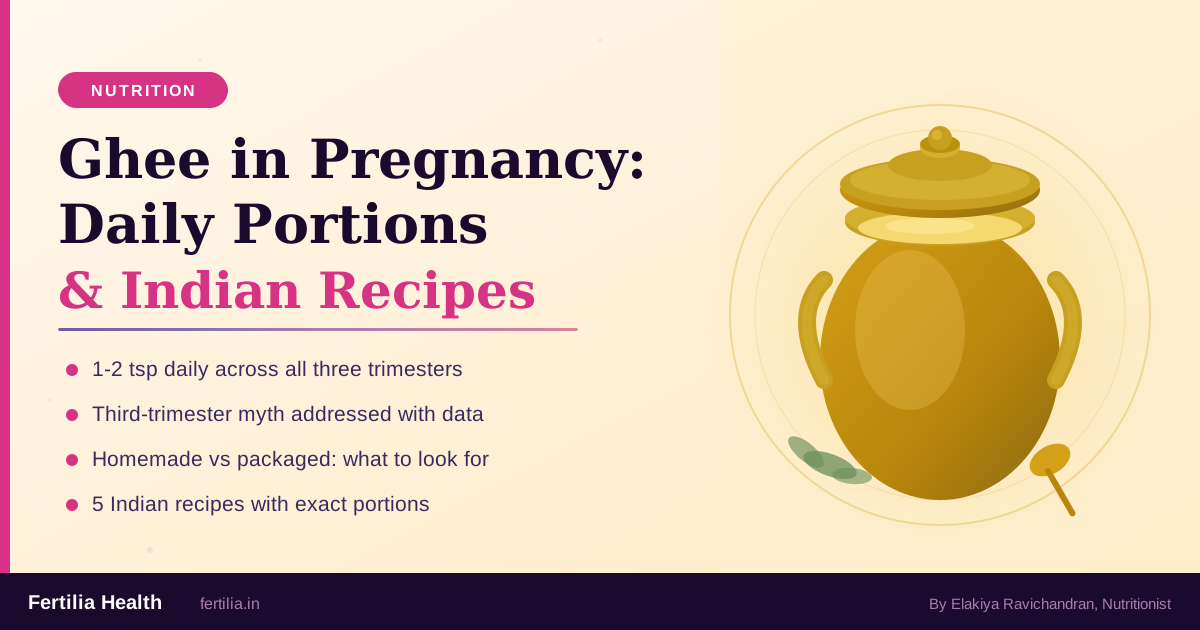
The short answer is 1 to 2 teaspoons per day, used as part of cooking, and this applies across all three trimesters.
Trimester-wise portions:
| Stage | Suggested Daily Amount | Practical Note |
|---|---|---|
| Pregnancy (T1: weeks 1-12) | 1 tsp | Nausea in early pregnancy can make fatty foods less appealing. Starting with a half teaspoon in tadka is fine. |
| Pregnancy (T2: weeks 13-27) | 1-2 tsp | Appetite typically improves. Ghee works well as a finishing touch on dal, roti, or khichdi. |
| Pregnancy (T3: weeks 28-40) | 1-2 tsp | No nutritional basis for increasing ghee significantly in the third trimester. See section below. |
| Gestational diabetes | 1/2-1 tsp | Ghee has no carbohydrate, so it does not spike blood sugar directly, but total calorie balance matters. Discuss the right amount with the team managing your GDM. The gestational diabetes guide for India has more. |
| Postpartum (weeks 1-4) | 2-3 tsp | Traditional panjiri, methi laddoo, and khichdi preparations use ghee more generously in this period. The full after-delivery food guide for Indian mothers covers this in detail. |
| General (non-pregnant) | 1-2 tsp | This is the standard guidance for a balanced Indian diet. |
The Third-Trimester Ghee Tradition: What the Data Shows
In many Indian families, particularly in South India, Rajasthan, and UP, there is a tradition of eating more ghee in the ninth month. The belief is that ghee lubricates the birth canal and helps with an easier delivery.
This tradition comes from a place of care and is woven into generations of family practice.
However, there is no scientific evidence that eating additional ghee in the third trimester changes how delivery proceeds. The amount already in your daily cooking (1 to 2 teaspoons) is sufficient throughout pregnancy, including the ninth month.
What this means in practice: You do not need to add extra tablespoons in month nine. Eating a ghee-rich festive dish on an occasion during the third trimester is not going to cause any problem. The caution is against treating extra ghee as a daily medical intervention for delivery outcomes.
For a full picture of what actually supports a healthy pregnancy, the evidence-based pregnancy guide covers nutrition, movement, and antenatal care in one place.
Have questions about building a ghee-inclusive pregnancy meal plan tailored to your trimester or condition? Dr. Suganya's team can put one together for you.
Chat on WhatsAppHomemade vs Packaged Ghee: Which One to Use?
Both work well during pregnancy. The choice depends on convenience, access, and budget.
| Homemade Ghee | Packaged AGMARK-Certified Ghee | |
|---|---|---|
| Source | Full-fat cow or buffalo milk from local dairy | Large-scale dairy or cooperative |
| How it’s made | Simmer milk, collect malai, churn into butter, clarify on low flame | Industrial clarification from cream or milk |
| Colour | Golden yellow (cow) or creamy white (buffalo) | Pale golden to off-white |
| Aroma and taste | Rich, nutty, pronounced desi butter character | Milder, more consistent batch to batch |
| Shelf life | 2-3 months at room temperature in a dry kitchen | 9-12 months (unopened), 3-6 months after opening |
| Quality marker | Depends on milk quality, no AGMARK | AGMARK or BIS (ISI) certification |
| Typical price | Depends on milk cost (Rs. 600-900 equivalent per 500g) | Rs. 400-700 per 500g (brand dependent) |
What About A2 Ghee?
A2 ghee is made from the milk of indigenous Indian cow breeds: Gir, Sahiwal, Red Sindhi, and Tharparkar. These breeds produce milk containing the A2 beta-casein protein rather than the A1 variant found in most commercial hybrid dairy cattle.
The nutritional composition of A2 ghee, as measured by fat, vitamins, and calorie content, is the same as regular cow ghee. The difference is in the source breed and the production, which gives A2 ghee a more pronounced traditional desi flavour.
A2 ghee typically costs Rs. 900-1,500 per 500g, which is two to three times the price of standard packaged ghee. If you enjoy the flavour and it fits your budget, it is a good choice. It does not provide nutritionally different outcomes during pregnancy compared to standard AGMARK-certified ghee.
What to look for on a packaged ghee label:
- AGMARK certification (ensures quality standards set by the Agricultural Marketing department)
- Ingredients: should read only “cow milk” or “buffalo milk” with no additions
- Manufacturing date within the last 6 months for best quality
- Absence of any “vanaspati” or “partially hydrogenated” mention (those are not ghee)
5 Indian Recipes Using Ghee in Pregnancy
These recipes use ghee within the 1 to 2 teaspoon daily guidance. In each recipe, ghee is used as a finishing touch or for tadka rather than as the primary cooking fat.
1. Ghee Dal Tadka
Makes: 2 servings What you need: 1 cup cooked moong or toor dal, 1 tsp ghee, 1/4 tsp cumin seeds, a pinch of hing (asafoetida), 1 small tomato (chopped), salt to taste, fresh coriander to finish
Method:
- Heat ghee in a small ladle or small pan on medium flame.
- Add cumin seeds and hing. Let the seeds splutter for about 30 seconds.
- Add tomato and cook for 2 minutes until slightly softened.
- Pour the tadka over the cooked dal.
- Mix gently, top with fresh coriander, and serve with rice or roti.
Serving note: Moong dal is one of the lightest on digestion, which makes this a reliable option during the first trimester when nausea is common.
2. Jeera Rice with Ghee
Makes: 2 servings What you need: 1.5 cups cooked rice, 1 tsp ghee, 1/2 tsp cumin seeds, salt to taste
Method:
- Heat ghee in a wide pan on medium flame.
- Add cumin seeds and let them splutter (about 20 seconds).
- Add cooked rice and fold gently to coat without breaking the grains.
- Season with salt and serve.
Serve with: Rajma, any dal, or a simple vegetable sabji on the side. This is an easy lunch option when appetite is low.
3. Ragi Kanji with Ghee
Makes: 1 serving What you need: 1 cup prepared ragi kanji (finger millet porridge), 1/2 tsp ghee, a pinch of salt or jaggery to taste
Method:
- Prepare ragi kanji as usual with water or thin buttermilk.
- Add a half teaspoon of ghee at the end, just before serving.
- Season with salt for a savoury version or a pinch of jaggery for a mildly sweet version.
Ragi is a widely used grain in pregnancy and postpartum cooking across South and West India. The ragi kanji guide has full preparation instructions and portion guidance.
4. Ghee-Coated Dates (Warm Snack)
Makes: 1 serving What you need: 3-4 Medjool or Khajur dates (pitted), 1/4 tsp ghee, a pinch of cardamom powder (optional)
Method:
- Warm the dates slightly (about 30 seconds in a microwave, or place in a small bowl near warm water for a few minutes).
- Add a tiny amount of ghee and cardamom.
- Mix until the dates are lightly coated.
- Eat as a mid-morning or evening snack.
Dates pair naturally with a small amount of ghee in Indian kitchen tradition. For a complete look at dates and their portions in pregnancy, see the dates during pregnancy guide.
5. Whole Wheat Roti with Ghee and Jaggery
Makes: 1 serving What you need: 1 fresh whole wheat roti, 1/2 tsp ghee, a small piece of jaggery (gur, about 5-10g)
Method:
- While the roti is still hot, spread a thin layer of ghee on one side using the back of a spoon.
- Serve with a small piece of jaggery on the side.
This is a familiar Indian breakfast in Punjab and Rajasthan, where a thin smear of ghee on a hot roti is part of the morning table. Keep the jaggery piece small (5-10g) to manage the sugar intake, especially in the third trimester.
Buying and Storage Guide
| Guidance | |
|---|---|
| Buying packaged ghee | Look for AGMARK or BIS (ISI) mark. Amul, Mother Dairy, Gopaljee, and Patanjali Ghee all carry AGMARK. Avoid any product labelled “vanaspati” or “dalda” (these are hydrogenated fats, not ghee). |
| Buying A2 ghee | Check for breed name on the label (Gir, Sahiwal, Red Sindhi). Ingredients should read only “A2 cow milk”. Expect to pay Rs. 900-1,500 per 500g. |
| Storage at room temperature | Up to 3 months in a cool, dry spot away from direct sunlight or the stove’s steam. Always use a clean, dry spoon. |
| Storage in the refrigerator | Up to 12 months. Ghee solidifies when cold and softens at room temperature within 20-30 minutes. |
| Signs of spoilage | Sour or rancid smell, visible mould, or a distinctly off colour. Discard if any of these are present. |
| Best container | Glass or stainless steel. Avoid plastic containers for long-term storage as ghee’s fat can absorb plastic odours over time. |
For more on building a complete and balanced pregnancy diet using traditional Indian foods, see the pregnancy guide and food resources.
Looking for a personalised plan that balances traditional Indian foods, including ghee, with your specific pregnancy nutrition needs? We are happy to help. Trimester by trimester, our 90-day Pregnancy Care program turns guidance like this into a plan you can actually cook from.
Chat on WhatsAppFrequently Asked Questions
Is ghee safe to eat in all three trimesters?
Yes. Ghee is a traditional Indian food and can be included in a balanced pregnancy diet across all three trimesters. The standard cooking amount of 1 to 2 teaspoons per day applies throughout. If you have a specific condition such as gestational diabetes, discuss the right portion with your doctor or dietitian.
Can I eat ghee if I have gestational diabetes?
Ghee contains no carbohydrates and does not directly affect blood sugar. However, it is calorie-dense, and total calorie intake matters in GDM management. Half a teaspoon to 1 teaspoon a day as part of cooking is generally a reasonable amount. Your GDM management team’s guidance takes priority over general nutrition recommendations.
Does eating more ghee in the third trimester help with a normal delivery?
There is no scientific evidence that increasing ghee intake in the last trimester influences delivery outcomes. The 1 to 2 teaspoons of ghee already in your daily cooking is sufficient throughout all three trimesters. A ghee-rich dish at a family occasion is not a concern; adding tablespoons daily on the basis of the delivery belief is not supported by nutritional evidence.
Is homemade ghee better than packaged ghee during pregnancy?
Both are good choices when made or packaged correctly. Homemade ghee from full-fat cow or buffalo milk is fresh and has no additives, with a rich desi flavour. Packaged AGMARK-certified ghee has consistent quality standards and a longer shelf life. The nutritional composition is similar. The choice depends on access, budget, and personal preference.
What is A2 ghee and is it different nutritionally during pregnancy?
A2 ghee comes from indigenous Indian cow breeds (Gir, Sahiwal) that produce milk with A2 beta-casein protein. Nutritionally, the fat content, vitamins, and calorie profile are the same as regular cow ghee. The difference is in the source breed and flavour, not the nutritional outcome. It costs more but is a fine choice if you prefer the flavour.
How much ghee is too much during pregnancy?
More than 3 to 4 teaspoons per day consistently over several weeks is more than what most pregnancy diets include. At 1 to 2 teaspoons (44 to 88 kcal), ghee fits comfortably within a balanced day. What matters most is the overall calorie and nutrient pattern across the full day, not ghee specifically.
Should I add ghee raw to food or cook with it?
Both are fine. Ghee has a high smoke point (around 250 degrees Celsius), which means it is stable at the temperatures used in Indian cooking: tadka, light sauteing, and roasting. Many families prefer to add a small amount raw at the end (poured over hot dal or roti) to preserve the aroma. Either method works well.