“You already have a baby. Just relax. It will happen.”
This is what most women with secondary infertility hear, from family, from friends, sometimes from a well-meaning doctor. The logic seems reasonable: if you conceived once, your fertility must be fine. But biology does not work that way. The body at 28 is not the body at 33. The uterus after one C-section is not the same uterus that carried the first pregnancy. Life, stress, weight changes, and new health conditions all affect fertility in real ways between pregnancies.
For more on this, read our guide on Infertility Doctor in India. Secondary infertility is genuinely common, genuinely treatable in many cases, and genuinely underserved because too many women are told to wait and relax when they should be investigated.
What Secondary Infertility Is
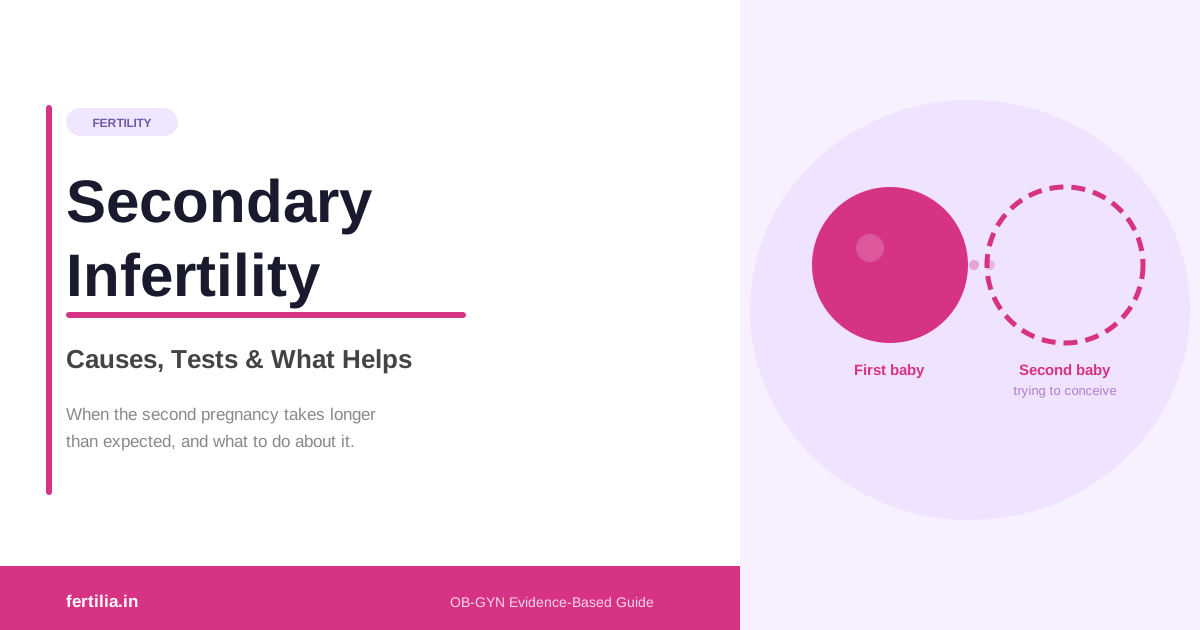
Secondary infertility is defined as the inability to conceive after 12 months of regular, unprotected intercourse in a couple who have had at least one previous pregnancy. In clinical practice, most guidelines focus on prior live births, though some definitions include any prior clinical pregnancy confirmed on ultrasound or histology.
A large-scale global analysis by Mascarenhas et al. (PLoS Med, 2012, PMID 23271957) estimated that approximately 10.5% of women who have previously had a child experience secondary infertility when trying for another. That figure likely underestimates the true burden, because many couples spend months or years assuming “it will happen eventually” before seeking help.
The workup and treatment framework is essentially the same as for primary infertility. What changes is the starting assumption: a prior pregnancy establishes that basic reproductive anatomy was functional at some point, and the investigation focuses on what has changed since.
Five Causes That Drive Secondary Infertility
1. Age-Related Change in Ovarian Reserve
The gap between the first and second attempt is often three to five years. Ovarian reserve declines with age in every woman, and AMH (anti-Mullerian hormone) drops most steeply in the early-to-mid 30s. A woman with comfortable AMH at 28 may have a noticeably lower reserve at 32 or 33, even with good health and no new diagnoses.
This is not a malfunction. It is physiology. The clinical implication is that the timeline urgency for investigation is higher the second time around, particularly for women over 35. Most guidelines recommend seeking evaluation after 6 months of trying for women aged 35 and older, not 12, because the fertility window is narrowing at a pace that makes a year of waiting too long.
If you have a recent AMH result and are wondering what it means in the context of a second pregnancy, AMH Normal Range by Age and Low AMH and Pregnancy: Can You Still Conceive Naturally? give you the full framework.
2. Post-Delivery Changes to the Uterine Cavity
Delivery, especially by C-section, can leave structural changes in the uterus that are invisible without imaging and yet clinically significant. The most recognised of these is the C-section scar niche, sometimes called isthmocele. This is a small indentation at the site of the uterine scar that can accumulate blood from each cycle, potentially affecting the implantation environment.
After any delivery where a D&C (dilation and curettage) was needed for retained placenta or incomplete miscarriage, intrauterine adhesions can form. These adhesions, known as Asherman’s syndrome, reduce the surface area available for implantation and can be the hidden explanation behind cycles that come and go without a pregnancy.
These structural changes cause no symptoms. Periods can appear entirely normal. The only way to identify them is through an HSG (hysterosalpingogram) or office hysteroscopy. Reading your HSG report explains what the radiologist’s language actually means.
3. Tubal Blockage from Post-Delivery Infection
Postpartum endometritis, infection of the uterine lining after delivery, is a well-documented precursor to tubal damage. If you had fever, abdominal pain, or a prolonged hospital stay in the days following delivery and were treated with antibiotics, there may have been some impact on tubal anatomy. A prior history of pelvic inflammatory disease, ruptured appendix, or abdominal surgery carries a similar risk.
Fallopian tube blockage causes no symptoms. Cycles come and go without conception despite ovulation. The Practice Committee of the American Society for Reproductive Medicine (ASRM, 2020) identifies tubal factor as a significant contributor in female infertility cases globally. An HSG is the standard test.
4. A New or Evolving Condition
Conditions like thyroid dysfunction, PCOS, uterine fibroids, and endometriosis can develop or become more evident between pregnancies. A woman who had a normal thyroid during her first pregnancy can develop thyroid antibodies in the years following delivery. Sub-clinical hypothyroidism with TSH in the range of 2.5 to 5.0 mIU/L is associated with impaired implantation and early pregnancy loss, and is easily missed without a targeted test.
This is why a secondary infertility workup is not simply a check that “everything is still fine.” It is a fresh clinical assessment of your current reproductive health, not a verification of what was true three or four years ago.
5. Changes in Male Fertility
Male fertility is not static. Semen analysis parameters, including sperm count, motility, and morphology, can shift meaningfully between a couple’s first and second pregnancy attempt. The factors most commonly involved include weight gain (particularly central adiposity, which affects testosterone metabolism), increased stress, new medication, varicocele development or progression, and reduced sleep.
In roughly 40 to 50% of couples experiencing infertility, male factor is either the primary or a contributing cause. A repeat semen analysis is always part of the secondary infertility workup, regardless of how the first pregnancy happened. Our guide to semen parameters and what they mean gives the full clinical context.
If you have been trying for more than 6 to 12 months for a second baby and are not sure where to start, I am available via WhatsApp. We review your history, your current tests, and your timeline, and give you a clear direction.
When to Start Investigating
Under 35: After 12 months of trying with no success.
35 to 37: After 6 months of trying.
38 and older: After 3 to 4 months. In the late 30s, monthly fecundity (the probability of conceiving in any given cycle) drops steeply. Waiting a full year is too long.
Sooner than any of these timelines, if: periods have changed significantly since the last delivery, a postpartum infection required antibiotics, there was a D&C procedure after delivery or miscarriage, either partner has a known diagnosis that affects fertility, or a recent semen analysis showed abnormal parameters.
These timelines are starting guides, not rigid rules. If something feels different from the first time, that instinct is worth acting on. Earlier investigation rarely costs anything except a few blood tests and one imaging study.
For a step-by-step framework covering the whole journey from workup to natural conception, the Getting Pregnant Guide is a free resource that walks through each stage.
The Secondary Infertility Workup
The complete fertility workup guide covers all layers of investigation in detail. For secondary infertility, the same framework applies, with particular emphasis on the uterine cavity assessment and the repeat male evaluation.
For the woman:
Ovarian reserve: AMH, plus Day 2-3 FSH, LH, and estradiol. This tells you how the reserve compares to age-matched reference ranges and how urgently to move through the investigation.
Thyroid: TSH, free T4, and anti-TPO antibodies. A full thyroid panel is standard. TSH above 2.5 mIU/L is associated with impaired implantation. Anti-TPO antibodies can be present with a normal TSH and still carry risk for early pregnancy loss.
Uterine cavity and tubes: HSG. This is the assessment most frequently skipped in secondary infertility because “she conceived before.” It should not be skipped if there was a prior C-section, D&C, or post-delivery infection. The HSG takes about 20 minutes, costs Rs. 2,500 to 6,000 at most diagnostic centres in India, and assesses both the uterine cavity and the fallopian tubes in one study.
Prolactin. Elevated prolactin suppresses ovulation. Some women develop mildly elevated prolactin from medications taken for other conditions, including domperidone (commonly used in India for gastric symptoms and during breastfeeding), antipsychotics, and certain antidepressants.
Vitamin D. A review documented widespread deficiency across varied Indian populations (Ritu and Gupta, Nutrients, 2014, PMID 24566435). It does not establish that deficiency caused an individual’s implantation difficulty or pregnancy loss. Discuss a confirmed deficiency with your doctor without treating it as the explanation for secondary infertility.
Fasting insulin and blood glucose. Insulin resistance can develop or worsen between pregnancies with weight and lifestyle changes. If not tested in the last year, it is worth including.
For the man:
A fresh semen analysis, interpreted against WHO 2021 reference values (concentration at least 16 million/mL, total motility at least 42%, morphology at least 4% by strict Kruger criteria). Done after 2 to 5 days of abstinence. If the first result is borderline, repeat after 3 months before making clinical decisions based on it.
Total cost of this workup in India typically falls between Rs. 10,000 and Rs. 18,000, depending on which components are included and whether the HSG is at a government or private facility.
What Treatment Looks Like
Treatment for secondary infertility follows the same sequence as for primary infertility, with two practical differences.
First, the timeline is usually accelerated, especially for women over 35. Investigation and intervention stages are moved through more quickly.
Second, a prior successful pregnancy is clinically reassuring. It establishes that the basic architecture works. This means treatable causes are identified and addressed first, before moving to assisted reproduction. Thyroid correction, surgical correction of intrauterine adhesions, treatment of a tubal blockage, varicocele repair, ovulation induction with timed intercourse or IUI: all of these have documented pregnancy rates that justify pursuing them in sequence.
For couples with an entirely clean workup (unexplained secondary infertility), the approach is lifestyle optimisation, accurate ovulation timing, a defined trial of IUI, and only then a conversation about IVF. The Do You Need IVF guide covers that decision clearly. Most couples with secondary infertility do not need IVF as their first intervention.
If you want a comprehensive framework for the natural conception process alongside your investigation, How to Conceive Naturally: A Couple’s Complete Guide is a useful companion.
What to Eat While You Are Trying
Nutritional support for secondary infertility follows the same principles as general fertility nutrition. Foods that support ovarian function and egg quality: amla (one of the highest natural sources of Vitamin C), haldi, rajma, palak, and dahi. For blood sugar stability, which supports the hormonal environment for ovulation and implantation: ragi, jowar, chana dal, moong dal. For both partners, adequate protein daily from dal, eggs, paneer, or fish.
These are not substitutes for the medical workup. They are the nutritional layer that supports it. The body cannot optimise what it is not being given.
India Context
A few things are specific to what I see in my clinic that are worth naming directly.
The “you already have one” dismissal works against care-seeking. Family support for a couple trying for a second baby is often thinner than it was for the first pregnancy. The social expectation that they are already fortunate can delay the recognition that something needs investigation. In clinical terms, this delay matters, especially for women approaching their mid-30s.
C-section rates in India are high. National Family Health Survey-5 (2019-21) data shows a national C-section rate of about 21.5%, with urban private facilities often exceeding 40%. A significant proportion of women attempting a second pregnancy have a prior uterine scar. The uterine cavity assessment is therefore a higher-yield investigation here than in settings with lower C-section rates. If you have had a C-section and are now trying for a second baby, ask specifically for the HSG to be included in your workup.
Post-delivery infection is underreported. Many women who received antibiotics after delivery were told they had a minor infection and discharged without formal documentation. If this happened to you, mention it specifically during your workup consultation. It is relevant to the tubal assessment decision.
Frequently Asked Questions
How is secondary infertility defined?
Secondary infertility is the inability to conceive after 12 months of regular, unprotected intercourse in a couple who have had at least one prior pregnancy. Most clinical guidelines focus on prior live births. The 12-month threshold is from the WHO definition of infertility (2023), with a shorter timeline recommended for women over 35.
How common is secondary infertility?
More common than most people realise. A systematic analysis of 277 health surveys (Mascarenhas et al., PLoS Med, 2012, PMID 23271957) estimated approximately 10.5% of women who have had a child experience difficulty conceiving again. In absolute terms, secondary infertility is more prevalent globally than primary infertility.
Does secondary infertility mean something went wrong during the first delivery?
Not necessarily. In many cases it is simply age-related decline in ovarian reserve between the first and second attempt. A prior C-section scar, retained products, or postpartum infection may be contributing factors in some cases. But secondary infertility does not automatically mean the first delivery caused a problem.
We conceived quickly the first time. Should we still wait 12 months before getting tested?
If you conceived within 1 to 3 months the first time and are now at 6 to 8 months without success, a basic workup is reasonable to start now, especially if you are 35 or older. The 12-month guideline is for the average population. A quick first conception followed by unexpected difficulty for a second pregnancy is a pattern worth investigating earlier.
Can PCOS cause secondary infertility even if it was not a problem the first time?
Yes. PCOS can become more metabolically significant after a pregnancy, particularly if weight, diet, or physical activity levels have shifted. The hormonal environment of the postpartum period can also unmask thyroid autoimmunity or insulin resistance that was subclinical before. The workup reflects your current biology, not the biology of a few years ago.
What is the typical treatment pathway?
The workup identifies the cause, and treatment targets that cause. Thyroid correction, uterine cavity repair, tubal treatment, varicocele management, and ovulation induction all have documented success rates in secondary infertility. IVF is appropriate for clear indications (blocked tubes, very low AMH combined with age, severe male factor) but is not the first step for most couples.
Is there anything we can do with diet or lifestyle while investigating?
Yes, though it works alongside the medical workup, not instead of it. Prioritising sleep, managing weight if there has been significant change since the first pregnancy, reducing processed foods, and eating a balanced Indian diet with ragi, dal, dahi, palak, til, and amla all support the hormonal and metabolic environment for conception. Both partners benefit from these changes.
Secondary infertility deserves the same clinical care and attention as primary infertility. If you are struggling to conceive a second baby and are not sure where to start, reach out directly. A structured conversation about your history, your current tests, and your timeline gives you a concrete plan in one session. When that plan calls for a supervised trying-again window, the 90-day Fertility program provides the structure to follow it.