When a couple is trying to conceive and things are not moving as quickly as hoped, the conversation almost always centres on the woman. Hormone panels, cycle tracking, ultrasounds. The man’s role tends to be addressed later, if at all.
This matters, because roughly 40 to 50 percent of all fertility challenges involve a male factor (Agarwal et al., Reprod Biol Endocrinol, 2015). Sperm count and quality are not fixed. Unlike a woman’s egg reserve, which is set at birth, the male body produces new sperm continuously. It takes approximately 74 days to complete one full cycle of sperm production, and another two to twelve days for the sperm to mature through the epididymis. That means changes made today become visible in roughly three months.
This three-month window is genuinely useful. It gives couples a concrete timeline: focus on these six areas for one full spermatogenesis cycle and repeat the semen analysis. Meaningful improvement is well documented in the research.
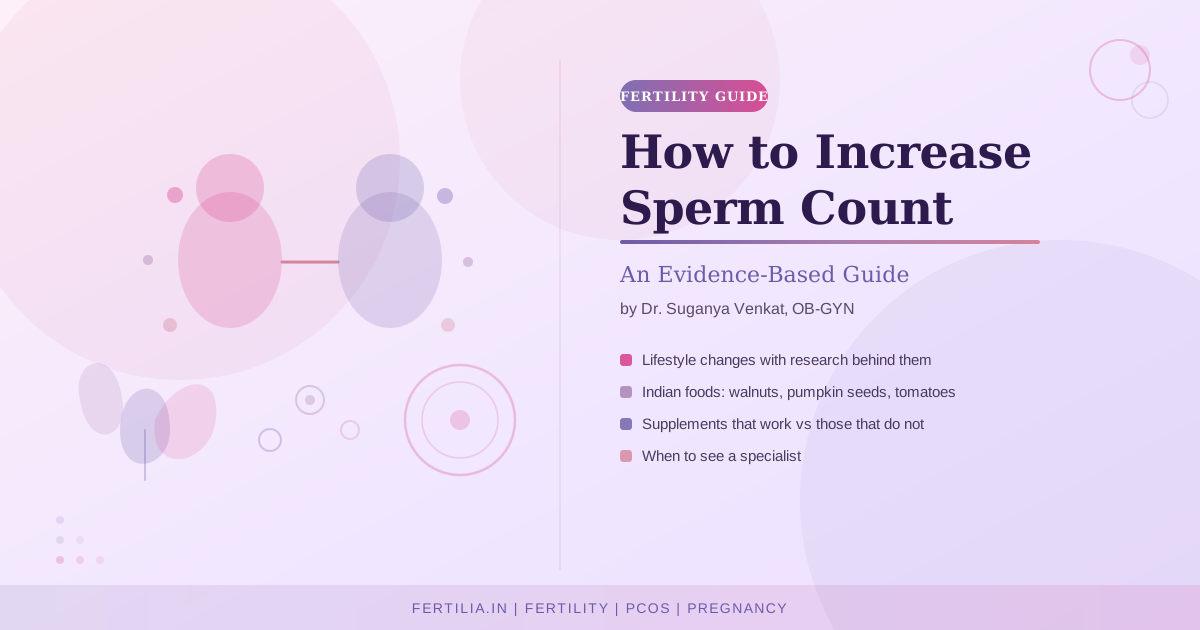
This guide covers:
- What the numbers on a semen analysis actually mean
- Six evidence-based lifestyle changes that move the needle
- Indian foods with research behind them
- Supplements worth considering and those not worth the money
- When to see a specialist rather than waiting
If you have not yet had a semen analysis done, start there. Our complete guide to reading your semen analysis report walks through every parameter against WHO 2021 reference values.
What Does “Low Sperm Count” Mean?
The clinical term is oligozoospermia. It means a sperm concentration below 16 million per millilitre, which is the lower reference limit in the WHO 2021 manual. Severe oligozoospermia is typically defined as below 5 million per millilitre. Azoospermia means no sperm detected in the ejaculate.
One result is not a verdict. Sperm production is sensitive to anything that raises scrotal temperature, disrupts sleep, or increases the body’s oxidative load, including a fever, a stressful work period, or even a hot climate. A low result on the first test should be repeated four to eight weeks later before any clinical decisions are made.
Beyond count, motility and morphology matter equally. A sperm count of 20 million per millilitre with poor motility is a different clinical picture from the same count with normal forward movement. Your fertility specialist will look at all parameters together, not in isolation.
The 6 Lifestyle Changes With Evidence Behind Them
1. Quit Smoking
The evidence on smoking and sperm is consistent across multiple analyses. A systematic review published in European Urology (Sharma et al., 2016) examined data from 20 studies and found that smoking significantly reduces sperm concentration, motility, and morphology. The effect is dose-dependent: higher daily cigarette consumption correlates with greater impairment. Passive smoke exposure also affects parameters, though to a lesser degree.
The good news is that the effect is reversible. Because sperm regenerate on a 74-day cycle, men who quit completely typically see measurable improvement within three to four months. This is one of the highest-impact changes on the list.
2. Reduce Alcohol
A study by Muthusami and Chinnaswamy (Fertil Steril, 2005) found that chronic alcohol consumption reduces testosterone levels, impairs sperm count, and lowers motility. The impact is proportional to how much and how often alcohol is consumed. Occasional moderate intake is less clearly harmful, but for couples actively trying to conceive, most clinicians recommend limiting alcohol to two drinks or fewer per week during the three-month improvement window.
3. Reduce Scrotal Heat
The testes are positioned outside the body for a reason. Sperm production requires a temperature approximately two to four degrees Celsius below core body temperature. When scrotal temperature rises consistently, spermatogenesis slows down.
Research by Durairajanayagam et al. (Reprod Biomed Online, 2015) reviewed the mechanisms of testicular heat stress and confirmed its role in impaired sperm parameters. Practical sources of scrotal heat that are worth addressing:
- Keeping a laptop directly on the lap for several hours daily
- Hot baths or extended time in a jacuzzi or steam room
- Tight underwear or trousers that press the testes against the body
- Occupations that involve prolonged sitting (drivers, desk workers) without regular movement breaks
Switching to looser cotton underwear, taking short standing breaks every 45 minutes, and avoiding hot soaks during the three-month window costs nothing and has a plausible physiological basis.
4. Reach a Healthy Weight
A meta-analysis by Eisenberg et al. (Hum Reprod, 2014) using data from the LIFE study found that elevated BMI is associated with reduced sperm concentration and altered reproductive hormone profiles, including lower testosterone and higher oestrogen. The relationship is not purely mechanical: excess adipose tissue converts testosterone to oestrogen via the aromatase enzyme, which suppresses the hormonal signals needed for sperm production.
Losing even five to ten percent of body weight in men who are significantly overweight has been shown to improve hormone profiles and sperm parameters. Equally, very low body weight can suppress hormonal function. The goal is the middle ground: a BMI within the normal range, maintained through diet and consistent moderate activity rather than extreme caloric restriction.
5. Prioritise Sleep
A prospective study by Jensen et al. (Am J Epidemiol, 2013) followed 953 Danish men and found a U-shaped association between sleep duration and sperm parameters. Both too little sleep (below six hours per night) and too much (above nine hours) were associated with lower sperm count and altered morphology. The sweet spot for sperm parameters was seven to eight hours per night.
The mechanism involves testosterone: peak testosterone production occurs during sleep, particularly in the later sleep cycles. Consistent poor sleep reduces total testosterone output, which in turn reduces sperm production. For couples juggling work and life stresses, sleep is often the first thing sacrificed. From a sperm health standpoint, it is worth protecting.
6. Manage Stress
Chronic psychological stress activates the HPA (hypothalamic-pituitary-adrenal) axis, which suppresses the HPG (hypothalamic-pituitary-gonadal) axis, the hormonal system that drives sperm production. Elevated cortisol reduces the pulsatile release of GnRH, which reduces FSH and LH output, which reduces testosterone and sperm production at the testicular level (Whirledge and Cidlowski, Nat Rev Endocrinol, 2010).
Oxidative stress is a separate but related pathway: reactive oxygen species from chronic stress damage sperm DNA and membranes, reducing both count and functional quality. Structured stress management, including breathwork, yoga, and adequate rest, is not a soft recommendation. It addresses a documented physiological mechanism. Our yoga for conception guide outlines a practice specifically designed for couples in the TTC phase, with pranayama techniques that are directly relevant to cortisol reduction.
Talk to Dr. Suganya About a Personalised Fertility Plan
If you are planning to conceive or have had abnormal semen analysis results, a couple’s consultation with an OB-GYN gives you a clear, individualised next step rather than a general protocol.
WhatsApp Dr. Suganya to book a consultation
Indian Foods That Support Sperm Health
Aakhrot (Walnuts)
A randomised controlled trial by Robbins et al. (Biol Reprod, 2012) studied 117 healthy men aged 21 to 35 who ate a Western-style diet. One group added 75 grams of walnuts daily for 12 weeks. The walnut group showed significant improvements in sperm vitality, motility, and morphology compared to controls. Walnuts are rich in omega-3 alpha-linolenic acid and antioxidants, both of which support sperm membrane integrity. A small handful (approximately 30 grams or 7 to 8 whole walnuts) daily is a practical target.
Kaddu ke Beej (Pumpkin Seeds)
Pumpkin seeds are one of the richest plant-based sources of zinc. Seminal plasma zinc concentration is positively correlated with sperm count and motility (Zhao et al., Sci Rep, 2016). Zinc is also required for testosterone synthesis and the structural integrity of the sperm’s outer membrane. A 30-gram serving (roughly two tablespoons) of roasted kaddu ke beej delivers approximately 4 milligrams of zinc, contributing meaningfully toward the recommended daily intake of 11 milligrams for adult men.
Til (Sesame Seeds)
Sesame seeds provide both zinc and vitamin E, two nutrients consistently flagged in male fertility research. They also contain lignans, which have antioxidant properties. Black til contains higher mineral concentrations than white. Til ladoo, ellu sadam, or simply adding til to dal or roti dough are practical ways to include them daily.
For more on this, read our guide on Sperm Freezing Cost India 2026.
Tamatar (Tomatoes)
Lycopene, the red pigment in tomatoes, is concentrated in the testes and in seminal plasma. Several observational studies have found associations between lycopene levels and sperm parameters. Cooked tomatoes and tomato paste have higher bioavailable lycopene than raw tomatoes, because heat processing breaks down the cell walls that contain the compound. Rasam, tomato dal, and sabzi are easy vehicles.
Palak and Methi (Spinach and Fenugreek Leaves)
Both are folate-rich. Folate plays a role in DNA synthesis and repair in developing sperm cells. Deficiencies have been associated with increased sperm DNA fragmentation (Ebisch et al., Hum Reprod Update, 2007). These greens are already staples in most Indian cooking and should be included daily, particularly during the three-month improvement window.
For more on this, read our guide on Sperm DNA Fragmentation (DFI).
Rajma, Chana, and Dal
Legumes provide zinc, protein, and folate together. Sperm production is a protein-intensive process, and adequate dietary protein supports the cellular machinery of spermatogenesis. Rajma and chana are also good sources of iron, which supports overall metabolic function.
A Practical Day
A sample pattern: breakfast with a small handful of aakhrot or a tablespoon of alsi (flaxseeds) stirred into porridge, lunch with rajma or chana, afternoon snack of kaddu ke beej or til laddoo, dinner with palak or methi dal and tomato-based rasam. These are not exotic interventions; they are the building blocks of a traditional South and North Indian diet, eaten deliberately.
Supplements: What the Evidence Shows
Before starting any supplement, it helps to know what the underlying deficiency or mechanism is. A blanket “male fertility supplement” with 15 ingredients at underdisclosed doses is not the same as addressing a specific documented gap.
Zinc: If seminal zinc levels are low (which a fertility specialist can test), zinc supplementation has a reasonable evidence base (Zhao et al., 2016). Standard supplementation doses for male fertility are typically in the 25 to 66 milligram per day range. High doses of zinc can interfere with copper absorption, so this should be done with medical guidance rather than self-supplementation.
Coenzyme Q10 (CoQ10): CoQ10 is an antioxidant and mitochondrial cofactor. A systematic review of antioxidant supplements in male infertility (Lafuente et al., Fertil Steril, 2013) found that antioxidant combinations, including CoQ10, were associated with improved sperm parameters. Ubiquinol form is better absorbed than ubiquinone. Typical study doses range from 200 to 300 milligrams daily.
Vitamin C and Vitamin E: These antioxidants address oxidative stress in seminal plasma. The systematic review by Lafuente et al. (Fertil Steril, 2013) found that antioxidant combinations including vitamin C and E were associated with reduced sperm DNA fragmentation and improved parameters in men with elevated oxidative stress markers. Standard supplementation doses studied are 500 milligrams vitamin C and 200 IU vitamin E daily. Food-first approaches (amla for vitamin C, nuts and seeds for vitamin E) are worth prioritising alongside any supplementation.
L-Carnitine: Most studied in men with low motility specifically. L-carnitine transports fatty acids into mitochondria and is present in high concentrations in the epididymis. A randomised trial by Lenzi et al. (Fertil Steril, 2003) found improved sperm motility with L-carnitine supplementation in men with asthenozoospermia (low motility). Typical study doses are 2 to 3 grams daily.
What to avoid: Testosterone supplements or anabolic steroids. These are sometimes taken for fitness reasons but suppress the HPG axis directly, which reduces sperm production significantly, sometimes to zero. This is a common cause of severely low sperm counts in younger men that is not immediately obvious on history.
When to See a Specialist
The three-month lifestyle protocol is the right starting point for borderline parameters. However, some findings warrant a specialist evaluation sooner rather than later:
- Azoospermia: No sperm detected on two separate analyses. This requires a full evaluation including hormone panel (FSH, LH, testosterone, prolactin), genetic testing (karyotype, Y-microdeletion), and consideration of testicular biopsy if obstructive causes are possible.
- Severe oligozoospermia: Below 5 million per millilitre on a repeat test. The three-month lifestyle window is still worth running, but simultaneous specialist workup rather than sequential is the right approach.
- Elevated white blood cells in semen: This suggests infection or inflammation of the reproductive tract. It requires antibiotic treatment and follow-up, not lifestyle modification alone.
- Consistent low motility with normal count: This is a separate clinical picture that may respond to L-carnitine and antioxidants, but it also warrants evaluation for varicocele, which is surgically correctable and measurably improves sperm parameters post-repair.
- Trying for over 12 months under 35, or over 6 months over 35: At this stage, simultaneous evaluation of both partners is the standard of care, not sequential.
Our complete guide to conceiving naturally as a couple outlines when and how both partners should be evaluated together, and our egg quality guide covers the female-side protocol that runs in parallel, which saves time and avoids the common error of treating only one side of a two-person challenge.
Frequently Asked Questions
How long does it take to improve sperm count? One complete spermatogenesis cycle takes approximately 74 days, with a further two to twelve days for epididymal maturation. In practice, most clinicians recommend a three-month focused protocol followed by a repeat semen analysis to assess improvement. Dramatic changes will not be visible at four weeks because the sperm in the ejaculate at that point were already in production before the changes began.
Can diet alone improve sperm count significantly? Diet is one of several levers, not a standalone fix. For men with borderline parameters driven by nutritional gaps, oxidative stress, or weight-related hormonal changes, dietary improvement can move the needle meaningfully. For men with structural causes (varicocele, hormonal disorders, genetic factors), diet supports but does not replace medical treatment. The right approach is to address lifestyle and diet in parallel with identifying any treatable underlying cause.
Does tight underwear really affect sperm count? Yes, with a caveat about magnitude. The evidence that sustained scrotal heat reduces spermatogenesis is well established. Whether tight underwear raises scrotal temperature enough to matter clinically is debated, with some studies showing small but measurable temperature differences. Given that switching to loose cotton underwear costs nothing and carries no downside, it is a reasonable low-effort step during the three-month improvement window.
Is stress affecting my husband’s sperm count? Chronic psychological stress activates the HPA axis, which suppresses the hormonal cascade driving sperm production. Acute short-term stress (a difficult week at work) probably has minimal lasting effect because sperm are produced continuously. Sustained stress over weeks to months is the clinical concern. Structured relaxation, consistent sleep, and activities that genuinely reduce cortisol load, such as yoga, walking, and breathwork, are evidence-backed additions to a fertility protocol.
Which Indian food is best for sperm health? No single food is most important. The pattern matters more than any individual item. Walnuts have the strongest single-food research (Robbins 2012 RCT). Tomatoes (for lycopene), pumpkin seeds and sesame (for zinc), and dark leafy greens (for folate) round out the core additions. Most of these are already part of a traditional Indian diet, eaten consistently rather than occasionally.
Are male fertility supplements safe to take without a doctor? Standard antioxidants (vitamin C, E, CoQ10) at the doses studied in fertility research are generally well tolerated. However, zinc in higher doses can deplete copper if taken for months without monitoring, and L-carnitine at high doses can cause gastrointestinal side effects. A brief conversation with a fertility specialist before starting any supplement protocol ensures the right targets are being addressed rather than supplementing broadly without knowing the underlying gap.
When should we see a fertility specialist rather than waiting? If a repeat semen analysis (four to eight weeks after the first) shows azoospermia or severe oligozoospermia, see a specialist immediately. For borderline parameters, a three-month lifestyle protocol first is reasonable, but if the couple has been trying for twelve months (or six months if either partner is over 35), simultaneous evaluation of both partners is the standard of care.
The Practical Summary
Sperm parameters are not fixed. The 74-day production cycle means a consistent three-month effort, on smoking, alcohol, heat, weight, sleep, and stress, combined with a diet that consistently includes walnuts, zinc-rich seeds, folate-rich greens, and lycopene from tomatoes, will reflect in the next semen analysis.
For more on this, read our guide on Semen Analysis. The key is to address both partners in parallel rather than sequentially. Roughly half of all fertility challenges involve a male factor. Starting the couple’s evaluation together, with a semen analysis alongside the female workup, gives a complete picture and prevents the common six-month delay that comes from investigating only one partner at a time.
For personalised guidance on both partners’ fertility workups, our free sperm health resource guide covers the Indian foods and supplement framework in detail.
If you want a direct conversation with Dr. Suganya about your specific situation, she reviews semen analysis reports and advises on next steps as part of a couple’s consultation.
WhatsApp Dr. Suganya to book your couple’s consultation
Male-factor support is part of Dr. Suganya’s Fertility program, which treats conception as a couple’s journey.
Dr. Suganya Venkat is an OB-GYN with 15 years of clinical experience. She completed her DNB in Obstetrics and Gynaecology from GKNM Hospital, Coimbatore, and her MD in Pathology from CMC Vellore. She holds 5 Gold Medals from SRMC (MBBS).