You’ve decided you’re ready to start trying. You’ve stopped birth control, you’re having regular intercourse, and you’re hoping it happens naturally without needing medical intervention.
But after a few months, questions start creeping in. Are we timing it right? Should we be doing something differently? Is there a problem, or do we just need to wait longer?
This guide walks you through the evidence-based steps both partners can take to optimize natural conception. Not supplements you might not need. Not old wives’ tales. Just what the research actually shows works.
What you’ll learn
- How long it typically takes to conceive naturally
- The fertile window and how to identify it
For more on this, read our guide on Can I Conceive Naturally with Thin Endometrium?.
- What both partners can do to optimize fertility
- When to seek medical help
- Common myths that create unnecessary anxiety
Let’s start with what “normal” actually looks like.
How long does natural conception take?
- 38% of couples conceive in the first cycle of trying
- 68% of couples conceive within 3 cycles
- 81% of couples conceive within 6 cycles
- 92% of couples conceive within 12 cycles
(Gnoth C et al., 2003, Human Reproduction, PMID 12923157. These are cumulative rates in 346 German women who were using natural family planning to time intercourse, so they describe well-timed cycles rather than a general population average.)
If you’re under 35 and it’s been less than 12 months, you’re still within the normal timeframe. If you’re over 35, the recommendation is to seek help after 6 months because fertility declines with age and time matters more.
But that doesn’t mean you should just wait passively. There are specific, evidence-based things you can do right now to improve your chances.
Step 1: Understand the fertile window
This is the most important piece of information for natural conception.
You can only get pregnant during a 6-day window each cycle: the 5 days before ovulation and the day of ovulation itself (Wilcox AJ et al., 1995, New England Journal of Medicine, PMID 7477165).
Why? Because:
- Sperm can survive in the female reproductive tract for up to 5 days
- The egg only survives for 12-24 hours after ovulation
Having intercourse every day of the month doesn’t increase your chances. Having intercourse during your fertile window does.
How to identify your fertile window
You have four methods. I recommend using at least two together for accuracy.
1. Calendar method (least accurate, but a starting point)
If your cycles are regular (28-32 days), ovulation typically happens 12-16 days before your next period.
For a 28-day cycle: ovulation is around day 14. Your fertile window is days 9-14.
For a 30-day cycle: ovulation is around day 16. Your fertile window is days 11-16.
But cycles vary. This method alone isn’t reliable for most women.
2. Cervical mucus tracking (free, surprisingly accurate)
As you approach ovulation, your cervical mucus changes to help sperm survive and travel:
- After your period: Dry, or minimal discharge
- 7-10 days into your cycle: Sticky, thick, white or cloudy
- Just before ovulation: Clear, stretchy, slippery (like raw egg white)
- After ovulation: Thick and sticky again, or dry
The “egg white” mucus is your most fertile sign. When you see it, you’re in your fertile window. This is when intercourse has the highest chance of resulting in pregnancy.
Read our complete guide to cervical mucus and ovulation tracking
3. Basal body temperature (BBT) charting
Your resting body temperature rises slightly (0.3-0.5°F) after ovulation due to progesterone.
Take your temperature first thing every morning before getting out of bed, using a basal thermometer. After 2-3 months, you’ll see a pattern: lower temps before ovulation, higher temps after.
The problem: BBT only confirms ovulation after it’s happened. By the time your temp rises, you’ve already missed the fertile window for that cycle. But it helps you understand your pattern so you can predict the next cycle.
4. Ovulation predictor kits (OPKs)
These test your urine for the LH surge that triggers ovulation. LH peaks 24-36 hours before the egg is released.
When you get a positive OPK, you’re about to ovulate. Have intercourse that day and the next 2 days.
OPKs are the most accurate home method, but they cost ₹300-₹800 per cycle.
Best approach: Use cervical mucus + OPKs together. When you notice egg-white mucus, start testing with OPKs. When the OPK is positive, that’s your cue.
Step 2: Time intercourse correctly
Once you know your fertile window, how often should you have intercourse?
Every other day during the fertile window is optimal.
Why not every day? Sperm quality can decrease slightly with daily ejaculation. But every-other-day is frequent enough to catch the fertile window without reducing sperm count.
If every other day feels like too much pressure, every 2-3 days throughout the cycle works nearly as well for couples without fertility issues. You’ll naturally hit the fertile window without needing to track anything.
For a deeper dive on the lifestyle side of conception, see 7 Evidence-Based Ways to Boost Fertility Naturally.
Some couples ask: does position matter? Should I lie down with my legs up afterward?
No good evidence supports either. Sperm reach the cervix within seconds of ejaculation. Gravity doesn’t play a significant role.
Trying to conceive and want personalized guidance?
Dr. Suganya's Fertility Program works with both partners to optimize natural conception through nutrition, lifestyle, and cycle tracking. Dr. Suganya's team has supported 1000+ pregnancies and helped over 100 women avoid surgery.
WhatsApp Dr. SuganyaStep 3: What the female partner can do
1. Address any underlying conditions
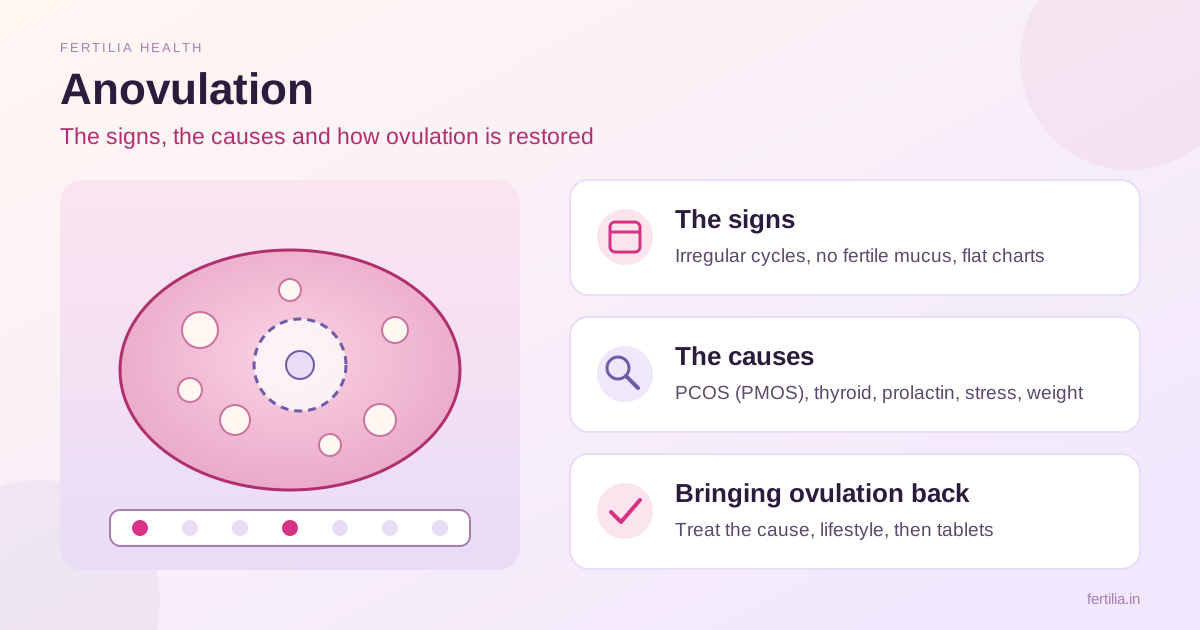
If you have irregular periods, very painful periods, or a history of pelvic infections, see a gynecologist before you start trying. Conditions like PCOS, endometriosis, or blocked tubes can delay conception, and addressing them early saves months.
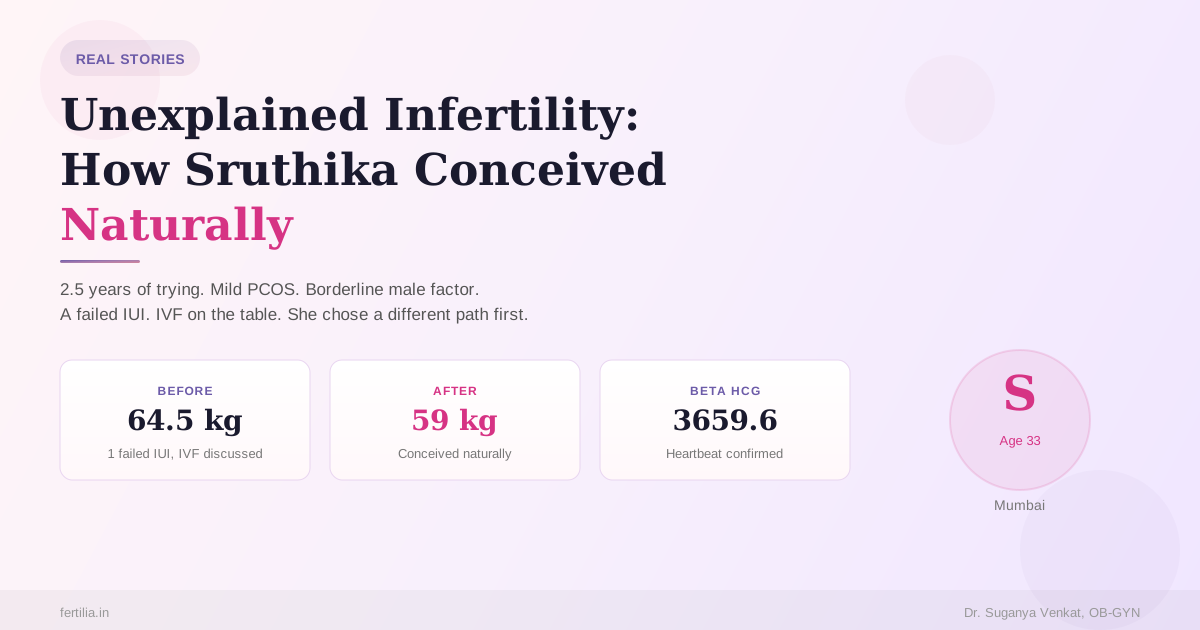
We see this often: a woman tries for 6-12 months, then discovers she has PCOS or endometriosis that could have been managed from day one.
PCOS & Pregnancy: How to Conceive Naturally (Step-by-Step)
2. Take folic acid (or L-methylfolate)
Start taking 400-800 mcg of folic acid daily as soon as you start trying. Folic acid supplementation started before pregnancy reduces the risk of neural tube defects (MRC Vitamin Study Research Group, 1991, The Lancet, PMID 1677062). The 72% protective effect that trial reported was measured in 1,817 women who had already had a pregnancy affected by a neural tube defect.
If you have the MTHFR gene variant, L-methylfolate is a better form because your body can use it directly without conversion.
Folic Acid in Pregnancy: When to Start & How Much
3. Optimize your weight
Both underweight (BMI <18.5) and overweight (BMI >25) can disrupt ovulation and reduce fertility.
If you’re underweight, you may not ovulate regularly because your body doesn’t have enough energy reserves to support a pregnancy.
If you’re overweight, insulin resistance can interfere with ovulation (even if you don’t have PCOS).
Losing weight if you’re overweight can restore ovulation. In a study of 13 overweight women who were not ovulating, a diet and exercise programme was associated with an average 6.3 kg weight loss and resumption of ovulation in 12 of the 13 (Clark AM et al., 1995, Human Reproduction, PMID 8567797).
4. Eat fertility-supporting foods
Focus on:
- Whole grains: Ragi, jowar, whole wheat, brown rice (low glycemic index to support insulin balance)
- Protein: Dal, rajma, chana, paneer, eggs, fish
- Healthy fats: Til (sesame seeds), alsi (flaxseeds), aakhrot (walnuts), ghee
- Leafy greens: Palak, methi (rich in folate and iron)
- Antioxidant-rich foods: Amla, tomatoes, carrots, pomegranate
What to minimize:
- Refined carbs (white bread, maida, packaged biscuits)
- Trans fats (vanaspati, packaged snacks)
- Excess caffeine (keep it under 200 mg a day, roughly two small tumblers of filter coffee or three cups of tea)
For a fuller practical list with portions and two simple recipes you can rotate, see our Indian fertility foods guide.
Blood sugar stability matters more than most couples realise. Insulin resistance, common in women with PCOS but also present in many women without a formal PCOS diagnosis, is a major cause of irregular ovulation. Meals that spike blood sugar rapidly create hormonal disruption downstream. Practical adjustments that help:
- Replace white rice with hand-pound rice, ragi, or jowar at least once daily
- Start every meal with fibre (vegetable sabzi, dal, salad) before the carbohydrate
- Include protein at every meal: eggs, curd, lentils, paneer
- Don’t skip meals, especially breakfast
7 Evidence-Based Ways to Boost Fertility Naturally
5. Reduce stress
Chronic stress raises cortisol, which can suppress the hormones that trigger ovulation (Whirledge S & Cidlowski JA, 2010, Minerva Endocrinologica, PMID 20595939).
You don’t need to quit your job or meditate for an hour daily. Small, consistent practices help:
- 10 minutes of deep breathing or pranayama daily
- A 20-minute walk after dinner
- One activity you genuinely enjoy (reading, music, cooking) each day
Stress reduction isn’t about being calm all the time. It’s about giving your body regular breaks from the stress response.
Yoga for Conception: A Fertility Yoga Plan That Works
6. Check for common nutritional deficiencies
In my clinical experience, Vitamin D deficiency and Vitamin B12 deficiency are the two most commonly overlooked factors quietly delaying conception in Indian women and their partners.
Vitamin D. India has paradoxically high rates of Vitamin D deficiency despite abundant sunlight, largely due to indoor lifestyles, darker skin tone requiring more sun exposure to synthesise equivalent amounts, and low dietary intake. A 2012 systematic review in the European Journal of Endocrinology (Lerchbaum & Obermayer-Pietsch) found evidence that vitamin D is involved in female reproduction, including IVF clinical pregnancy rates and PCOS, though the authors were careful to frame these as associations rather than proven cause and effect. Vitamin D receptors are present in the ovaries, uterus, and placenta. Deficiency is associated with irregular ovulation, lower AMH levels, and poorer embryo quality. Get your level checked; if you’re below 30 ng/mL, supplementation is warranted.
Vitamin B12. Vegetarian and vegan diets (common in Tamil Nadu and much of South India) carry a significant risk of B12 deficiency, since B12 is found almost exclusively in animal products. B12 plays a direct role in DNA synthesis and cell division, both critical in early embryo development. Low B12 is also associated with elevated homocysteine, which can impair implantation. Ask for a B12 test alongside your fertility evaluation. Dairy (dahi, paneer) provides some B12 but often insufficient amounts for fully vegetarian individuals.
Iron. Iron deficiency anaemia is extremely prevalent in Indian women and is associated with anovulatory cycles (cycles where you don’t ovulate). If you feel fatigued, look pale, or have heavy periods, ask your doctor to check your haemoglobin and serum ferritin.
Folate is covered above in #2. The short version: start at least 3 months before you plan to conceive, not after a positive test.
Step 4: What the male partner can do
Male fertility matters just as much as female fertility. Men are solely responsible for 20-30% of infertility cases and contribute to about half of cases overall (Agarwal A et al., 2015, Reproductive Biology and Endocrinology, PMID 25928197).
1. Get a semen analysis if conception isn’t happening
If you’ve been trying for 6-12 months without success, a semen analysis is the first test to do. It’s simple, non-invasive, and tells you whether sperm count, motility, or morphology are contributing to the delay.
Many men avoid this test because of embarrassment or fear, but it’s the fastest way to rule out a major factor.
Semen Analysis: What Your Report Really Means
2. Avoid heat exposure to the testicles
Sperm production happens at 2-4°C below body temperature. Anything that raises scrotal temperature can reduce sperm count:
- Hot baths, saunas, steam rooms
- Tight underwear
- Keeping laptops on your lap for extended periods
- Long-distance driving with heated seats
Wear loose cotton underwear. Take breaks during long drives. Skip the sauna while trying to conceive.
3. Stop smoking and limit alcohol
Smoking is associated with reduced sperm count, motility, and morphology (Sharma R et al., 2016, European Urology, PMID 27113031).
Heavy alcohol intake (>2 drinks per day) also impairs sperm quality.
If you’re serious about conceiving naturally, this is one of the highest-impact changes you can make.
4. Eat for sperm health
The same antioxidant-rich foods that support egg quality also support sperm quality:
- Zinc-rich foods: Chana, moong dal, pumpkin seeds (kaddu ke beej), whole eggs
- Selenium: Brazil nuts (just 2-3 per day), eggs, fish
- Vitamin C: Amla, tomatoes, bell peppers, guava
- Omega-3: Walnuts (aakhrot), flaxseeds (alsi), fish
- Folate: Palak, methi, whole grains
Sperm take 72-90 days to mature. What you eat today affects sperm quality 3 months from now.
5. Manage stress and sleep
Just like in women, chronic stress impairs sperm production. Cortisol suppresses testosterone, which is needed for sperm production.
Get 7-8 hours of sleep. Exercise regularly (but not excessively). Find a stress outlet that works for you.
Step 5: What both partners should avoid
1. Lubricants during intercourse
Some common lubricants, including K-Y Jelly and Astroglide, reduce sperm motility or damage sperm DNA in laboratory studies, most likely because of their pH and concentration (osmolality) (Agarwal A et al., Fertility and Sterility, 2008, PMID 17509584). No lubricant has been shown to improve pregnancy rates, so the aim is simply to avoid the ones that hinder sperm while you are trying to conceive.
If you need lubrication:
- A fertility-formulated lubricant such as Pre-Seed did not significantly reduce sperm motility in a laboratory study, unlike standard products (though no lubricant is proven to improve conception)
- Or use plain coconut oil in small amounts
2. Excessive exercise
Moderate exercise supports fertility. Excessive exercise (>7 hours of intense cardio per week in women, or extreme endurance training in men) can suppress reproductive hormones.
If you’re training for a marathon or doing intense CrossFit daily, consider dialing it back while trying to conceive.
3. Environmental toxins
Minimize exposure to:
- Pesticides (wash vegetables thoroughly, buy organic when possible)
- Plastics (avoid heating food in plastic containers, reduce plastic water bottles)
- Heavy metals (be cautious with fish high in mercury like swordfish, king mackerel)
These are endocrine disruptors that can interfere with hormone balance in both partners.
When to seek medical help
Don’t wait if:
- You’re under 35 and have been trying for 12 months without success
- You’re over 35 and have been trying for 6 months without success
- You have irregular periods (cycles shorter than 21 days or longer than 35 days)
- You have a history of pelvic infections, endometriosis, or PCOS
- Your partner has a known fertility issue (low sperm count, varicocele, etc.)
- You’ve had two or more miscarriages
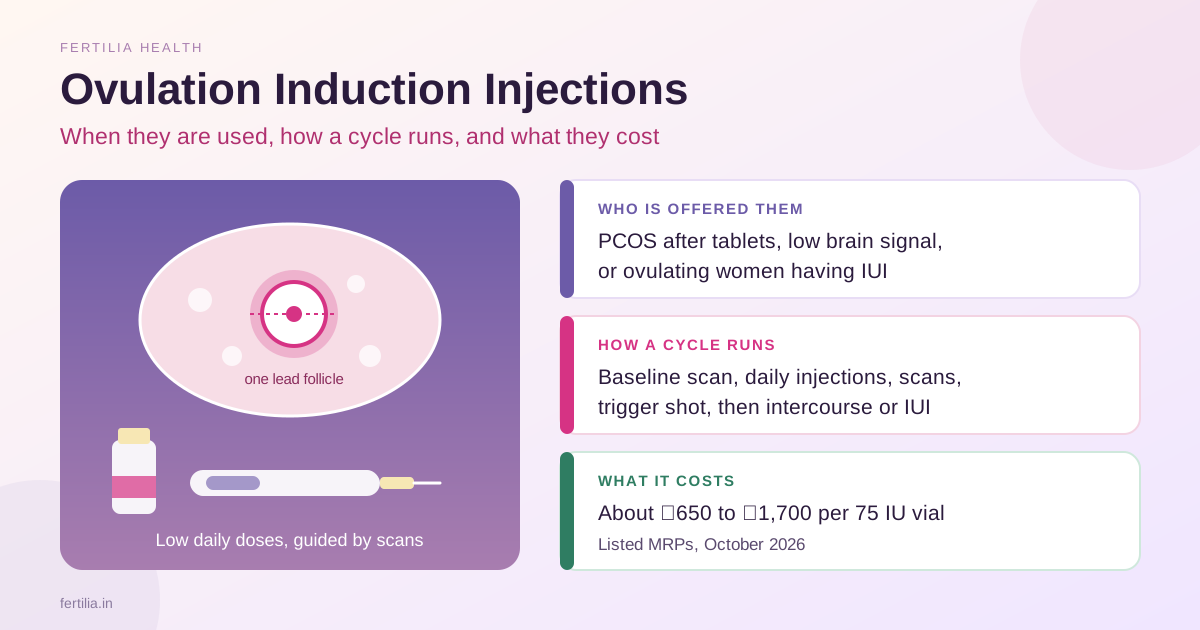
Seeking help doesn’t mean you’ll need IVF. Often, simple interventions (ovulation induction with letrozole, treating an underlying infection, addressing a luteal phase defect) are enough to help you conceive naturally.
Not sure if you should see a doctor yet?
Dr. Suganya offers a one-on-one consultation to review your history, answer your questions, and help you decide the next best step. ₹399 for 30 minutes. For couples who want ongoing structure, her 90-day Fertility program supports both partners through the journey.
Book Your ConsultationCommon myths that create unnecessary anxiety
Myth 1: “If it doesn’t happen in 3 months, something is wrong.”
Reality: about 68% of couples conceive within 3 cycles. That means close to a third take longer, and that’s completely normal. Give it 12 months (or 6 months if you’re over 35) before worrying.
Myth 2: “You should have intercourse every day to maximize chances.”
Reality: Every other day during the fertile window is optimal. Daily intercourse can reduce sperm count slightly without increasing pregnancy chances.
Myth 3: “You need to orgasm to conceive.”
Reality: Female orgasm may help sperm travel (the uterine contractions create a suction effect), but it’s not required for conception. Plenty of women conceive without orgasm.
Myth 4: “Certain positions (legs up, missionary, etc.) increase chances.”
Reality: Sperm reach the cervix within seconds regardless of position. Lying down afterward doesn’t hurt, but there’s no strong evidence it helps either.
Myth 5: “If you relax and stop trying, it will happen.”
Reality: This is the most frustrating myth. Stress can affect fertility, yes. But “just relax” isn’t a treatment plan. Many women who are deeply relaxed still face fertility challenges. And many women who are stressed conceive just fine. Telling someone to relax dismisses the very real medical, hormonal, or structural issues that may be at play.
Frequently Asked Questions
1. How many times a week should we have intercourse to conceive naturally?
If you’re tracking ovulation: every other day during your fertile window (the 5 days before ovulation + ovulation day).
If you’re not tracking: every 2-3 days throughout the cycle. This ensures you hit the fertile window without needing to pinpoint ovulation.
2. Can we conceive naturally if I have PCOS?
Yes. Most women with PCOS can conceive naturally with the right support: managing insulin resistance, restoring ovulation through diet and lifestyle, and tracking your cycles carefully.
Some women with PCOS need medications like letrozole or metformin to help them ovulate. But many conceive naturally once they address the root drivers of their PCOS.
PCOS & Pregnancy: How to Conceive Naturally (Step-by-Step)
3. Does age matter for natural conception?
Yes, especially after 35. Fertility declines gradually in your early 30s, then more sharply after 35. By 40, natural conception becomes harder (but not impossible).
The reason: both egg quality and egg quantity decrease with age. Chromosomal abnormalities in eggs also increase, raising the risk of miscarriage.
If you’re over 35, don’t wait 12 months before seeking help. See a fertility specialist after 6 months of trying.
Pregnant After 35: Real Chances + 6 Steps That Help
4. Can we conceive naturally with low sperm count?
It depends on how low. If the sperm count is mildly reduced (10-15 million/ml, just under the WHO 2021 reference of 16 million/ml), natural conception is still possible with optimized timing and lifestyle changes.
If the count is severely low (<5 million/ml) or motility is very poor, you may need assisted reproductive techniques like IUI or IVF.
A semen analysis will tell you where your partner stands.
5. Should we both take supplements while trying to conceive?
For the female partner:
- Folic acid (400-800 mcg): yes, always
- Vitamin D (if deficient based on a blood test)
- Iron (if anemic based on a blood test)
For the male partner:
- Zinc (if low sperm count or motility)
- Vitamin C and E (antioxidants that support sperm health)
- Coenzyme Q10 (some evidence for improving sperm motility)
Don’t take random supplements without testing first. Many supplements are unnecessary if your diet and baseline health are good.
6. How long does it take for lifestyle changes to improve fertility?
For women: 90-120 days. That’s how long it takes for a group of eggs to mature from recruitment to ovulation.
For men: 72-90 days. That’s the sperm maturation cycle.
This is why Fertilia’s programs are 90 days long. Real fertility improvement takes 3 months of consistent effort.
7. Can we conceive naturally if we’ve had a miscarriage before?
Yes. One miscarriage doesn’t mean you can’t conceive naturally. 15-20% of recognized pregnancies end in miscarriage, and most women go on to have a successful pregnancy afterward.
If you’ve had two or more miscarriages, see a doctor to rule out underlying causes (thyroid issues, uterine abnormalities, chromosomal problems, clotting disorders). But even with recurrent miscarriage, natural conception is often still possible once the underlying issue is addressed.
The bottom line
Natural conception is absolutely possible for most couples. Here’s what actually matters:
- Time intercourse correctly: every other day during the fertile window
- Address underlying conditions early: PCOS, endometriosis, thyroid issues, low sperm count
- Eat well, sleep well, manage stress: for both partners
- Avoid lubricants that hinder sperm, excessive heat, smoking, heavy alcohol
- Seek help after 12 months if under 35, or 6 months if over 35
You don’t need to do everything perfectly. You don’t need expensive supplements or extreme diets. You just need to understand your body, time things right, and give both partners the nutritional and lifestyle foundation to support conception.
If you’ve been trying for a few months and it hasn’t happened yet, that’s normal. Give it time. But if you’re approaching the 6-12 month mark, don’t wait passively. Get evaluated, understand what’s happening, and get the support you need.
Natural conception is still the most common outcome when you know what to do.
Dr. Suganya Venkat is an OB-GYN with 15+ years of experience helping couples conceive naturally through evidence-based fertility care. She completed her DNB in Obstetrics & Gynecology at GKNM Hospital, Coimbatore, her MD in Pathology at CMC Vellore, and earned 5 Gold Medals during her MBBS at SRMC.
For more on this, read our guide on Can I Conceive with Hypothyroidism? An OB-GYN Answers.