The IUI or embryo transfer goes by in a blur of paperwork and quiet hope. Then you step outside and wait. Fourteen days. Sometimes twelve. Sometimes sixteen.
Every twinge, every cramp, every moment of fatigue suddenly has weight. Women in the Fertilia program describe the two-week wait as the most psychologically exhausting phase of their entire fertility journey, more draining than the injections, the scans, or the procedures themselves.
What makes it hard is not the waiting. It is the uncertainty layered on top of a body that is sending signals you cannot quite interpret. Are these symptoms a good sign? Are they from the progesterone? Is the fact that you feel nothing a bad sign?
This post explains what is actually happening in your body during the two-week wait, which symptoms have a physiological explanation, and how to hold this time without being undone by it.
What Is the Two-Week Wait?
The two-week wait (abbreviated 2WW or TWW) is the period between an IUI procedure or embryo transfer and the scheduled beta hCG blood test that tells you whether the cycle worked.
The window is not exactly fourteen days for everyone. The timeline depends on which treatment you had.
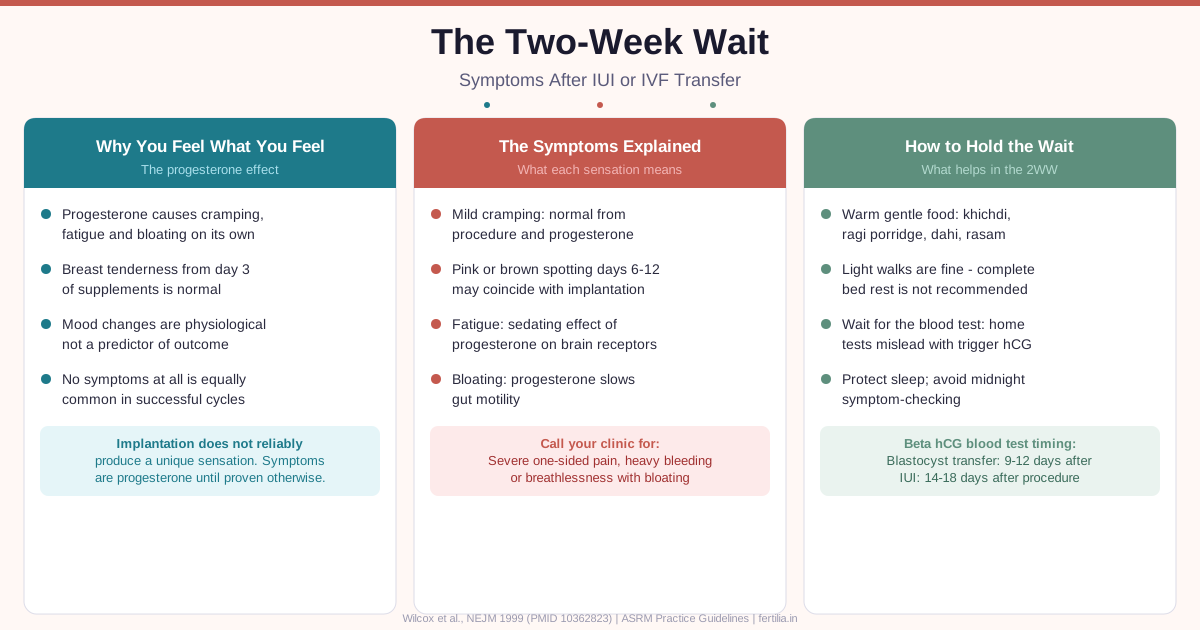
After IUI: Your clinic will usually schedule a blood test 14 to 18 days after the procedure. If you received an hCG trigger shot to time ovulation, testing before 14 days can give a false positive from the trigger hormone still circulating in your system. Most clinics ask you to wait at least 14 days before testing.
After a 5-day blastocyst transfer: The beta hCG test is usually scheduled 9 to 12 days post-transfer (which corresponds to 14 to 17 days post-retrieval).
After a 3-day embryo transfer: The beta hCG test is typically scheduled around 12 to 14 days post-transfer.
These windows exist because a fertilised egg needs time to implant and begin producing detectable hCG. Implantation itself occurs between days 6 and 12 after ovulation or fertilisation, with the highest rates of ongoing pregnancy seen when implantation happens on days 8 to 10 (Wilcox et al., NEJM 1999, PMID 10362823). A pregnancy test taken too early will either give a false negative or, if a trigger shot was used, a false positive that has nothing to do with the current cycle.
What Is Happening in Your Body
During the two-week wait, your uterine lining is maintaining itself under the influence of progesterone. In a natural cycle, the corpus luteum produces this progesterone. In an IUI or IVF cycle, your clinic typically adds progesterone support: vaginal suppositories, injections, or oral tablets.
This progesterone is not optional. It maintains the uterine environment during the window when an embryo might implant. In an IVF cycle particularly, the natural corpus luteum function may be suppressed or absent, so progesterone supplementation replaces what the body would normally make.
The critical thing to understand: progesterone causes symptoms whether or not you are pregnant. Every symptom of early pregnancy (breast tenderness, bloating, fatigue, mood changes, mild cramping) is also a symptom of progesterone supplementation. There is no way to tell them apart by feel alone.
Understanding the Symptoms
Cramping
Mild cramping is one of the most frequently reported symptoms during the two-week wait, and it causes considerable anxiety.
There are several reasons cramping can occur during this period:
Progesterone itself can cause mild uterine cramping. The IUI procedure (placing a catheter through the cervix) and embryo transfer (placing a catheter into the uterus) can both produce residual cramping for a day or two. Implantation, when an embryo burrows into the uterine lining, can produce cramping as the lining adjusts, though not everyone feels this.
Mild cramping that comes and goes over the two-week period, similar in character to pre-period cramping, is generally not a sign that something has gone wrong. It is not a reliable indicator that something has gone right either. Both outcomes (successful implantation and no implantation) can produce this pattern.
What warrants a call to your clinic: cramping that is severe, one-sided, or accompanied by shoulder-tip pain. These can be signs of ovarian hyperstimulation syndrome in IVF cycles, or in rare cases, an ectopic implantation.
Spotting
Some women notice light spotting or pink-brown discharge between days 6 and 12 of the two-week wait. This timing coincides with the implantation window.
Implantation spotting occurs because when an embryo burrows into the endometrium, small blood vessels at the surface can be disrupted, releasing a small amount of blood. This blood is typically older by the time it exits, which is why it appears brown or pink rather than red. The volume is small, often just a few drops or a light stain.
However, spotting during the two-week wait is not exclusively implantation spotting. Progesterone withdrawal (when your suppository schedule shifts or a dose is missed) can cause light spotting. Irritation from vaginal progesterone suppositories is also common.
Light brown or pink spotting during this window, without other concerning symptoms, does not require panic. A heavier bleed (pad-soaking, bright red, with cramping) is different and warrants a call to your clinic.
The implantation bleeding vs period guide covers the distinguishing characteristics in more detail.
For context on IUI success rates by age and diagnosis, the IUI success rate guide for India provides the evidence-based numbers to set realistic expectations before the wait begins.
Breast Tenderness
Breast soreness is one of the most consistent progesterone effects. Progesterone prepares the breast ducts for potential lactation, and this preparation causes noticeable soreness, particularly in the outer portions of the breasts and in the nipples.
This happens whether or not implantation has occurred. Women in IVF cycles taking progesterone injections particularly often notice breast tenderness from around day 3 or 4 onward.
Breast tenderness by itself is not predictive of pregnancy outcome.
Bloating
Bloating is almost universal during the two-week wait in IVF cycles, and common after IUI. The causes are layered:
Progesterone slows gastrointestinal motility, which causes bloating and sometimes mild constipation. In IVF, the ovaries may still be slightly enlarged after the retrieval process. Fluid retention, a mild effect of progesterone, can contribute to a feeling of fullness in the abdomen.
This is often described as feeling heavy in the lower abdomen, or feeling as though your clothes are tighter than usual. It is not a sign that the cycle has or has not worked.
Warm, easy-to-digest food helps during this time. Moong dal khichdi, soft-cooked rice with rasam, ragi porridge, and warm dahi are all gentle on the gut. Staying well-hydrated (coconut water, warm water with jeera or ajwain) also eases the bloating.
Fatigue
Fatigue is another consistent progesterone effect. Progesterone has mild sedating properties, partly because it is metabolised into compounds that act on GABA receptors in the brain, the same receptors that sleep aids target.
Women who feel tired during the two-week wait are not imagining it. The progesterone they are taking is physiologically causing fatigue. It does not indicate that the cycle has or has not worked.
Rest during this period is appropriate and reasonable. There is no clinical evidence that light daily activity harms implantation chances, but equally no need to push through exhaustion.
Mood Changes
Emotional sensitivity, waves of anxiety, and irritability during the two-week wait come from multiple sources: progesterone itself affects mood-regulating neurotransmitters; the psychological weight of the cycle adds another layer; disrupted sleep from anticipation compounds both.
These responses are understandable and, to a significant degree, physiological. They are not a sign of weakness, and they are not predictive of outcome.
Message Dr. Suganya on WhatsApp (Rs. 399 online consultation)
What If You Have No Symptoms?
The absence of symptoms during the two-week wait is not a bad sign. Some women with entirely successful IVF cycles feel nothing unusual during the waiting period. Others experience every symptom listed above and find that the cycle has not worked.
Symptoms during the 2WW do not reliably predict outcome. The embryo does not announce itself with consistent physical markers. Implantation is a microscopic process, and whether an embryo successfully burrows into the endometrium does not produce a detectably different physical sensation in all women.
The absence of symptoms is information-free waiting. It is not a verdict.
About Testing at Home
Home pregnancy tests detect hCG in urine. In a fertility treatment cycle, their timing matters significantly.
If you had an hCG trigger shot, that synthetic hCG will show up on a home test for up to 10 days after administration. Testing before the trigger has cleared will give a positive result regardless of whether the embryo has implanted. This is a false positive in the clinical sense, reflecting the trigger medication, not a pregnancy.
In IVF cycles using a GnRH agonist trigger instead of hCG (or no trigger at all), the body produces its own hCG only if an embryo has implanted. A 5-day blastocyst, if it implants and begins producing hCG, would typically produce a detectable amount by days 10 to 12 post-transfer.
A very faint line on day 10 is not a definitive answer either way. A line that is clearly darkening over two or three successive tests, taken 48 hours apart, is a more reliable signal than a single reading.
The most reliable approach is to wait for your clinic’s scheduled beta hCG blood test. The blood test detects lower hCG concentrations than a urine test, gives you a quantitative number (useful for understanding if the pregnancy is progressing), and eliminates the ambiguity of a faint line.
Testing too early, getting an ambiguous result, and then living in that ambiguity for several more days is genuinely harder than waiting for the scheduled date.
How to Look After Yourself During the 2WW
There is no medically proven action that improves implantation chances after the transfer or IUI has occurred. The embryo’s ability to implant is determined by its own chromosomal health, the state of the endometrium at transfer, and a set of immune and biochemical factors that are not meaningfully modified by what you eat or how you move in the days after.
That said, how you look after yourself during this period matters for your mental state and your body’s general wellbeing.
Eat regularly: Warm meals, easy-to-digest carbohydrates (rice, ragi, poha, idli, soft oats), adequate protein (dal, paneer, dahi, eggs), and good hydration. The progesterone support and the emotional weight of the wait can both suppress appetite. Small, regular meals keep blood sugar stable, which helps with mood and fatigue.
Keep moving gently: A gentle walk, simple stretches, and normal daily activity are all appropriate. Complete bed rest is not recommended by ASRM guidelines and is not the standard at most reputable fertility centres. Your clinic will advise if there is any specific activity restriction for your situation.
Protect your sleep: Progesterone causes fatigue but can paradoxically disrupt night-time sleep with vivid dreams or early waking. A consistent evening routine and avoiding symptom-checking at midnight both help.
Limit the symptom spiral: Searching “2WW symptoms day 7” or comparing your cramping to accounts on fertility forums typically increases anxiety without adding useful information. Every symptom you read about was reported by women who went on to have successful cycles and by women who did not. There is no way to tell which pattern is yours.
For day-by-day practical support during this window, the Two-Week Wait Care Guide at Fertilia covers what to expect and how to manage each stage.
When to Call Your Clinic
Contact your fertility clinic promptly if you experience:
Heavy bleeding (pad-soaking, bright red, with cramping) at any point during the wait. Severe or one-sided pelvic pain, particularly with shoulder-tip pain (this can be a sign of ectopic implantation or OHSS). Significant abdominal bloating accompanied by shortness of breath or a marked decrease in urination (early OHSS signs, more common after egg retrieval). Fever above 38°C. Sudden severe headache.
The above are distinct from the common mild symptoms described earlier. If you are uncertain, call your clinic. Fertility nurses are trained to triage two-week wait concerns and will advise you accordingly.
Frequently Asked Questions
How many days is the two-week wait after IUI? After IUI, the blood test is typically scheduled 14 to 18 days after the procedure. If an hCG trigger shot was used, your clinic waits for the trigger hormone to clear before testing, usually at least 14 days post-IUI. If no trigger was used, testing around 14 to 16 days is standard.
What are early signs that an IVF transfer has worked? There are no symptoms that are reliably specific to a successful transfer. Cramping, spotting, breast tenderness, and fatigue can all occur from progesterone supplementation regardless of outcome. Some women report light pink or brown spotting around days 6 to 12 of the wait, which can coincide with implantation. However, this is not present in all successful cycles and can occur in unsuccessful ones too.
Is it normal to have no symptoms during the 2WW? Yes. The absence of symptoms is common and is not predictive of failure. Some women with completely successful IVF cycles feel nothing unusual during the waiting period. Symptoms during the 2WW reflect progesterone levels and individual sensitivity to those levels, not whether implantation has occurred.
Can I do a home pregnancy test during the 2WW? It depends on your protocol. If an hCG trigger shot was used, home tests will remain positive for up to 10 days from the injection date regardless of whether implantation occurred. Testing before the scheduled beta hCG date introduces ambiguity. If you do test at home, wait at least 12 to 14 days post-blastocyst transfer or 14 days post-IUI, use first morning urine, and treat any result as provisional until confirmed by the blood test.
What should I eat during the two-week wait? There is no diet proven to improve implantation. Balanced, regular, warm meals are the practical goal: moong dal khichdi, soft sabzi with paneer or dahi, ragi porridge, idli with sambar, coconut water, jeera water. Avoid very cold, raw, or spicy food if your gut is sensitive during progesterone supplementation. Stay well-hydrated.
Should I rest completely or can I work during the 2WW? Normal daily activity and desk work are appropriate. Complete bed rest is not recommended by the ASRM Practice Committee’s embryo-transfer guideline (“Performing the embryo transfer,” Fertil Steril 2017, PMID 28366416) and has not been shown to improve IVF outcomes. Light walks, gentle stretching, and regular daily life are all fine unless your clinic has specified otherwise for your individual situation.
When does beta hCG become detectable after embryo transfer? In natural conception, hCG first becomes detectable 6 to 12 days after ovulation (Wilcox et al., NEJM 1999, PMID 10362823); after a 5-day blastocyst transfer, implantation happens within the first few days, and hCG builds to reliably detectable levels over the days that follow. Blood tests are more sensitive than urine tests and can detect lower concentrations. Most clinics schedule the beta hCG blood test at 10 to 14 days post-blastocyst transfer, or 12 to 14 days post-day-3 transfer, allowing enough time for hCG to reach reliably detectable levels.
The two-week wait does not come with guarantees. What it does come with is your clinical team managing the hormonal support, a test date that is approaching regardless, and the ability to look after yourself in the time between.
If you are going through IUI or IVF and would like clinical guidance during this period, including understanding what your beta hCG result means when it comes, Dr. Suganya Venkat consults online across India.
Book a Rs. 399 video consultation with Dr. Suganya
For more on preparing for IUI or IVF, the 90-day IVF support program and the IUI and IVF prep guide cover the full arc of the treatment journey. If you are still deciding whether IVF is the right step for you, the OB-GYN decision framework for IVF addresses that question with honest clinical criteria.